Tabella
EWTN News

EWTN News

About

Trusted global Catholic news, analysis, and multimedia coverage of the Church, Pope Leo XIV, the Vatican, and issues impacting Catholics worldwide.

Latest Articles

EWTN News
WS
EWTN News
Walter Sánchez Silvaabout 4 hours ago

New archbishop appointed in Archdiocese of Santo Domingo, Dominican Republic

Santo Domingo has a new archbishop: Carlos Tomás Morel Diplán. He succeeds Francisco Ozoria Acosta, whose resignation was accepted by Pope Leo XIV after he reached the episcopal retirement age of 75.

Morel Diplán had been appointed by Pope Leo as coadjutor archbishop of Santo Domingo, Dominican Republic, on Oct. 18, 2025, with the automatic right of succession.

As reported by the Vatican Press Office on Oct. 12 and by mandate of the Holy Father, the new archbishop of Santo Domingo also assumes the office of Military Ordinary of the Dominican Republic, a role previously held by Ozoria.

Ozoria offers Mass of Thanksgiving

On Sunday, Oct. 11, Ozoria, now archbishop emeritus of Santo Domingo, offered a Mass of Thanksgiving for his years of episcopal service. He spent 10 of those years serving the primatial see of the Americas, the Archdiocese of Santo Domingo, erected in 1546, the first in the Western Hemisphere.

“I do not cease to be a bishop; I do not cease to be a priest; I am resigning from pastoral governance,” the prelate stated during the Mass in the Santo Domingo cathedral, concelebrated by Morel Diplán and other Dominican prelates, according to the Archdiocese of Santo Domingo.

“Every Eucharist is an act of thanksgiving to the Lord,” the archbishop emeritus said, highlighting that “the way to exercise the priesthood is in the manner of Jesus Christ, who gives life to the world through his death on the cross.”

New archbishop of Santo Domingo

Morel Diplán was born on Nov. 2, 1969, in Monte de la Jagua, Moca, in Espaillat Province. He was ordained a priest on June 24, 2000, for the Archdiocese of Santiago de los Caballeros in the Dominican Republic.

He has served as rector, vice-rector, and professor at the seminary; vocations director; parish priest, vicar, and parish administrator; collaborator with various diocesan curia bodies; and professor and director of the School for the Permanent Diaconate in Santiago de los Caballeros.

On Dec. 14, 2016, he was appointed auxiliary bishop of Santiago de los Caballeros. On Dec. 2, 2023, he was appointed apostolic administrator of the Diocese of La Vega, and on Oct. 18, 2024, he was named bishop of the same diocese.

On Oct. 18, 2025, he was appointed coadjutor archbishop of Santo Domingo.

This story was first published by EWTN News Español, the Spanish-language sister service of EWTN News. It has been translated and adapted by EWTN News English.

EWTN News
ES
EWTN News
EWTN News Staffabout 6 hours ago

What is pulmonary adenocarcinoma? An oncologist explains and talks about Pope Leo XIV’s recovery

After a surgery on Tuesday in which the lower lobe of his right lung was removed, Pope Leo XIV was diagnosed with lung cancer. Dr. Luis Ráez, a prominent oncologist, explained in an interview with EWTN News what pulmonary adenocarcinoma is and what factors will determine the Holy Father’s next medical steps.

Ráez, who is not treating the pope, serves as the medical director and head of the Thoracic Oncology Program at the Memorial Cancer Institute in Florida.

The Vatican reported that the pope had “the lower lobe of the right lung removed using a video-assisted technique. The intraoperative histological examination has confirmed the diagnosis of pulmonary adenocarcinoma, as was suspected from the preoperative tests.”

The most common lung tumor

“The Holy Father remained in the operating room for approximately 3 hours; the duration of the surgery was approximately 90 minutes. The surgery was a success and there were no complications,” the Holy See added.

Ráez explained that adenocarcinoma “is the most common tumor in the lung” and noted that “in general, lung cancers are more aggressive than those of the prostate or breast.”

However, he clarified that seriousness is not defined solely by the type of cancer, but that “the prognosis depends on the stage, that is, the size of the tumor and how far it has spread.”

‘Stage one or stage two’

The pope said during the Angelus prayer on Sunday, Oct. 11, that a nodule on his lung was detected “at a very early stage” and was “well localized.” Ráez speculated that the decision to operate could confirm that the cancer is not at an advanced stage.

“We assume that is the case because they subjected him to surgery. If it were metastatic, for example, stage three or stage four, which are advanced, most likely they would not have operated on him. An operation usually implies stage one or stage two,” he said.

Asked what will determine whether removal of part of the lung is sufficient or whether additional treatment will be required, Ráez highlighted the importance of the tumor size and the absence of metastases.

“If the tumor is larger than four centimeters, the surgery will not be enough and chemotherapy will be necessary. If the tumor is smaller than four centimeters, the surgery is sufficient and nothing else is done. A patient then moves to an observation phase with check-ups every six months,” he explained.

The recovery process

Regarding the chances of a cure, Ráez noted that, under optimal conditions and with a tumor smaller than four centimeters, the figures are favorable: “The chance of cure for early-stage lung cancer is 80 to 90%; it is not total because the cancer can come back.”

Regarding the physical recovery of Pope Leo XIV, who is 71 years old, Ráez expressed a favorable short-term prognosis. “Since he is a healthy man, the most likely thing is that he will be fine” in a few weeks, he stated.

He added that this surgery usually requires a hospital stay of two or three days in the United States and considered that, in the pontiff’s case, more days of hospitalization may have been planned as a precaution.

Regarding medical follow-up after discharge, the specialist stressed that the protocol does not end when one leaves the hospital. “For the next five years, control CT scans must be done every six months, until one is sure that the cancer has not returned and that he has been cured,” said Ráez, who has more than two decades of experience in hematology and medical oncology.

This story was first published by EWTN News Español, the Spanish-language sister service of EWTN News. It has been translated and adapted by EWTN News English.
EWTN News
ES
EWTN News
EWTN News Staffabout 7 hours ago

LIVE UPDATES: Pope Leo XIV diagnosed with lung cancer

The Holy See Press Office confirmed the nodule removed on Tuesday during Pope Leo’s surgery is a type of non-small cell lung cancer. Follow here for more updates.
EWTN News
ES
EWTN News
EWTN News Staff1 day ago

Who is St. Peregrine, the ‘cancer saint’ Catholics are invoking for Pope Leo XIV?

As Pope Leo XIV recovers at Rome’s Gemelli Hospital from surgery that confirmed lung cancer, Catholics around the world are praying for him, and many are turning to a 14th-century Servite priest long known as “the cancer saint”: St. Peregrine Laziosi.

From punch to penance

According to an account by Father Lawrence G. Lovasik, SVD, published in EWTN’s library, Peregrine was born in 1260 in Forlì, Italy. He was the only son of a wealthy family, and as a young man he sided with the city’s anti-papal faction.

When St. Philip Benizi of the Servants of Mary (the Servites) came to Forlì to preach peace on behalf of Pope Martin IV, he was met with insults, rocks, and clubs. Peregrine struck him in the face. Philip answered by offering the other cheek and praying for the young man.

Moved, Peregrine ran after the departing friar. He begged forgiveness on his knees and promised to change his life. According to the traditional account, the Virgin Mary later appeared to him in Forlì’s cathedral and told him: “Go to Siena. There you will find the devout men who call themselves my servants. Join them.”

Peregrine received the Servite habit in 1292. It was said that for 30 years he never sat down. In 1322, his superiors sent him to found a Servite house in his hometown of Forlì, where he became known as a preacher and a readily available confessor.

The night before the amputation

Later in life, Peregrine developed a painful cancerous wound on his foot. Lovasik writes that its “gangrenous stench” was so foul that others kept away. Surgeons decided to amputate.

Peregrine spent the night before the operation in prayer before an image of the crucified Christ and fell asleep there. In a dream, Christ seemed to reach down from the cross and touch his diseased foot. When he awoke, he was healed. The account says the doctors could no longer find any trace of the disease.

Peregrine died in 1345 at about 80 years of age. He was beatified in 1609, and Pope Benedict XIII canonized him in 1726. His feast is celebrated May 1. His body rests in the Basilica of San Pellegrino Laziosi in Forlì. Devotion to him has spread far beyond Italy, including to the National Shrine of St. Peregrine at Our Lady of Sorrows Basilica in Chicago, the city where Leo was born.

Lovasik’s booklet includes several prayers, and EWTN offers a novena to St. Peregrine.

EWTN News
MM
EWTN News
Marco Mancini1 day ago

Pope Leo XIV has lung cancer, Vatican says

VATICAN CITY — Pope Leo XIV underwent surgery Tuesday to remove the lower lobe of his right lung after doctors confirmed a diagnosis of lung adenocarcinoma, the Vatican announced Tuesday evening.

“The Holy Father underwent thoracic surgery as scheduled. To ensure the radical removal of the tumor, the lower lobe of the right lung was removed using a video-assisted technique. An intraoperative histological examination confirmed the diagnosis of lung adenocarcinoma, as suspected from preoperative tests,” the Holy See Press Office said in a statement concerning the operation performed Tuesday afternoon at Romeʼs Agostino Gemelli University Hospital.

“The Holy Father was in the operating room for approximately three hours, while the procedure itself lasted about 90 minutes,” the statement continued. “The operation was successful, and there were no complications. After surgery, the pope regained consciousness normally and, following a brief period of observation, returned to his room on the 10th floor.”

The statement was prepared by Dr. Luigi Carbone, the popeʼs personal physician, and Professor Stefano Margaritora, who performed the operation.

In addition to Margaritora, the surgical team included Professor Elisa Meacci and Drs. Maria Teresa Congedo and Leonardo Petracca Ciaravella. The anesthesiology team consisted of Professor Massimo Antonelli and Drs. Giovanni Punzo and Giuseppe Bello.

Further postoperative tests, including a histological examination, are expected in the coming days. Doctors have not discussed chemotherapy or similar treatments at this stage.

Leo XIV is being accompanied at the hospital by his two secretaries, the religious sisters who assist him, and his personal physician.

Further updates on the pontiffʼs health could be released Wednesday.

This story was first published by ACI Stampa, the Italian-language sister service of EWTN News. It has been translated and adapted by EWTN News English.

EWTN News
DP
EWTN News
Daniel Payne1 day ago

EWTN News explains: Who’s in charge of the Vatican while Pope Leo XIV is hospitalized?

Pope Leo XIV entered the hospital on Oct. 13 to undergo surgery to remove a lung nodule. The Vatican has said his recovery in the hospital will take at least a week and the pope’s appointments are canceled through Oct. 20.

An extended hospital stay for one of the most important leaders in the world may raise the question: Who exactly runs the Vatican wh

en a pope is hospitalized or unable to perform his normal duties?

Matthew Bunson, vice president and editorial director of EWTN News and the author of numerous books on Catholicism including “Encyclopedia of Catholic History,” told EWTN News in 2025 after then-Pope Francis was hospitalized that in such cases, “the machinery of state tends to keep functioning.”

Andreas Widmer, an associate professor of practice in entrepreneurship at The Catholic University of America’s Busch School of Business and former Swiss Guard at the Vatican, likewise said much of the Vatican’s administration continues even when the pope is sick.

“Things keep going. He is kept apprised by [Vatican officials],” said Widmer, who served as a Swiss Guard under Pope John Paul II in the 1980s and who regularly returns to the Vatican to work with the guard.

Pope Leo is expected to be hospitalized for just a week. But in some cases, popes have addressed the possible need for resignations in the event of serious health crises.

Pope Paul VI in 1965 wrote a letter to the dean of the College of Cardinals stating that, in the event of his incapacitation while in office, he should be considered resigned. (Pope Paul ultimately lived another 13 years and died while in office.)

In 2022, Pope Francis revealed that in the first year of his pontificate he had signed his resignation and given it to then-Vatican Secretary of State Cardinal Tarcisio Bertone, to be invoked if he was medically incapacitated and unable to carry out his duties. (“I don’t know who Cardinal Bertone gave it to, but I gave it to him when he was secretary of state,” the late pope joked at the time.)

In his biography published in 2024, Francis said he considered the Petrine ministry to be “for life” and saw no conditions for resignation, barring serious physical impairment.

Widmer argued that popes are not given to leaving such matters unresolved one way or the other. “A pope is not going to leave this to chance. They take their responsibility very seriously,” he said.

The Vatican said on Oct. 13 that the pope’s surgery was completed successfully. Yet in the event of a pope’s death, Bunson said, much of the immediate administration of the Vatican falls to the camerlengo of the Holy Roman Church — one of the few officials of the Vatican who does not immediately lose his job upon a pope’s death.

The camerlengo’s roles include certifying the pope’s death and overseeing the functions of the interregnum.

“It’s his job to certify the death of the reigning pope and to make sure the wishes of the pope are respected,” Bunson explained. “Then the cardinals are summoned to Rome,” after which a new pope is eventually elected.

Also retaining his title in the event of a pope’s death is the head of the Apostolic Penitentiary, the dicastery for which the chief role is the forgiveness of sins.

That official “always keeps his job,” Bunson said, “because there must always be the opportunity for God’s loving mercy.”

A second key official is the almoner of his holiness, the cardinal in charge of papal charity and care for the poor. It was Pope Francis who decreed that the almoner should keep his post, a reflection of Francis’ concern for the forgotten and most vulnerable.

This story was first published on Feb. 26, 2025, and was updated on Oct. 13, 2026.

EWTN News
ES
EWTN News
EWTN News Staff1 day ago

Praying for Pope Leo? Meet the patron saint of lung problems

As Pope Leo XIV undergoes lung surgery and recovers at Gemelli Hospital this week in Rome, the faithful can turn to the intercession of a 15th-century Franciscan friar who is the patron saint of lung diseases and respiratory illnesses.

St. Bernardine of Siena, known as “the Apostle of Italy” for his efforts to revive the countryʼs Catholic faith in the 1400s, was known to have overcome a weak voice and severe respiratory/throat issues early in his life, while also caring for plague victims and the hospitalized.

Born to upper-class parents in the Italian republic of Siena during 1380, Bernardine Albizeschi soon suffered misfortune when he lost his mother at the age of 3 and his father four years later. His aunt Diana cared for him afterward, teaching him to seek consolation and security by trusting in God.

Even at a young age, Bernardine demonstrated a remarkable concern for the poor as an outgrowth of his love for God. Having become accustomed to fasting, he preferred at times to go without any food in order to help someone in greater need. From the ages of 11 to 17 he focused on his studies, developing the eloquence and dedication that would serve his future work as an evangelist.

Before becoming a preacher, however, Bernardine spent several years ministering to the sick and dying. He enrolled in a religious association that served at a hospital in the town of Scala and applied himself to this work from 1397 to 1400.

During that time, a severe plague broke out in Siena, causing a crisis that would eventually lead to the young man taking charge of the entire hospital. Inside its walls, up to 20 people were dying each day from an illness that also killed many of the hospital workers. The staff was decimated and new victims were coming in constantly.

Bernardine persuaded 12 young men to help him continue the work of the hospital, which he took over for a period of four months. Although the plague did not infect him, the exhausting work left him weak and he contracted a different sickness that kept him in bed for four months.

After recovering, he spent over a year caring for his aunt Bartholomaea before her death. Then the 22-year-old Bernardine moved to a small house outside the city, where he began to discern Godʼs will for his future through prayer and fasting.

He eventually chose to join the Franciscans of the Strict Observance in 1403, embracing an austere life focused on poverty and humility. During this time, while praying before a crucifix, Bernardine heard Christ say to him: “My son, behold me hanging upon a cross. If you love me, or desire to imitate me, be also fastened naked to your cross and follow me. Thus you will assuredly find me.”

After Bernardine was ordained a priest, his superiors commissioned him to preach as a missionary to the Italians who were falling away from their Catholic faith. The Dominican evangelist St. Vincent Ferrer, just before leaving Italy, preached a sermon in which he predicted that one of his listeners would continue his work among the Italians — a prophecy Bernardine heard in person and went on to fulfill.

Bernardineʼs personal devotion to God, which amazed even the strict Franciscans, made his preaching extremely effective. He moved his hearers to abandon their vices, turn back to God, and make peace with one another. He promoted devotion to the name of Jesus as a simple and effective means of recalling Godʼs love at all times.

When other priests consulted him for advice, Bernardine gave them a simple rule: “In all your actions, seek in the first place the kingdom of God and his glory. Direct all you do purely to his honor. Persevere in brotherly charity, and practice first all that you desire to teach others.”

“By this means,” he said, “the Holy Spirit will be your master and will give you such wisdom and such a tongue that no adversary will be able to stand against you.”

Bernardineʼs own life attested to this source of strength in the face of trials. He patiently suffered an accusation of heresy — which Pope Martin V judged to be false — and refused to abandon his bold preaching when a nobleman threatened him with death.

But Bernardine was also widely admired throughout Italy, and he was offered the office of a bishop on three occasions. Each time, however, he turned down the position, choosing to fulfill the prediction of St. Vincent Ferrer through his missionary work. Bernardine preached throughout most of Italy several times over, and even managed to reconcile members of its warring political factions.

Later in his life, Bernardine served for five years as the vicar general for his Franciscan order and revived the practice of its strict rule of life. Then in 1444, 40 years after he first entered religious life, Bernardine became sick while traveling. He continued to preach, but soon lost his strength and his voice.

He died on May 20, 1444, and only six years later, in 1450, Pope Nicholas V canonized him a saint.

This story was first published on May 15, 2011, and was updated Oct. 13, 2026.

EWTN News
VC
EWTN News
Victoria Cardiel1 day ago

Who is Dr. Luigi Carbone, Pope Leo XIV’s personal physician?

As Pope Leo XIV undergoes surgery at Rome’s Gemelli Hospital, one figure has taken on particular prominence in recent hours: Dr. Luigi Carbone, who is responsible for coordinating the pontiff’s medical care and is one of his closest advisers on health matters.

Carbone was among the doctors who welcomed Leo XIV when he arrived at the hospital in an armored Ford sedan.

Carbone has professional ties to the Agostino Gemelli University Hospital, one of Italy’s leading medical centers and the hospital traditionally used to treat popes. His career has been particularly associated with emergency medicine and emergency services, fields in which rapid diagnosis and the ability to intervene immediately are essential.

He currently serves as director of the Vatican City State’s Directorate of Health and Hygiene, the agency responsible for providing medical care not only to the pope but also to employees and residents of the tiny state.

The directorate operates medical facilities and diagnostic equipment that allow for regular checkups, specialized examinations, and the coordination of medical care when necessary.

A role rooted in centuries of tradition

Carbone’s position recalls the historic role of the “archiatra pontificio,” or personal physician to the pope. Although the traditional title is no longer formally used, the Italian doctor performs similar functions as one of the principal officials responsible for the pontiff’s health, coordinating the work of the physicians, nurses, and specialists who care for him.

His duties include ensuring continuity of treatment, arranging medical procedures when necessary, and coordinating healthcare resources according to the pope’s needs.

It is a particularly delicate responsibility because it requires balancing clinical care with the demands of the Petrine ministry.

Accompanying the pope on apostolic journeys

The papal physician’s responsibilities extend beyond the Vatican. Carbone regularly accompanies Leo XIV on international apostolic journeys, working with nursing staff to oversee medical preparations for each trip.

Before each journey, factors such as travel time, the intensity of the schedule, and the availability of medical facilities in the countries being visited are assessed.

The papal aircraft also carries medical equipment that allows health checks to be performed and provides for a response to possible emergencies until the pontiff can be transferred to a specialized hospital.

Such planning requires constant coordination with local healthcare systems, as well as considerable discretion, to ensure that any medical emergency can be addressed without disrupting the pope’s pastoral and institutional commitments.

The connection to Gemelli Hospital

Carbone’s presence takes on particular significance at Gemelli Hospital, which has served for decades as the principal medical center for popes.

The relationship between the Rome hospital and the papacy was strengthened especially during the pontificate of St. John Paul II, who was hospitalized there on several occasions.

When a pope is hospitalized, his regular medical team works alongside Gemelli specialists to ensure continuity of care and facilitate the exchange of clinical information.

This arrangement reflects the evolution of papal healthcare, which has shifted from relying primarily on physicians attached to the Apostolic Palace to drawing on the resources of major, highly specialized hospitals.

This story was first published by EWTN News Español, the Spanish-language sister service of EWTN News. It has been translated and adapted by EWTN News English.
EWTN News
VC
EWTN News
Victoria Cardiel1 day ago

Pope Leo XIV breaks with decades of secrecy by announcing his own surgery

VATICAN CITY — Pope Leo XIV’s decision to personally announce that he will undergo surgery to remove a nodule from one of his lungs has been welcomed as an unprecedented gesture of transparency in the recent history of the papacy.

The surprise announcement Sunday, Oct. 11, stunned hundreds of pilgrims gathered in St. Peter’s Square for the Angelus prayer.

By speaking directly about his health, the pontiff departed from a long-standing Vatican practice of limiting information about papal illnesses and medical treatment.

Traditionally, the health of popes has been shrouded in considerable secrecy. For decades, illnesses and hospitalizations were disclosed only in limited terms and sometimes incompletely.

In 1992, for example, St. John Paul II announced that he would enter the hospital for medical tests but did not explain why. Only three days later did the Vatican disclose that he had undergone surgery to remove a benign tumor from his colon.

Under Pope Francis, a greater degree of openness began to emerge. During his various hospitalizations, the Holy See issued medical bulletins about his condition and, in some cases, arranged briefings by the doctors treating him.

Even troubling details of the Argentine pontiff’s hospitalizations were disclosed, including respiratory crises during his final illness before his death in 2025.

Nevertheless, the information continued to come primarily through official Vatican channels rather than directly from the pope himself.

In earlier decades, secrecy surrounding papal health had contributed to controversies such as the death of John Paul I in 1978. The limited information released after his death, just 33 days after his election, fueled years of questions and speculation about the circumstances.

Against that historical background, Leo XIV’s decision to announce his own upcoming surgery represents a significant departure from tradition.

Senior cardinals interviewed by EWTN News described the disclosure as a shift in how the Vatican communicates about the health of the pope.

Cardinal Michael Czerny, prefect emeritus of the Dicastery for Promoting Integral Human Development, linked the decision to the spirit of fraternity promoted in Pope Francis’ encyclical Fratelli Tutti.

“In the spirit of Fratelli Tutti, it is a sign of fraternity to share your illness with those who care for you,” Czerny said.

“And to say that the whole world cares for Pope Leo is not an exaggeration; it’s a fact. So I see his openness or transparency as an expression of both humility and truth.”

Czerny emphasized that the concern and prayers prompted by the announcement reflected the communion of the Church and the wider human family with the successor of Peter.

“Now, every feeling of concern, every hopeful prayer of whatever kind, is the human family expressing communion with an esteemed leader and father who we know loves us,” he said.

“May God bless Pope Leo and bring him back to us, healthy as ever!”

Czerny is scheduled to receive the first Pope Leo XIV Sustainability Medal on Tuesday afternoon at Borgo Laudato Si’, located on the grounds of the papal villas at Castel Gandolfo. The pope had been expected to attend the ceremony, but his participation was canceled.

Cardinal Víctor Manuel Fernández, prefect of the Dicastery for the Doctrine of the Faith, said hearing the news directly from the pope had provoked a mixture of painful surprise, fear, and fraternal affection, along with a sense of closeness and honesty.

“Hearing the news directly from the pope caused me painful surprise, fear, fraternal affection, but at the same time a sense of intimacy, closeness, openness without masks, of great honesty toward us,” Fernández said.

“It is impossible not to feel personally involved when you hear the pope tell his truth in that way, acknowledge the frailty of his flesh and at the same time his serene confidence,” he added.

Fernández said that, paradoxically, the troubling news had deepened the sense of communion within the Church.

“Mysteriously, bad news thus becomes a deeply felt expression of ecclesial communion and affection for that father who unites us,” he said. “I experienced a powerful sense of how valuable it is for the Church to have that father.”

Cardinal Tarcisio Isao Kikuchi, archbishop of Tokyo and president of Caritas Internationalis, offered a firsthand account of the pope’s condition after meeting with him Monday, Oct. 12.

The audience, Kikuchi explained, had been arranged long in advance as part of the annual meeting in which the president and secretary-general of Caritas Internationalis report on the organization’s activities to the pope.

“Holy Father was as usual and calm with no sign of sickness,” Kikuchi told EWTN News.

“He assured me that this is a minor operation and he feels nothing wrong with his body, and he said he had decided to go for the operation as soon as possible not to change his plan of [the] Latin America pastoral visit.”

The pope is scheduled to travel to South America Nov. 6–17.

Kikuchi said he also joked with Leo XIV about the wisdom of publicly announcing the surgery.

“I told him jokingly that his decision to make it public was prudent to prevent speculation of [the] public who would be next pope. For this he smiled,” the cardinal recalled.

“But I really believe so that he made really a prudent decision to avoid any speculation or gossiping,” Kikuchi added.

The cardinal’s account suggests that Leo XIV’s decision to disclose his medical condition was intended not only to inform the faithful but also to forestall rumors about the future of the papacy.

For the cardinals who spoke to EWTN News, the announcement marks a notable change in Vatican communications, with the pope choosing to speak openly about his vulnerability while expressing confidence about his treatment and his plans to continue his ministry.

This story was first published by EWTN News Español, the Spanish-language sister service of EWTN News. It has been translated and adapted by EWTN News English.
EWTN News
ME
EWTN News
Madalaine Elhabbal1 day ago

Villanova scholars bring Catholic social teaching to Rome sustainability conference

Villanova University faculty members will shed light on the application of Catholic social teaching to nontheological disciplines such as business and engineering at the International Sustainability Conference in Rome. 

Father John Abubakar, chief sustainability officer at Villanova University, told “EWTN News Nightly” on Oct. 12 that the goal of Villanova faculty at the Oct. 12–15 conference, themed “Responding to the Cries of the Earth and the Poor,” is “to bring in the ethical and moral dimension of our responsibility to care for our common home.”

The conference comes after Pope Leo XIV announced that he will admitted to the hospital for surgery on Oct. 13 to remove a “small nodule” found in his lung. The Holy Father had been scheduled to present Cardinal Michael Czerny, prefect emeritus of the Dicastery for Promoting Integral Human Development, with the conference’s inaugural Pope Leo XIV Sustainability Medal.

“The Pope Leo XIV Sustainability Medal Ceremony will take place on Oct. 13 at the originally announced time and location. We are in close coordination with the Vatican regarding the medal presentation in light of the Holy Fatherʼs upcoming surgery,” Villanova said in a statement. “We are awaiting official confirmation as to whether Pope Leo XIV will present the medal. Our thoughts and prayers are with the Holy Father. May God grant the Holy Father strength, healing and a full recovery in the days ahead.”

Abubakar said the aim of the inaugural award is to fill “an important gap” in the sustainability sphere by emphasizing both “the ethical and moral dimension of caring for our common home and also caring for the poor.”

Measures such as carbon footprints and other environmental benchmarks are important tools for understanding ecological systems, he said, but they alone are not enough.

Villanova professors scheduled to present are David Dinehart, a professor of civil and environmental engineering; Manuela Priesemuth-Payan and Jonathan Doh, professors of business; and Ruth McDermott-Levy, co-director of the Mid-Atlantic Center for Children’s Health and the Environment.

“It is our hope that the research being done will not only emphasize the technical aspects of caring for our common home, but that the moral and the ethical dimension will also be fully embraced,” Abubakar said.

“When you look at Catholic social teaching, the principles are applicable to social settings,” he said. “We speak about the preferential option for the poor, for instance. Such a principle directly applies to those who are engaged in business endeavors. And when you think also about solidarity, when you think about what engineering does in terms of maybe humanitarian engineering, that we have a department at Villanova, they show great sense of solidarity, which is another Catholic social teaching principle.”

EWTN News
RH
EWTN News
Romy Haber1 day ago

Across the Middle East, children answer Pope Leo’s call to pray the rosary for peace

In a Middle East scarred by war, children in Lebanon, Palestine, and Syria gathered in churches and schoolyards this month to answer Pope Leo XIV’s call to pray the rosary for peace, joining more than a million young people worldwide.

Children in Lebanon pray the rosary for peace. | Credit: Suzie El Hage

Their prayers were part of “One Million Children Praying the Rosary,” organized by the pontifical charity Aid to the Church in Need (ACN), and took place Oct. 1–7. This year’s campaign drew particular inspiration from Our Lady of Fátima’s promise: “In the end, my Immaculate Heart will triumph.”

Lebanon

At least 261 children have been killed and 1,056 injured in Israeli attacks on Lebanon since March 2, according to figures published by UNICEF. In March, the agency reported that an average of at least 19,000 children were being displaced each day.

Against this backdrop, in the Maronite Diocese of Antelias, more than 1,300 students gathered around Bishop Antoine Bou Najem to pray. “We are praying today for children living in fear, for those who have no home, and for those enduring war, hunger, and sorrow,” Bou Najem said.

Students from schools in the Maronite Diocese of Antelias pray the rosary for peace. | Credit: Photo courtesy of the Maronite Diocese of Antelias

Palestine

In Palestine, the prayer for peace took place against the backdrop of the devastation and displacement caused by the war in Gaza, whose effects continue to weigh heavily on children and families there.

In Jerusalem, Our Lady of Pilar College, also known as the Spanish School, shared photographs of its students gathered in the school courtyard to pray for peace.

Located in Jerusalem’s Old City and run by the Missionary Daughters of Calvary, the school serves underprivileged students belonging to the poorest families in and around East Jerusalem.

Children gather before the altar in Homs, Syria. | Credit: Photo courtesy of the Syriac Catholic Archeparchy of Homs, Hama, and Nabk

Syria

In Syria, children and families gathered at Holy Spirit Cathedral in Homs, a city scarred by years of war, to join the same international initiative.

“From Homs, a city that has known the pain of war and longs for peace, the children’s prayers rose with a simple yet profound hope,” the Syriac Catholic Archdiocese of Homs, Hama, and Nabk wrote in its post. “Queen of Peace, pray for us … and bring the world together in love and unity.”

This story was first published by ACI MENA, the Arabic-language sister service of EWTN News, and has been translated for and adapted by EWTN News English.

EWTN News
JF
EWTN News
Juan Andrés Muñoz Fernández2 days ago

ACI Prensa becomes EWTN News Español

There are dates that could not be better selected, even with the liturgical calendar in hand. On Monday, Oct. 12, ACI Prensa became EWTN News Español and launched its new platform at EWTNNews.com/es. This is a day when so many celebrations converge that it is impossible not to see the hand of God behind it.

I would be lying if I said this was the date we had in mind from the moment we began this project, as if we had experienced a supernatural vision. That was not the case. But when you work in the service of God and the Church, you learn to view coincidences through different eyes. They are “God-incidences.”

This relaunch goes far beyond simply changing a websiteʼs name. Since 1980, ACI Prensa has accompanied generations of Spanish-speaking Catholics, and since 2014 it has been part of the EWTN family. Today, that journey enters a new phase: the same mission, but with the strength and reach of a global brand like EWTN News.

I confess that, while I am incredibly excited to launch EWTN News Español, I also feel a touch of nostalgia at saying goodbye to ACI Prensa — a brand I have followed and admired for decades. Yet, “we know that all things work together for good for those who love God” (Rom 8:28). St. Augustine spoke of God as a beauty “ever ancient, ever new.” The Gospel does not change; what changes are the ways we transmit and communicate it, or the technologies that help us spread it throughout history.

3 feasts, 3 patrons

This Oct. 12 marks 20 years since the death of St. Carlo Acutis at the age of 15. Canonized by Pope Leo XIV in September 2025, Acutis is the first millennial saint, and his defining characteristic was his use of new technologies to share the faith.

We ask him to guide us in the apostolic use of communication technologies (including the internet, social media, and artificial intelligence) and to help us bring God closer to the many young souls who live their lives online today. It cannot be a coincidence that a new platform is being born under the gaze of a teenager who turned the internet into a path to heaven.

It is also the feast of Our Lady of the Pillar, patroness of the Hispanic world — a title recognized by St. John Paul II in 1984 — and the date on which Spain celebrates its National Day.

There could hardly be a better day to launch EWTN News Español: a language that connects hundreds of millions of people — from the historic Catholic communities of Latin America and Spain to the ever-growing Catholic population of the United States, which now has a home of its own within the global EWTN family.

On this same day of Oct. 12, Brazil celebrates its patroness, Our Lady of Aparecida, a title proclaimed by Pius XI in 1930. Since the mission of EWTN News extends beyond a single language — and with ACI Digital delivering our news in Portuguese — we place our work under her protection as well, honoring her as a patroness of our efforts across the Americas, alongside our beloved Virgin of Guadalupe. Yet today, the focus is on Spanish, and to that we now return.

A platform built for us

A shared brand does not imply an identical experience for everyone. Our goal is not merely to translate the English-language EWTN News site into Spanish but to build a platform tailored to the Spanish-speaking audience — reflecting their customs, their culture, and the ways they stay informed today. That is why EWTN News Español combines the technology and editorial resources of EWTN News with the expertise and capabilities of a team that deeply understands the people it serves and the evolving nature of news consumption habits.

We used to expect users to come looking for us. Now, it’s the other way around: We go where the people are. The latest Reuters Institute report on journalism makes this clear: Today, most people get their news from social media and video rather than from media websites.

That is why EWTN News Español is designed for mobile, where you and I spend our day. We offer content that keeps you informed wherever you are (whether via a newsletter sent to your email or your WhatsApp) while also enriching your faith with devotional material, such as the daily Mass readings or the lives of the saints. The good news alongside the dayʼs headlines.

And if you prefer watching to reading, we now have “Watch” — a new tab on the EWTN News Español site where we gather all our video content, featuring the best reports, interviews, broadcasts, and viral social media clips.

Plus, if something major happens in the Church or the world, we cover it with you in real time through updates on our live blog.

And speaking of staying connected, your EWTN News Español account goes wherever you go. Not only can you save articles, comment on them, and follow your favorite writers and topics, but you can also personalize your experience across EWTN.com, EWTNNews.com, Roku, and EWTN+ using the same login.

As always, access is free, sustained by the generous donations of so many people who believe in and support our mission, a mission that began when Mother Angelica had the “crazy” idea to launch a Catholic television channel on Aug. 15, 1981 (talk about providential dates!).

Behind this platform lies an incredible team that is deeply dedicated to the mission and has decades of experience covering conclaves, World Youth Days, synods, jubilees, and International Eucharistic Congresses, as well as the daily lives of Catholic communities throughout the Spanish-speaking world. The new platform makes this work easier to discover, whether for those who live out their faith every day or for those who are just beginning to explore it.

What does not change

The name (from ACI Prensa to EWTN News Español), along with the design and the site’s tools and features, are changing.

What does not change is our commitment to the truth, to our audiences, and to journalistic excellence — a path ACI Prensa charted four decades ago, bringing hundreds of thousands of people closer to God through quality content and a faithful commitment to the Church’s magisterium. That will not change, with God’s help and the guidance of Mother Angelica.

St. Carlo Acutis used to say that the Eucharist was his “highway to heaven.” We simply aspire to build, by God’s grace, a few digital lanes leading to it. Our hope is that EWTN News — in all its languages — becomes the place where every Catholic turns for information and that we prove ourselves worthy, day by day, of the trust that aspiration represents. Welcome to EWTN News Español!

This story was first published by EWTN News Español, the Spanish-language sister service of EWTN News. It has been translated and adapted by EWTN News English.
EWTN News
IA
EWTN News
Ishmael Adibuah2 days ago

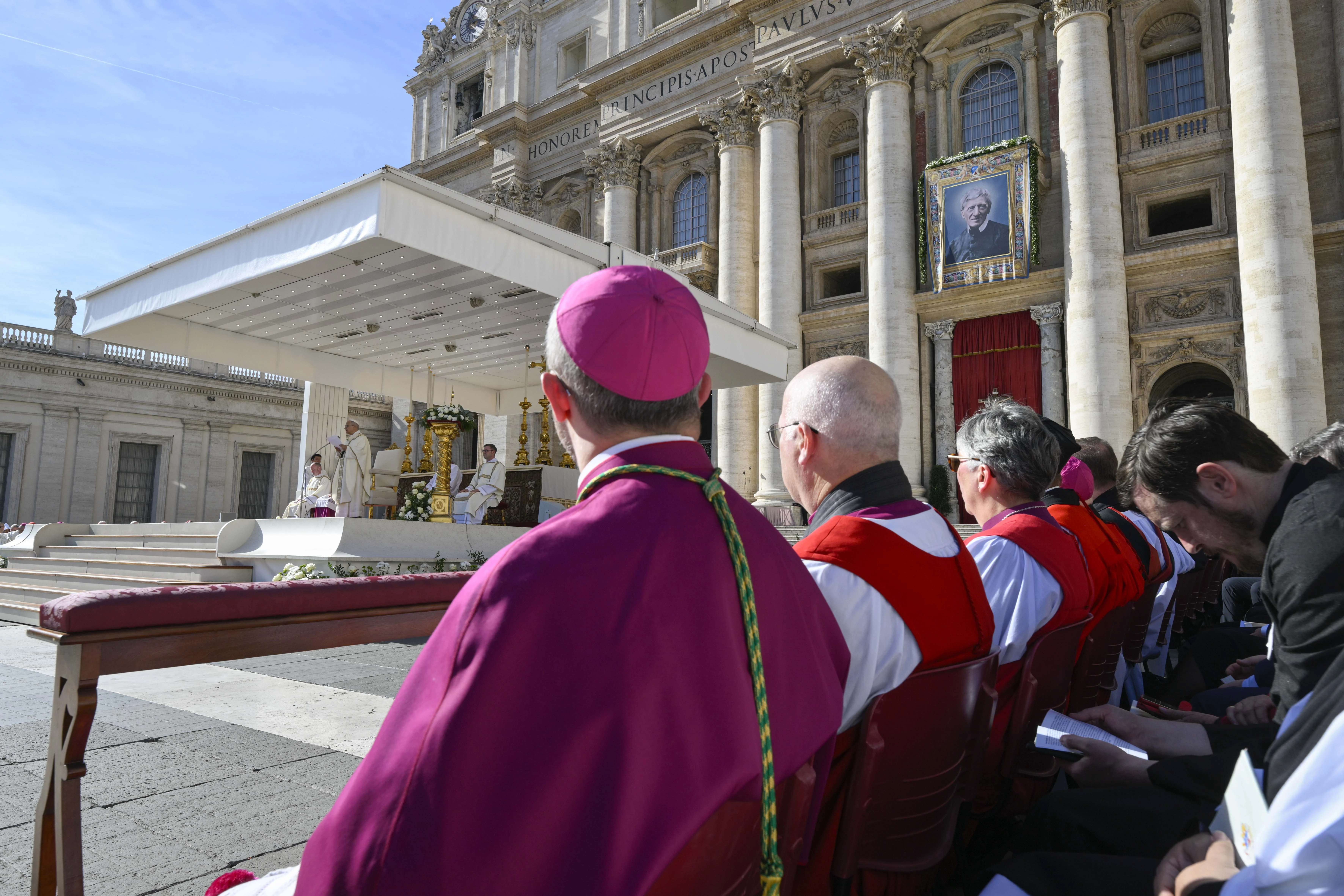
‘Lead, Kindly Light’: New documentary on St. John Henry Newman premieres in Rome

A new documentary about the life of St. John Henry Newman has premiered in Rome.

The film “Lead Kindly Light: The Story of Saint John Henry Newman” premiered at the Pontifical University of the Holy Cross in Rome on Oct. 9, marking the first celebration of his feast day since Pope Leo XIV declared him the 38th doctor of the Church in 2025.

The movie, produced by Lumine Studios in Brazil, features places significant to Newman’s life, including his childhood home in London, the University of Oxford, and Rome, where he studied for the Catholic priesthood after converting from Anglicanism.

The movie is available in English on the Catholic media website Formed.

‘A story of conversion and great personal sacrifice’

Father Hermann Geissler, FSO, director of the International Centre of Newman Friends in Rome, described the movie as a demonstration of faith and the significant personal sacrifices that would mark Newman’s life.

Father Hermann Geissler delivers remarks at the premiere of the film “Lead Kindly Light: The Story of Saint John Henry Newman,” at the Pontifical University of the Holy Cross in Rome on Oct. 9, 2026. | Credit: Photo courtesy of Sister Christiane Fritsch, FSO

“It is a documentary film where we visit all of the places where Newman lived, doing interviews,” Geissler told EWTN News, “and where we are telling the story of Newman and reading parts of Newmanʼs letters. It is a wonderful film that shows the great faith of Newman, the sacrifice that his conversion cost, and the coherence of his life and thought.”

A doctor and patron for Catholic education

Pope Francis canonized Newman along with four others in 2019, after Pope Benedict XVI beatified him in Birmingham, England, in 2010.

On All Saints Day 2025, St. John Henry Newman was proclaimed a doctor of the Church by Pope Leo XIV. | Credit: Vatican Media

In 2025, Pope Leo XIV declared Newman a doctor of the Church and a co-patron of Catholic education alongside St. Thomas Aquinas. In his homily, the pontiff cited Newman’s famous hymn “Lead, Kindly Light” to highlight the need for education to inspire hope.

“The task of education is precisely to offer this Kindly Light to those who might otherwise remain imprisoned by the particularly insidious shadows of pessimism and fear,” Leo said. “For this reason, I would like to say to you: Let us disarm the false reasons for resignation and powerlessness, and let us share the great reasons for hope in today’s world.”

In February, the Vatican established Newman’s feast day as Oct. 9 in the General Roman Calendar.

EWTN News
NC
EWTN News
Nicolás de Cárdenas2 days ago

Archbishop Hicks recounts pilgrimage to Santiago de Compostela

Upon completing the final 62 miles of the Camino de Santiago (Way of St. James) in northwestern Spain, New York Archbishop Ronald Hicks celebrated on Monday the pilgrimʼs Mass at the Cathedral of Santiago de Compostela.

During his homily, delivered in both Spanish and English, the prelate shared aspects of his experience as a pilgrim and encouraged those present to reflect on what — and with whom — they had journeyed along the Camino de Santiago, the route that leads from various points across Europe to the site where tradition places the tomb of the apostle St. James the Greater.

Regarding the first question — “What were you walking with?” — the archbishop revealed that, beyond his backpack, walking sticks, and physical gear, he completed the route with something more: “With my prayers, with my problems, with my thoughts.”

He also took the opportunity to share that he made the pilgrimage wearing a baseball cap “featuring a photo of our Holy Father, Pope Leo,” to show that “I am Catholic and am walking with him and the Church.”

Tweet

As for the company he kept during the pilgrimage, the prelate expressed his joy at having walked the Camino de Santiago not only with a group of his own companions but also alongside other pilgrims from all over the world. He particularly noted crossing paths with an 89-year-old woman and a family with a 7-month-old baby.

“To say that we were walking with everything is another way of saying that we were walking with the Church, together as brothers and sisters. Pope Francis said that the Catholic Church is ‘everyone, everyone, everyone.’ When we are gathered together, Jesus is with us,” he added.

He also noted that the apostle James was very much present throughout the journey. In this regard, he affirmed that James is “not merely part of our past history” but is present today, for “he walked with us at every step.”

Referring to the feast of Our Lady of the Pillar — patroness of the Hispanic world, celebrated on Oct. 12 — Hicks recalled how she appeared to the apostle James in Zaragoza before her assumption into heaven at a time when he was feeling “a bit discouraged” at seeing no fruit from his preaching.

“Our Lady of the Pillar wants only one thing from us. She wants us to know her Son and to find salvation through, in, and with her Son Jesus Christ — in his life, suffering, death, and resurrection,” he added.

Hicks emphasized that the journey of faith is not limited to the Camino de Santiago; rather, “our journey is with Jesus toward heaven, toward eternal life.” In this regard, he added that the pilgrim’s Mass does not mark the end of the Camino de Santiago: “Our journey continues on to eternal life.”

A journey encouraged by Cardinal Dolan

Hicks arrived in Spain on Sunday, Oct. 4, embarking on what he described — in posts shared on his social media — as a “spiritual journey” he had long wished to undertake.

“I have been planning this journey for three years. Ever since I arrived, I kept asking myself, ‘Will I have time to do it? Am I too busy? Should I put it off?’” he explained shortly before traveling to Spain.

While weighing this decision, he received a call from Cardinal Timothy Dolan — his predecessor as archbishop of New York — who told him: “I hear you want to do the Camino. Here is some advice: Do it, do it, do it. I always wanted to do the Camino but never could, and I regret it.”

Taking that recommendation to heart, he decided to make the pilgrimage to Santiago de Compostela, “following the voice of the Lord.” To that end, he announced that he would disconnect from social media for the duration of the trip.

And that is exactly what he did; upon arriving Sunday in Compostela — standing in the imposing Plaza del Obradoiro beside the cathedral — he picked up his phone again to share that he had felt the Lord’s companionship every step of the way: “Jesus was walking with me the whole time.”

Santiago de Compostela is one of five cities in the world that enjoy the privilege of celebrating jubilee years in perpetuity, alongside Jerusalem and Rome as well as Santo Toribio de Liébana and Caravaca de la Cruz, both in Spain.

This story was first published by EWTN News Español, the Spanish-language sister service of EWTN News. It has been translated and adapted by EWTN News English.
EWTN News
CM
EWTN News
Courtney Mares2 days ago

Carlo Acutis and the 4 popes

Oct. 12, 2026, marks the 20th anniversary of the death of St. Carlo Acutis, the Italian teenager who captivated a generation of young Catholics with his love of the Eucharist and passion for technology.

Acutis’ journey to sainthood has unfolded alongside the lives of the last four popes, each of whom has marked a different chapter in the teenager’s short life and legacy.

Carlo went on pilgrimage to see John Paul II, offered up his suffering from cancer for Benedict XVI, and was later beatified during the pontificate of Pope Francis. Finally, Pope Leo XIV canonized him, along with Pier Giorgio Frassati, on Sept. 7, 2025, making him the first millennial to ever be made a saint.

A childhood inspired by John Paul II

Born in 1991 during the pontificate of John Paul II, Carlo Acutis grew up at a time when the Polish pontiff was inspiring millions with his travels and teaching. It was Carlo’s Polish nanny, herself devoted to the pope, who helped cultivate Carlo’s early faith.

In October 2000, the Acutis family traveled to Rome to attend a landmark moment of the Great Jubilee: Pope John Paul II’s act of entrusting the new millennium to the Immaculate Heart of Mary. Standing in St. Peter’s Square, the then-9-year-old Carlo witnessed a crowd united in prayer, gathered beneath Bernini’s colonnade and in front of a statue of Our Lady of Fátima.

“The Church today, through the voice of the successor of Peter, in union with so many pastors assembled here from every corner of the world, seeks refuge in your motherly protection and trustingly begs your intercession as she faces the challenges which lie hidden in the future,” John Paul II prayed to Our Lady.

Offering his suffering for Benedict XVI

When white smoke emerged from the Sistine Chapel in April 2005, 13-year-old Carlo Acutis watched closely as Cardinal Joseph Ratzinger was elected Pope Benedict XVI. According to his mother, Carlo was “fascinated” by Benedict XVI.

The following year, Carlo was diagnosed with leukemia. Before he died of cancer in October 2006, he offered up his suffering for Benedict XVI, saying: “I offer all the suffering I will have to endure to the Lord for the pope and for the Church, in order not to go through purgatory and to go straight to heaven.”

Beatification under Pope Francis

Pope Francis declared Carlo Acutis’ heroic virtue in 2018 and recognized the two miracles attributed to Carlo’s intercession that made possible his beatification and canonization.

Francis frequently cited Carlo as a model for youth in the digital age. In Christus Vivit, his apostolic exhortation to young people, Francis wrote that Carlo’s life stood as a witness against the temptation of “self-absorption, isolation, and empty pleasure” in the digital world.

“His witness indicates to today’s young people that true happiness is found by putting God in first place and serving him in our brothers and sisters, especially the least,” Pope Francis said the day after Carlo’s beatification in 2020.

Pope Francis had been scheduled to preside over Carlo’s canonization on April 27, 2025, during a jubilee event expected to draw 80,000 teenagers to Rome. Instead, with Francis’ death on April 21, 2025, Carlo’s canonization awaited a new date until a new pope was elected.

Carlo Acutis and Pope Leo XIV: A witness to young people

Carlo Acutis’ canonization on Sept. 7, 2025, was one of the first major acts of Leo XIV following his election to the papacy in May 2025. In his homily at the canonization, the pontiff hailed Acutis and Frassati as models for youth seeking holiness.

“Dear friends, Sts. Pier Giorgio Frassati and Carlo Acutis are an invitation to all of us, especially young people, not to squander our lives, but to direct them upwards and make them masterpieces,” Leo said.

Their example, the pope explained, is the “type of witness we are called to follow, in order to enjoy life to the full and meet the Lord in the feast of heaven.”

Ishmael Adibuah contributed to this report.

This story was first published on April 27, 2025. It was updated on Oct. 12, 2026.

1
EWTN News
IA
EWTN News
Ishmael Adibuah2 days ago

Breaking the stigma: Rome conference highlights Catholic mental health ministry

A conference in Rome last week brought together clergy, pastoral workers, and mental health professionals to discuss how to overcome the stigma surrounding mental health in the Church.

The conference, “A Healing Presence: The Church’s Call to Mental Health Ministry,” held in Rome from Oct. 9–10, responded to Pope Leo XIV’s October prayer intention for mental health. Organized by the International Association of Catholic Mental Health Ministers, the conference also coincided with World Mental Health Day on Oct. 10.

The conference was also under the patronage of the Pontifical Academy for Life.

Among those present were Bishop Borys Gudziak of the Ukrainian Catholic Archeparchy of Philadelphia, Bishop John Dolan of Phoenix, and Deacon Ed Shoener, a founding member of the International Association of Catholic Mental Health Ministers.

‘The Church is a safe space, not a replacement for psychologists’

Among the themes discussed at the conference was the Church as a place where individuals can seek spiritual remedies for their mental health challenges.

Shoener clarified that the Church and those dedicated to mental health ministry complement medical professionals rather than replace them.

“Our goal is that someday, when someone faces a mental health challenge, the first place they think to turn is the Catholic Church as a safe space, Shoener told EWTN News. “We are not psychologists or psychiatrists providing medical care; rather, we provide the spiritual and social support that is so often missing due to stigma, discrimination, and fear.”

“We work closely with professionals because faith and science must go together,” he added.

Deacon Ed Shoener is a founding member of the Association of Catholic Mental Health Ministers. | Credit: Photo courtesy of Deacon Ed Shoener

Shoener also shared the personal tragedy of his daughter’s 2016 suicide, which prompted him to help establish the International Association of Catholic Mental Health Ministers in hopes that others with similar challenges would be heard.

“Katie had bipolar disorder, lived with it for 10 years, went to college, had friends, and did not fit the stereotypes people often have about mental illness. Sadly, she died by suicide in 2016,” Shoener said.

“Her obituary went viral because we clearly stated that she had a mental illness, was not defined by it, and was a beautiful child of God.”

The conference “A Healing Presence: The Church’s Call to Mental Health Ministry” was held in Rome on Oct. 9–10, 2026. | Credit: Photo courtesy of Andrea Sarubbi

Speaking about the stigmatization of mental health in the wider culture and the Church, he also cited several reasons for it.

“In the U.S., we often avoid talking about it because we fear it makes us look weak or inadequate, potentially jeopardizing our success or employment. What brought me into this ministry was that overwhelming response from people longing for the Church to comfort them rather than push them aside,” Shoener said.

An epidemic hidden by happiness in Sweden

One participant, Samuelle Falk, discussed opportunities for the Church to minister to those with mental health challenges, particularly in her native Sweden, which is noted for its high Happiness Index.

“To the outside world, Sweden often appears as a model of security and comfort; we even rank fourth in the 2025 World Happiness Report,” Falk said. “Yet, beneath this surface of prosperity, we are facing a profound crisis of youth mental health, driven by a silent epidemic of loneliness.”

Samuelle Falk, a psychiatrist in training and a doctoral student at the Karolinska Insitutue in Sweden, participated in the conference “A Healing Presence: The Church’s Call to Mental Health Ministry,” held in Rome from Oct. 9–10, 2026. | Credit: Photo courtesy of Samuelle Falk

“Yet, I believe God has been using this inner suffering to lead a generation back to himself. The Catholic Church in Sweden is experiencing a clear influx of new members. The Church does not stand on the sidelines of the youth mental health crisis; she stands right in the middle of it,” Falk added.

Falk, a psychiatrist in training, began working in mental health ministry with the Diocese of Stockholm. Reflecting on her experience, she spoke of the unique offering the Church can give young people seeking help.

“The Church offers what medicine cannot: a home for the soul, a framework of meaning, and a sense of true belonging,” Falk told EWTN News. “Where youth are increasingly isolated behind digital screens, the Church offers a physical and present community. We proclaim the one truth the secular world cannot offer: Your worth does not lie in your achievements but in being unconditionally loved by God. We remind them that they are never walking alone.”

2
EWTN News
DM
EWTN News
Diego López Marina2 days ago

Pope Leo XIV appoints new archpriest of St. Peter’s Basilica

Pope Leo XIV has appointed Archbishop Vittorio Francesco Viola, a 61-year-old Italian Franciscan, as the new archpriest of St. Peter’s Basilica.

The appointment also includes the positions of vicar general for Vatican City and president of the Fabric of St. Peter, the body responsible for the conservation of the basilica.

Viola thus leaves the Secretariat of the Dicastery for Divine Worship and the Discipline of the Sacraments, a position he had held since 2021. To succeed him, the pope appointed Bishop Aurelio García Macías, until now undersecretary of the same organization.

Born on Oct. 4, 1965, in Biella, in northern Italy, Viola belongs to the Order of Friars Minor. He was ordained a priest in 1993 and holds a doctorate in Sacred Liturgy from the Pontifical Liturgical Institute of Sant’Anselmo in Rome.

Before arriving at the Roman Curia, he carried out much of his ministry in Assisi. Between 1999 and 2005 he was custodian of the convent and the Basilica of St. Mary of the Angels at the Porziuncola. He also headed Caritas of Assisi between 2008 and 2014.

Pope Francis appointed him bishop of Tortona in 2014. Seven years later, in May 2021, he called him to Rome to join the Dicastery for Divine Worship and the Discipline of the Sacraments as secretary.

New secretary of the Dicastery for Divine Worship

The second appointment falls to García, a Spanish priest who has worked in the dicastery since 2015 and who until now served as undersecretary.

Born on March 28, 1965, in Pollos, in the Spanish province of Valladolid, he was ordained a priest in 1992 for that archdiocese. He studied philosophy at the University of Salamanca and obtained a doctorate in liturgy from the Pontifical Liturgical Institute of Sant’Anselmo in Rome.

Before joining the Vatican, he was diocesan delegate for liturgy and rector of the seminary of Valladolid.

In the Roman Curia he began as an official of the Dicastery for Divine Worship and the Discipline of the Sacraments. In 2016 he became head of office and, in May 2021, Pope Francis appointed him undersecretary. He received episcopal ordination on July 11 of that year.

As secretary, García will work alongside the prefect of the dicastery, Cardinal Arthur Roche, on matters related to the liturgy and the discipline of the sacraments. Among the responsibilities of the body are the promotion and regulation of the liturgy of the Latin Church and the application of the norms governing liturgical celebrations.

This story was first published by ACI Prensa, the Spanish-language sister service of EWTN News. It has been translated and adapted by EWTN News English.
EWTN News
IA
EWTN News
Ishmael Adibuah2 days ago

Pope Leo XIV to be admitted to Rome’s Gemelli Hospital on Tuesday

Pope Leo XIV will be admitted to the Gemelli University Hospital in Rome on late Tuesday morning.

The Holy See Press Office made the announcement on Monday, one day after the pontiff said, during his Sunday Angelus, that he would undergo surgery to remove a nodule from one of his lungs.

The nodule, he explained in his Angelus address, was found during a routine medical checkup and prompted his doctors to advise him to have it surgically removed.

“The doctors believe it is advisable to operate. I have decided to undergo surgery to remove it, following their advice,” Leo said in his address.

According to Matteo Bruni, director of the Holy See Press Office, who spoke to ACI Prensa, the Spanish-language sister service of EWTN News, the pontiff is expected to remain hospitalized for about one week at Rome’s Gemelli Hospital, where he will continue his recovery after the operation.

Due to the pope’s upcoming hospitalization and recovery, he will no longer celebrate the closing Mass of the meeting “10 Years After Amoris Laetitia: Proclaiming the Gospel with Families Today.” Cardinal Luis Antonio Tagle, the dean of the College of Cardinals, will replace him as the celebrant for the closing Mass.

Additionally, according to one of the organizers, Father Giacomo Costa, SJ, the conference’s concluding summary will no longer be published on Wednesday night. Costa told journalists Oct. 12 that the pope would like to have time following his hospitalization to read the document and possibly add his own response before making it public.

A press briefing on the night of Oct. 14 marking the conclusion of the conference will still take place at the Holy See Press Office as scheduled.

EWTN News
CM
EWTN News
Courtney Mares3 days ago

St. Carlo Acutis’ doctors recall his last days in the hospital

Fifteen-year-old Carlo Acutis died within a week of being diagnosed with acute promyelocytic leukemia, offering his suffering for the pope and for the Church. Following his beatification on Oct. 10, 2020, his doctors and hospital chaplain recalled their memories of his final days.

Father Sandro Villa was the hospital chaplain of St. Gerald Hospital outside of Milan, Italy, who gave Carlo the anointing of the sick and holy Communion on Oct. 10, 2006, the day before Carlo went into a coma due to a brain hemorrhage caused by the M3 subtype of acute myeloid leukemia.

Villa shared at an event in Assisi, Italy, on Oct. 13, 2020, that he was touched by Carlo’s “composure and devotion” in receiving the sacraments in the hospital room.

“In a small room, at the end of the corridor, I found myself in front of a boy. His pale but serene face surprised me — unthinkable in a seriously ill person, especially an adolescent,” he said.

“I was also amazed by the composure and devotion with which, albeit with difficulty, he received the two sacraments. He seemed to have been waiting for them and felt the need for them.”

Before his cancer diagnosis, Carlo had a great devotion to the Eucharist. From a young age, he expressed a special love for God, even though his Catholic parents had stopped attending Mass.

As he grew older, he started going to daily Mass, often dragging his family members along with him. He made Holy Hours before or after Mass and went to confession weekly.

With his aptitude for computer programming, Carlo built websites to inform others about Eucharistic miracles and Marian apparitions around the world. On his site, he told people: “The more often we receive the Eucharist, the more we will become like Jesus, so that on this earth we will have a foretaste of heaven.”

For Villa, this administration of the sacraments would be his only encounter with Carlo, but he said the look of serenity on Carlo’s face was something that stayed with him.

“After a few years … I learned that he was declared ‘venerable.’ I was amazed that the Lord had allowed me to meet him, if only for a few moments,” he said.

Villa continued: “I decided to learn about his life. I discovered that he was in love with the real presence of Jesus in the Eucharist, and I therefore began to better understand some of his words.”

Dr. Andrea Biondi and Dr. Mòmcilo Jankovic, who treated Carlo in the pediatric clinic of St. Gerald Hospital, recorded their memories together in a paper that was read aloud at the event.

They said: “Carlo was like a meteor with a quick passage through our ward; leukemia took him away before we could get to know him even a little. However, his sweet eyes remain engrained [in our memories]. His gaze was full of attention … of courage, of love, of strong empathy.”

“His faith in God, which he had wanted and still wanted to pass on to others, to his neighbor, shone through him … His gentle eyes … taught us a lot: life, whether short or long must be lived intensely for oneself, but also and above all for others.”

Carlo’s heart stopped beating on Oct. 12 — a date that is now celebrated as a local feast in the Diocese of Assisi and Archdiocese of Milan. His parents had desired to donate his organs, but they were too compromised by leukemia to be donated.

Today St. Carlo’s heart is a relic and is contained in a reliquary in Assisi that is inscribed with his words: “The Eucharist is my highway to heaven.” He was canonized on Sept. 7, 2025, by Pope Leo XIV in St. Peter’s Square at the Vatican.

This story was first published on Oct. 16, 2020, and has been updated.

EWTN News
DM
EWTN News
Diego López Marina3 days ago

Bishops around the world ask for prayers for Pope Leo XIV’s health

Bishops from around the world asked for prayers for Pope Leo XIV after he announced on Sunday, Oct. 11, that he will undergo surgery to remove a nodule on one of his lungs in the coming days.

In the United States, Archbishop Paul Coakley, president of the U.S. bishops’ conference, said the prelates would join “the faithful and all people of good will in praying for his good health.” He also prayed for those who will perform the operation: “May the hand of Pope Leo’s surgeons be guided by the divine physician, Jesus Christ.”

Archbishop Ronald Hicks of New York joined the prayers as he finished a week-long pilgrimage on the Camino de Santiago in Spain. “I join with the bishops, priests, faithful, and all people of good will of the Archdiocese of New York in praying for our Holy Father, Pope Leo XIV, as he prepares for his surgery later this week,” he wrote. He also asked Jesus, “the divine physician,” to care for the pope and guide “the hands of his surgeons, nurses, and other health professionals.”

Prayers from Uruguay, Argentina, and Peru

Cardinal Daniel Sturla, archbishop of Montevideo, also wrote about the news. Uruguay is one of the countries expecting Pope Leo XIV on his upcoming visit to Latin America. “Let us pray for his speedy recovery and continue with greater spirit the preparation for his visit to our land,” he wrote.

In Peru, which also expects the pope later this year, the Archdiocese of Lima entrusted his health to the Lord of Miracles, a devotion that draws millions of Peruvians each year. “We ask the Lord of Miracles for his speedy recovery,” the archdiocese said on social media.

The Peruvian bishops’ conference issued a message titled “United in prayer for the health of the Holy Father Leo XIV.” It noted the :serenity and humility” with which the pope shared the news and asked that his health be entrusted to the Lord of Miracles.

“Lifting to God, Lord of life and source of all health, our supplications that he strengthen him and grant him the health that the fulfillment of his mission requires,” the Peruvian bishops said. They also urged communities, families, and the faithful to place the Holy Father under the maternal protection of the Blessed Virgin Mary, so that in the fullness of his strength he may continue his mission in service of the Church and all humanity, as a messenger of peace and hope and a witness of unity, fraternity, and encounter among all peoples.

The Argentinian bishops said in a statement: “We ask the Lord to grant him strength and peace at this time, that the operation may go well, and that he may make a swift and full recovery.”

Prayers from Spain

The Spanish bishops’ conference also invited prayer for the pope. Its president, Archbishop Luis Argüello, asked “the whole Spanish Church — dioceses, institutes of consecrated life, communities and lay associations, all members of the People of God, and our fellow citizens — to pray for the health of our beloved Pope Leo XIV.”

The conference’s secretary general, Bishop Francisco César García Magán, recalled the welcome Leo XIV received on his recent visit to Spain and said the faithful can now show him their closeness in another way: “Now we show it by uniting in prayer.”

Instagram post

The conference’s secretary general, Bishop Francisco César García Magán, recalled the welcome Leo XIV received on his recent visit to Spain and said the faithful can now show him their closeness in another way: “Now we show it by uniting in prayer.”

Prayers from Poland, Great Britain, Malta

Archbishop Tadeusz Wojda, the president of the Polish Bishops’ Conference, issued an appeal to the Polish people, asking them to “pray for the Holy Father, Pope Leo XIV, asking God for a successful operation and a speedy recovery.”

Bishop John Keenan, on behalf of the Scottish bishops’ conference, said: “We invite Catholics across Scotland, and all people of goodwill, to join us in praying for Pope Leo, for the medical team caring for him, and for a successful operation and a full and speedy recovery.”

Archbishop Richard Moth of Westminster and the president of the Catholic Bishops’ Conference of England and Wales, assured Leo of the prayers of the faithful.

“We pray that following the procedure and a period of recovery, he will soon be restored to health,” Moth wrote.

Archbishop Charles Scicluna, Archbishop of Malta and Adjunct Secretary of the Dicastery for the Doctrine of the Faith, wrote on X: “The Church in Malta is united in prayer for the Holy Father, wishing him well for the surgery he will be undergoing.”

Leo XIV asks for prayer

The pope announced the operation after Sunday’s Angelus. Doctors found a nodule on one of his lungs and recommended removing it. In sharing the news, Leo asked the faithful to accompany him spiritually in the coming days: “I entrust myself to your prayer.”

This story was first published by ACI Prensa, the Spanish-language sister service of EWTN News. It has been translated and adapted by EWTN News English.
EWTN News
VC
EWTN News
Victoria Cardiel3 days ago

What we know about Pope Leo XIV’s health

The news that Pope Leo XIV will have surgery next week left many asking what a lung nodule is.

He confirmed at the Angelus in St. Peter’s Square on Sunday that the lesion was caught early and is well localized. “The doctors consider it advisable to intervene. I have decided to have the operation to remove it, following their advice,” he said.

Many are asking how nodules are found, how they are evaluated, and what leads doctors to recommend removing them.

The condition, commonly called a “spot on the lung,” shows up on imaging as a white opacity against normal lung tissue and is generally up to 30 millimeters in diameter.

Dr. Bruno Vincenzi, head of the oncology service at the Campus Bio-Medico University Hospital in Rome, told ACI Prensa, the sister service of EWTN News, that a nodule can be found because a patient has symptoms that lead to tests.

“A persistent cough that has just appeared, expectoration — that is, producing phlegm with traces of blood — or chest pain can be reasons the patient undergoes studies,” he said.

He added that these findings are now increasingly accidental. Patients may be scanned before an operation or a hospital stay, or as part of a screening program, especially if they are older or have been smokers.

Asked why a doctor would recommend surgery, as in the pope’s case, Vincenzi said certain features on the images can raise concern. Spiculated margins — irregular or jagged — can suggest a more worrying lesion and make removal advisable. Well-defined margins, perhaps with calcifications inside, more often suggest a benign nodule.

Dr. Elmer Huerta, a Peruvian oncologist based in the United States and the first Latin American president of the American Cancer Society, said the operation the pope is expected to have is usually done with minimally invasive techniques. “The old thoracotomies, which meant opening the chest, are no longer done. What is done now is minimally invasive robotic surgery, in which a half-centimeter opening is made between the ribs, the robot is introduced, and the operation is done with that,” he said.

Huerta said it is not yet possible to say how long the pope will need to recover fully, because the specific features of the nodule, and therefore the exact extent of the surgery, are not public. Depending on what is found, doctors may remove a wedge of lung that includes the nodule, a segment, or a whole lobe. That will determine the recovery.

On how soon the pope can resume his usual commitments, Huerta said it depends on the extent of the operation. A wedge removal is simpler, and he could fly in two or three weeks and make his planned trip to Latin America. Removing a lobe would be more complicated. The key is the nature of the nodule, which has not been made public.

Huerta also stressed that most lung nodules are not cancerous. A 2022 study found that 95 percent are benign and only 5 percent are cancer. Cancerous nodules have certain features on X-rays, CT scans, and PET exams.

Vincenzi said a histological analysis is needed to determine what a nodule is. When a nodule is removed because its features suggest a suspicious lesion, the pathologist’s final examination of the cells can give a clear indication of whether it is benign or malignant.

Both experts declined to speculate on the pope’s case without precise clinical details. Vincenzi said it is better to stop at the diagnostic stage, because saying more risks creating needless reassurance or needless worry. Huerta said the same thing he tells his patients: go step by step.

The hospitalization planned for next week will force the pope to cancel all commitments on those days, Vatican press office director Matteo Bruni told ACI Prensa. Among them is the closing Mass of an international meeting on the family, held for the tenth anniversary of Pope Francis’s apostolic exhortation Amoris Laetitia, which Leo XIV was to preside over on Wednesday with the presidents of episcopal conferences gathered at the Vatican.

In principle, the surgery would not affect the trip to South America planned for November 6–17, judging by the pope’s own words at the Angelus. Greeting members of the Brotherhood of the Lord of Miracles in St. Peter’s Square, he said, “Thank you for your prayer for the pastoral visit I will make to Peru.”

This story was first published by ACI Prensa, the Spanish-language sister service of EWTN News. It has been translated and adapted by EWTN News English.
EWTN News
ES
EWTN News
EWTN News Staff4 days ago

Many Australian Catholics who skip Mass still keep the faith, bishops’ study finds

Many Catholics in Australia who do not regularly go to Sunday Mass still pray, believe Jesus is the Son of God, and say their faith matters, according to a study released Oct. 7 by the countryʼs bishops.

The report, "Absent from the Table: Catholics in Australia Who Do Not Regularly Attend Sunday Mass," was commissioned by the Australian Catholic Bishops’ Conference and carried out by its National Centre for Pastoral Research. Researchers surveyed 1,973 self-selected adult Catholics online in 2024 and interviewed 67 of them from March to July 2025.

“Despite their irregular attendance, most participants remained deeply connected to their faith,” the executive summary states.

Around two-thirds of respondents said faith was very important to them, 77% said Jesus is the Son of God, and 64% said they pray regularly. Just over half (55%) affirmed the real presence of Christ in the Eucharist, while 24% saw the elements as symbolic and 21% were unsure.

In all, 74% of respondents attended Mass less than weekly: 19% monthly, 36% occasionally, and 19% not at all. The full report notes that the findings, based on a self-selected sample, “are not fully generalisable to all Catholics in Australia.”

Why they stay away

The researchers identified 14 reasons for missing Mass. The main ones were Mass not being a priority, a crisis of faith, family or household issues, liturgical issues, challenges with the parish priest or other clergy, and the misuse of power and authority in the Church. Respondents also cited abuse, particularly clergy sexual abuse, as a significant factor affecting trust.

According to the bishops' most recent national count, in 2021, about 8.2% of Australiaʼs Catholics, or 417,000 people, went to church on a typical weekend.

Bishop Greg Bennet of Sale, the conferenceʼs vice president and bishop-delegate for pastoral research, said the research is being entrusted to bishops to act on locally.

“The hope is that each diocese will listen carefully to what people have shared and respond with pastoral initiatives shaped by their own communities and contexts,” he said in a statement. “We know there are many people who are open to re-engagement with the Church and we need to work harder to find ways of making those re-connections.”

Bishop Michael Kennedy of Maitland-Newcastle, in a reflection published by his diocese, urged a different question: “Rather than simply asking why people are no longer coming to Mass, we should be asking what they are looking for, what their experiences of the Church have been and what we can do to help them feel they belong.”

EWTN News
VC
EWTN News
Victoria Cardiel4 days ago

Pope Leo XIV announces that he will undergo surgery to remove a lung nodule.

Pope Leo XIV announced Sunday that he will undergo surgery in the coming days to remove a nodule from one of his lungs that was recently detected during medical examinations.

Speaking to the faithful gathered in St. Peter’s Square after the Angelus prayer on Oct. 11, the pontiff personally disclosed his medical condition, explaining that the nodule had been discovered at a very early stage.

“Dear brothers and sisters, recently, during some medical examinations, doctors found a well-defined nodule in one of my lungs. It was detected at a very early stage and is well localized,” he said.

Leo XIV said doctors had recommended surgery to remove the nodule and that he had decided to follow their advice.

“The doctors believe it is advisable to operate. I have decided to undergo surgery to remove it, following their advice,” he said.

The pope also confirmed that the operation has already been scheduled and will take place in the coming days. He did not provide further details about the exact date or the surgical procedure.

“The operation has already been scheduled for the coming days. I thank you for your spiritual closeness and entrust myself to your prayers,” he said.

According to Matteo Bruni, director of the Holy See Press Office, who spoke to ACI Prensa, the pope’s surgery is scheduled for early this week, although an exact date has not yet been announced.

Bruni also said the pontiff is expected to remain hospitalized for approximately one week at Rome’s Gemelli Hospital, where he will continue his recovery following the operation.

The hospitalization will require the pope to cancel all engagements scheduled for the coming days.

Among them is the closing Mass of an international meeting on the family marking the 10th anniversary of the publication of Pope Francis’ apostolic exhortation Amoris Laetitia. The pope had been scheduled to preside at the Mass on Wednesday, with the presidents of bishops’ conferences gathered at the Vatican.

However, the pope’s upcoming surgery is not expected, at least for now, to prevent his planned trip to South America from Nov. 6–17, judging by the pontiff’s own remarks during the Angelus.

Leo XIV explicitly referred to his upcoming visit to Peru while greeting members of the Brotherhood of the Lord of Miracles gathered in St. Peter’s Square.

“Thank you for your prayers for the pastoral visit I will make to Peru,” he said.

This story was first published by ACI Prensa, the Spanish-language sister service of EWTN News. It has been translated and adapted by EWTN News English.
EWTN News
RH
EWTN News
Romy Haber4 days ago

From Turkey to Ethiopia: 7 churches and monasteries for adventurous pilgrims

Churches and monasteries around the world vary in their architecture and size, as well as in how easy they are to reach. Some stand in the heart of cities, while others are reached along daunting mountain roads or rocky trails. For pilgrims who enjoy hiking and exploring, these sites combine Christian history with outdoor adventure. The walk or climb to reach them can be as memorable as the visit itself.

Here are seven destinations across the Middle East, Africa, and Europe where the road itself becomes part of the pilgrimage.

Sumela Monastery, Turkey

Sumela Monastery rises from a sheer cliff above the forested Altindere Valley near Trabzon, roughly 300 meters (984 feet) above the valley floor. Dedicated to the Virgin Mary, the former Greek Orthodox monastery was an important pilgrimage destination for the region’s Greek Christian communities.

The buildings include a rock church, chapels, monks’ quarters, and a sacred spring. Frescoes depict biblical scenes and episodes from the lives of Christ and the Virgin Mary.

The setting reveals how the community adapted its buildings to the mountain, with rooms and balconies extending along the cliff face.

St. Catherine’s Monastery, Egypt

At the foot of Mount Sinai in Egypt’s southern Sinai Peninsula, St. Catherine’s Monastery preserves a monastic tradition that has continued since the sixth century. Built under Emperor Justinian, the Orthodox monastery stands at the site traditionally identified with the burning bush from which God spoke to Moses.

Its principal church, the Basilica of the Transfiguration, retains a sixth-century mosaic showing Christ with Moses and Elijah and the apostles Peter, James, and John. The complex also preserves early Christian icons and a library containing thousands of manuscripts in languages including Greek, Arabic, and Syriac, evidence of the many Christian cultures connected with Sinai.

St. Catherine’s Monastery in Sinai, Egypt. | Credit: Mildax/Shutterstock

The Monasteries of Meteora, Greece

Meteora’s monasteries crown towering sandstone formations that made the area a place of retreat for generations of Orthodox monks. Hermits began settling here by the 11th century, and monasteries were later built on the summits. By the end of the 15th century, there were 24; six remain in operation today.

Access once depended on rope ladders and nets used to lift people and supplies. At Holy Trinity Monastery, visitors now descend toward the base of the rock and then climb a staircase of about 140 steps carved in 1925. The ascent opens onto views of Kalambaka, the Peneios River, and the surrounding mountains.

The Meteora monasteries in Greece. | Credit: zedspider/Shutterstock

Sevanavank Monastery, Armenia

Above Lake Sevan, Sevanavank stands on a peninsula that was once an island, giving its early monastic community a more secluded setting. Its two principal surviving churches were built in 874 through the patronage of Princess Mariam, daughter of Ashot Bagratuni, under the spiritual guidance of the monk Mashtots, who later became Catholicos of All Armenians, the chief bishop and supreme spiritual leader of the Armenian Apostolic Church.

The churches were dedicated to the Holy Apostles and the Mother of God. Their cruciform plans and central domes reflect medieval Armenian church architecture.

The road is gentler than a cliff climb: Visitors ascend the hillside steps to reach the churches and views across the lake. The site also has a link to Armenian Catholic history: Mekhitar of Sebaste, who later founded the Mekhitarist congregation, studied at the monastery in the late 17th century.

Sevanavank Monastery on Lake Sevan at sunset, Armenia. | Credit: Labunskiy Konstantin/Shutterstock

Abuna Yemata Guh Church, Ethiopia

Carved into a sandstone pinnacle in the Gheralta Mountains of Ethiopia’s Tigray region, Abuna Yemata Guh requires one of the most demanding approaches among these destinations: Reaching its entrance involves scaling a steep rock face.

The church is named for Abuna Yemata, one of the Nine Saints traditionally associated with the spread of monasticism in northern Ethiopia around the beginning of the sixth century. Its interior preserves wall paintings that art historians generally date to the second half of the 15th century, although local tradition assigns them an earlier date.

A worshipper at Abuna Yemata Guh in Ethiopia. | Credit: Therina Groenewald/Shutterstock

The Monasteries of Wadi Qadisha, Lebanon

In northern Lebanon, Wadi Qadisha, or the Holy Valley, contains monasteries, cave churches, and hermitages set among steep cliffs and cultivated terraces. Inscribed on UNESCO’s World Heritage List in 1998 together with the nearby Cedars of God, the valley bears witness to centuries of Christian monastic life and has a particular place in the Maronite Church’s history.

Our Lady of Qannoubine served as the residence of Maronite patriarchs from 1440 to 1823. Its history reflects the valley’s role as a refuge during periods of persecution. Beneath the church, a narrow crypt provided a hiding place for patriarchs; surviving wall paintings include a depiction of the Coronation of the Virgin.

Monastery of Our Lady of Qannoubine in Kadisha Valley in North Governorate region of Lebanon. | Credit: Fotokon/Shutterstock

Mor Mattai Monastery, Iraq

On Mount Alfaf, also known as Mount Maqlub, northeast of Mosul, Mor Mattai Monastery overlooks the Nineveh Plain. The Syriac Orthodox monastery takes its name from St. Matthew the Hermit. Tradition dates its foundation to A.D. 363 and links it to the monk’s flight from persecution under the Roman emperor Julian.

The monastery became an important center of Syriac Christian religious life and learning. Its complex includes churches, chapels, and memorials, while caves in the surrounding mountain recall the hermits who once lived there.

The mountain setting has offered refuge. In 2014, as Islamic State forces advanced in the region, Christians from nearby villages temporarily sheltered at the monastery.

Mor Mattai is located atop Mount Alfaf in northern Iraq near Mosul. It is one of the oldest Christian monasteries, was founded in 363, and is currently maintained by the Syriac Orthodox Church. | Credit: Johlige/Shutterstock

This story was first published by ACI MENA, the Arabic-language sister service of EWTN News, and has been translated for and adapted by EWTN News English.

EWTN News
FF
EWTN News
Francesca Pollio Fenton5 days ago

Canadian youth retreat seeks to strengthen faith of young Catholics entering adulthood

A youth retreat taking place in Ontario, Canada, aims to help young Catholics graduating from high school and entering college, as well as students graduating from college and entering the workforce, stay committed to their faith during these critical transitions in their lives.

Dead Man Walking is being hosted by Jesus Youth Ontario and will take place Oct. 16–18 at the Mother of God Retreat Center in Orangeville, Ontario. The retreat will include talks from Catholic author and speaker Jason Evert, international missionary George Devassy, and local young adults sharing their personal testimonies.

Jim Isaac, a member of the retreat’s planning team, told EWTN News that the inspiration for the retreat came from conversations with parents where it was evident that there was “an overwhelming need.”

“They felt that while children were in high school there were so many guardrails about who they can interact with, who can reach out to them, and all these things to ensure that they have a proper and safe childhood,” he explained. “But, right when they leave high school, all those guardrails are sort of lifted and almost at the same time they also leave home.”

He added that young people also feel “thrown into adulthood” and that this transition “was something that they were struggling with.”

With this in mind, the Dead Man Walking youth retreat was created to give them a space where they can encounter Christ, help them understand the big questions they’re grappling with, and instill in them a strong foundation to maintain their faith during this transition in their lives.

The theme of the retreat comes from John 11, specifically the raising of Lazarus. Isaac explained that many times “we feel that we are going through the motions [and] we are almost like dead people.”

Each day focuses on a specific part of the raising of Lazarus. The theme for Day 1 is “Dead for Four Days,” focusing on the idea that there is always hope even when we’re at our lowest point. Day 2 is called “come out,” encouraging the participants to take part in the Church and in their faith and ends with the opportunity for attendees to go to confession and attend Mass. The last day is called “untie and unbind,” which will call the young people gathered to go out on mission and spread the Gospel message.

Isaac emphasized that their “primary objective is that they [the attendees] have an encounter with Christ at this crucial juncture of their lives.”

“We want these youngsters, who probably are, within their own realities, bombarded with a lot of contemporary and secular media, to understand the richness of the Church,” he added.

“We are hoping that something might resonate with them and that might help them build their interior life and thereby reach out to the people within the community. At the end of the day, it is about reaching out to people and giving them a call for mission. Thatʼs what we are hoping for by the end of it.”

EWTN News
MM
EWTN News
Matt McDonald5 days ago

NFL legend Mike Ditka was a Catholic coach

Former professional football coach Mike Ditka, a practicing Catholic who occasionally served as lector at the 7 a.m. team Mass on game-day Sundays during his decade leading the Chicago Bears, died Friday. He was 86.

“Iron Mike,” as Ditka was known, had a famously explosive temper, which often boiled over on the sidelines and in postgame press conferences. Ditka, who led the Bears to a Super Bowl XX victory in 1986, once broke his right hand after punching a hard object over frustration with the play of a rookie offensive lineman — then, before the next game, told his team to “win this one for Lefty.”

Less well known was Ditka’s commitment to his Catholic faith, for which he credited his convert mother and the nuns of his parochial school in Aliquippa, Pennsylvania, where he was raised.

“Growing up, the most important thing was the sacraments with my family,” Ditka told an interviewer with the Catholic website “One Peter Five” in August 2018. “We loved everything about the faith. Going to Catholic school and learning the faith, I wouldn’t trade that for anything.”

“I don’t care how many times I got hit by a nun,” Ditka said, “it was good for me.”

Football success

Born Michael Dyczko in 1939, Ditka was the son of a non-churchgoing Ukrainian and Polish steelworker father and an Irish and German mother who converted to Catholicism.

He played tight end for the University of Pittsburgh and then in the NFL for the Chicago Bears, Philadelphia Eagles, and Dallas Cowboys. In 1988 Ditka was honored as the first tight end ever to be inducted into the Pro Football Hall of Fame.

After retiring from playing, Ditka served as an assistant coach before getting his unlikely chance as the head coach of the Bears in 1982.

His 1985 Bears went 15-1 during the regular season and stomped their way through the playoffs to a Super Bowl victory. So confident were the players of that dominant team that they recorded a rap song called “The Super Bowl Shuffle” during the regular season. (Ditka later said he didn’t know about it, but he didn’t criticize the players for doing it.)

Ditka’s success, toughness, temper, and sense of humor made him a cultural phenomenon, inspiring a recurring skit (and guest appearances) on “Saturday Night Live” and launching a career as a motivational speaker.

When the team’s fortunes plummeted, he was fired in 1992. He later coached the New Orleans Saints but was fired after three years.

Off-field philanthropy

Ditka made millions as a pitchman for dozens of products after he left football, and he used some of that wealth to help others.

“Ditka was very supportive of Misericordia and other charities that supported children with special needs and disabilities,” Mary FioRito, an attorney, lifelong Chicagoan, and Cardinal Francis George Fellow at the Ethics and Public Policy Center, told the National Catholic Register, the sister partner of EWTN News.

And not just with checks.

“He spoke at fundraisers, and surprised observers could catch him privately visiting with residents he knew by name,” reported the suburban Chicago Daily Herald.

Ditka was also a member of the Knights of Columbus and participated in the organization’s charitable activities.

‘Constant turmoil’

In his 1986 autobiography “Ditka,” published at the peak of his success, Ditka admitted to having had “no spiritual life at all” during the 1970s, before two other coaches got him involved in a Bible study that reintroduced him to God.

“I always had faith, but I never had understanding,” Ditka said. “I always knew what was going on in life. I was raised right. I did all the things you were supposed to do. But I never understood why I was supposed to do them, because I never had a total understanding of what was going on.”

He also acknowledged what he called “constant turmoil inside,” and he compared himself unfavorably to longtime Dallas Cowboys coach Tom Landry (1924–2000), whom he admired for always keeping his cool on the sidelines and for his involvement in the Fellowship of Christian Athletes.

“My priorities can get mixed up. I don’t think he ever gets his priorities mixed up,” Ditka said in the book.

Ditka said he discovered that following his faith was hard work.

“Sometimes you take for granted that your faith will always be there and everything will be fine. But without making the effort, that’s just not a fact. You have to make a real effort to live your faith daily,” Ditka said in the book.

“Nobody is going to do it every day. Nobody is going to do it perfectly,” he continued. “But unless you make the effort you’ve got no chance at all.”

Ditka married in 1961, got divorced in 1973, and then remarried in 1977. Both wives survive him, as do his four children, according to an obituary in the Daily Herald.

“I’m far from perfect now, and I’m never going to be perfect,” Ditka said in his autobiography. “When I die, I’m going to be still trying to get better than I am.”

This story was first published by the National Catholic Register, the sister partner of EWTN News, and has been adapted by EWTN News.

EWTN News
AA
EWTN News
Amira Abuzeid5 days ago

Transnational online scam operations on the rise, U.S. State Department says

The State Department released its 2026 Trafficking in Persons (TIP) Report on Oct. 8, showing criminal organizations and repressive governments are using trafficking for profit in new ways.

The report, released more than three months after the June 30 deadline, said the spread of industrial-scale online scam operations “pose a direct threat to US national security.”

Transnational crime organizations, mostly run by Chinese nationals and long based in Southeast Asia, have moved into Africa, the Middle East, Europe, and Latin America, destabilizing local communities and cheating people out of billions of dollars each year, according to the report.

Fraudulent online romance, gambling, and cryptocurrency schemes have defrauded people in more than 125 countries, with Americans, the primary targets, losing at least $18.2 billion in 2025 to compounds operating out of Southeast Asia, according to the report.

The organizations recruited people from at least 80 countries over the past few years through fraudulent schemes, often pushing them into forced labor and holding them in guarded compounds and manipulating them through violence, sexual exploitation, intimidation, and other acts. They are often coerced into committing crimes, the report found.

The report, an annual assessment required by the Trafficking Victims Protection Act (TVPA) of 2000, covers April 1, 2025, through March 31.

The State Department said it relied on information from embassy reporting, government officials, nongovernmental and international organizations, published reports, news articles, and other sources.

The State Department said that governments that fail to punish traffickers and protect victims should be held accountable.

12 governments cited

Twelve governments are cited in the report for a “policy or pattern” of state-sponsored human trafficking: Afghanistan, Belarus, Burma, Cambodia, China, Cuba, Eritrea, Iran, North Korea, Russia, South Sudan, and Sudan. This designation covers “trafficking in government-funded programs, forced labor in government-affiliated medical services or other sectors, sexual slavery in government camps, or the employment or recruitment of child soldiers.”

Under the Child Soldiers Prevention Act, the department listed 14 countries whose forces or state-backed militias recruited or used children in any capacity during hostilities, including as sex slaves: Afghanistan, Burma, the Central African Republic, the Democratic Republic of Congo, Ethiopia, Iran, Nigeria, Russia, Rwanda, Somalia, South Sudan, Sudan, Venezuela, and Yemen.

Among country rankings reported so far, Israel returned to Tier 1, the highest category, for the first time since 2021, after five years on Tier 2. The Republic of Congo was downgraded to Tier 3, the lowest, for failing to meet minimum standards and not making significant efforts. A Tier 3 listing can restrict certain U.S. assistance, including security assistance, the report said.

A Tier 1 ranking does not mean that a country has no human trafficking. Instead, according to the report, “a Tier 1 ranking indicates that a government has made efforts to address the problem … and met the TVPA’s minimum standards.”

Rep. Chris Smith, R-New Jersey, author of the Trafficking Victims Protection Act, said in a statement on Oct. 8 that the report’s findings are “a stark reminder that modern-day slavery remains a global scourge — and that governments must be held accountable when they fail to protect vulnerable people.”

“Human trafficking is an assault on human dignity and freedom,” the congressman wrote. “The United States must continue to use every tool at its disposal — including the TIP Report — to expose human trafficking whenever it rears its ugly head, protect survivors, and press foreign governments to end this blight upon humanity.”

“China remains on Tier 3 — the lowest ranking,” Smith continued, “reflecting its continued failure to meet the minimum standards for eliminating trafficking. The Chinese Communist Party’s (CCP) use and enabling of forced labor — including the systematic exploitation of Uyghurs and other persecuted minorities — is deeply troubling and deserves the greatest level of scrutiny.”

“Moreover, the horrific, ongoing consequences of China’s one-child per couple policy can still be seen and felt today, as the Report notes that a gross disparity — tens of millions more boys than girls — has driven the demand for commercial sex trafficking and coercive marriages in the country,” Smith wrote.

“Governments on Tier 3 — including China, North Korea, Iran, Russia, Burma, Belarus, Cambodia, Cuba, Laos, Nicaragua, Sudan, South Sudan, and Venezuela — can and must do more. Tier 3 must never become a permanent designation; it should serve as a dire warning and a call to action,” Smith wrote.

EWTN News
DR
EWTN News
David Ramos5 days ago

Guadalupe expert appointed to lead Mexico’s preparations for 500th anniversary of apparitions

Father Eduardo Chávez has been named representative of the Primate Archdiocese of Mexico for the celebrations of the fifth centenary of the apparitions of Our Lady of Guadalupe, which will take place in 2031.

In a letter signed on Sept. 22, Cardinal Carlos Aguiar Retes, primate archbishop of Mexico, appointed Chávez, the magisterial Guadalupan theologian of the Basilica of Guadalupe in Mexico City, “representative of this particular church, especially in everything concerning the content of this marvelous Guadalupan event, in the preparation and in the celebrations of the fifth centenary of the apparitions of Holy Mary of Tepeyac.”

He said he made the decision in light of Chávez’s “preparation and experience in the subject of the Guadalupan event.”

In the letter, the cardinal recognized the Mexican priest’s work as postulator of the cause of St. Juan Diego, the visionary of Our Lady of Guadalupe, as well as his leadership of the Higher Institute of Guadalupan Studies, which for more than 25 years has borne “fruit in continuing research, in the formation of formators, and in spreading the message of love to so many peoples.”

“May God, Our Lady of Guadalupe, and St. Juan Diego continue to enlighten, inspire, and strengthen you in this mission,” Aguiar wrote.

Our Lady of Guadalupe appeared to St. Juan Diego between Dec. 9 and 12, 1531, asking him to intercede with the first bishop of Mexico, Friar Juan de Zumárraga, so that a “sacred little house” would be built at the foot of Tepeyac Hill to exalt God: “he who is my compassionate gaze, he who is my help, he who is my salvation.”

On Dec. 12, as proof for the bishop that the apparitions were true, the Virgin sent Juan Diego with roses that had miraculously bloomed on the barren Tepeyac, carried in his tilma, or cloak. When the Indigenous man opened his tilma before de Zumárraga, the image of Mary had been miraculously imprinted on the cloth.

Nearly 500 years later, St. Juan Diego’s tilma with the image of Our Lady of Guadalupe is still preserved in her shrine in Mexico City.

‘A great honor, but also a great responsibility’

In remarks to ACI Prensa, the Spanish-language sister service of EWTN News, on Oct. 7, Chávez, known as the leading expert on the apparitions of Our Lady of Guadalupe, said Aguiar’s appointment fills him “with tremendous enthusiasm.”

“It is a great honor, but also a great responsibility,” he said. “It will be a lot of work, but work done with so much affection that you hardly feel it. It is joyful work for Our Lady of Guadalupe.”

The celebration of the fifth centenary of the apparitions of Our Lady of Guadalupe, he said, is meant to promote “the exaltation of, devotion to, and above all adoration of Jesus, her beloved Son, because that is the center of her message.”

He said the celebration, now only five years away, “should unite us all: unite us in love and in enthusiasm to celebrate her who is our Mother and who offers us, gives us, and entrusts to us her Son Jesus Christ.”

“She is our Mother, she protects us, and she is the source of our joy,” he said.

This story was first published by ACI Prensa, the Spanish-language sister service of EWTN News. It has been translated and adapted by EWTN News English.
EWTN News
DC
EWTN News
Diego López Colín5 days ago

Bishops of El Salvador ask Pope Leo to proclaim Saint Óscar Romero a Doctor of the Church

The bishops of El Salvador asked Pope Leo XIV to proclaim St. Óscar Arnulfo Romero a doctor of the Church and to visit the Central American country to pray at the tomb of the martyred archbishop.

The requests were made during an audience on Sept. 11 as part of the ad limina visit the Salvadoran prelates made to Rome from Sept. 7–11.

The Episcopal Conference of El Salvador announced the request in a press release issued Oct. 4 that noted the meeting with the Holy Father “was marked by closeness, fraternity, and the paternal character of the Pontiff.”

In that setting, the bishops presented both petitions concerning St. Óscar Romero, who was assassinated on March 24, 1980, while celebrating Mass in the chapel of Divine Providence Hospital in San Salvador and who was canonized by Pope Francis on Oct. 14, 2018.

Salvadoran bishops meet with Pope Leo XIV on Sept. 11, 2026. | Credit: Vatican Media

According to Archbishop José Luis Escobar Alas of San Salvador, president of the Episcopal Conference of El Salvador, the Holy Father received the proposals with “a very positive and welcoming attitude.” The prelate explained, however, that “both decisions require a process of consultation and discernment before a definitive response can be given.”

Pope Leo XIV’s devotion to St. Óscar Romero

During the meeting, Leo also told the Salvadoran bishops of his particular devotion to St. Óscar Romero.

Escobar said the pope used to carry “a holy card of Monsignor Romero together with a third-class relic and commended himself daily to his intercession.”

During the meeting, the bishops of El Salvador gave the pope a first-class relic of St. Óscar Romero.

Archbishop José Luis Escobar gives a first-degree relic of St. Óscar Romero to Pope Leo XIV on Sept. 11, 2026. | Credit: Vatican Media

What is a doctor of the Church?

The title “doctor of the Church” recognizes canonized men and women who possessed deep knowledge, were outstanding teachers, and contributed significantly to the theology of the Church.

Traditionally the title has been granted on three conditions: evident holiness of the candidate, confirmed by canonization as a saint; eminence in doctrine, shown by a body of teaching that made significant and lasting contributions to the life of the Church; and a formal declaration by the Church, usually by a pope.

There are currently 38 doctors of the Church.

This story was first published by ACI Prensa, the Spanish-language sister service of EWTN News. It has been translated and adapted by EWTN News English.
EWTN News
DP
EWTN News
Daniel Payne5 days ago

Iowa bishop calls for government to release immigrant mother facing deportation

Bishop Dennis Walsh of Davenport, Iowa, is joining a chorus of voices calling for the federal government to release an immigrant mother facing deportation as advocates argue that she is legally permitted to be in the country.

Walsh said in an Oct. 2 letter to Homeland Security Secretary Markwayne Mullin that Iowa City resident Fatou Traore has resided in that community for more than two decades and has been a legal resident since a 2011 withholding of removal order. A withholding of removal order bars deportation to a country where an immigration judge found the person would likely face persecution.

Davenport Letter

U.S. Immigration and Customs Enforcement officials arrested Traore on Sept. 24. The federal agency told the Cedar Rapids Gazette that she “admitted to using a fake birth certificate and fake passport” to enter the U.S.

Traore’s family has denied those allegations. Walsh, meanwhile, said in his letter that Traore “has raised her family [in Iowa], lived peacefully, and has no criminal history.”

Traore’s family has said the government is preparing to deport her to Sierra Leone, a country with which, Walsh said, “she has no connection and where violence and human rights violations remain serious concerns.”

The bishop said he was “deeply troubled” by the government’s actions, which he argued were proceeding “despite the absence of any lawful or humanitarian justification.”

“Proceeding with this deportation is [a] grave violation of [Traore’s] human dignity and the rights that are intrinsic to each one of us,” the bishop said. He urged the government to stay the deportation and allow Traore to return to her family.

Walsh in his entreaty joined several other religious and community leaders in Iowa in urging the government to hold off on the deportation. ICE did not immediately respond to a request for comment.

This is not the first time the leader of the Davenport Diocese had advocated on behalf of immigrants.

In 2020, then-Bishop Thomas Zinkula — now the Archbishop of Dubuque, Iowa — urged the government to release several Guatemalan immigrants from custody, citing the risks of COVID infection while in detainment.