St. Frumentius helped bring Christianity to Ethiopia. He was born in Lebanon, and was shipwrecked in East Africa during a voyage on the Red Sea. Only Frumentius and his brother Aedeius survived.
The brothers were taken to the king at Axum, Ethiopia, and became members of the court. When the king died, they stayed on in the queen’s court. The queen allowed them to introduce their faith to the country, and they also helped open up trade between Ethiopia and the west.
Frumentius convinced St. Athanasius to send missionaries from Alexandria. He was later consecrated as bishop of Ethiopia, and converted many people to Christianity before dying in 380. He is the patron of Ethiopia. His brother Aedeius was also canonized.
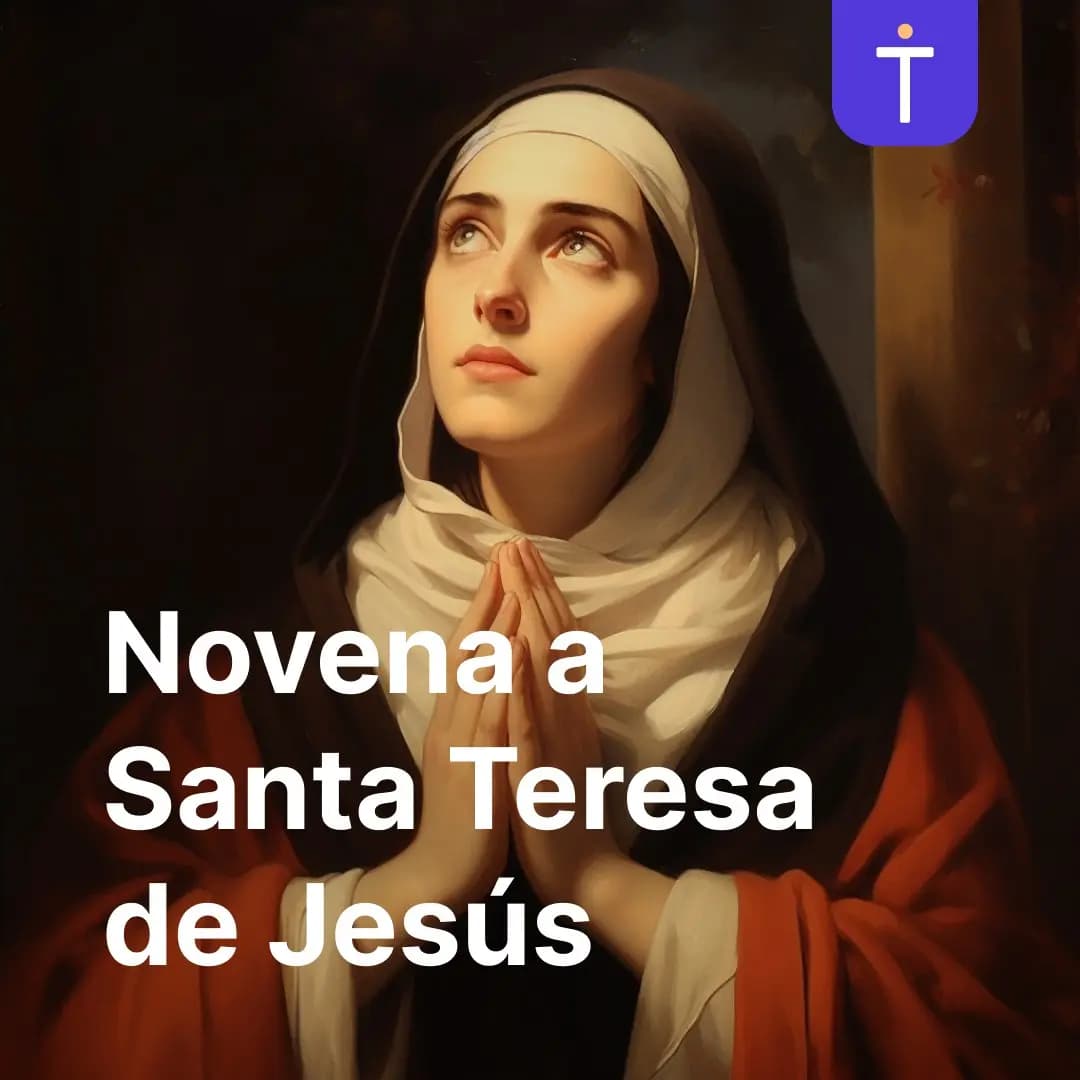
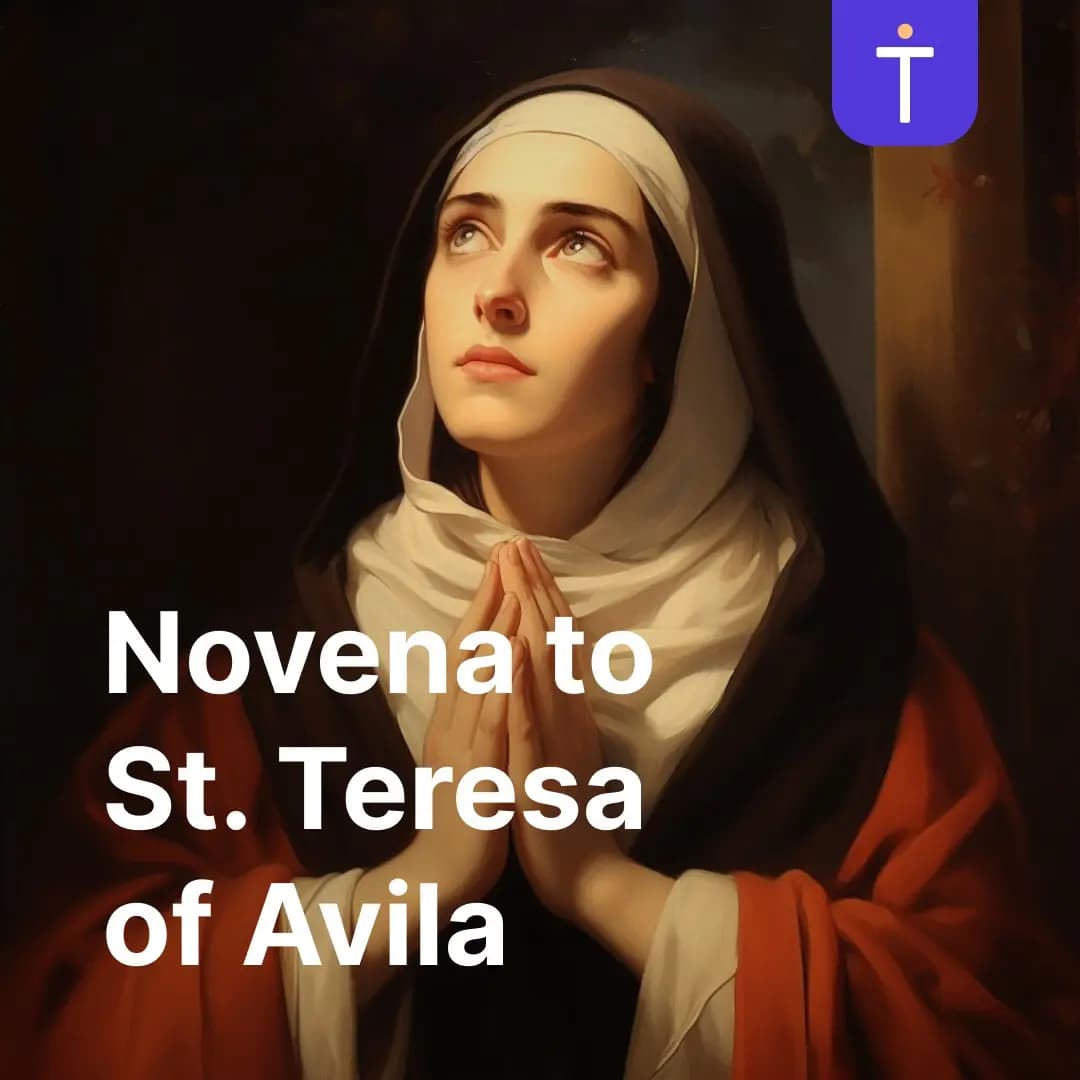
St. Teresa of Avila Novena | Novena a Santa Teresa de Jesús
🇺🇸 Pray the novena to St. Teresa of Avila and seek a deeper spiritual life through the wisdom of this Doctor of the Church: web.tabella.app/.../Novena-to-St.-Teresa-…
🇲🇽 Reza la novena a Santa Teresa de Jesús y profundiza tu vida espiritual a través de la sabiduría de esta Doctora de la Iglesia: web.tabella.app/.../Novena-a-Santa-Teresa…
Mass celebrates Fuerza's 40 years of helping parents of children with disabilities
When Rosario Marín gave birth to her son, Eric, born with Down syndrome 41 years ago, she quickly realized that non-English-speaking parents were left out of crucial developmental resources.
“There was absolutely nothing in Spanish,” Marín said. “By that time, I already spoke English, I had my degree, I was a professional. And so I would advocate for my son. There was a Down syndrome support group right in Los Angeles. I got all this information; I got a lot of support.
“But everywhere I went, I didn’t see mothers like me.”
Determined to bridge that gap, Marín founded Fuerza Inc., a nonprofit rooted in Catholic faith whose mission has been serving and supporting Spanish-speaking parents of children with developmental disabilities. Now 40 years later, Marín joined hundreds of families to celebrate the milestone anniversary with a special Mass on Oct. 18 at St. Matthias Church in Huntington Park, led by Archbishop José H. Gómez.
“Here in this celebration, we comprehend clearly what belongs to each person; the value of life,” Marín told the assembly in Spanish before the Mass began. “The value that unites the families, the hope that sustains them, that takes care of us, that changes and accompanies our children with special needs. May our Lord show us to see how he sees, love how he loves, and to recognize that they are special, a light coming directly from the heart of God.”
What started only for children with Down syndrome, Fuerza quickly evolved through conferences and symposiums, expanding to include all developmental disabilities, including autism, cerebral palsy, epilepsy, and rare syndromes. The group was founded as a Catholic lay ministry by living out the Church’s teachings on the dignity of human life through prayer.
Marín’s deep personal faith — instilled by her late mother — guided her work.
“She really was the person that enabled me to see my child as a gift from God,” Marín said.
In his homily, Archbishop Gómez reminded the community of every human person’s divine origin and dignity.
“Of course, we know that to God our Lord, we owe him what he gave us,” Archbishop Gómez said. “We were all created in his image, regardless of what our capabilities or the situations we have to face. We are all sons and daughters. And St. Paul tells us today during the second reading, give thanks to God at all times, and never forget that he has chosen us.”
Archbishop José H. Gómez poses for a photo during Fuerza Inc.'s 40th anniversary Mass at St. Matthias Church in Huntington Park on Oct. 18, 2026. (Michael Goulding)Archbishop José H. Gómez offers holy Communion during Fuerza Inc.'s 40th anniversary Mass for families of children with developmental disabilities at St. Matthias Church in Huntington Park on Oct. 18, 2026. (Michael Goulding)Archbishop José H. Gómez pushes a girl with developmental disabilities during Fuerza Inc.'s 40th anniversary Mass at St. Matthias Church in Huntington Park on Oct. 18, 2026. (Michael Goulding)Archbishop José H. Gómez blesses a man with developmental disabilities during Fuerza Inc.'s 40th anniversary Mass at St. Matthias Church in Huntington Park on Oct. 18, 2026. (Michael Goulding)Fuerza Inc., a Catholic nonprofit supporting Spanish-speaking parents of children with developmental disabilities, celebrated its 40th anniversary Mass at St. Matthias Church in Huntington Park on Oct. 18, 2026. (Michael Goulding)Archbishop José H. Gómez offers the homily during Fuerza Inc.'s 40th anniversary Mass at St. Matthias Church in Huntington Park on Oct. 18, 2026. (Michael Goulding)
Fuerza encourages families to overcome language barriers, shame, and cultural hesitation to access the support their children deserve under the law. While the group holds conferences and helps children get the services they need, its main focus is supporting parents.
“I know it’s tough, especially at the very beginning, when you wonder why your child was born with this or that disability,” Marin said. “Why? Many of us felt like there was a punishment from God. And yet, God created each child in his image.”
One of the first families to believe in Marín and her dream was Maria Elena Hernández, her husband Danecio, and their daughter Cintia, who has cerebral palsy. The couple met Marín 39 years ago through a child development program at Cal State LA, and eventually started Spanish-language Fuerza meetings in San Bernardino to help other Inland Empire families.
“God always helps us; he doesn’t let us fall,” Hernández said in Spanish. “He always takes us by his hand. We can move forward; we just need the support of other people to help us. … The services are available, but you have to look for them, and you have to fight.”
For Linda Murillo, who has been Fuerza’s director for 30 years after her son was born with Down syndrome 38 years ago, the ministry has been like a second family. She explained that as parents age, Fuerza’s guidance becomes even more critical.
“It’s necessary,” Murillo said. “Many mothers whose children are already grown and who are very old do not know about the services available when the children are adults, and they don’t know what will happen. They are left without security. And we would always like to continue giving them information on how things work.
“One has to be looking at what will happen to our children when we are gone.”
Operated entirely by volunteers, Fuerza faces ongoing challenges. Since 2020, when the community center that hosted its meetings for two decades closed, the group has struggled to find a permanent monthly meeting space and raise funds, decreasing their numbers from their original 800 total families. Operating costs for mailings and invitations alone reach $500 to $600 per event, supported only by voluntary annual dues and donations from local businesses like El Pescador restaurants and La Casa de los Sueños bakery.
While Fuerza’s identity is firmly centered on the Catholic Mass and parish life, the group is open to all families.
“Everyone is welcome; even if they aren’t Catholic, they come,” Murillo said. “In the end, what moves us is the same: the desire to serve and the love we have for our children.”
For Guadalupe Perez, who raised her son, Felix Aguirre Jr., as a single mother after his Down syndrome diagnosis, Fuerza was an answer to prayer. Marín personally visited Perez’s home to invite her.
“It was such a relief to know there were many professionals we could rely on,” she said in Spanish. “Through Fuerza’s program was where I found out because Regional Center representatives came, and I realized that we could get help … with the help of Rosario, who was the one pushing us to achieve those goals.”
Perez credits her faith with carrying her through the daily medical uncertainties of raising a child with complex needs, giving thanks to God for 40 years of the program and her son’s life.
“It’s something quite indescribable because my Catholic faith is internal,” Perez said in Spanish. “Ever since I can remember, this religion was instilled in me. So every day, in every moment, I always seek help in that faith I have.”
For Marín, Fuerza’s power lies in the living example of joyful, resilient families standing together in faith.
“I can tell you you’re going to be OK, but unless you see that I’m OK, you won’t believe it,” Marín said. “So when you come here, and you see all these families, and they’re all smiling, and they’re all happy, then you’re part of something much bigger. Then it’s a lot easier because you see everybody’s handling it. We’re here to lend each other a hand.”
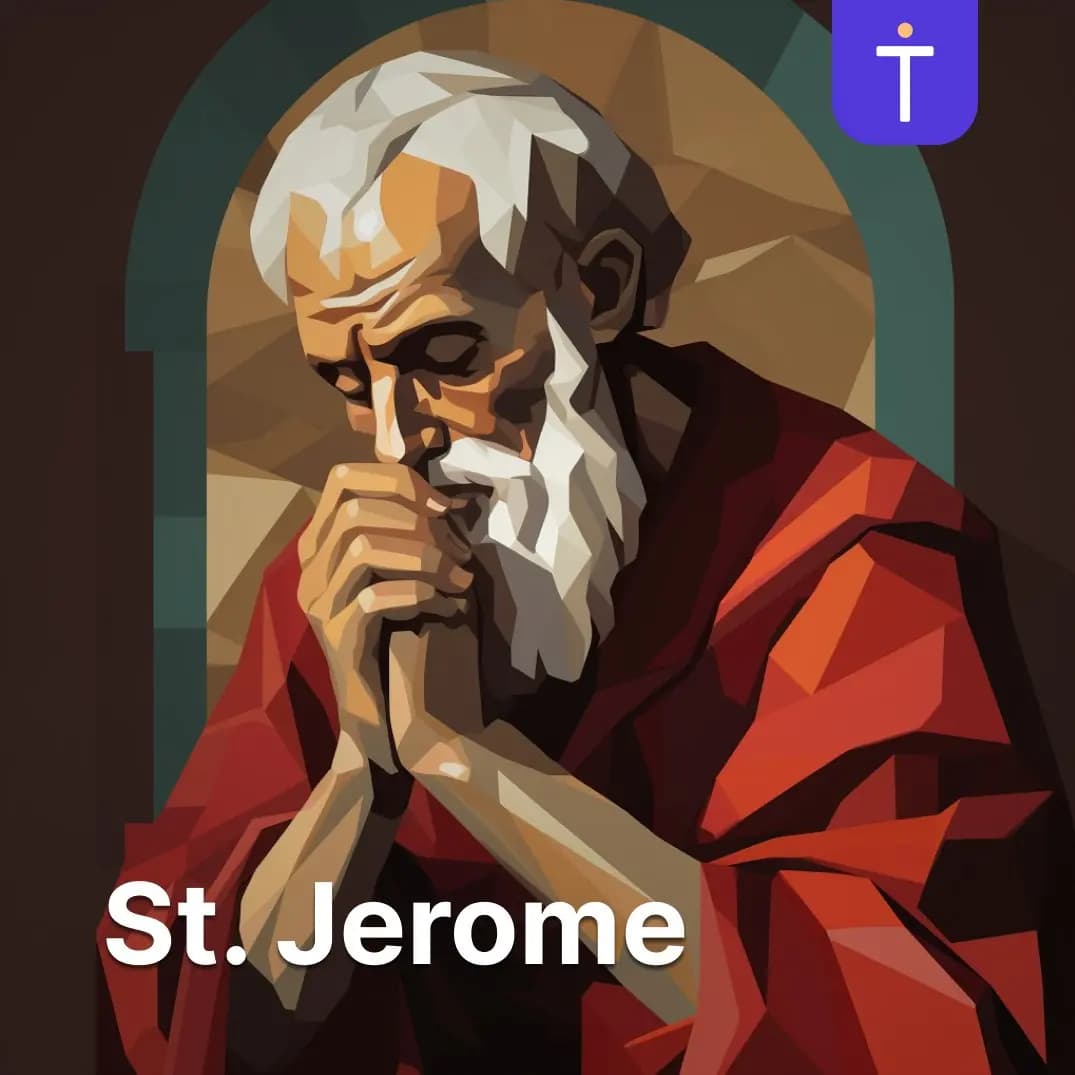
🇺🇸 Celebrate St. Jerome, pray his novena, and deepen your faith through the wisdom of the Word: web.tabella.app/.../St.-Jerome
🇲🇽 Celebra a San Jerónimo, reza su novena y profundiza tu fe a través de la sabiduría de la Palabra: web.tabella.app/.../San-Jeronimo
What does it take to make someone a Catholic? The waters of Baptism bring new birth, yet when we look around, we find many baptized pagans in the world today. In response, it’s easy to [...]
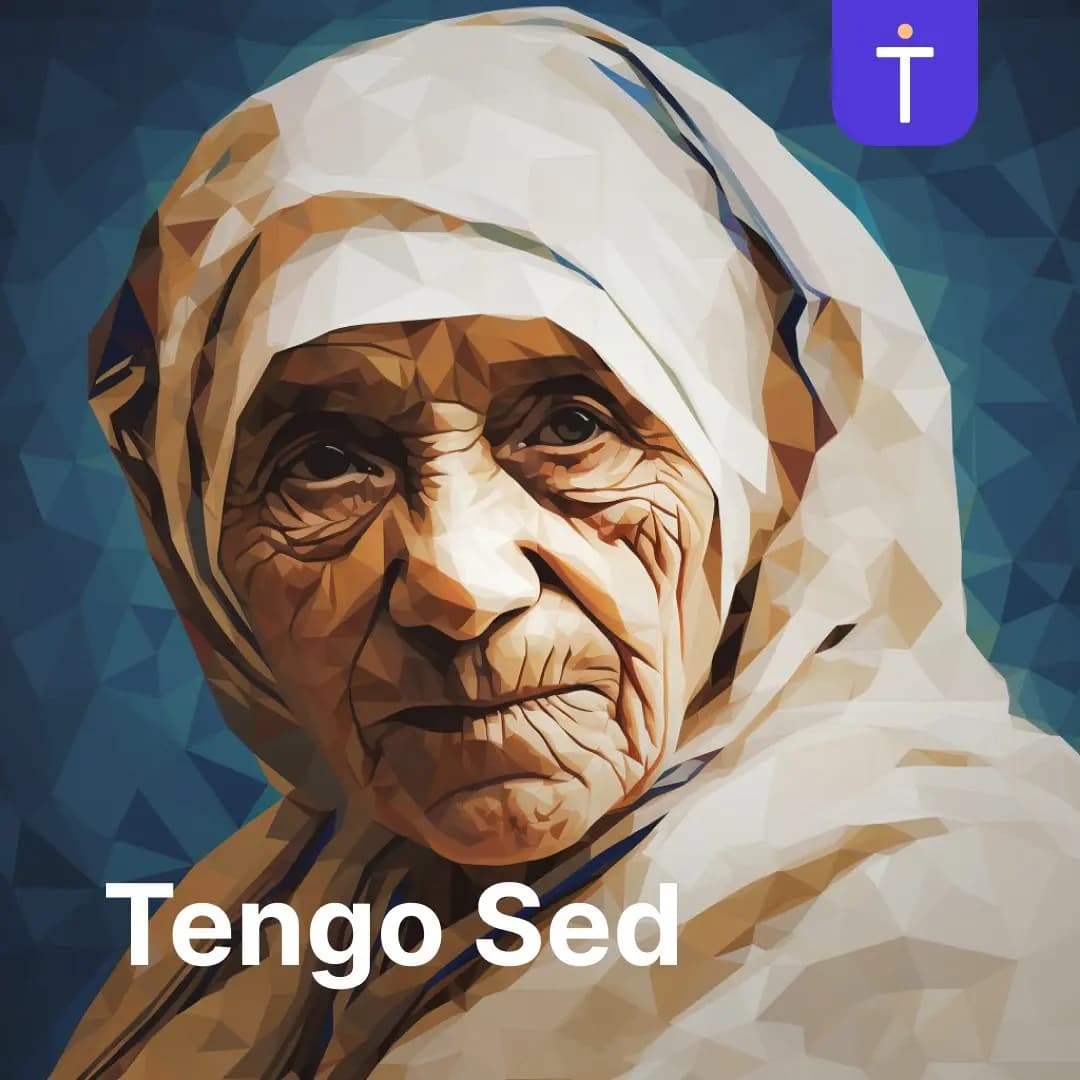
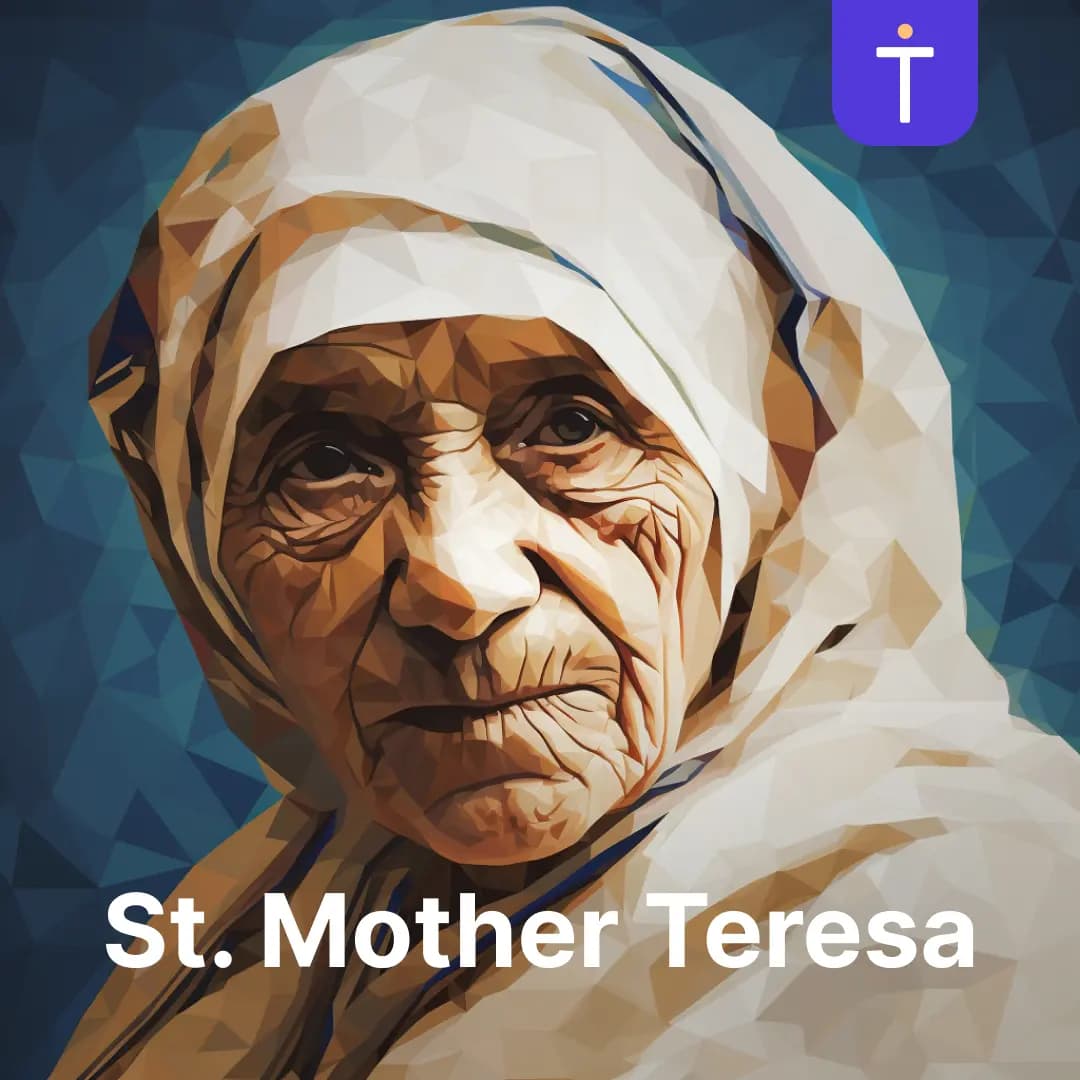
St. Mother Teresa of Calcutta | Santa Madre Teresa de Calcuta
🇺🇸 Pray with Mother Teresa, experience the "I Thirst" meditation, and contemplate Christ's infinite love for you: web.tabella.app/.../I-Thirst
🇲🇽 Medita junto a la Madre Teresa y contempla el amor infinito que Cristo tiene por ti: web.tabella.app/.../Tengo-Sed
Bishop Joensen says Trump meeting ‘exploited’ for politics, while others clarify backstory
Bishops who attended the meeting and the prayer have stated they were invited by the White House Faith Office to discuss issues of importance to Catholics. [...]
(OSV News) — A new report indicates that 60% of adult Catholics in the U.S. believe racism exists within their local community, with about 4 in 10 (39%) saying they have experienced racial discrimination generally.
That figure was higher among Black Catholics (66%), Hispanic Catholics (54%) and Asian Catholics (54%).
In addition, 10% of Catholics polled said they have experienced racial discrimination within their parish community, and 11% within Catholic education.
Black Catholics are also more likely to experience racial discrimination within their parish and in Catholic education, according to the report.
The findings were released Oct. 26 in “Experiences of Race, Diversity, and Racism: A National Survey of Adult Catholics.”
The report, published by the Center for Applied Research in the Apostolate, was funded by the Sisters of Charity Ministry Foundation in Cincinnati; the Jesuits USA East Province in New York; the Sisters of the Precious Blood in Dayton, Ohio; the Baltimore-based National Black Catholic Congress; and individual CARA donors.
CARA researchers Mark M. Gray and Ali Mumbach conducted the national survey between May 15 and June 30 among 2,401 self-identified Catholics.
Gray told OSV News that one key takeaway from the report was the impact of faith formation on the issue of racism, which Catholic teaching denounces as a sin and incompatible with God-given human dignity.
“It does appear that the more formation you’ve had as an adult, you probably have a better understanding of the Church’s teachings, and that’s showing up in the results here,” he said.
A look at the survey respondents
CARA partnered with enterprise software survey firm Qualtrics, which used its opt-in sampling panels for the study.
The data was statistically adjusted to ensure the sample of adult Catholics aligned with recent estimates from the General Social Survey, one of the most widely used for social science research on the American public.
The online survey was available in both English and Spanish.
Most (53%) of the adult Catholics surveyed described themselves as non-Hispanic white, with 38% Hispanic or Latino. Another 5% of the respondents were African American, Black, African or Afro-Caribbean, while 3% identified themselves as Asian, Pacific Islander or Native Hawaiian. American Indian, Native American, Native Alaskan or Indigenous participants represented 1% of the survey pool.
Survey respondents were evenly split between male and female, with their ages most typically between 45 and 29. Generation X (born 1962 to 1981) accounted for 39% of the survey participants.
The survey’s typical respondent fell between ages 45-49, and most (88%) had become Catholics by the time they were teenagers. The majority (81%) reported attending a parish near their home.
Parish less likely context for racism, compared to rest of society
Gray said the data showed respondents were “least likely to experience racism” in parishes, compared to other social contexts.
He pointed to the survey’s question on racism in several institutions, which found that U.S. adult Catholics tend to see racism as an issue — either “a great deal” or “a lot” — for police (36%), government (35%), housing (34%) and business (31%).
Among Hispanic Catholics, government (44%) was viewed as a significant context for racism, while Black Catholics (54%) viewed racism as a key issue regarding the police.
“Black Catholics also are especially likely to see racism as being this kind of an issue for business (49%), housing (45%), and education (41%),” said the report.
Sin, social issue and the importance of saints
Most of the survey’s respondents agreed with statements derived from Church documents addressing racism. Almost three quarters (74%) affirmed racism is sinful; 74% concurred racism can take the form of a sin of omission, where injustice is left unchallenged; and 67% supported tackling “policies and institutional barriers” to eradicate racism.
Yet awareness of pastoral letters and other documents by the U.S. Catholic bishops on racism remains incomplete, with roughly half of respondents saying they were “very” or “somewhat” aware of a given document, and the other half saying they were “not at all” or “not very aware.”
At the same time, said the report, “Black Catholics are generally more likely than others to be ‘very aware’ of many Church letters, statements, or documents.”
Just about one third (28%) of adult Catholics said they had heard preaching on racism in a parish homily over the past year. That number was higher for Black (43%) and Latino (34%) Catholics.
Close to half of adult Catholics (49%) said they would like to hear more at their parishes about Church teaching on racism.
The report found that 47% of U.S. adult Catholics — and 57% of Black Catholics — feel that canonizing Black, brown and Indigenous faithful is important.
At the same time, the report found that most respondents (46%) considered racism a social rather than religious (16%) issue. Another 30% viewed it as a political problem and 24% considered it economic in nature. Thirty-two percent said racism was “all of the above” and 8% said none of those options applied. Asian Catholics (45%) were more likely than others to view racism as a political issue, said the report.
Racism (38%), along with healthcare (38%), ranked behind other issues described as “among the most important” by respondents, behind inflation and the cost of living (73%); unemployment (45%), poverty, hunger and homelessness (43%); immigration (41%); and fuel and oil prices (39%).
Why seminaries need to teach political philosophy and study of statesmanship
I taught in fine seminary programs at the beginning and end of my full-time teaching career, with stints at Catholic colleges and universities in between. I continue to teach part-time for the college seminary of [...]
Pope Leo's doctors confirm his visit to Latin America two weeks after lung surgery
Two weeks after Pope Leo XIV's surgery for lung cancer, his doctor confirmed he can fly to South America according to the previously released schedule, with Uruguay, Argentina and Peru planned as stops for his Nov. 6-17 trip, the longest trip of the pontificate so far.
Vatican Denies Traditional Pilgrim Group Permission to Pray Together in St. Peter’s
undefined
St. Peter’s Basilica and the Rome skyline are seen through a decorative metal gate on May 18, 2025.
Organizers say more than 1,500 pilgrims were refused a collective visit to pray at the Apostle’s tomb after their request for a Pontifical Mass was also rejected.








:quality(85)/https://angelus.sfo3.digitaloceanspaces.com/Fuerza.40th.10182026_27.jpg)
:quality(85)/https://angelus.sfo3.digitaloceanspaces.com/Fuerza.40th.10182026_01.jpg)
:quality(85)/https://angelus.sfo3.digitaloceanspaces.com/Fuerza.40th.10182026_09.jpg)
:quality(85)/https://angelus.sfo3.digitaloceanspaces.com/Fuerza.40th.10182026_21.jpg)
:quality(85)/https://angelus.sfo3.digitaloceanspaces.com/Fuerza.40th.10182026_20.jpg)
:quality(85)/https://angelus.sfo3.digitaloceanspaces.com/Fuerza.40th.10182026_11.jpg)









 undefined