Catholic, evangelical leaders issue joint call for compassionate immigration reform
WASHINGTON (OSV News) — Catholic and evangelical leaders issued an ecumenical statement Oct. 13 as part of a joint effort to call for compassionate immigration reform.
Bishop Brendan J. Cahill, chair of the U.S. Conference of Catholic Bishops’ Committee on Migration, and Rev. Walter Kim, president of the National Association of Evangelicals, are the co-chairs of the Evangelical-Catholic Dialogue on Immigration. Their joint statement, “A Call for Christian Compassion and Wisdom in the Immigration Debate,” marks the first such statement on immigration in U.S. history to be jointly issued by senior leaders of their respective traditions, they said.
Doctrinal differences, but shared principles
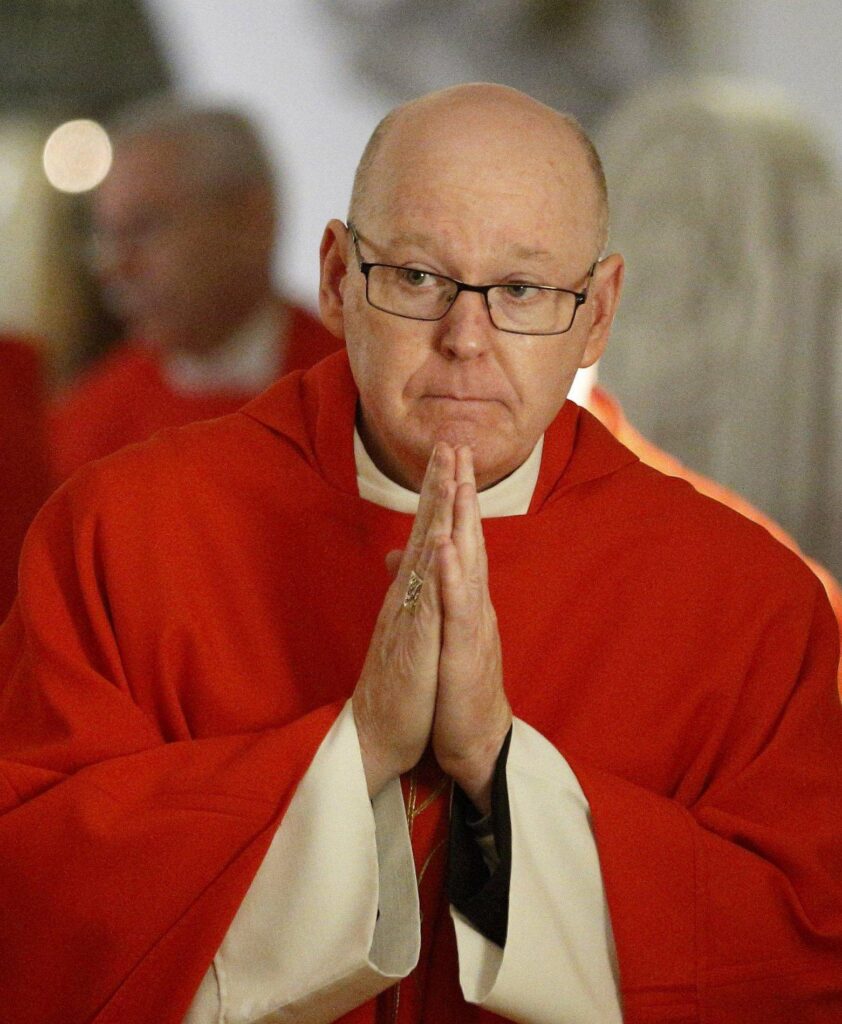
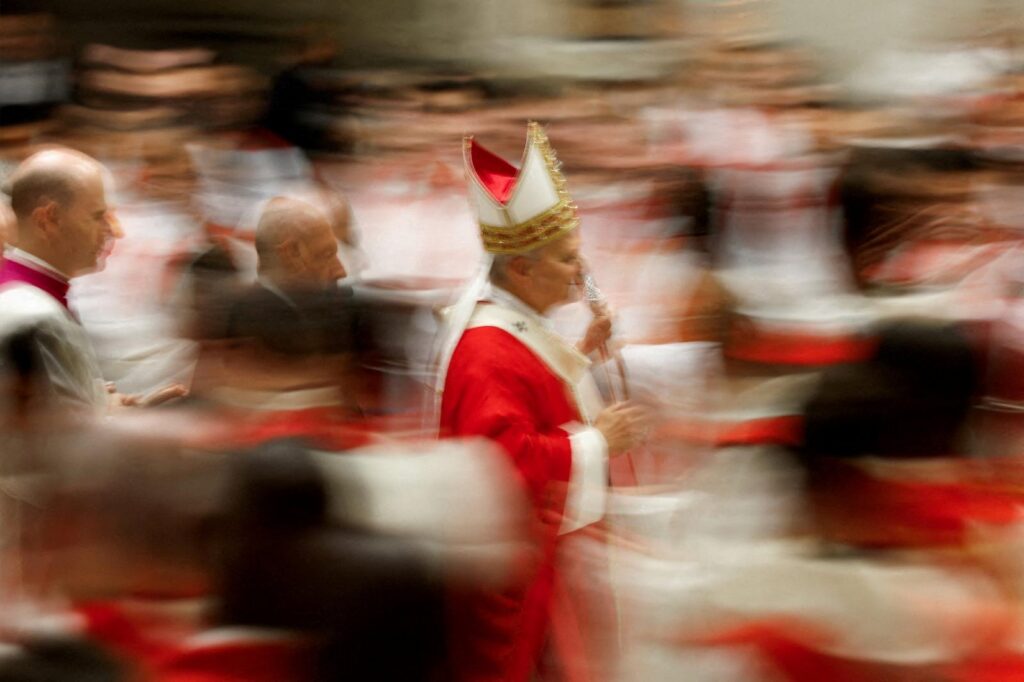
Bishop Brendan J. Cahill of Victoria, Texas, is pictured concelebrating Mass in the crypt of St. Peter’s Basilica at the Vatican Jan. 20, 2020. (OSV News photo/Paul Haring)
The pair said that although they have “doctrinal differences,” they are “united in our conviction that God calls us to stand both with our fellow Americans who are experiencing economic and cultural anxieties and with our immigrant neighbors who are facing existential challenges.”
The statement articulated shared principles that every human being is “created with dignity, bearing God’s image,” and that government “is responsible for protecting its citizens and providing for the common good, including the establishment and enforcement of reasonable immigration policies.”
Those policies should include targeted, humane border enforcement, clear legal pathways to citizenship and efforts to prevent the separation of families, they said.
Statement highlights religious liberty threats
They also highlighted risks to religious liberty presented by certain immigration enforcement efforts.
Catholic and other faith leaders have pointed to recent cases where religious liberty challenges have intersected with immigration issues, such as a recent lawsuit from the Archdiocese of St. Louis against the federal government over a policy it said prohibits priests from distributing holy Communion and hearing the confessions of people detained by U.S. Immigration and Customs Enforcement.
“We especially commit to upholding the right to religious liberty,” the statement said. “This right extends to all people, of all faiths and none, no matter their immigration status. It is implicated in a particular way for those in detention, for whom we as Christians are specifically compelled by Christ to offer our pastoral care (Matthew 25:31–46). We are resolute in our commitment to working with the relevant authorities to ensure access to religious and pastoral services for all in detention, that each person may have the opportunity for spiritual counsel and active participation in the sacraments.”
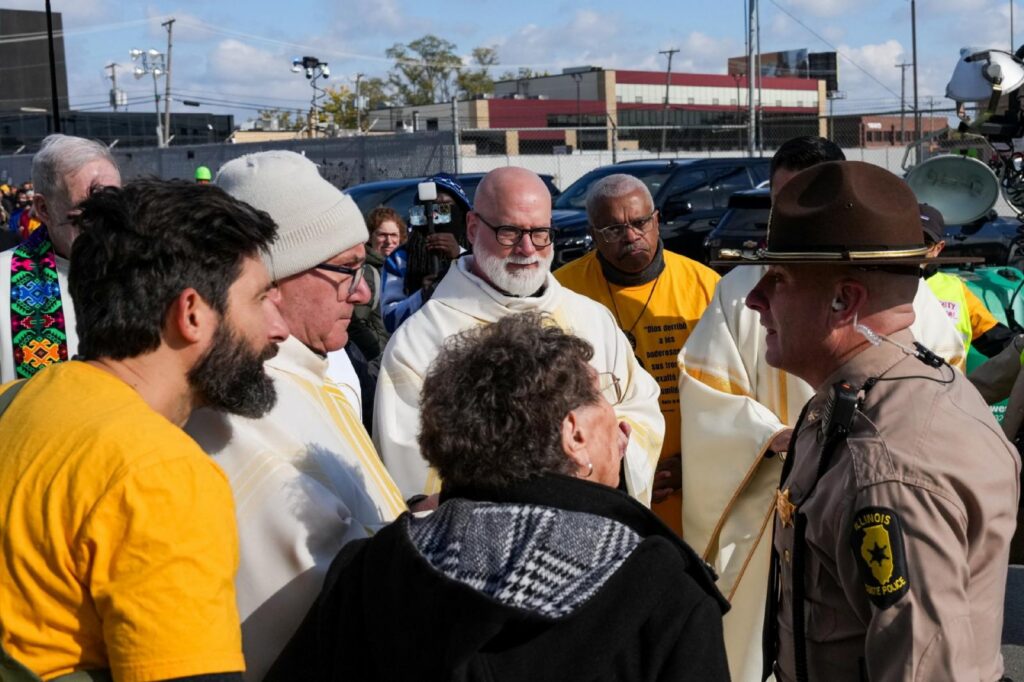
Clergymen talk with law enforcement officers preventing religious leaders from entering the Immigration and Customs Enforcement facility in Broadview, Ill., and offering Communion to immigrants detained inside, during an outdoor Mass Nov. 1, 2025. (OSV News photo/Leah Millis, Reuters)
Catholic and evangelical unity on immigration
Faith leaders have also raised alarm about the need to prevent immigration enforcement actions at places seen as sensitive locations, including houses of worship, schools and hospitals.
In a joint statement issued through the USCCB, Bishop Cahill — currently bishop of Victoria, Texas, but was recently appointed the next bishop of the Diocese of Joliet, Illinois — and Rev. Kim said, “What is unique about this statement is not the content, which is grounded in centuries of Christian teaching and tradition that we have already affirmed separately, but the clear unity that exists between us in this moment.”
“As pastors devoted to proclaiming the Gospel of Jesus Christ, we share a responsibility to articulate our convictions, even when it comes to subject matter as challenging as immigration. In doing so together, we seek to embrace our common heritage as both Christians and Americans,” they said. They added that through Evangelical-Catholic Dialogue on Immigration, “we have found a strong sense of fraternity and common purpose. It is from this sincere and patriotic perspective, and with deep concern for those affected by current immigration policies, that we offer this statement with both conviction and hope.”
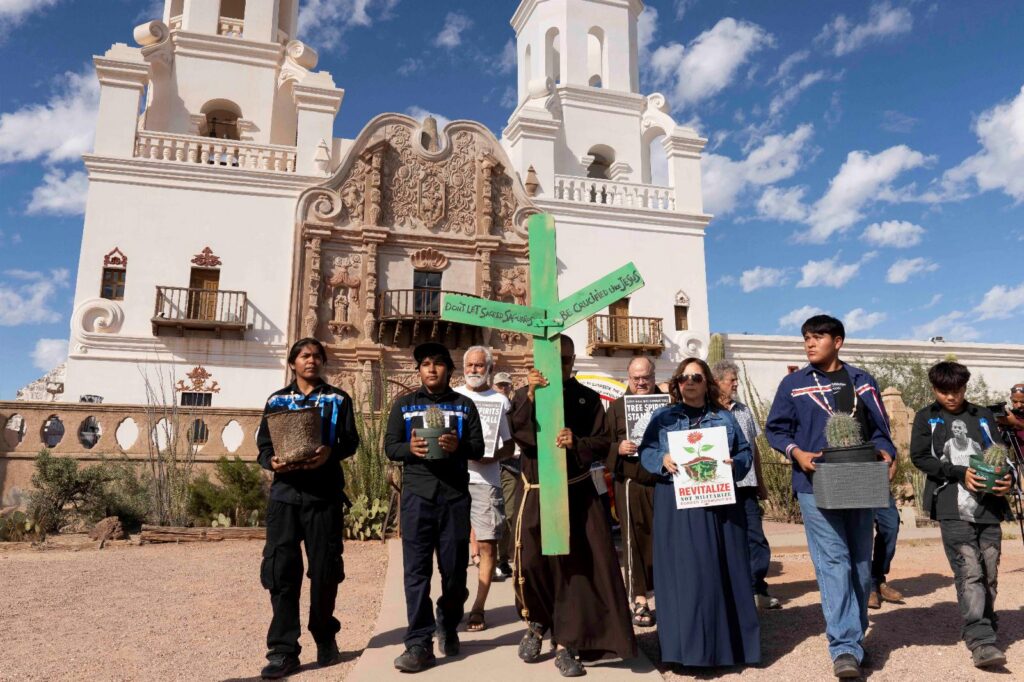
Faith leaders, elected officials and Tohono O’odham youth lead an Oct. 7, 2026, procession in opposition to U.S.-Mexico border fence construction outside San Xavier del Bac Mission in Tohono O’odham Nation outside Tucson, Ariz. (OSV News photo/Rebecca Noble, Reuters)
Catholics, evangelicals account for most targeted for deportation
A joint report issued last year by the USCCB’s Migration and Refugee Services, the Center for the Study of Global Christianity at Gordon-Conwell Theological Seminary, and World Relief, found that more than 10 million Christians living in the U.S. would be vulnerable to deportation under Trump administration policies implemented in 2025. A majority of them were Catholic followed by a sizable number of evangelicals.
The joint statement from Bishop Cahill and Rev. Kim noted the report’s findings.
“Roughly one in 12 believers in this country either faces the loss of legal status or shares a home with someone who does,” they said. “Their fear is our fear; their tears are ours to wipe.”
Kate Scanlon is a national reporter for OSV News covering Washington. Follow her on X @kgscanlon.
Pope Leo XIV starts respiratory physical therapy a day after lung cancer surgery
ROME (OSV News) — Pope Leo XIV underwent more medical exams and started respiratory physical therapy on Oct. 14, the day after the lung cancer surgery that removed the lower lobe of the pope’s right lung.
In the first medical update provided by the Vatican since the late-night revelation of the pope’s lung cancer diagnosis, the pope’s doctors said Wednesday that the pope’s “recovery is proceeding as expected” and the pope has begun walking around his hospital room.
“This morning, the Holy Father underwent the blood tests and chest X-ray scheduled following the surgery. The results confirm a normal postoperative recovery: the values are within the normal range for the type of surgery performed,” the joint statement by Dr. Stefano Margaritora, the pope’s surgeon, and Dr. Luigi Carbone, the pope’s personal doctor, said.
“The Holy Father underwent respiratory physical therapy and has begun walking around his room. He has resumed his regular diet, having had breakfast and lunch. His recovery is proceeding as expected.”
Post-operation tests to be conducted in the coming days
Vatican spokesman Matteo Bruni told journalists that Pope Leo was “in good spirits” the day after surgery. Bruni told journalists that before having surgery, Pope Leo had undergone a robotic bronchoscopy with biopsy, a chest CT scan with contrast, and a PET scan which indicated the need for the Oct. 13 surgery.
Pope Leo was admitted to Gemelli Hospital Oct. 13 for the lung surgery, following the pope’s Oct. 11 disclosure that recent medical examinations had revealed a “well-contained” lung nodule that had been “detected at a very early stage.”
According to Vatican News, post-operation tests will be conducted on the removed tissue in the coming days.
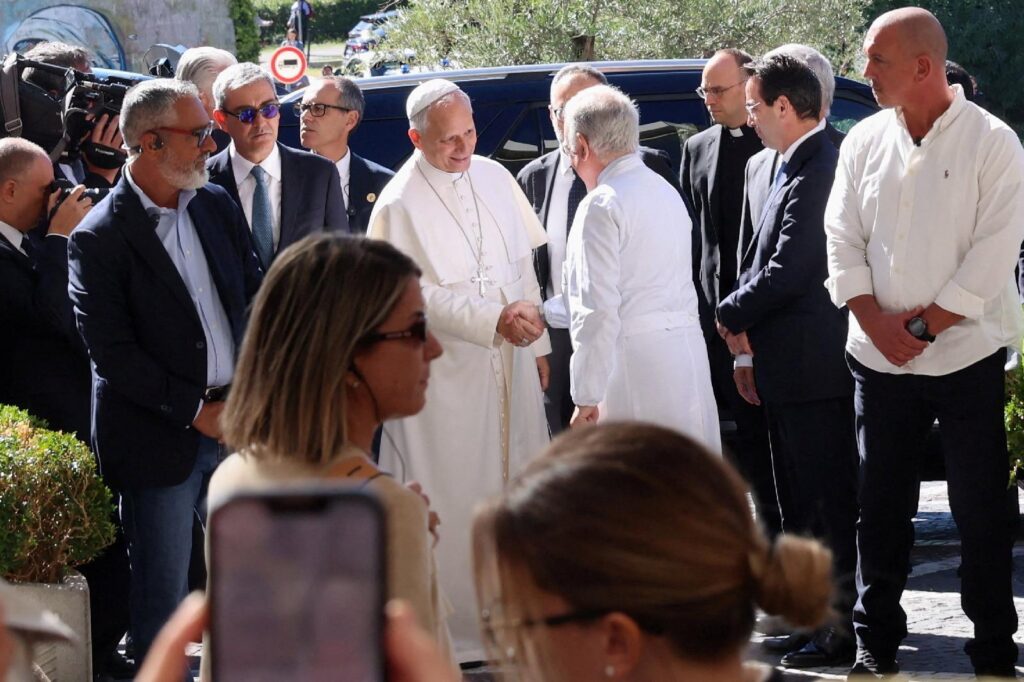
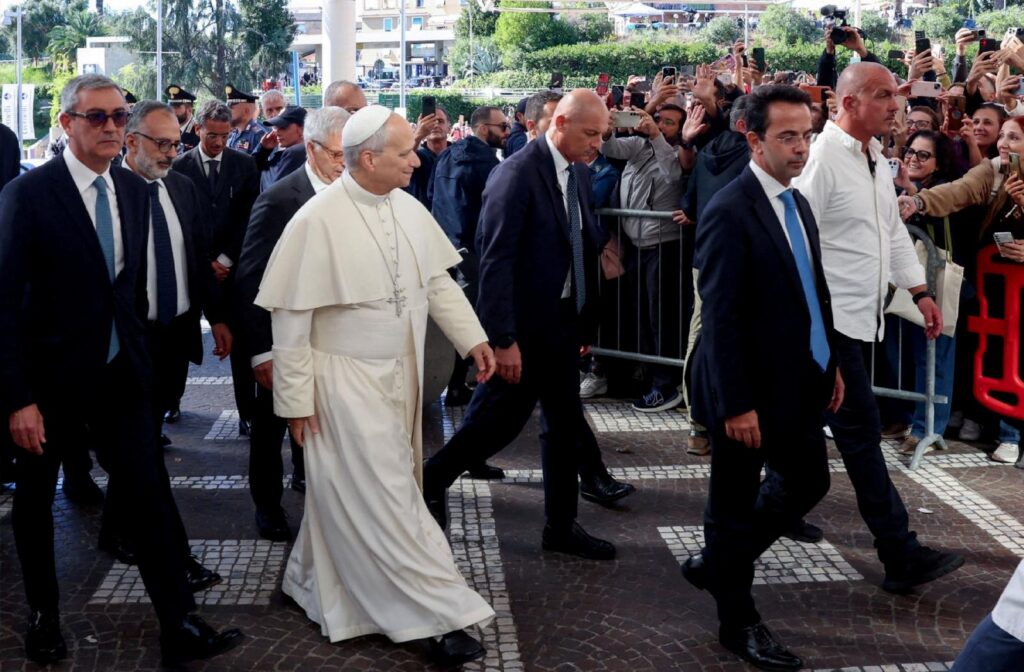
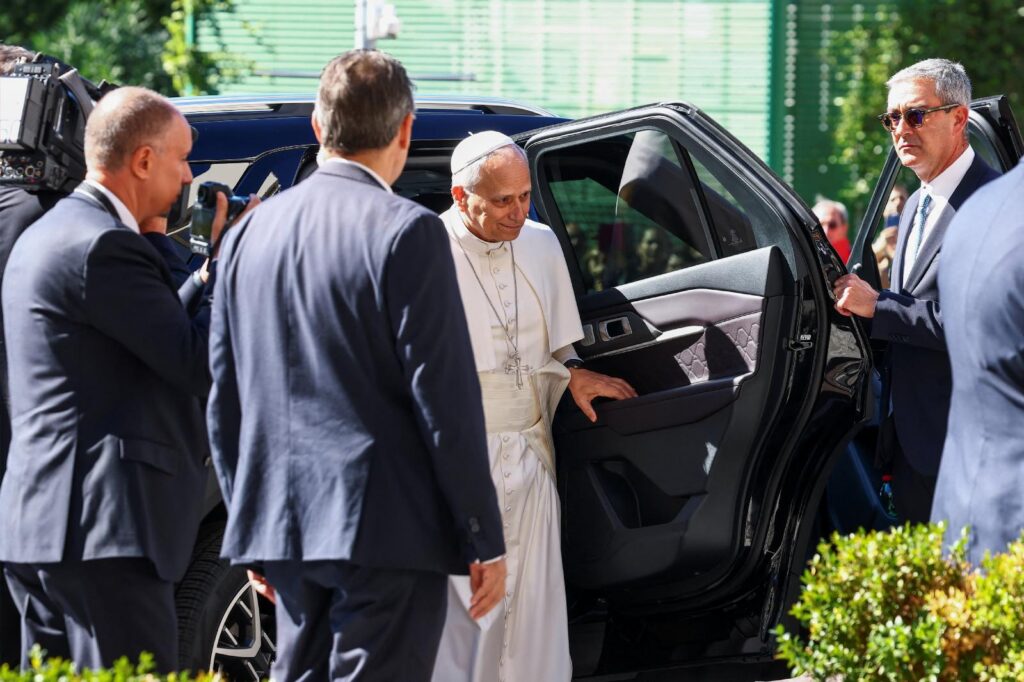
Pope Leo XIV is greeted by Dr. Andrea Cambieri as the pontiff arrives at Rome’s Gemelli Hospital Oct. 13, 2026, ahead of his surgery that afternoon to remove a lung nodule. The Vatican confirmed that evening that Pope Leo has lung cancer. (OSV News photo/Ciro De Luca, Reuters)
In response to a question of how long the wait might be to receive any results as to whether cancer remains beyond what was removed during the pope’s surgery, Bruni said, “You have to ask a doctor for the timing of those. It usually takes five, 10, 15 days depending on the situation.”
Speaking with OSV News, medical experts indicated that a potential analysis of the pope’s lymph nodes could be key to evaluating the next steps.
Dr. Nirmal Veeramachaneni, professor of cardiothoracic surgery at St. Louis University School of Medicine and medical director for lung cancer screening at SSM Health, who is not involved in the pope’s care, said in an interview with OSV News that it would typically take a week to get all of the biopsy results back.
Pope to remain at hospital as he recovers from surgery
The pope’s doctors Oct. 14 statement is the first update from the Vatican on the pope’s medical condition since the pope’s surgery ended with the revelation from his doctors that the “examination confirmed the diagnosis of lung adenocarcinoma, as suspected by the preoperative tests.”
Adenocarcinoma of the lung is the most common form of lung cancer in the United States. It represents about 40% of all lung cancers, according to the Lung Cancer Foundation of America.
The right lower lobe of the lung, which Pope Leo had removed, is the largest of the three lobes in the right lung. Located in the posterior and inferior part of the right chest cavity, it contributes roughly 30% of total lung capacity, making it the single largest lung lobe, according to the Baylor College of Medicine.
Pope Leo is expected to remain in Rome’s Gemelli Hospital as he recovers from surgery for at least one week. The Vatican has canceled all of the pope’s scheduled audiences through Oct. 20.
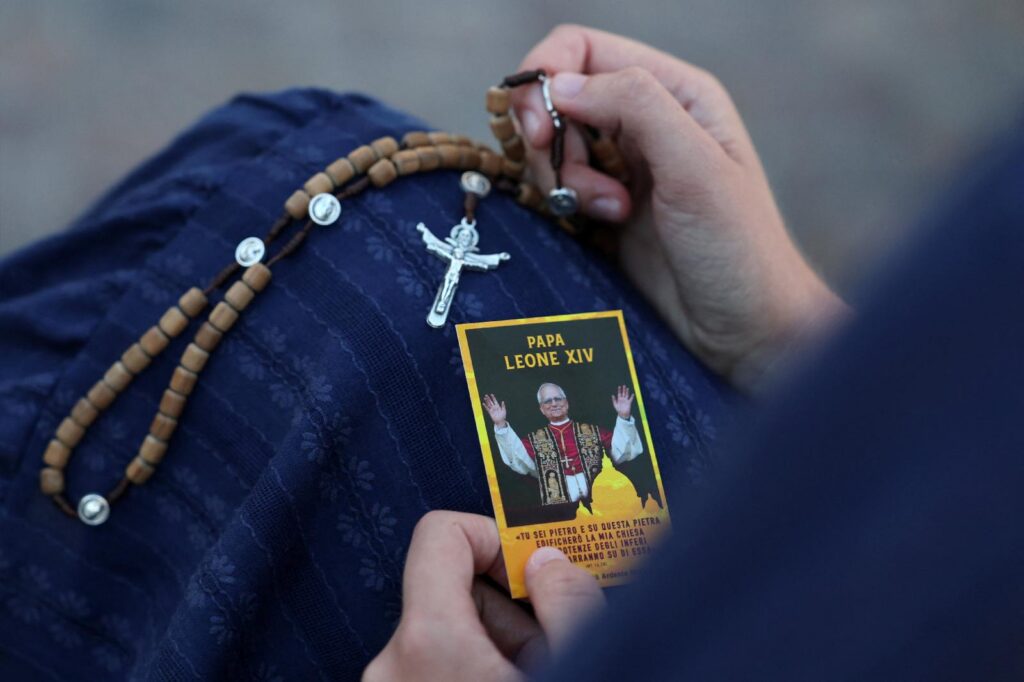
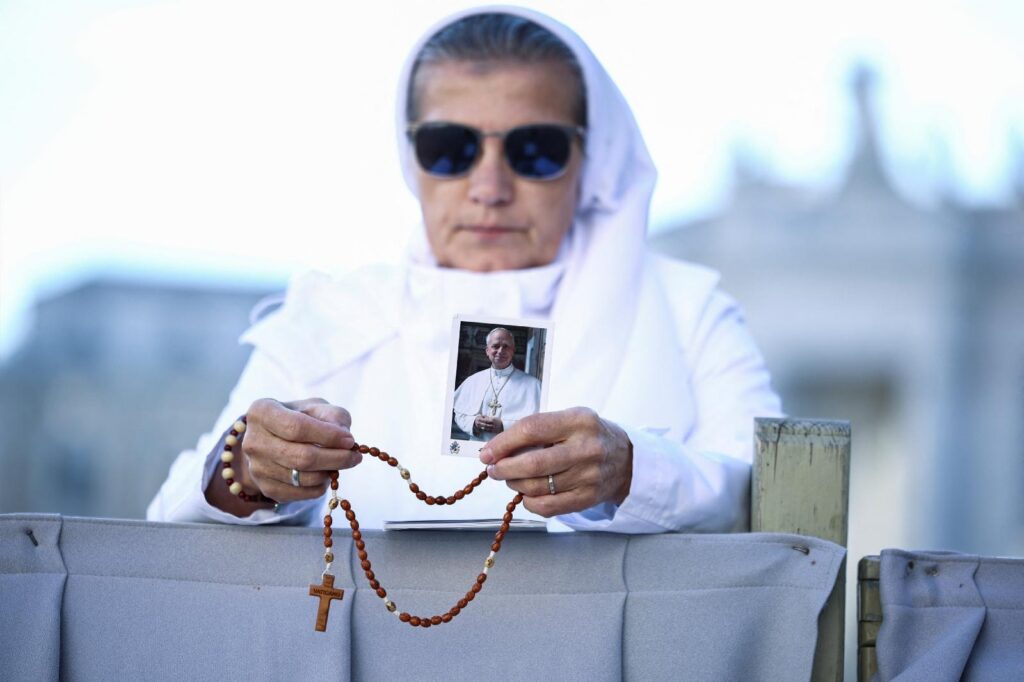
A woman prays with a rosary and a card portraying Pope Leo XIV Oct. 14, 2026, where Pope Leo XIV had surgery the previous evening to remove a lung nodule. The Vatican confirmed after the surgery that Pope Leo has lung cancer. (OSV News photo/Yara Nardi, Reuters)
No changes to scheduled trip so far
Bruni said that there were no changes to announce at this time to the pope’s expected length of stay in the hospital or to the pope’s scheduled trip to Latin America Nov. 6-17. He said that Pope Leo XIV had “manifested his intention” to travel to Peru and “that’s still there.”
The previously published schedule for the 12-day trip to South America indicated that he would travel more than 19,000 miles on 14 flights during a November trip to Uruguay, Argentina, and Peru, which includes stops high in the Andes mountains.
Peru’s President Keiko Fujimori said the country received the news of the pontiff’s diagnosis “with deep sadness” and asked God “to care for him, to give him strength, and allow us to see him soon recovered.”
“Holy Father, this land, which is also your home, embraces you with immense affection. Today it is our turn to accompany you with our prayers, just as you have so many times accompanied us with yours,” she wrote.
Junno Arocho Esteves & Paulina Guzikabout 7 hours ago
Prayers, well-wishes pour in after pope’s lung cancer diagnosis
ROME (OSV News) — Church and world leaders offered prayers and wishes for a speedy recovery to Pope Leo XIV following the Vatican’s announcement that he was diagnosed with lung cancer after undergoing surgery to remove part of his right lung.
Following the Oct. 13 announcement that the operation was successful, Dr. Stefano Margaritora, chief thoracic surgeon at Rome’s Gemelli Hospital, and Dr. Luigi Carbone, said in a joint statement that the “examination confirmed the diagnosis of lung adenocarcinoma, as suspected by the preoperative tests.”
The pope is expected to remain in recovery at Rome’s Gemelli Hospital for one week. According to Vatican News, doctors will conduct post-operation tests on the removed tissue in the coming days.
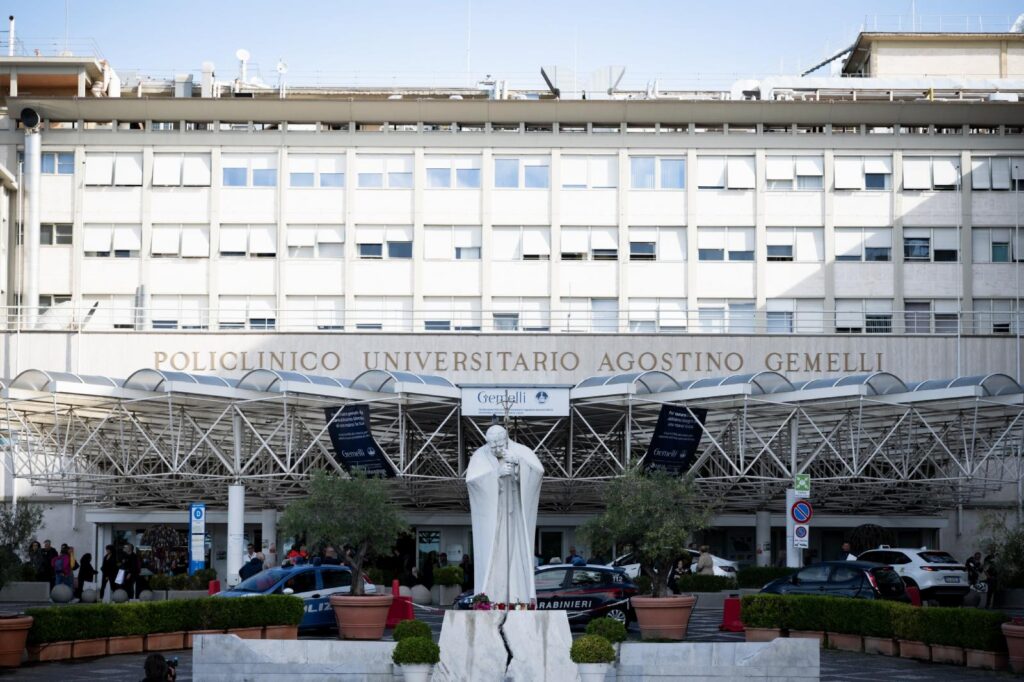
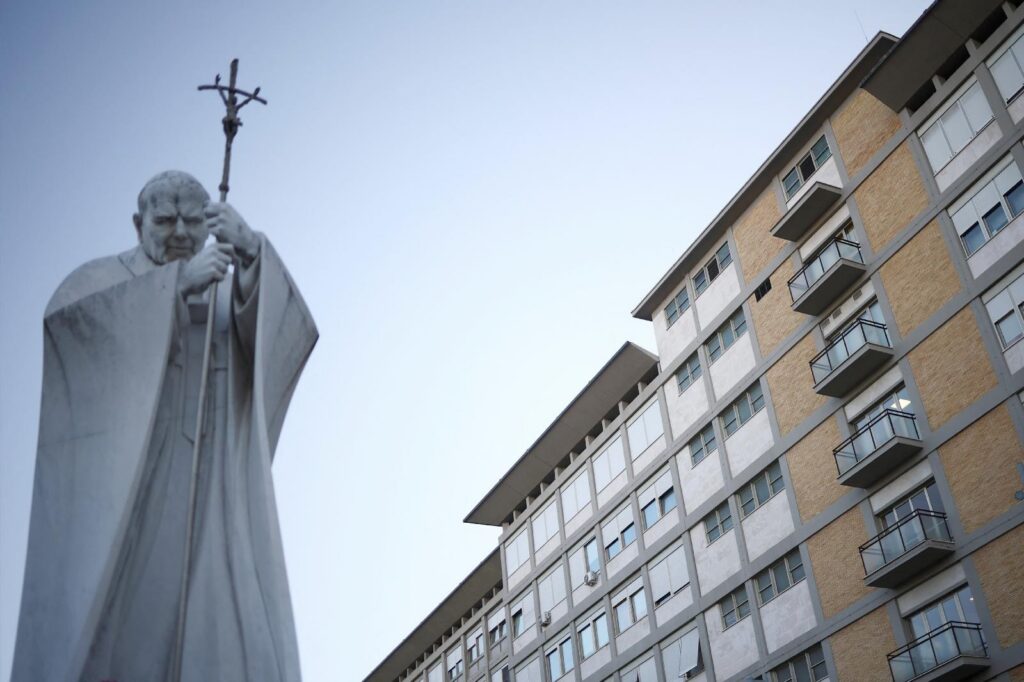
A statue of St. John Paul II Oct. 14, 2026, can be seen in front of Rome’s Gemelli hospital where Pope Leo XIV is recovering from surgery during which doctors removed his lower right lung to treat a cancerous tumor. (CNS photo/Cristian Gennari)
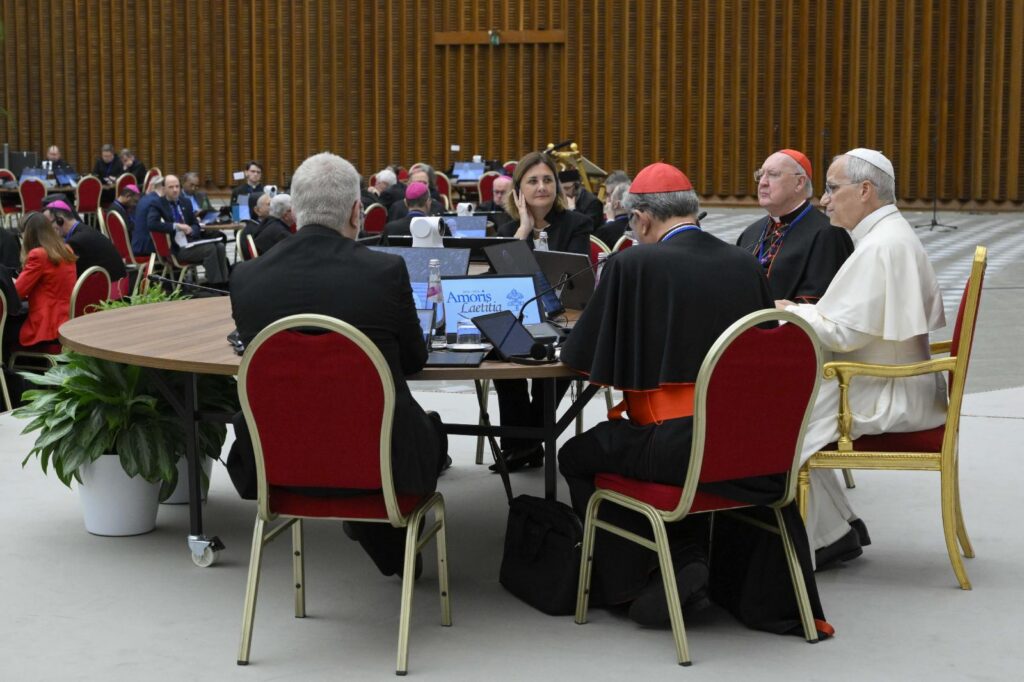
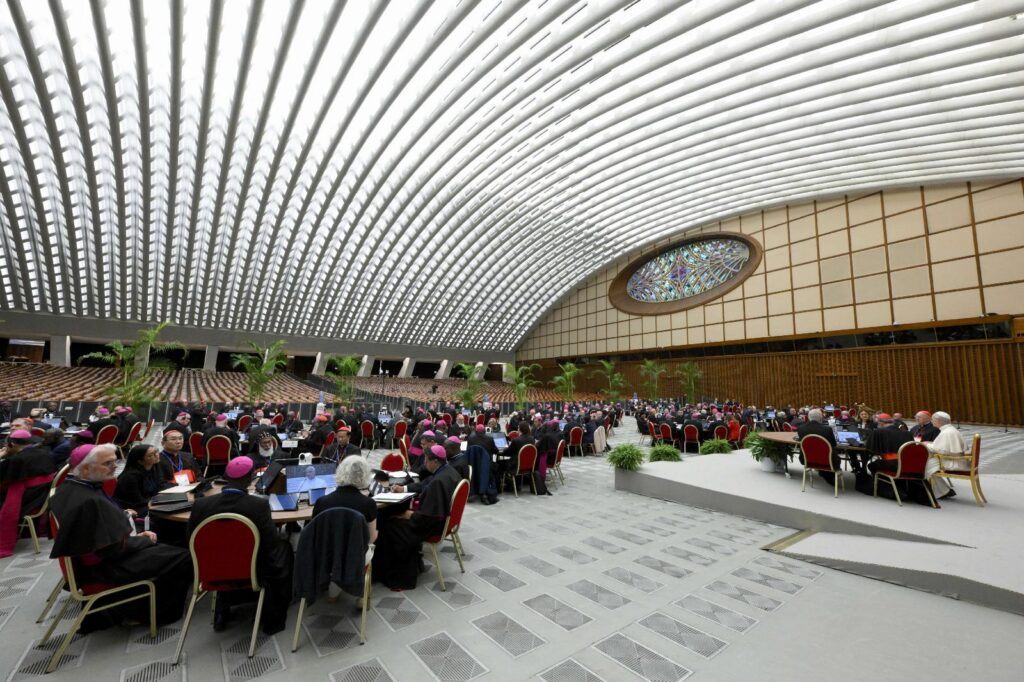
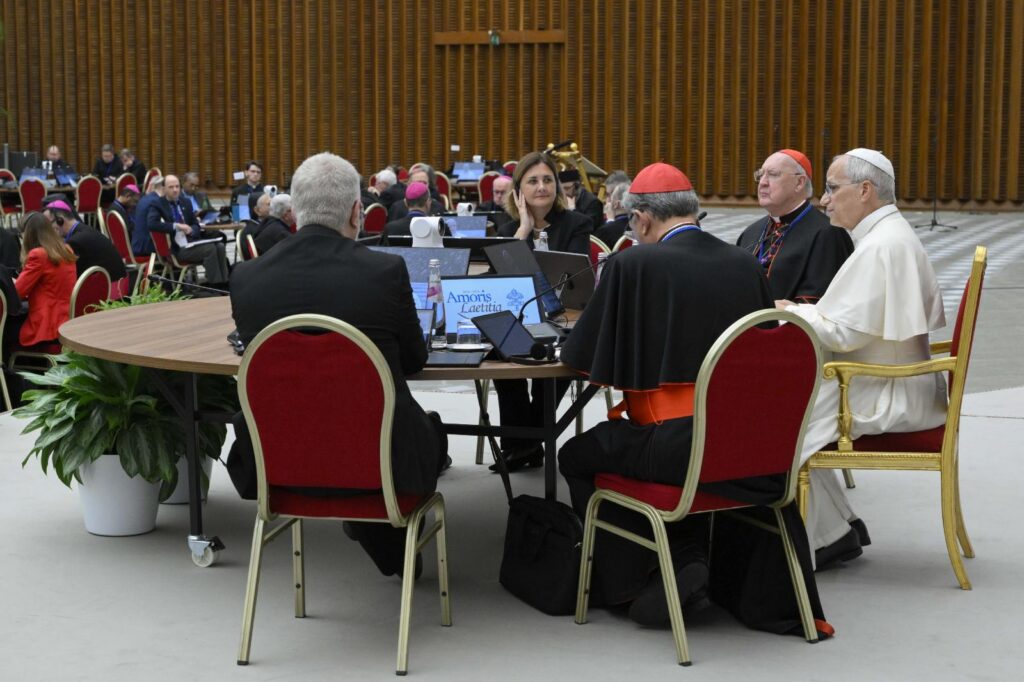
In Rome, concern for the pope’s health was the number one topic from pontifical university classrooms to curial offices and the “Amoris Laetitia” meeting hall.
For Cameroonian Archbishop Andrew Nkea of Bamenda, who was in Rome for the Oct. 7-14 gathering marking the 10th anniversary of “Amoris Laetitia,” the diagnosis was very surprising.
“It was a very surprising announcement (for) me in particular, because in April, the pope had been to my country, to my diocese and to my house,” Archbishop Nkea told OSV News, recalling the pope’s visit to Cameroon during a four-nation apostolic visit to Africa in April.
“He was looking in very good form,” the archbishop said.
Nevertheless, he added, “We thank God that it was an early discovery. So, we are hoping that he will recover very fast, and he will get back to his duties because the whole world is waiting for him to get well.”
Despite the pope’s absence on the meeting’s final days, Archbishop Nkea told OSV News those present in the assembly “were not discouraged, but we were very, very strongly united with him in prayer.”
“And every morning before we started the meeting, we prayed for his health and for his quick recovery,” he said. “It really didn’t affect the meeting in the sense that it didn’t kill our spirits, because we have hope in God and trust in his healing power. But at the same time, we missed him in the meeting.”
A meaning to suffering
Cardinal Gerhard Ludwig Müller, who led the then-Congregation for the Doctrine of the Faith from 2012 to 2017, in a conversation with OSV News Oct. 14, acknowledged the shock many felt at Pope Leo’s diagnosis so early in his pontificate.
“We are remembering John Paul II; in his last years he suffered. But now Pope Leo, nobody thought, was prepared for the suffering of these (health problems), with cancer in the first year,” the German cardinal said.
While the pope’s office does not spare him from human suffering, Cardinal Müller noted that it does position him to be an example of leading in adversity. “The Holy Father is the first representative of Jesus Christ, the Vicar of Christ, and the successor of Saint Peter,” he told OSV News.
“Therefore, he is also for us an example, and he wants to be an example, to give us a good example in suffering, but also in the hope in Jesus Christ and this life on earth, and also for eternal life,” the cardinal added.
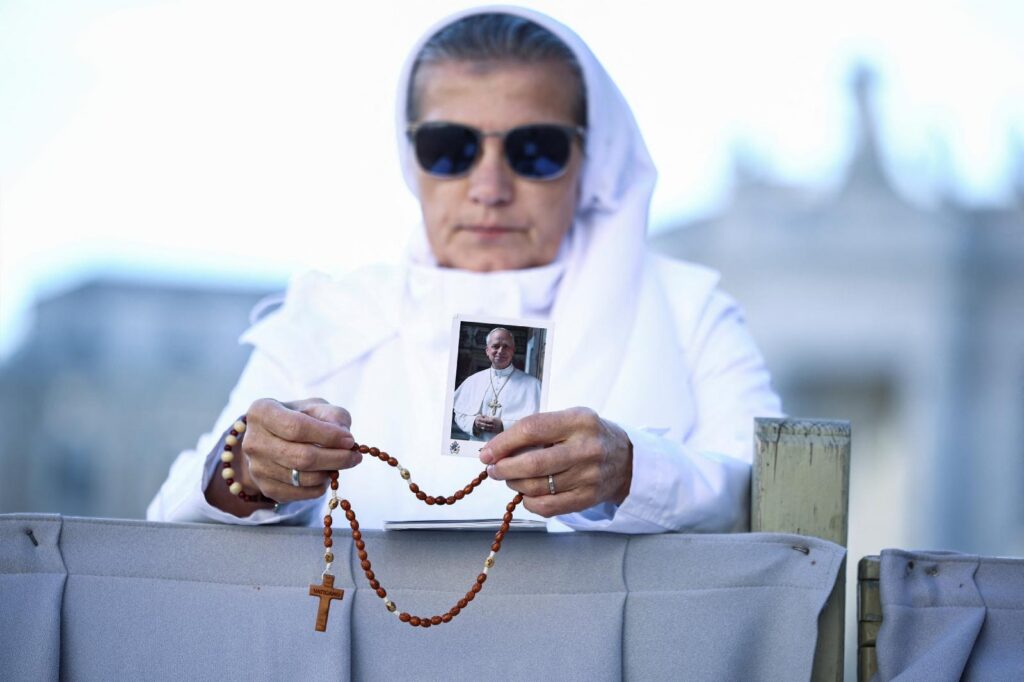
A nun holds an image of Pope Leo XIV while praying with rosary as Cardinal Luis Antonio Tagle, pro-prefect of the Dicastery for Evangelization, celebrates a Mass in St. Peter’s Square at the Vatican Oct. 14, 2026, on the final day of the meeting in which the presidents of bishops’ conferences are marking the 10th anniversary of “Amoris Laetitia” (“The Joy of Love”). The Mass also included special prayers for the health of Pope Leo XIV, following lung surgery the previous day and a diagnosis of cancer. (OSV News photo/Stoyan Nenov, Reuters)
Speaking with OSV News Oct. 14, Dominican Father Thomas Joseph White, rector of Rome’s Pontifical University of Saint Thomas Aquinas, said that while the news of Pope Leo’s surgery and cancer diagnosis had left many “concerned and saddened,” it also serves as a reminder of “the Christian meaning of suffering.”
“Even though it’s objectively a bad thing — I mean, it’s a grave thing to suffer — there’s the Christian hope to live suffering constructively,” Father White told OSV News. “And so, you think about the pope doing that, and you pray for him.”
Father White recalled the witness given by previous pontiffs who navigated debilitating illnesses in the public eye.
He noted that ministerial priests, especially the Roman Pontiffs, are called “to be conformed to Christ and to pray for others, to offer himself in Christ with the grace of Christ for others.”
“I think actually of John XXIII, who did die of cancer and would actually publish, I think on a weekly basis, the intentions that he was praying for and how he was offering his suffering for the faithful and for various intentions, which is, I think, a saintly example,” Father White said.
Father White also noted the “saintly example” of St. John Paul II’s battle with Parkinson’s and said both pontiffs’ examples were “meant to speak to all of us as Christians and just human beings about the constructive living of suffering, despite its objectively bad character, to make something constructive of it.”
Recalling his personal encounters with Pope Leo, Father White told OSV News he was struck by the pope’s “peacefulness, his joy and his serenity,” expressing hope that the pope’s “stability of character” will guide him “through this next stage in his own vocation and in his teaching to us as the Holy Father, including in his illness.”
World leaders react
Prominent world leaders took to social media to offer prayers and words of encouragement in the wake of the pope’s diagnosis.
“Wishing His Holiness Pope Leo XIV a speedy recovery following his recent diagnosis,” U.N. Secretary-General António Guterres wrote on X, adding that his prayers and thoughts were with the pope and “the Catholic community worldwide.”
U.S. Secretary of State Marco Rubio also took to X, saying that he and his wife, Jeanette, were “united in prayer for (Pope Leo’s) health following his recent diagnosis.”
“May the Lord give him strength and the Holy Spirit guide the medical professionals taking care of the Holy Father,” Rubio wrote.
The U.S. ambassador to Italy and San Marino, Tilman J. Fertitta, offered hopes for the pontiff’s “speedy recovery from his surgery and for his continued health.”
Canadian Prime Minister Mark Carney wished the pope “a full and swift recovery following his successful surgery.”
“His Holiness is a source of hope and inspiration for billions around the world,” Carney wrote on X. “His message of unity and compassion reminds us of the strength we can offer one another in moments of uncertainty.”
Echoing Carney’s sentiments, Australia’s prime minister, Anthony Albanese, praised the pope as “a source of inspiration to Catholics” and a “voice for peace, humanity and reason in our modern world.”
“My thoughts and prayers are with him as he recovers from his recent surgery,” Albanese wrote. “We hope and pray for a quick recovery.”
Indian Prime Minister Narendra Modi wished Pope Leo “a full and speedy recovery as well as continued good health,” while his counterpart in neighboring Pakistan, Shehbaz Sharif, assured the pontiff of his prayers for “strength, comfort and a speedy recovery.”
“Pakistan’s Catholic community, and indeed the entire nation, joins me in praying for His Holiness’ good health,” Sharif wrote. “His steadfast message of compassion, peace and human dignity resonates deeply with people across Pakistan and the world. We pray that he continues his invaluable service to humanity, with renewed strength and conviction.”
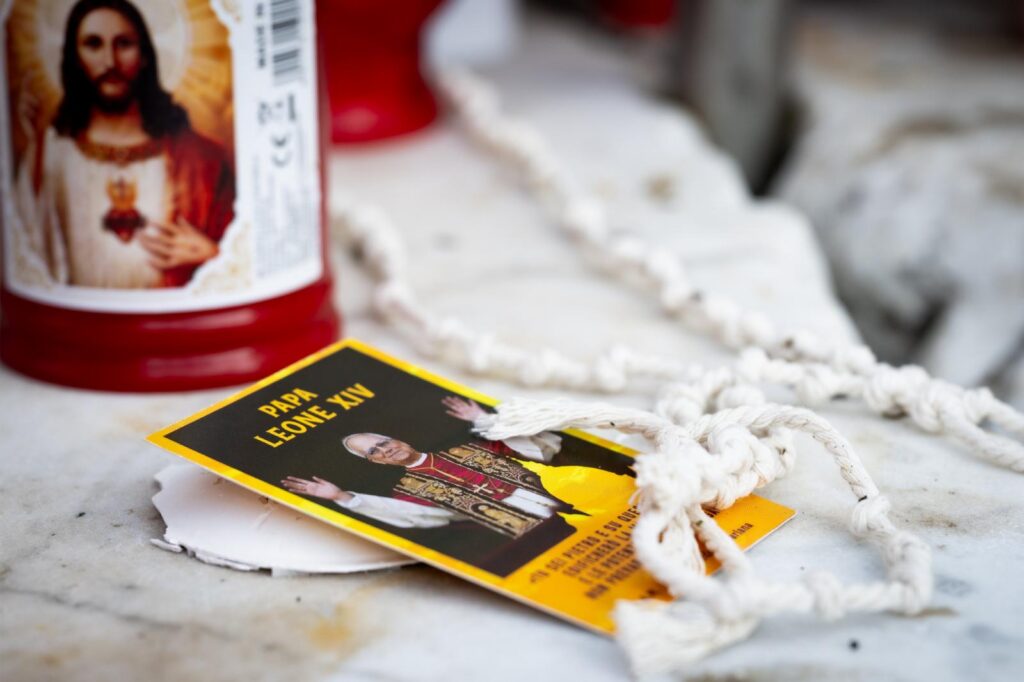
Devotional items are found next to the statue of St. John Paul II Oct. 14, 2026, in front of Rome’s Gemelli hospital where Pope Leo XIV is recovering from surgery during which doctors removed his lower right lung to treat a cancerous tumor. (CNS photo/Cristian Gennari)
In Latin America, Venezuela’s acting president, Delcy Rodriguez, invoked the intercession of the country’s saints — Sts. José Gregorio Hernández and Carmen Rendiles — and prayed that God “grant you strength to continue your noble mission of bringing peace, love, and hope to the peoples of the world.”
“Venezuela raises its prayers for the prompt and full recovery of His Holiness Pope Leo XIV. We convey to him the affection and solidarity of our people, united in faith and hope for his health and well-being,” she wrote on X.
In Peru, one of three countries Pope Leo is scheduled to visit in November, President Keiko Fujimori said the country received the news of the pontiff’s diagnosis “with deep sadness” and asked God “to care for him, to give him strength, and allow us to see him soon recovered.”
“Today, more than ever, let us unite our faith in a great chain of prayer. May our Lord of Miracles hear our pleas and accompany him in this difficult moment,” Fujimori wrote. “Holy Father, this land, which is also your home, embraces you with immense affection. Today it is our turn to accompany you with our prayers, just as you have so many times accompanied us with yours.”
Anglican Archbishop Sarah Mullally of Canterbury also reacted to the news of the pope’s cancer diagnosis, saying that her “daily prayers remain with Pope Leo XIV.”
Assuring the prayers of the Church of England and the Anglican Communion, Archbishop Mullally said: “I pray that the Holy Spirit — the Comforter, Healer and Giver of Life — will sustain him in the days and weeks ahead, and that his recovery will be swift and complete.”
Shortly after the Archbishop of Canterbury’s post was published, the Anglican Communion’s official X account shared her message and called on Anglicans “to join with Catholic sisters and brothers in prayer for the Holy Father.”
Cardinal Tagle reads Pope Leo’s homily to bishops: ‘The world has no future without strong families’
VATICAN CITY (OSV News) — Cardinal Luis Antonio Tagle, the newly elected dean of the College of Cardinals, presided over the closing Mass for the Vatican meeting of bishops on marriage and family on Oct. 14, reading aloud a homily that had been prepared by Pope Leo XIV prior to his lung cancer surgery, saying, “The world has no future without strong families.”
Pope Leo had been scheduled to preside over the closing Mass in St. Peter’s Square himself before he shocked the world on Sunday with the announcement that he would be having surgery. As a result, the morning Mass took place without the presence of the pope, just hours after the Vatican announced that late Oct. 13 that the surgery had confirmed a diagnosis of lung cancer for the 71-year-old pope.
Prayers for Pope Leo
Participants in the Oct. 7-14 gathering of the world’s bishops’ conference presidents and the heads of Eastern Catholic churches marking the 10th anniversary of Pope Francis’ document on the family, “Amoris Laetitia,” prayed for Pope Leo’s recovery in the Prayer of the Faithful during the Mass and listened to the words that the pope had prepared for them.
A nun holds an image of Pope Leo XIV while praying with rosary as Cardinal Luis Antonio Tagle, pro-prefect of the Dicastery for Evangelization, celebrates a Mass in St. Peter’s Square at the Vatican Oct. 14, 2026, on the final day of the meeting in which the presidents of bishops’ conferences are marking the 10th anniversary of “Amoris Laetitia” (“The Joy of Love”). The Mass also included special prayers for the health of Pope Leo XIV, following lung surgery the previous day and a diagnosis of cancer. (OSV News photo/Stoyan Nenov, Reuters)
“The world has no future without strong families open to the gift of children and attentive to their education and growth,” Pope Leo wrote in his homily, which emphasized the important role of families in educating and forming the young in the virtues.
The pope highlighted, quoting Amoris in part, that “the importance of the virtues, among which a special place is given to chastity, which is ‘invaluable for the genuine growth of love between persons,'” in preparing young people for true love in marriage.
“Marriage preparation programs conscientiously developed for this purpose in parishes and pastoral areas are commendable. Yet such courses alone are insufficient, for they must be preceded and supported by an education in love that accompanies a person’s growth from childhood,” he wrote.
Pope Leo highlighted Pope Francis’ post-synodal apostolic exhortation that followed the Synod on the Family, saying that “marriage preparation begins at birth.”
Family as ‘first school’
“In this way, love lived within the family — with its moments of struggle, mistakes and failures, yet also with the marvel of its unpredictable, everyday life — becomes the first school of human affection, the first precious and irreplaceable apprenticeship in the ‘joy of love,'” Pope Leo said.
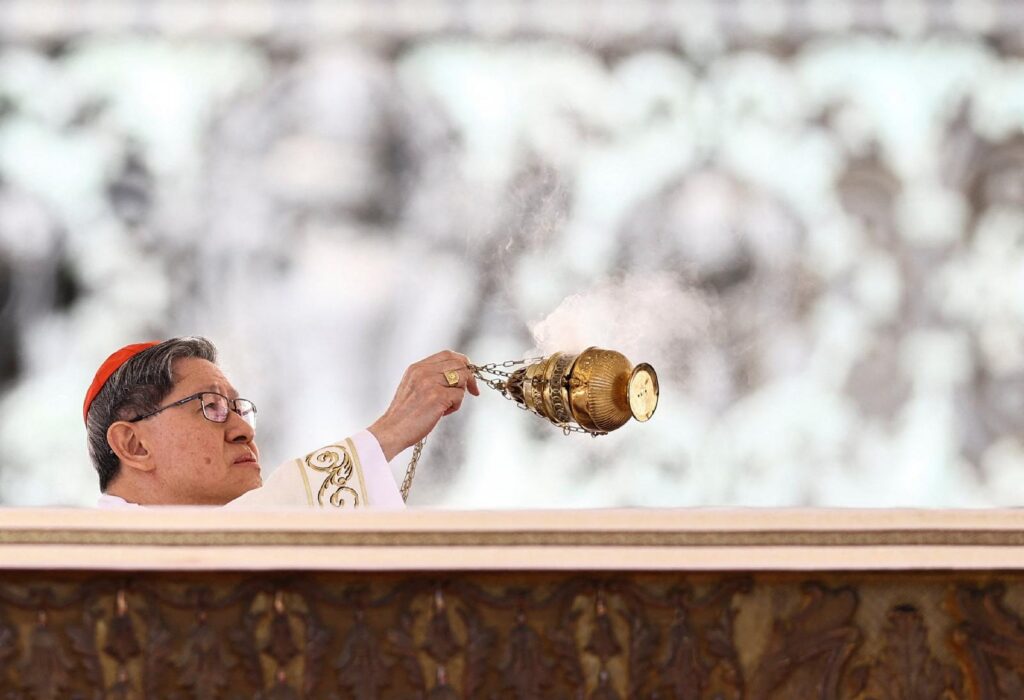
Cardinal Luis Antonio Tagle, pro-prefect of the Dicastery for Evangelization, swings a censer over the altar as he celebrates a Mass in St. Peter’s Square at the Vatican Oct. 14, 2026, on the final day of the meeting in which presidents of bishops’ conferences marked the 10th anniversary of “Amoris Laetitia” (“The Joy of Love”). The Mass also included special prayers for the health of Pope Leo XIV following lung surgery the previous day and a diagnosis of cancer. (OSV News photo/Stoyan Nenov, Reuters)
Pope Leo said that “the values of openness to life and respect for life, from conception to natural death, are also rooted in this charity, which is fundamental to our existence and to our life together as human beings.”
“The family is the foremost guardian of these values, a beacon for the good of humanity,” he added.
As Cardinal Tagle read aloud the pope’s prepared homily, the cardinal noted the presence of Patriarch Paul III Nona, the patriarch of Baghdad of the Chaldeans, whom Pope Leo granted ecclesiastical communion in April.
“I myself have the honor of presiding over this celebration by special mandate of His Holiness Pope Leo XIV, in order to manifest publicly the ecclesiastical communion he has granted to His Beatitude Paul III Nona, Patriarch of Baghdad of the Chaldeans, who is participating in this Eucharist,” the cardinal said.
“Your Beatitude, your presence helps us better understand our identity as the Church, which is a communion in Christ the Lord of the Churches of various rites and traditions, in a unity that is expressed tangibly with the Successor of Peter,” he added.
Report release delayed
The Vatican did not provide an update on Pope Leo’s clinical condition in the morning following the announcement of his cancer diagnosis, other than that the pope’s first night in the hospital passed calmly.
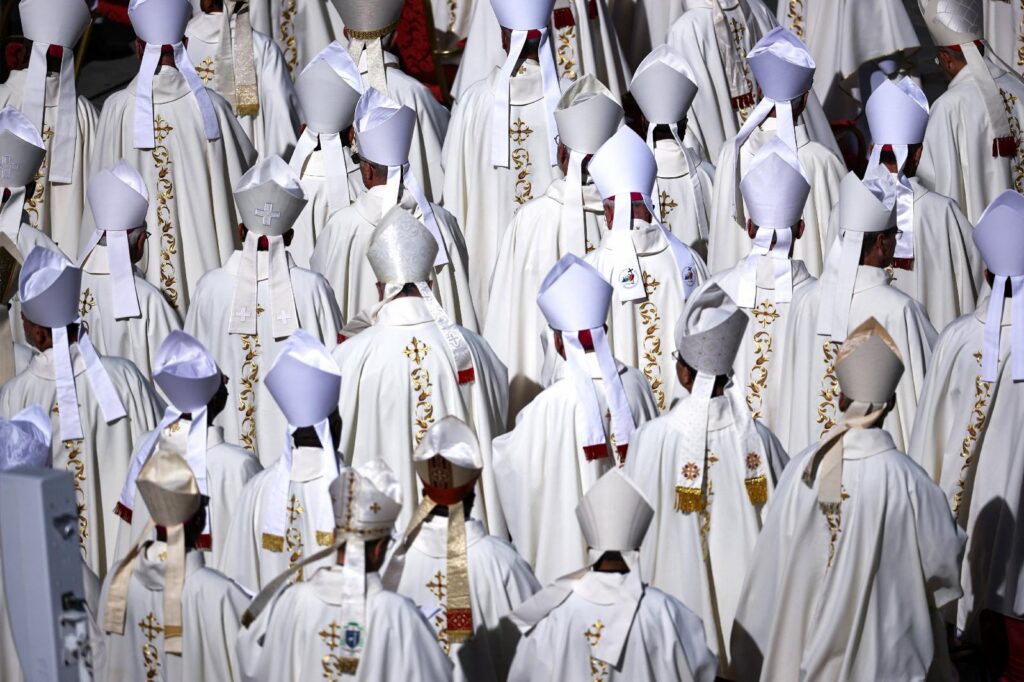
Prelates attend a Mass celebrated by Cardinal Luis Antonio Tagle, pro-prefect of the Dicastery for Evangelization, in St. Peter’s Square at the Vatican Oct. 14, 2026, on the final day of a meeting in which the presidents of bishops’ conferences are marking the 10th anniversary of “Amoris Laetitia” (“The Joy of Love”). The Mass also included special prayers for the health of Pope Leo XIV, following his lung surgery the previous day and diagnosis of cancer. (OSV News photo/Stoyan Nenov, Reuters)
Following the closing Mass, the bishops, families and experts taking part in the “Amoris Laetitia” meeting are scheduled to meet again in the late afternoon for the presentation of the meeting’s synthesis report at the closing session of the weeklong event.
Due to the personal request of Pope Leo prior to his surgery, the meeting’s final synthesis report will no longer be made public on Oct. 14. Jesuit Father Giacomo Costa, a consultant to the General Secretariat of the Synod, said that the pope requested to postpone the meeting’s final report, noting that Pope Leo “wanted to listen to it and be able to offer his own word on it himself.”
‘To see the face of God in wartime’: a Jesuit’s mission in Siberia
WARSAW, Poland (OSV News) — Every day for more than four years, in a Catholic parish deep in the Russian region of Siberia, a small community has gathered before the Blessed Sacrament to pray the rosary for peace between Russia and Ukraine.
The prayer has continued since Feb. 24, 2022, the day Russia launched its full-scale invasion of Ukraine. It includes another intention, one that Jesuit Father Wojciech Ziólek said has become essential to his ministry: that God would “save our hearts from hatred and revenge.”
When the war broke out, the world of Father Ziólek, the Polish pastor of Our Lady of the Rosary Parish in Tomsk, seemed to collapse. “I cried so much at the beginning. It was terrible,” Father Ziólek told OSV News during a brief visit to Poland in October. “There was this enormous sense of helplessness. As a Jesuit community, we did not know what to do.”
Father Ziólek spoke with OSV News in Warsaw Sept. 17, ahead of the 100th World Mission Sunday observed Oct. 18, and on the same day Russia launched another large-scale missile and drone attack on Ukraine. The overnight barrage wounded more than 20 people in Kyiv and other cities and damaged homes and infrastructure across several regions, according to Ukrainian officials.
Jesuit Father Wojciech Ziólek of Our Lady of the Rosary Parish in Tomsk, Siberia, Russia, is pictured on an undated photograph. He said his community has gathered daily before the Blessed Sacrament since Feb. 24, 2022, Russian invasion of Ukraine, praying for peace between Russia and Ukraine and asking God to “save our hearts from hatred and revenge.” (OSV News photo/courtesy Father Wojciech Ziolek)
The war is now well into its fifth year, as diplomatic efforts continue but so far have not brought a resolution for peace. On Oct. 11, right before announcing that would undergo surgery to remove a lung nodule, Pope Leo XIV renewed his appeal for peace, saying, “The war in tormented Ukraine continues to cause suffering far beyond its borders, especially in the poorest countries, where so many people depend on grain imports.”
“I make a heartfelt appeal to the parties to the conflict to allow for the safe transport of grain through the Black Sea. The daily bread of millions of people cannot be held hostage by the war,” the pope said.
Just weeks earlier, Archbishop Paul R. Gallagher, the Vatican secretary for relations with states and international organizations, had completed a visit to Moscow, where he met Russian government officials, representatives of the Russian Orthodox Church and Russia’s small Catholic community. During Mass with Catholic clergy and religious, he urged the Church in Russia to become “true artisans of peace in our daily lives.”
A microscopic minority
For Father Ziólek, that daily life takes place far from Moscow. His parish covers Tomsk Oblast, a Siberian region of more than 122,000 square miles — slightly larger than his homeland, Poland.
“The first thing that makes an impression on someone who has never been there is the distances,” Father Ziólek told OSV News. Across that enormous territory, he added, there are just two Catholic churches: the parish church in Tomsk and a tiny wooden church in the village of Bialystok.
“We are not simply a minority. We are a microscopic minority,” Father Ziólek said. “For someone coming from a Catholic country, or even from a place where there are several churches in one city, it is difficult to understand that across an area the size of Poland there are two churches.”
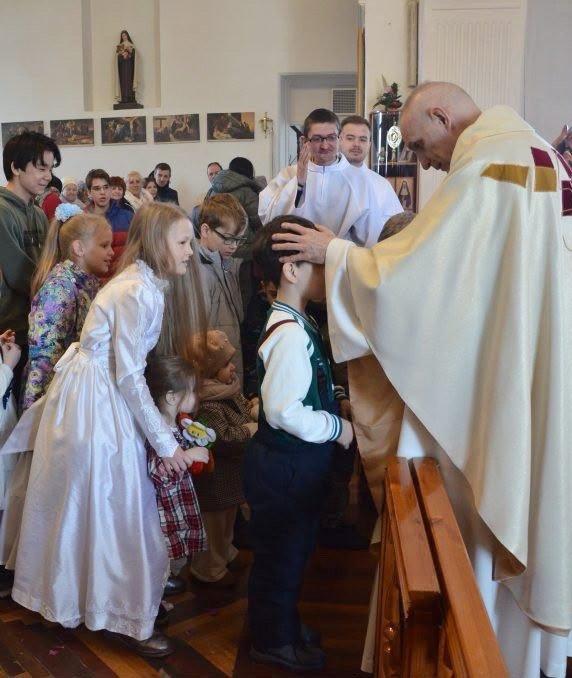
Father Wojciech Ziólek is seen in an undated photo blessing a child in the Siberia region Catholic parish community at the Church of Our Lady of the Rosary in Tomsk, Russia. (OSV News photo/courtesy Tomsk Jesuit Parish)
By Siberian standards, however, Tomsk has a large Catholic parish. Three Sunday Masses draw a combined 200 to 250 people, Father Ziólek said. In some Siberian Catholic communities, he added, Sunday Mass may bring together only 20 or 30. Catholics make up only about 0.5% of Russia’s population, with the Latin-rite Catholic community numbering roughly 800,000 people nationwide, according to recent Church data.
The congregation itself is a portrait of Siberia’s complicated religious history. There are descendants of Poles, Germans and Lithuanians, but also ethnic Russians, including people baptized in the Orthodox Church as infants, who never practiced the faith and later began searching for God as adults.
‘How did you come to God’
That search, Father Ziólek said, is something Russians speak about in a way that still moves him. “There is a beautiful question people ask here, a question I had never heard in Poland: ‘How did you come to God?'” Father Ziólek said. “And then the story begins.”
For older Catholics, those stories often reach back into families in which faith survived decades of Soviet atheism through a grandmother or great-grandmother who prayed while younger generations were taught that religion was meaningless.
Now something new is happening.
“The first generation of Catholics who have been going to church since childhood is entering adulthood,” Father Ziólek said. “These are people who have had contact with faith from birth, who were baptized as children.” Not everyone stays. Some young people rebel and leave, just as they do elsewhere, Father Ziólek said. Some later return. Others arrive by unexpected routes.
Father Ziólek recalled two young women in their 20s who were walking home after a Saturday night party. It was early Sunday morning, it was cold, and public transportation had not yet started running. They saw the Catholic church open and went inside to get warm. “They were dressed as you might dress for a nightclub,” Father Ziólek said. “They were afraid that some grandmother would spot them and tell them what an offense against God it was to come into church dressed like that.”
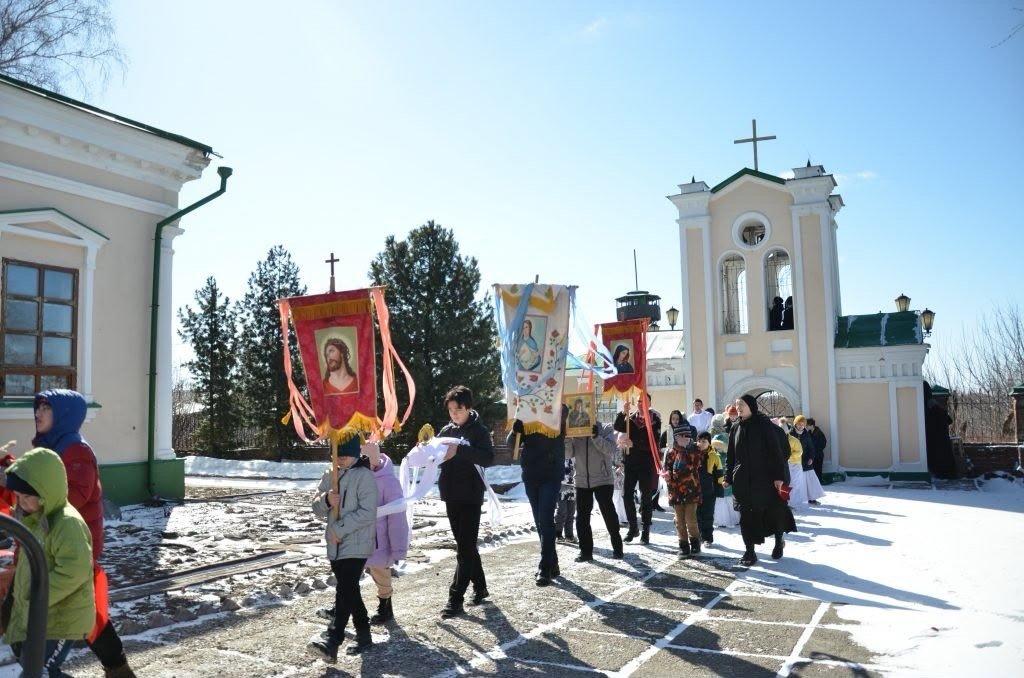
Worshippers are seen in an undated photo processing in the Siberia region Catholic parish community at the Church of Our Lady of the Rosary in Tomsk, Russia. (OSV News photo/courtesy Tomsk Jesuit Parish)
Nobody did. Mass began while they sat inside. The young women had never attended Catholic Mass before. “And then came the sign of peace,” Father Ziólek said. “Those grandmothers not only did not scold them, but reached out their hands to them. They were shocked.”
Today, he said, both women are among the parish’s most active members. Stories like that help explain why the community matters in a place where Catholics are few and separated by immense distances. Father Ziólek said laypeople play an unusually large role in parish life, including administration, fundraising and other ministries.
“They stay, because here they experienced God,” Father Ziólek said. “And they stay because this is a place of encounter.”
The fruits of war
The war brought a different kind of test. From its first day, Father Ziólek and his fellow Jesuits decided to hold a daily half-hour of Eucharistic adoration and pray the rosary for peace between Russia and Ukraine.
“What we have tried to do from the beginning is, first, to pray for peace and, second, to protect people from hatred and fear,” Father Ziólek said.
“Because the two main fruits of war, the ones that appear immediately, are hatred and fear.”
He is careful to distinguish that experience from religious persecution. “No one persecutes us here as Catholics,” Father Ziólek told OSV News, adding that the parish has warm relations with many Orthodox Christians. Tomsk, he said, has its own tradition of religious and cultural coexistence, shaped partly by generations of people sent there from different corners of the Russian Empire and later the Soviet Union.
The Catholic Church itself carries that history. After the suppression of Poland’s November Uprising against Russian rule, many Polish insurgents were exiled to Tomsk and the surrounding region. Their growing presence helped create the need for a permanent Catholic church building, which was consecrated in 1833.
Nearly two centuries later, a Polish Jesuit is serving Catholics there.
Father Ziólek said he welcomed Archbishop Gallagher’s recent effort to meet Russia’s local Catholic community as part of the Vatican’s contacts in Moscow. But diplomacy, in his experience, is only one part of building peace. “I have much more hope in human gestures that bring Catholics, Orthodox Christians and Protestants closer to one another,” Father Ziólek said, pointing to Tomsk as a place where such relationships are part of ordinary Christian life.
For him and the other Jesuits, remaining present to that community has become particularly important since the war began. “Our duty – our honorable duty – is to be with people,” Father Ziólek said, “to help them and accompany them, as much as we are able, on their way to God.”
“People often ask me what I miss in Russia,” Father Ziólek told OSV News. “I always answer: freedom and parsley.” The parsley, he quickly explained, is quite literal. “They have parsley leaves in the vegetable shops, but no parsley root. And you need it to make Polish soup.” But when OSV News asked what Russian Catholics themselves are missing, Father Ziólek’s answer was no longer a joke. “Love,” he said. “The experience of someone accepting them as they are. Someone who understands their tangled and very painful situation.”
“I think the essence of Christianity is to see the human being in another human being,” he said. “And the essence of working in Russia, in Siberia, is to see the human being in Russian.” “More than that, it is about seeing the face of God in another person,” Father Ziólek added. “And the essence of working in Russia during the war is to see the face of God in Russians and help them see that face in Ukrainians.”
– – – Katarzyna Szalajko writes for OSV News from Warsaw, Poland.
US bishops, lawmakers offer prayers for Pope Leo after cancer diagnosis
WASHINGTON (OSV News) — Following the Holy See’s Oct. 13 announcement that Pope Leo XIV was diagnosed with lung cancer and had the lower lobe of his right lung removed, Church and civic leaders expressed their hope and prayers for his full recovery.
The U.S. Conference of Catholic Bishops urged the faithful to pray for Pope Leo in a post on X.
“Doctors at Gemelli Hospital removed a cancerous tumor from Pope Leo XIV’s right lung, according to the Holy See Press Office,” the post said. “The surgery was successful, with no complications, and the Holy Father has returned to his hospital room. We ask the faithful to continue praying for Pope Leo’s recovery and for the doctors and staff caring for him. We also hold in prayer all who are living with cancer, their families, and those who care for them.”
Individual bishops and dioceses in the U.S. also urged prayer.
“Bless Pope Leo XIV with strength and peace as he faces this illness and unite him ever more closely with your Son,” said the Archdiocese of New York in an X post asking for prayers for the restoration of the pope’s health.
In a separate post, Archbishop Ronald A. Hicks of New York thanked God that the pope’s surgery was “by all accounts, successful” and added that he joined faithful from the archdiocese, country and the world “in keeping the Holy Father in our prayer.”
“Friends, please join me in praying for healing for our Holy Father, Pope Leo XIV, who has been diagnosed with lung cancer,” Bishop Robert E. Barron of Winona-Rochester, Minnesota, wrote on X.
Archbishop Mitchell T. Rozanski of St. Louis asked “all people of good will to join us in prayer for Pope Leo XIV and those who are caring for him.”
An image of Pope Leo XIV and other items are displayed outside Rome’s Gemelli Hospital in the evening hours of Oct. 13, 2026, where the pontiff underwent surgery to remove a lung nodule. The Vatican announced that evening the surgery was successful, but revealed the pope was confirmed to have lung cancer. (OSV News photo/Stoyan Nenov, Reuters)
Bishop Mark A. Eckman of Pittsburgh said in a statement he joins Catholics in that diocese “and around the world in lifting up our Holy Father, Pope Leo XIV, in prayer following the news of his surgery and lung cancer diagnosis.”
“We are grateful to hear that the surgery was successful, and we pray that the Holy Father will experience a full and peaceful recovery,” Bishop Eckman said. “Pope Leo has reminded us of the importance of faith, hope, and caring for one another. Now, as he faces this personal health challenge, we have an opportunity to surround him with the same love and prayerful support that he so generously offers to the Church and the world.”
Civic leaders express support, pray for Pope Leo
Some U.S. officials and lawmakers also weighed in, including Rep. Jonathan L. Jackson, D-Ill., who represents a Chicago-area district.
“Pope Leo XIV is one of our own, a Chicago kid who carried the values of our neighborhoods all the way onto the world stage, and today our whole city is wishing him strength and a full recovery,” Jackson said in a post on X. “Let his diagnosis also be a reminder to talk with your doctor about lung cancer screening, because catching it early saves lives. Chicago is with you.”
Secretary of State Marco Rubio wrote in a post on X, “Jeanette and I are united in prayer for (Pope Leo)’s health following his recent diagnosis.”
“May the Lord give him strength and the Holy Spirit guide the medical professionals taking care of the Holy Father,” Rubio said.
Rep. Riley Moore, R-W.Va., who is Catholic, wrote in a post on X, “Saint Teresa of Avila reminds us that ‘those who were nearest to Christ our Lord were those who had the greatest trials.'”
“This is no doubt true of (Pope Leo),” he said. “Please join Mina and me in praying for the Holy Father as he begins this battle to defeat cancer.”
Surgery to remove nodule was announced after Sunday Angelus
The 71-year-old pope disclosed during his Oct. 11 Angelus address that doctors had found a “localized nodule” in his lung. He said the nodule was “detected at a very early stage” during “some recent medical examinations.”
“The doctors believe intervention is advisable, so, following their advice, I have decided to undergo surgery to have it removed,” Pope Leo said.
The pope arrived at Rome’s Gemelli Hospital at about 1 p.m. Rome time on Oct. 13, and underwent the surgery in the late afternoon.
Pope Leo XIV arrives at Rome’s Gemelli Hospital Oct. 13, 2026, ahead of his surgery that afternoon to remove a lung nodule. The Vatican confirmed that evening that Pope Leo has lung cancer. (OSV News photo/Guglielmo Mangiapane, Reuters)
“The surgery was successful, completed on schedule and as planned, and the Holy Father has returned to his room,” the Holy See Press Office said in a statement issued shortly before 8 p.m.
Just before 10 p.m., a joint statement by Dr. Stefano Margaritora, chief thoracic surgeon at Rome’s Gemelli Hospital, and Dr. Luigi Carbone revealed that the “examination confirmed the diagnosis of lung adenocarcinoma, as suspected by the preoperative tests.”
Pope Leo XIV’s lung surgery completed successfully, Vatican says
ROME (OSV News) — Pope Leo XIV’s surgery to remove a lung nodule on Oct. 13 was completed successfully, the Vatican announced that night.
The pope underwent the surgery in the late afternoon after being admitted to Rome’s Gemelli Hospital at 1 p.m. Rome time. Dr. Stefano Margaritora, the hospital’s chief thoracic surgeon, led a medical team in the procedure.
“The surgery was successful, completed on schedule and as planned, and the Holy Father has returned to his room,” the Holy See Press Office said in a statement issued shortly before 8 p.m. Rome time.
Pope Leo is expected to remain for one week of recovery in Rome’s Gemelli Hospital, located atop Monte Mario, the highest hill in Rome. The Vatican has canceled all of the pope’s scheduled audiences through Oct. 20.
Rosary while waiting
The hospital’s chapel was overflowing with people on Tuesday evening as Cardinal Baldassare Reina, the vicar general of the Diocese of Rome, led a rosary for the pope’s healing as people anxiously awaited the results of the pope’s operation.
Among those who came to pray was Sister Alphonsa Manikkathan from the Indian state of Kerala and her fellow sisters from the Daughters of Divine Providence whose residence is located near the hospital.
“We pray for the pope every day, not only today,” Sister Alphonsa told OSV News. “Jesus said wherever two or more are gathered and pray for something, he will give. So for his fast recovery, we are praying.”
Father Miguel Silvestre Bengoa from Spain also joined in the rosary at the hospital. “If the pope is suffering, we also suffer with him,” he said. “But we want also to see him again in the Vatican.”
“It was so nice to be close to the pope in this same hospital,” the priest said. “We entrust the health of the pope to the hands of Our Lady.”
Asking for prayers
Pope Leo’s operation took place just days after he first revealed to the world that he needed surgery at the end of his Angelus address in St. Peter’s Square on Oct. 11.
Speaking from the window of the Apostolic Palace, the pope announced that doctors had discovered a nodule in his lung during a medical examination, adding that the growth was detected “at a very early stage” and it was “well-contained.”
“The doctors believe intervention is advisable, so, following their advice, I have decided to undergo surgery to have it removed,” Pope Leo said.
Since the pope’s announcement, prayers and messages of support have poured in from around the globe from prime ministers, presidents, religious leaders and Catholic bishops.
Pope Leo’s second hospitalization
This was the second hospitalization in the 71-year-old pope’s life, according to a recently published biography. Shortly after his election, Pope Leo said that he had only been hospitalized once in his life before becoming pope when he caught typhoid fever after recently arriving as an Augustinian missionary in Peru in 1985.
“It’s the only time in my life I’ve been hospitalized,” Pope Leo is quoted as saying in the book, “Pope Leo XIV” by Elise Ann Allen, calling it “a very significant” moment in his life that helped him more sharply focus on his new ministry.
South America trip planned
Pope Leo’s surgery occurred less than one month before he is scheduled to depart for South America for what would be the longest international trip of his pontificate Nov. 6 to 17, with stops in Uruguay, Argentina and Peru. The Vatican has not announced any changes to the trip.
Cardinal Isao Kikuchi, archbishop of Tokyo, who met Pope Leo for a private audience the day before the surgery, wrote in a social media post that the pope had told him on Oct. 12 that he wanted to have the operation as soon as possible to give himself time to recover before the trip to Latin America.
“He assured me that this is a minor operation and he feels nothing wrong with his body, and he said he had decided to go for the operation as soon as possible not to change his plan of Latin America visit,” Cardinal Kikuchi said. “We have to keep Holy Father in our prayers.”
Courtney Mares is Vatican editor for OSV News. Follow her on X @catholicourtney.
What’s a lung nodule? As Pope Leo undergoes surgery, medical experts explain
(OSV News) — As Pope Leo XIV undergoes surgery for a lung nodule, medical experts consulted by OSV News said the condition is typically benign — but requires careful scrutiny and early intervention to address any possible cancer.
In addition, the experts — none of whom are part of Pope Leo’s care team — offered varying views on how much post-operative downtime patients typically face after the type of procedure Pope Leo is undergoing Oct. 13.
That downtime may affect the pope’s planned Nov. 6-17 apostolic visit to Latin America.
Lung nodules can be due to ‘laundry list of reasons’
Pope Leo was admitted to Rome’s Gemelli Hospital Oct. 13 for lung surgery, following his Oct. 11 disclosure that a scan had revealed a “well-contained” lung nodule that had been “detected at a very early stage.”
The pope’s expected week-long hospitalization, confirmed by the Vatican, has led to a slew of cancelled papal appearances, including meetings, addresses, ceremonies and participation in a Mass in St. Peter’s Square.
While not speculating on Pope Leo’s specific circumstances, medical experts with whom OSV News spoke explained that lung nodules, or abnormal growths on the lungs, are far from unusual — and, for the most part, are not life-threatening.
“Lung nodules are very common, and 90% of the time, they are benign,” said Dr. Stacey Su, chief of thoracic surgery at Fox Chase Cancer Center in Philadelphia and associate professor of surgical oncology at Temple University’s Lewis Katz School of Medicine.
But, she said, “the potential impact of lung cancers is so grave that any lung nodule deserves serious attention.”
A statue of the St. John Paul II is seen outside Gemelli Hospital in Rome Oct. 13, 2026, where Pope Leo XIV is having surgery that afternoon to remove a lung nodule. (OSV News photo/Matteo Minnella, Reuters)
Most lung nodules are benign
Dr. Sonali Sethi, an interventional pulmonologist at the Cleveland Clinic, told OSV News that “in the U.S. alone, 1.5 million lung nodules are seen in imaging a year” — and of those, “95% of the time, what we see is benign.”
Such nodules “can be caused by a whole laundry list of reasons,” said Su. “Sometimes it’s from infection, sometimes it’s an old scar. But in some cases, it is a growth, with the potential to grow and spread.”
Lung nodules, “depending on their size and location,” can develop “without any symptoms at all” for the patient, said Su. “Patients will come all the time to the clinic saying, ‘I feel completely fine,’ and they doubt the veracity of the lung nodule.”
“Size is an important component,” said Dr. Nirmal Veeramachaneni, professor of cardiothoracic surgery at St. Louis University School of Medicine and medical director for lung cancer screening at SSM Health. “So if you see a lesion that’s 4 or 5 millimeters versus 8 or 10 millimeters — we’re talking fractions of an inch — the guidelines on what the follow-up should look like are different, and they’re evidence-based.”
Pope Leo XIV smiles as he arrives at Rome’s Gemelli Hospital Oct. 13, 2026, ahead of his surgery that afternoon to remove a lung nodule. (OSV News photo/Ciro De Luca, Reuters)
Follow-up protocols for lung nodules
He pointed to standards from the Fleischner Society — an international, multidisciplinary group of medical experts focused on chest diseases — that recommend a range of follow-up protocols for lung nodules discovered outside of formal lung cancer screening.
The guidelines take into account the size, location and margins of the nodule, as well as the patient’s overall risk factors, including age and tobacco use.
Pope Leo does not have any history of tobacco use, said Veeramachaneni — but he and other experts pointed out that lung nodules can sometimes be attributed to genetics, exposure to particulates such as asbestos, and pulmonary histoplasmosis.
The fungus that causes histoplasmosis is particularly found in the Mississippi and Ohio River valleys, and in certain areas of Central and South America — including Peru, where Pope Leo once spent some two decades as an Augustinian missionary.
However, said Sethi, while histoplasmosis “does cause a lot of scares,” the condition “doesn’t cause malignancy.”
Birds fly near St. Peter’s Square at the Vatican Oct. 12, 2026, ahead of Pope Leo XIV’s expected surgery to remove a small growth on his lung. The Vatican has confirmed that Pope Leo will be admitted to Gemelli Hospital on Oct. 13 before undergoing lung surgery, prompting the cancellation of several public appearances and meetings over the coming week. (OSV News photo/Guglielmo Mangiapane, Reuters)
Surgical options for lung nodules
Medical experts at Sweden’s renowned Karolinska University Hospital said surgical intervention for a lung nodule is standard when imaging raises concerns “that the nodule may be more serious.”
In a joint response sent to OSV News Oct. 13, Simon Ekman and Signe Friesland, senior oncologists at Karolinska University Hospital, also noted generally that if a “nodule is difficult to biopsy, surgery is a way to get material (tissue) to analyse.”
Both experts stressed that their remarks reflected standard clinical practice rather than direct knowledge of the pontiff’s medical history.
Veeramachaneni said that treating lung nodules involves “a multidisciplinary approach.”
“You have lung doctors, surgeons, radiation oncologists, medical oncologists involved,” he said.
According to Ekman and Friesland, the typical surgical procedure “for all patients regardless of condition” is a Video-Assisted Thoracoscopic Surgery. VATS is a minimally invasive surgery using a camera inserted through one to three keyhole incisions.
After the operation and travel risks
The oncologists told OSV News that postoperative recovery includes pain medication, breathing exercises to expand the lungs, and having the patient move around “as early as possible.”
While chest tubes with suction are sometimes required to evacuate trapped air, the specialists noted that “this is not the usual case.”
Ekman and Friesland noted that some risks of flying not long after lung surgery include possible air leakage “when the outside pressure (cabin pressure) gets lower.”
“If you get an air leakage, the lung may collapse if the air gets trapped inside the chest wall. Blood clots are also a risk,” they said.
A statue of the St. John Paul II is seen outside Gemelli Hospital in Rome Oct. 11, 2026. The Vatican confirmed that Pope Leo XIV will be admitted to Gemelli Hospital on Oct. 13 before undergoing lung surgery, prompting the cancellation of several public appearances and meetings over the coming week. (OSV News photo/Matteo Minnella, Reuters)
Recovery times for patients like Pope Leo vary
However, both specialists noted that “potential risks in individual cases depend on the recovery of the patients, and it varies between patients when it is deemed safe to fly again.”
“It really depends on the type and extent of the surgery and of course the speed of the recovery afterward, any complication factors, etc.,” Ekman and Friesland said. “Generally, we recommend not to fly within a month after lung surgery, but it is really a judgment by the treating physicians to recommend what is safe or not.”
Veeramachaneni said his patients typically spend just over two days in the hospital following surgery, “especially with minimally invasive techniques.”
“Usually at the one- to two-week standpoint, if it’s somebody who’s not doing hard physical labor, I pretty much clear them to do whatever their body tells them is OK,” he said.
Sethi said Pope Leo “may in one week be perfectly fine to continue with whatever he had scheduled.”
Su said that a needle biopsy “should be relatively well tolerated,” with a patient “potentially going back to work the next day.”
But, she said, a patient whose biopsy involves an excision, or full removal, would possibly need “three to four weeks to recover before they’re back at work.”
“They may be home from surgery within one to three days,” she said. “But it still requires recovery time, management of pain that may be associated with the surgery, and just getting up and moving around well enough to go back to work.”
Prayers for pope ahead of surgery invoke Our Lady of Fatima on miracle of sun anniversary
KRAKOW, Poland (OSV News) — As Pope Leo XIV entered the hospital Oct. 13 for surgery, Cardinal Stanislaw Dziwisz, longtime secretary to St. John Paul II, offered prayers through the intercession of the Polish pope and Our Lady of Fatima.
The operation coincides with the anniversary of the “miracle of the sun” in Fatima, a supernatural event tied to the apparitions of Our Lady of Fatima and occurring in response to a prophecy made by three shepherd children, Lucia dos Santos and Sts. Francisco and Jacinta Marto. The prophecy was that the Virgin Mary would appear and perform miracles on that date.
Pope John Paul II credited Our Lady of Fatima with saving his life after the 1981 assassination attempt, which occurred on May 13, the feast of Our Lady of Fatima.
Writing to Pope Leo Oct. 11, Cardinal Dziwisz said, “The news that reached us has shaken us.”
“Your temporary indisposition all the more puts us closer to you,” he said, assuring the pope of his prayers through the intercession of St. John Paul II.
Pope Leo XIV smiles as he arrives at Rome’s Gemelli Hospital Oct. 13, 2026, ahead of his surgery that afternoon to remove a lung nodule. (OSV News photo/Ciro De Luca, Reuters)
Pope Leo was admitted Oct. 13 to Rome’s Gemelli Hospital to undergo surgery to remove a lung nodule in the afternoon.
Speaking to OSV News, Cardinal Dziwisz said he hopes the hospitalization is “only temporary, a precautionary measure to prevent the illness from progressing.”
“That is what we are praying for. I entrust this matter to God through St. John Paul II, because I know from experience how many people have received graces through his intercession,” said the cardinal, St. John Paul II’s personal secretary for four decades.
Cardinal Dziwisz said that after what “we’ve seen in Spain” and during the papal trip to France, he was surprised to learn about the pope’s health condition, but that he was reassured to hear “the powerful message from the Holy Father” announcing his sickness transparently.
“He had the courage — much like John Paul II once did — to tell people: ‘I have a health issue; I need to step back and undergo treatment.'”
St. John Paul II, who died April 2, 2005, views the faithful gathered below his room at Rome’s Gemelli Hospital March 6, during a brief midday appearance. As Pope Leo XIV was admitted to the hospital Oct. 13, 2026, to undergo surgery, scheduled for that same afternoon, Polish Cardinal Stanislaw Dziwisz, longtime secretary of St. John Paul, assured the pontiff of his prayers through the intercession of Pope Leo’s predecessor and Our Lady of Fatima. (CNS photo/Arturo Mari, L’Osservatore Romano)
Connections to Pope John Paul II
On July 12, 1992, St. John Paul II told pilgrims: “I would now like to share something personal with you,” and announced that he would be visiting Gemelli “for some diagnostic tests,” which resulted in him undergoing surgery to remove a large tumor from his colon.
In the spring of 1994, after the pontiff underwent hip replacement and reconstructive surgery to repair his right hip joint that followed fracturing of his right femur in a fall, Pope John Paul II reflected on his health during the May 29, 1994, Angelus prayer.
“I would like to express, through Mary, my gratitude today for this gift of suffering — once again linked to the Marian month of May. I wish to give thanks for this gift. I have come to understand that it is a necessary gift,” Pope John Paul said.
“The pope had to be at the Gemelli Polyclinic; he had to be absent from this window for four weeks — four Sundays,” he continued. “He had to suffer — just as he had to suffer 13 years ago, so too this year,” a reference to the assassination attempt.
In 1994, the Church observed the Year of the Family. Reflecting on his suffering, John Paul went on to say: “Why now? Why this year? Why during this Year of the Family?” — and immediately answered: “Precisely because the family is under threat; the family is under attack. The pope must be attacked; the pope must suffer, so that every family and the world may see that there is a Gospel … through which the future must be prepared: the third millennium of families — of every family and of all families.”
While St. John Paul II underwent surgery in the Church’s Year of Family, Pope Leo’s operation coincides with the final days of the Vatican meeting of the world’s bishops’ conference presidents and the heads of Eastern Catholic Churches on families, marking the 10th anniversary of “Amoris Laetitia.”
A statue of the St. John Paul II is seen outside Gemelli Hospital in Rome Oct. 13, 2026, where Pope Leo XIV is having surgery that afternoon to remove a lung nodule. (OSV News photo/Matteo Minnella, Reuters)
Prayers from Fatima
As the pope prepared for surgery, pilgrims from around the world were in Fatima to commemorate the 109th anniversary of Mary’s final apparition and pray for Pope Leo’s health.
According to a statement from the Shrine of Fatima, an estimated 130,000 pilgrims gathered Oct. 12 for an evening liturgy. During the universal prayer, the shrine said the pilgrims prayed that “the Immaculate Heart of Mary may be the model of the holy Church and intercede for Pope Leo XIV, so that, through the love and power of Christ, he may find relief and health.”
Shortly after the pope’s surprise announcement of the surgery during his Sunday Angelus address Oct. 11, Father Carlos Cabecinhas, the shrine’s rector, announced that the special prayer would be recited during the pilgrimage celebrations.
Noting that the shrine normally prays for the pope, Father Cabecinhas explained that “the current situation justifies making this intention explicit.”
“We will invite pilgrims to pray specifically for the pope and for his health, for his speedy recovery,” he said.
While news of the surgery may be concerning, Catholics have also received it with confidence and serenity because “we also trust in the power of prayer,” Father Cabecinhas said.
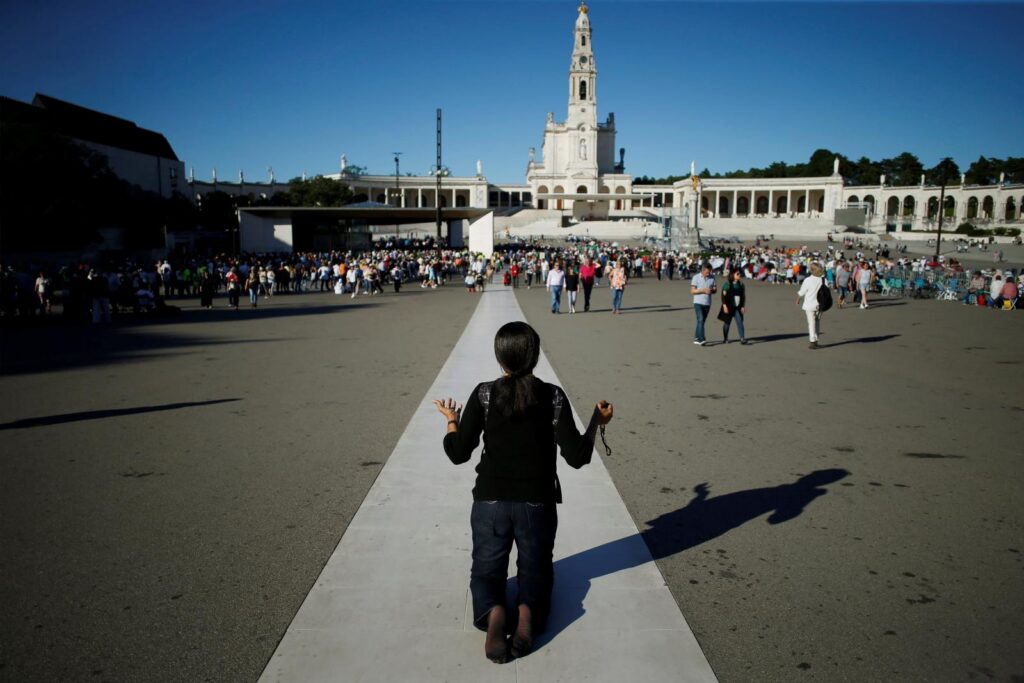
A pilgrim prays near the Marian shrine of Fatima in central Portugal May 12, 2019. (OSV News photo/Pedro Nunes, Reuters)
The miracle of the sun
The Oct. 12-13 International Anniversary Pilgrimage marks the last pilgrimage of the year at the site where Mary appeared to the three shepherd children. The apparitions began May 13, 1917, when the children reported seeing the Virgin Mary, and continued once a month until Oct. 13, 1917.
On the day of the final apparition, despite heavy rainfall, tens of thousands of people went to the apparition site, known as Cova da Iria, to witness the long-awaited miracle the children said Mary had promised.
After Mary identified herself as “Our Lady of the Rosary” and asked people to stop offending God, she opened her hands, reflecting light toward the sun. After Lucia told the crowds to look up, the sun appeared to “dance,” spinning and changing colors.
However, panic ensued when the sun seemed to hurtle toward the earth, but it returned to its place. Thirteen years later, the bishop of Leiria deemed the apparitions worthy of belief.
Hope that Pope Leo will visit Fatima
Francisco died from influenza April 4, 1919, at age 10, while Jacinta also succumbed to illness Feb. 20, 1920, at age 9.
Pope Francis canonized the two young children during his 2017 visit to Fatima, making them the Catholic Church’s youngest non-martyred saints. Pope Francis declared their cousin, Sister Lucia, who died in 2005 at the age of 97, “venerable” in 2023.
Father Cabecinhas expressed his hope that Pope Leo would visit Fatima in 2027 to mark the 110th anniversary of the apparitions.
“I remain confident that it will be possible to nurture this hope of the pope’s visit next year,” he said.
Paulina Guzik is international editor for OSV News. Follow her on X @Guzik_Paulina. Junno Arocho Esteves is an international correspondent for OSV News. Follow him on X @jae_journalist.
Pope Leo XIV admitted to hospital for afternoon lung surgery
ROME (OSV News) — Pope Leo XIV was admitted Oct. 13 to Rome’s Gemelli Hospital, where the Vatican has confirmed that he will undergo surgery to remove a lung nodule in the afternoon.
Dr. Stefano Margaritora, the hospital’s chief thoracic surgeon, will be the lead surgeon for the pope’s operation assisted by a medical team, according to the Holy See Press Office.
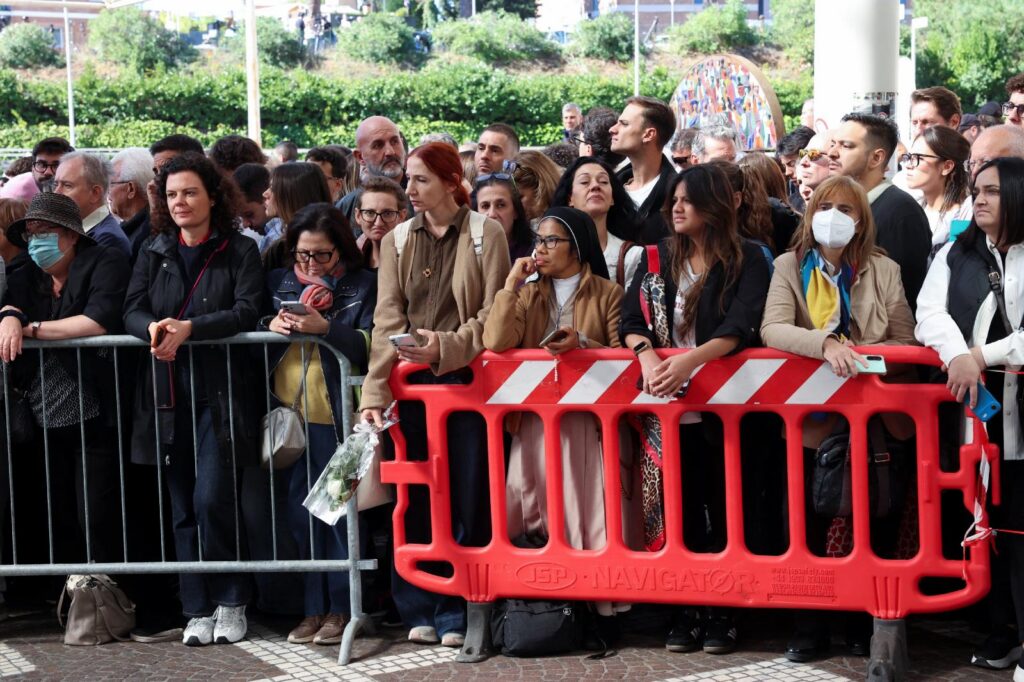
The pope arrived at the hospital by car at about 1 p.m. Rome time on Oct. 13, greeting hospital staff and waving to the hordes of journalists and well-wishers gathered outside the polyclinic hospital as he walked inside. The Vatican announced after his arrival that the surgery will be taking place later in the afternoon.
Pope Leo is expected to remain for one week of recovery in the Gemelli Hospital, located atop Monte Mario, the highest hill in Rome. The Vatican has canceled all of the pope’s scheduled audiences through Oct. 20.
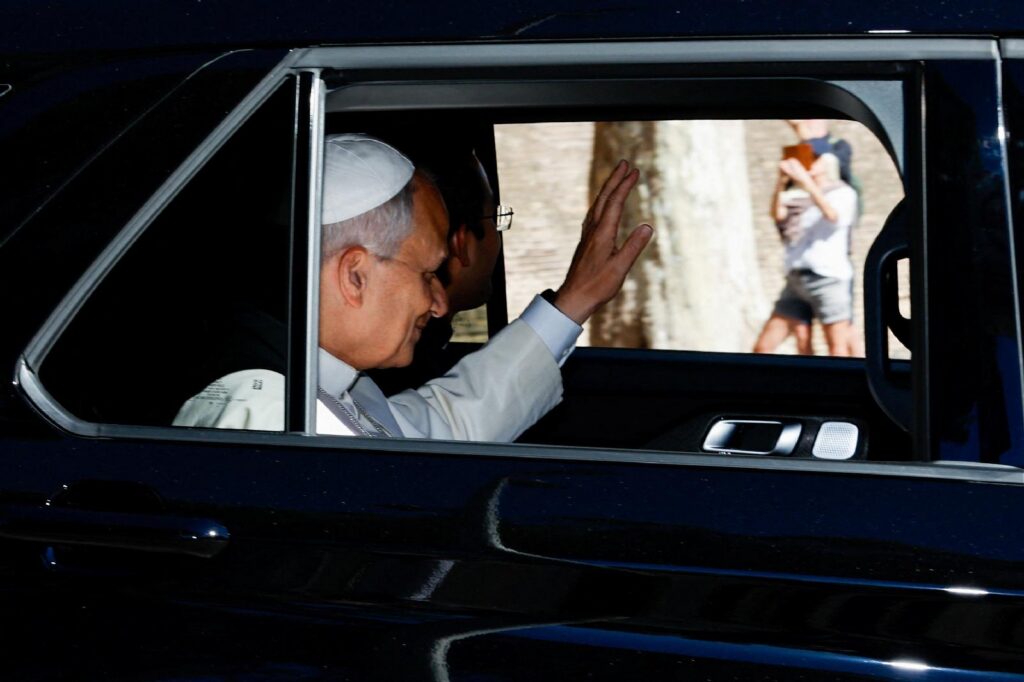
Pope Leo XIV waves from a car window as he leaves the Vatican ahead of his hospitalization for surgery to remove a lung nodule in Rome Oct. 13. (OSV News photo/Remo Casilli, via Reuters)
The pope is being treated at the same hospital where Pope Francis and Pope John Paul II were treated throughout their pontificates, including John Paul II’s hospitalization after being shot in an assassination attempt in 1981. While the hospital has a special suite on the 10th floor reserved for papal medical emergencies, Pope Leo will be staying in a nearby room as the papal hospital room is currently undergoing renovations.
Medical experts told OSV News that lung nodules, or abnormal growths on the lungs, are far from unusual — and, for the most part, not life-threatening.
“Lung nodules are very common, and 90% of the time, they are benign,” said Dr. Stacey Su, chief of thoracic surgery at Fox Chase Cancer Center in Philadelphia and associate professor of surgical oncology at Temple University’s Lewis Katz School of Medicine.
But, she said, “the potential impact of lung cancers is so grave that any lung nodule deserves serious attention.”
“Most of the time these are asymptomatic,” Dr. Nirmal Veeramachaneni, professor of cardiothoracic surgery at St. Louis University School of Medicine and medical director for lung cancer screening at SSM Health, said. “They’re often found incidentally.”
Pope Leo XIV arrives at Rome’s Gemelli Hospital Oct. 13, 2026, ahead of his surgery that afternoon to remove a lung nodule. (OSV News photo/Guglielmo Mangiapane, Reuters)
At the age of 71, Pope Leo is considered to be generally in good health. He noted in the first interview of his pontificate that he had only been hospitalized once in his life when he caught typhoid fever after recently arriving as an Augustinian missionary in Peru in 1985.
“It’s the only time in my life I’ve been hospitalized,” Pope Leo is quoted as saying in the book, “Pope Leo XIV” by Elise Ann Allen, calling it “a very significant” moment in his life that helped him more sharply focus on his new ministry.
Pope Leo’s surgery is taking place less than one month before he is scheduled to depart for Latin America for what would be the longest international trip of his pontificate Nov. 6 to 17, with stops in Uruguay, Argentina and Peru. The Vatican has not announced any changes to the trip.
Pope Leo first revealed to the world that he would undergo surgery at the end of his Angelus address in St. Peter’s Square on Oct. 11. Speaking from the window of the Apostolic Palace, the pope announced that doctors had discovered a nodule in his lung during a medical examination, adding that the growth was detected “at a very early stage” and was “well-contained.”
People wait for the Pope Leo’s arrival at Gemelli Hospital, where he was expected to be hospitalized to undergo surgery to remove a small growth on his lung in Rome Oct. 13. The Vatican confirmed to media that the pope had been admitted to the hospital that afternoon. (OSV News photo/Ciro de Luca, via Reuters)
“The doctors believe intervention is advisable, so, following their advice, I have decided to undergo surgery to have it removed,” Pope Leo said.
A prayer vigil for the pope’s healing, led by Cardinal Baldassare Reina, is scheduled to take place in the hospital chapel at 6 p.m. Rome time.
The Holy See Press Office has said that it will release more information on the pope’s surgery in the evening.
Courtney Mares is Vatican editor for OSV News. Follow her on X @catholicourtney. Gina Christian, multimedia reporter for OSV News, contributed to this report.
Texas priest named Maronite bishop of eparchy in Mexico
(OSV News) — A parish priest in Texas has been tapped by Pope Leo XIV to lead Mexico’s Maronite Catholics.
The pope has nominated Maronite Father Milad T. Yaghi as bishop of the Maronite Eparchy of Our Lady of the Martyrs of Lebanon in Mexico (“Nuestra Señora de los Mártires del Líbano en México”).
The eparchy, established in 1995 by St. John Paul II and covering the whole of Mexico, counts some 200,000 lay faithful and 10 parishes.
Bishop-elect Yaghi succeeds the eparchy’s apostolic administrator, Maronite Father Elie Mikhael, who was appointed in 2024 by Pope Francis.
News of the bishop-elect’s appointment was publicized Oct. 12 in Washington by Archbishop Gabriele G. Caccia, the apostolic nuncio to the U.S., who made the announcement since Bishop-elect Yaghi currently serves within his jurisdiction.
About the bishop-elect
A member of the Congregation of Maronite Lebanese Missionaries — which he entered at age 13 in 1977 — Bishop-elect Yaghi has served as pastor of Our Lady of the Cedars Maronite Mission for more than three decades.
Having completed his studies at the Collège Des Apôtres and the Holy Spirit University of Kaslik, both in Lebanon, Bishop-elect Yaghi was ordained to the priesthood in 1988. He then attended the University of Strasbourg, where he obtained a master’s degree in Catholic theology, and was appointed assistant pastor for a parish in Metz, France.
In 1991, then-Father Yaghi was sent to San Antonio, Texas, to serve while also traveling to Houston to celebrate Mass. He eventually relocated to Houston to, as his parish biography notes, “embark on a challenge and personal dream of building a church.”
Our Lady of the Cedars Maronite Mission rapidly expanded under his leadership from several families to some 250. According to the mission’s website, there are currently over 700 families registered to Our Lady of the Cedars, which the mission states is “the second largest Maronite parish in the United States.”
Eparchy receives news with joy
In a Facebook post about the Oct. 12 announcement, the Maronite Eparchy of Our Lady of the Martyrs of Lebanon in Mexico expressed its joy, saying, “Let us rejoice and give thanks to God for our new Eparch (Bishop).”
The Mexican Bishops’ Conference also joined the eparchy in prayer, saying in a social media post: “We wish Bishop Milad Tannous Yaghi a fruitful ministry in the new episcopal responsibility that the Lord has entrusted to him.”
The Maronite Catholic Church is one of the 23 Eastern Catholic Churches that, along with the Roman Catholic Church, comprise the universal Catholic Church.
According to the Catholic Near East Welfare Association — a papal agency serving the churches and peoples of the Middle East, Northeast Africa, India and Eastern Europe — both the U.S. and Latin America are home to flourishing Maronite communities, with more than 1.3 million Maronite Catholics in Latin America alone.
Pope Leo XIV’s to be hospitalized Oct. 13 ahead of lung surgery, public appearances canceled
ROME (OSV News) — The Vatican has confirmed that Pope Leo XIV will be admitted to Rome’s Gemelli Hospital on Oct. 13 before undergoing lung surgery, prompting the cancellation of several public appearances and meetings for the coming week.
In a statement to journalists Oct. 12, the Vatican press office said that Pope Leo will enter Rome’s Gemelli Hospital late tomorrow morning. The Vatican did not confirm whether the operation will be performed on Oct. 13 or the following day.
The Vatican spokesman has said the pope is expected to remain hospitalized for about a week following the operation, prompting changes to a schedule that included a Mass in St. Peter’s Square, an awards ceremony in Castel Gandolfo, an address to an infertility conference, a meeting with bishops from Nicaragua, and closing remarks at the Vatican family summit.
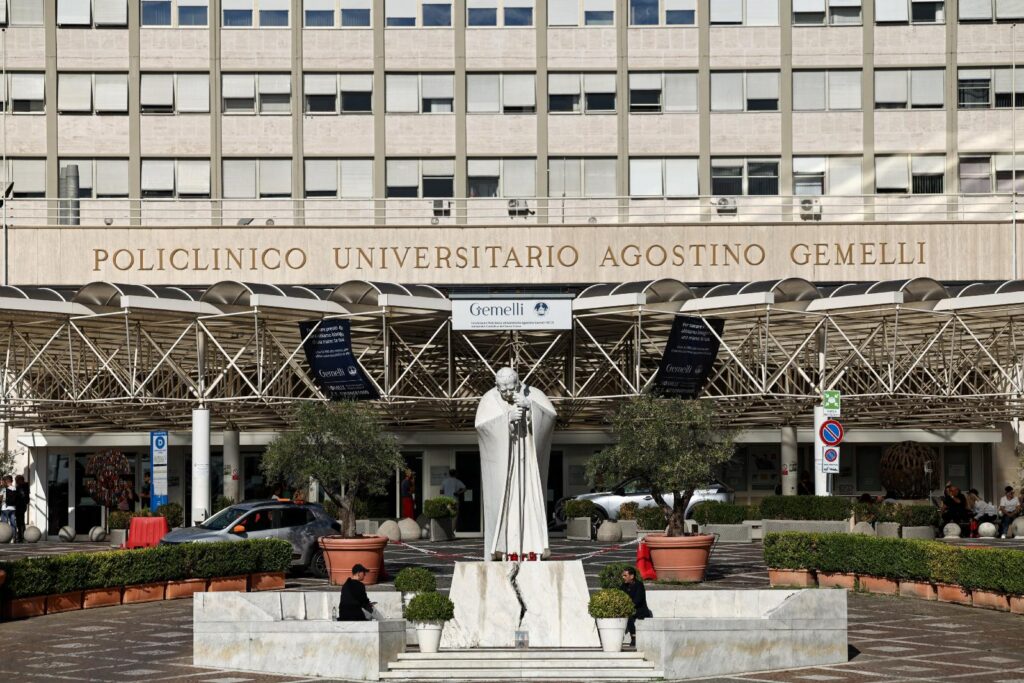
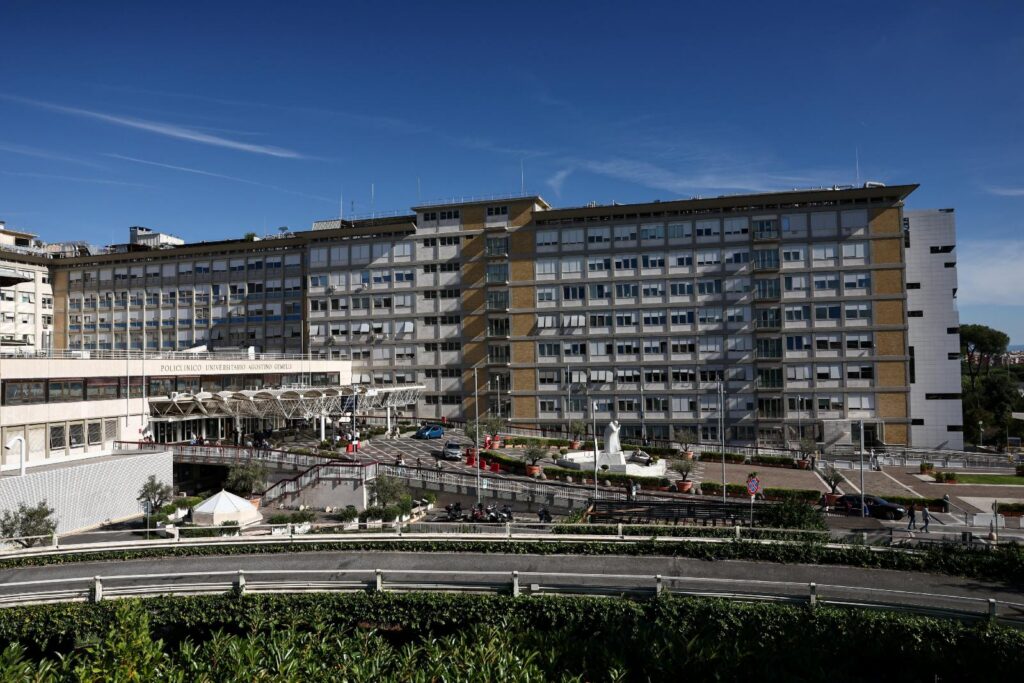
This is a general view of Rome’s Gemelli Hospital Gemelli Hospital Oct. 11, 2026. The Vatican has confirmed that Pope Leo XIV will be admitted to Gemelli Hospital on Oct. 13 before undergoing lung surgery, prompting the cancellation of several public appearances and meetings over the coming week. (OSV News photo/Matteo Minnella, Reuters)
Cardinal Luis Antonio Tagle, who was elected as dean of the College of Cardinals last week, will preside in the pope’s place at the Oct. 14 Mass in St. Peter’s Square to close the Vatican meeting of the world’s bishops’ conference presidents and the heads of Eastern Catholic Churches marking the 10th anniversary of “Amoris Laetitia.” Pope Leo had also been scheduled to deliver the congress’ closing address later that evening, but will no longer attend.
Changes to the ‘Amoris Laetitia’ meeting
Father Giacomo Costa, a consultant to the General Secretariat of the Synod, confirmed at an Oct. 12 press briefing that the pope would be admitted to the hospital and that it would affect Pope Leo’s attendance at the gathering.
“As you can imagine, the Holy Father truly wished to listen and then share his own reflection on what he heard, but that has proven difficult,” Father Costa said.
He also said the pope requested to postpone the meeting’s final report, noting that Pope Leo “wanted to listen to it and be able to offer his own word on it himself.”
“So, he reserves the right to receive it and, once he is discharged from this period of hospitalization, to take up the materials and what has been said over these days again, and offer his reflection,” he explained.
While apologizing for the delay, Father Costa said it was “wonderful that he genuinely desires to listen, not to let the meeting just pass by, and to have the opportunity to truly say a word about what he heard to support the commitment of the entire Church.”
Sustainability medal and infertility conference without the papal involvement
The pope likewise canceled his appearance at an Oct. 13 ceremony in Castel Gandolfo for the inaugural “Pope Leo XIV Sustainability Medal,” an award established by the pope’s alma mater, Villanova University. The event will proceed as planned at Borgo Laudato Si’ in the Pontifical Gardens of Castel Gandolfo without the presence of the pope.
Because of his anticipated recovery period, Pope Leo is also expected to miss his previously announced speech to open the international infertility conference, “The Splendor of Humanity: Preserving Fertility, Curing Infertility,” on Oct. 16. The conference is co-sponsored by Gemelli Hospital, where the pope is scheduled to have surgery.
Bishops from Nicaragua, who are visiting Rome for their scheduled ad limina visit, were also expecting to meet the pope for a private audience this week. Pope Leo received Bishop Carlos Enrique Herrera Gutiérrez, the president of the Nicaraguan bishops’ conference, for a private audience at the Vatican on Oct. 12, one of six private audiences the pope held on the day before his scheduled surgery.
Papal surgery ahead of Latin America trip
Pope Leo’s surgery is taking place about four weeks before he is scheduled to depart for Latin America for what would be the longest international trip of his pontificate, which includes stops in Uruguay, Argentina and Peru. The Vatican has not announced any changes to the trip.
However, the pope indicated he still intends to visit Peru when speaking to pilgrims after the Angelus Oct. 11, shortly before publicly announcing the surgery.
Addressing pilgrims in St. Peter’s Square, Pope Leo said doctors discovered a nodule in his lung during a medical examination. He said the growth was detected “at a very early stage” and was “well-contained.”
“The doctors believe intervention is advisable, so, following their advice, I have decided to undergo surgery to have it removed,” he said. “The procedure is already scheduled for the coming days.”
The 71-year-old pope’s surgery is the first major surgical intervention he has publicly disclosed during his pontificate. Popes rarely announce medical procedures themselves.
Pope Francis’ visits to Gemelli for checkups or medical procedures, including his 2021 colon surgery and his 2023 abdominal surgery, were disclosed by the press office.
On July 12, 1992, St. John Paul II told pilgrims: “I would now like to share something personal with you,” and announced that he would be visiting Gemelli “for some diagnostic tests,” which resulted in him undergoing surgery to remove a large tumor from his colon.
Courtney Mares is Vatican editor for OSV News. Follow her on X @catholicourtney. Junno Arocho Esteves, international correspondent for OSV News, contributed to this report.
World, religious leaders unite in prayer for Pope Leo, praising his ‘profound serenity and transparency’
(OSV News) — Prominent political and religious leaders from around the world expressed well wishes and prayers for Pope Leo XIV after he announced he would undergo surgery to remove a lung nodule.
The pope made the surprise announcement while addressing pilgrims Oct. 11 during his Sunday Angelus address.
After doctors detected “a small, localized nodule” in his lung, Pope Leo said he would follow their advice and “undergo surgery to remove it.”
“The operation is already scheduled to take place in the coming days,” he said. ” I thank you for your spiritual closeness and entrust myself to your prayers.”
Messages of support and prayers from around the world
Not long after his announcement, Italian President Sergio Mattarella published a letter to Pope Leo saying that the news of his surgery “was received with deep empathy and emotion by all the Italian people.”
“In view of your hospitalization in the coming days, may the affectionate thoughts of all Italians reach you, which I convey while adding my own personal sentiments,” Mattarella wrote. “The Italian people stand close to you.”
The Italian head of state said the pope could count on the prayers of not only the Catholic faithful, but also “on the caring thoughts of countless people, in Italy as well as across the world, whether believers or non-believers.”
Several world leaders also took to X to send well wishes to the pope, including Ukrainian President Volodymyr Zelenskyy, who wished Pope Leo “a successful surgery and a swift, full recovery.”
“Our thoughts and prayers are with him, and we hope he will soon be back in good health and strength,” Zelenskyy wrote. “Ukraine is deeply grateful to His Holiness for his prayers and his strong, consistent calls for a dignified and durable peace.”
In a brief message posted to X, Israeli President Isaac Herzog wrote: “From the holy city of Jerusalem, I wish Pope Leo XIV a full and speedy recovery.”
Maltese Prime Minister Robert Abela also extended “prayers and best wishes” to the pope for “a successful procedure and a complete recovery.”
Pope Leo also received prayers from Anglican Archbishop Sarah Mullaly of Canterbury, who said she was “holding Pope Leo XIV in my prayers over these coming days, asking for God’s protection, closeness and care.”
“With Christians across the country and around the world, I pray for the pope’s swift recovery,” the head of the Church of England wrote on X.
Viktor Eichner, the World Jewish Congress’ representative to the Holy See, also posted on X, writing: “On behalf of the World Jewish Congress, I wish Pope Leo XIV a successful surgery and a speedy recovery. May he return to full strength soon.”
Questions about the Latin America upcoming trip
The surgery announcement came as Pope Leo prepares to embark on his longest international trip to date: a 12-day apostolic visit to Latin America, including stops in Uruguay, Argentina, and Peru.
At the Angelus, the pope greeted a group of Peruvian pilgrims and thanked them for praying for his upcoming visit, indicating the trip was still moving forward.
At a press conference in Uruguay, the first stop in the pope’s Nov. 6-17 apostolic trip, Cardinal Daniel Sturla of Montevideo told journalists Oct. 11 that although the announcement “was a surprise,” the pope’s greetings to the Peruvian pilgrims showed that “the plans remain the same.”
“Obviously, we are all praying for the pope’s health and trust that everything will go well, that he will recover and be able to be here on the scheduled date,” Cardinal Sturla said.
When asked if any precautions will be taken given that the pope is expected to arrive in less than a month, the Uruguayan cardinal said he believed so and that the pope “always travels accompanied by his personal physician and other healthcare staff.”
“I understand that some care will need to be taken,” Cardinal Sturla said. “We will be instructed in the coming days. We will be very attentive to that, but confident that everything will go well and that we are moving forward.”
Argentina praying for the pope
Argentine President Javier Milei extended his “affection and best wishes” ahead of the pope’s surgery. Pope Leo will visit Argentina Nov. 8-11.
“All of Argentina accompanies His Holiness with affection and prayer, wishing him a prompt and full recovery,” Milei wrote on X. “From our country, we join in prayer for his health, in the hope that he may soon continue guiding the Church with his characteristic wisdom and strength.”
The Argentine bishops’ conference issued a statement calling on the country’s Catholics to pray for Pope Leo ahead of his surgery.
“We ask the Lord to grant him strength and peace at this time, that the surgery proceeds favorably, and that he may achieve a prompt and full recovery,” the bishops wrote.
Noting the pope’s “serenity and confidence” in his announcement, the bishops urged Catholics to “remain spiritually united with him.”
Peru in hopes of ‘soon having him among us’
In Peru, where Pope Leo is scheduled to visit Nov. 11-17, President Keiko Fujimori took to X to express her and her country’s “profound affection and solidarity” with the pope “in the face of this health issue, which we hope he will overcome fully and successfully.”
“Our hearts and our prayers are with him, in the hope of soon having him among us,” Fujimori wrote. “With deep faith and hope, we pray that the Holy Father has a prompt recovery and may continue guiding, with wisdom and strength, the path of faith of the entire Holy Church.”
In a statement released shortly after the pope’s announcement, Bishop Carlos Enrique García Camader of Lurin, president of the Peruvian bishops’ conference, noted the pope’s “profound serenity and transparency” in announcing his surgery and that his “testimony of fortitude and humility in sharing this news moves us and immediately calls us to unity in prayer.”
“The Peruvian Episcopate invites all Catholic people and people of goodwill to unite in prayer for the health of His Holiness Pope Leo XIV, raising our supplications to God, Lord of life and source of all health, so that He may strengthen him and grant him the health required for the fulfillment of his mission,” Bishop García wrote.
He also invoked Mary’s intercession “so that in the fullness of his strength he may continue fulfilling his mission in service to the Church and all humanity, continuing to be a messenger of peace and hope, and a witness of unity, fraternity, and encounter among all peoples.”
Junno Arocho Esteves is an international correspondent for OSV News. Follow him on X @jae_journalist
Bishops, clergy, religious and faithful offer prayers for Pope Leo ahead of lung surgery
(OSV News) — Shortly after Pope Leo XIV announced he will undergo surgery to remove a lung nodule, Catholic bishops, clergy, religious and other faithful in the U.S. and Canada offered their promise of prayers for his recovery.
The 71-year-old pope disclosed during his Oct. 11 Angelus address that doctors had found a “localized nodule” in his lung.
He said the nodule was “detected at a very early stage” during “some recent medical examinations.”
Matteo Bruni, director of the Holy See press office, said the operation will take place this coming week at Rome’s Gemelli Hospital.
The “estimated post-recovery time will be about one week,” said Bruni.
Archbishop Paul S. Coakley of Oklahoma City, president of the U.S. Conference of Catholic Bishops, swiftly promised prayers for the U.S.-born Pope Leo.
“The bishops of the United States join with the faithful and all people of good will in praying for his good health,” Archbishop Coakley said in a statement provided to OSV News. “May the hand of Pope Leo’s surgeons be guided by the divine physician Jesus Christ.”
Pope Leo XIV shakes hands with Archbishop Paul S. Coakley of Oklahoma City, president of the U.S. Conference of Catholic bishops, during a private audience with the USCCB leadership at the Vatican Oct. 5, 2026. (CNS photo/Vatican Media)
The archbishop added, “Please find a moment today, as I will, to offer a prayer for Pope Leo and his care team.”
In an Oct. 11 statement provided to OSV News, the Canadian Conference of Catholic Bishops said it united “with the faithful in prayer” for Pope Leo’s health.
Outpouring of support for Pope Leo
“We seek the intercession of the Blessed Virgin Mary, Health of the Sick, asking for a prompt recovery for the Holy Father following his upcoming surgery,” said the Canadian bishops.
“I ask all of the people of the Archdiocese of Washington to raise their prayers to the Father, Son and Holy Spirit that Pope Leo may be sustained in the fullness of health and lead the Church on its pilgrimage of grace and hope with the same vision, holiness, sacrifice and pastoral compassion that have marked his pontificate at every moment since he assumed the Chair of Saint Peter,” said Cardinal Robert W. McElroy of Washington in an Oct. 11 message posted by Catholic Standard, the Archdiocese of Washington’s news outlet.
The cardinal — currently in Rome for the Vatican’s conference marking the 10th anniversary of Pope Francis’ apostolic exhortation “Amoris Laetitia” — added, “I would also ask every priest of the Archdiocese to offer Mass for Pope Leo and his health in these days.”
In an Oct. 11 Facebook post, Archbishop Ronald A. Hicks of New York said he joined “with the bishops, priests, faithful, and all people of good will of the Archdiocese of New York in praying for our Holy Father, Pope Leo XIV, as he prepares for his surgery later this week.”
The archbishop, currently completing a week-long pilgrimage along the Camino de Santiago — the ancient network of pilgrimage routes through Europe to the tomb of St. James in Santiago de Compostela, Spain — said, “Pope Leo will have an even greater remembrance in my prayers” to “Jesus, the Divine Physician” to guide the pope’s doctors and care team.
Pilgrims gather as Pope Leo XIV leads the Angelus prayer in St. Peter’s Square at the Vatican Oct. 11, 2026. (OSV News photo/Elisabetta Trevisan, Vatican Media)
Augustinians: ‘We believe strongly in the power of prayerful petitions’
“We believe strongly in the power of prayerful petitions,” Father Joseph Farrell, prior general of the Augustinian Order of which Pope Leo is a member, told OSV News by email.
He added, “The Augustinian brothers and sisters across the globe are praying for our brother Pope Leo XIV. We are praying also for the doctors and entire medical staff who will be assisting him in surgery in the coming days.”
The Augustinian Order issued an Oct. 11 message of support saying, “As Augustinians, we pray together for the health of Pope Leo XIV.”
“May God bless the Holy Father and his doctors during his upcoming surgery for a nodule found in his lung during a recent exam,” said the order in its message, which was provided in Italian, English, Spanish, French and Portuguese.
Augustinian Father Tom McCarthy, prior provincial of the Our Mother of Good Counsel province to which Pope Leo belongs, told OSV News he and his Augustinian brothers “are very sad to hear that Pope Leo needs surgery.”
Pope Leo XIV is seen after the Angelus prayer in St. Peter’s Square at the Vatican Sept. 13, 2026. After the Angelus on Oct. 11, he announced that he would undergo surgery to remove a lung nodule. (OSV News photo/Matteo Pernaselci, Vatican Media)
“But,” he added, “we are grateful it was caught early. We are offering prayers for the Holy Father and for his doctors, surgeons, nurses, and medical staff who will be caring for him. We are asking everyone to pray for Pope Leo.”
Villanova University, Pope Leo’s alma mater, said in an Oct. 11 X post that it “joins the global Church in prayer for Pope Leo as he prepares to undergo surgery.”
“May God grant the Holy Father strength, healing and a full recovery in the days ahead,” said the university.
New online courses help Catholics comfort those struggling with mental health
VATICAN CITY (CNS) — A U.S.-based Catholic association dedicated to mental health ministry released two new online resources to help lay Catholics understand the signs of mental health struggles and how to better accompany those seeking help.
Sometimes a loved one or acquaintance seems “irritable, emotional or just absent from things they used to love. But you’re not sure what’s wrong. Most of us don’t. We weren’t trained to recognize mental illness,” a trailer for the free video courses said.
“We want to help. But we’re afraid of saying the wrong thing, making it worse,” it said, especially by offering the usual platitudes: “Time heals all wounds”; “God has a plan”; and “God never gives us more than we can handle.”
Different members of the International Association of Catholic Mental Health Ministers presented the trailer for the courses at Vatican News headquarters Oct. 10, World Mental Health Day. The news conference was part of its international meeting being held in Rome and at the Vatican, dedicated to “A Healing Presence: The Church’s Call to Mental Health Ministry.”
Videos aim for mental health literacy
The new one-hour-plus video course on “mental health literacy” aims to help people recognize some of the signs and symptoms of the most common forms of mental illness, such as depression, bipolar disorder, addiction and trauma.
The two-hour course on “psychological first aid,” said Deacon Ed Shoener, founder and president of the CMHM global association, is “much like physical first aid, where you can approach someone who may be in trouble or hurting, patch them up, so to speak, help them along, accompany them, and then direct them to professional care.”
The courses are not meant to train people how to diagnose problems or to provide clinical treatment or advanced spiritual care, the video said. What they do is merge faith resources with the skills to recognize, speak about and support people showing signs of a mental health struggle or crisis so that everyday Catholics can learn how to be part of a mental health ministry team for their parish — not how to be a licensed therapist or counselor.
The video lessons include scenes shot at Our Lady of Mount Carmel Parish in Chicago with professional local actors recreating scenarios of what to do and not to do.
The National Institute of Mental Health estimated that more than 1 in 5 adults in the United States was living with a mental illness in 2022. Women, young people between 18 and 25 years old, and people of two or more races or ethnicities were just some segments of the population showing the highest reported incidence of a mental illness according to gender, age or ethnicity.
That means, in a parish of just 500 people, there could be well over 100 parishioners that might be struggling, the video said, encouraging Catholics to “look, listen and link” someone to the right resources.
Pope Leo XIV is pictured praying his October 2026 prayer intention dedicated to mental health. (OSV News screenshot /Pope’s Worldwide Prayer Network)
Resources available for parishes to put pope’s intention into action
Andrea Sarubbi, director of outreach for the association, encouraged parishes, dioceses, media outlets and broadcasters to write info@catholicmhm.org for more information, and to look at its online learning center at learn.catholicmhm.org to create or strengthen a parish mental health ministry team, so that mental health ministry can be an integral part of every Catholic parish and community worldwide. The new videos are at catholicmhm.org/act-videos.
Pope Leo XIV’s prayer intention for October 2026 is dedicated to praying specifically for mental health ministries.
He asked that the Church be a “safe space where everyone has a place — a community that accompanies and never excludes, that listens without judging and draws near without fear” and he prayed that God give strength and compassion to all those who provide care.
The pope also underlined the need to ask for forgiveness for every time a Christian looked the other way or contributed to stigmatizing or discriminating against people with mental illnesses.
According to the Pope’s Worldwide Prayer Network, which produces and distributes the papal prayer videos, more than 1 billion people worldwide live with a mental disorder, and less than 2% of national health budgets are dedicated to public spending on mental health.
Carol Glatz is editor in chief of the Rome bureau of Catholic News Service.
Full text: Pope Leo XIV’s Angelus address given Oct. 11, 2026
VATICAN CITY (OSV News) — The following is the full text of Pope Leo XIV’s Angelus address given Oct. 11 at St. Peter’s Square.
Dear brothers and sisters, happy Sunday!
In today’s Gospel reading, Jesus speaks of the wedding feast prepared by a king for his son (cf. Mt 22:1–14).
A son’s wedding is a special occasion for any family, and this happy father wants to share his joy with everyone. He prepares a banquet and invites many people. St. Thomas Aquinas says that goodness, by its very nature, tends to spread: “Bonum dicitur diffusivum sui” (Summa Theologiae, I, q. 5, a. 4, ad 2). The image in the narrative expresses this idea in the context of our lived experience. When something good happens, it kindles a light that leads us to share our happiness with others.
In response to such a gracious invitation, however, instead of coming to the feast, the guests turn away and prefer to continue going about their business. Some are annoyed, insult the king’s messengers and even kill them. Unfortunately, this can happen to us, too, for the good we offer to do is not always understood, recognized or appreciated. Indeed, at times, it is willfully misinterpreted and rejected. Yet this must not discourage us. When faced with rejection, the king does not call off the wedding or cancel the celebrations. On the contrary, he extends his invitation to an even greater number of people, sending his servants out into the streets to call them so that the bride and groom’s joy may be a gift for all.
At this point, we can ask ourselves whom the main characters in this story represent. St. Jerome identifies the king as the Heavenly Father, the bridegroom as Jesus, and the bride as the Church (cf. Commentary on Matthew, Book III, ch. 22). We are among the main characters as well, chosen by the Lord to share our lives with him and to be bearers of life with him. The wedding feast is ours, and the banquet hall is our churches and homes, the places where we live and where the King’s Son, Jesus Christ, continues to declare his love for us and await our “yes.” We encounter him there, and are clothed like a bride in the white garment of baptism and adorned with the jewels of good works, which draw us closer to God and to one another.
The joy we proclaim, therefore, is not artificial; it is profound, concrete and real. It is as beautiful as the faces of the people we meet. It is as genuine as the work, the smiles, the tears, the handshakes, and the acts of kindness that fill our days. It is a gift of God for the salvation of the world.
Therefore, let us ask Mary, the Mother of the Lord, to help us grow in this joy. Even when it is not understood, let us proclaim this joy always and everywhere, with generosity, courage and faith.
Pilgrims gather as Pope Leo XIV leads the Angelus prayer in St. Peter’s Square at the Vatican Oct. 11, 2026. (OSV News photo/Elisabetta Trevisan, Vatican Media)
After the Angelus:
Yesterday, in Mantua, Sister Maria Ignazia Isacchi, the foundress of the Congregation of the Ursuline Sisters of the Sacred Heart of Jesus, was beatified. Between the end of 19th century and the early decades of the 20th century, she devoted herself with courageous charity to the needy and the disadvantaged. May her example rekindle in all of us the desire to be witnesses in the world of the love of the Gospel toward everyone.
The war in tormented Ukraine continues to cause suffering far beyond its borders, especially in the poorest countries, where so many people depend on grain imports. I make a heartfelt appeal to the parties to the conflict to allow for the safe transport of grain through the Black Sea. The daily bread of millions of people cannot be held hostage by the war.
Today in Italy marks the Day for Victims of Workplace Accidents. I extend my greetings to the National Association of Workers with Work-Related Injuries and Disabilities and encourage efforts toward prevention.
I extend a warm welcome to all of you, Romans and pilgrims alike!
I greet the members of the Hermandad del Señor de los Milagros in Rome and all those who took part in the procession with the venerated Icon of the Crucified Christ. Thank you for your prayers for the pastoral visit I will make to Peru.
I joyfully welcome the faithful of the Greek Catholic Eparchy of Mukachevo in Ukraine, accompanied by their bishop; the Asociación de fieles Hakuna; the las Antiguas Alumnas Jesús Maria España; the choir and choral school of the Cathedral of Haarlem in the Netherlands; and the faithful from Vienna.
I extend my greetings to the young people of the Chiaravalle vicariate in the Diocese of Senigallia; the members of the Belluno provincial chapter of AIDO; the Ars Enotria group from Cosenza and the women’s soccer team from the Biella Hospital.
Dear friends, during some recent medical examinations, the doctors found a small, localized nodule in my lung. It was detected at a very early stage and is well-localized. The doctors believe that it is best to intervene, so, following their advice, I have decided to undergo surgery to remove it. The operation is already scheduled to take place in the coming days. I thank you for your spiritual closeness and entrust myself to your prayers.
Thank you, and happy Sunday!
Pilgrims carry an image of the crucified Christ as Pope Leo XIV leads the Angelus prayer in St. Peter’s Square at the Vatican Oct. 11, 2026. (OSV News photo/Elisabetta Trevisan, Vatican Media)
Pope Leo XIV to undergo surgery to remove lung nodule
(OSV News) — Pope Leo XIV announced that he will undergo surgery after doctors discovered a nodule, or lump, in his lungs.
Speaking to pilgrims gathered in St. Peter’s Square Oct. 11, during his Sunday Angelus address, the pope said the nodule was “detected at a very early stage” during a medical checkup and it is “well-contained.”
“The doctors believe intervention is advisable, so, following their advice, I have decided to undergo surgery to have it removed. The procedure is already scheduled for the coming days,” he said.
Concluding his address, the pope thanked the crowds in the square for their “spiritual closeness” and entrusted himself to their prayers.
BREAKING! Pope Leo XIV announced after the Angelus prayer he will undergo operation of a lung nodule:
"Recently, during some check-ups, doctors discovered a localized nodule on my lung. It was detected at a very early stage and is well-contained. The doctors believe intervention… pic.twitter.com/5pK41wWsq6
Responding to questions from journalists, Vatican spokesman Matteo Bruni confirmed that the surgery is scheduled within “the first few days” of this week and that “the expected post-operative hospital stay is about one week.”
The Vatican also confirmed that the pope will undergo the medical procedure at Rome’s Gemelli Hospital.
First reactions to the announcement
In response to the announcement, Italian Prime Minister Giorgia Meloni expressed her closeness and that of the Italian government “in this time of trial he is called to face in the coming days.”
“The serenity and peace of mind with which he spoke about it during today’s Angelus reassures us,” Meloni said in a post on X. “I am certain that the Italian people, too, will not fail to offer their support and affection.”
In one of the first immediate reactions to the news, Archbishop Charles Scicluna of Malta posted on X, following the Angelus: “The Church in Malta is united in prayer for the Holy Father, wishing him well for the surgery he will be undergoing.”
Pope Leo XIV leaves following a Mass marking the start of the academic year at the Pontifical Universities, in St. Peter’s Basilica at the Vatican, Oct. 8, 2026. After the Angelus prayer on Oct. 11, he announced that he would undergo surgery to remove a lung nodule. (OSV News photo/Remo Casilli, Reuters)
Archbishop Luis Argüello of Valladolid, president of the Spanish bishops’ conference, also urged prayers for the pontiff, saying: “From Rome, I invite the entire Spanish Church, dioceses, institutions of consecrated life, lay communities and associations, all members of the People of God, and our fellow citizens, to pray for the health of our beloved Pope Leo XIV.”
Archbishop Argüello is in Rome for Oct. 7-14 gathering of the world’s bishops’ conference presidents and the heads of Eastern Catholic churches, marking the 10th anniversary of “Amoris Laetitia.”
Pope Leo was originally scheduled to celebrate the Oct. 14 closing Mass. However, the Vatican has not announced whether the pope’s surgery will take place before or after the Mass.
Greeting Peruvian pilgrims, Pope Leo indicated Latin American visit remains on schedule
The surprise announcement comes less than a month before his longest international trip to date, a 12-day apostolic visit to Latin America that includes stops in Uruguay, Argentina and Peru.
Nevertheless, during his address to pilgrims, the pope greeted members of the Hermandad del Señor de los Milagros, or the Brotherhood of the Lord of Miracles, a Peruvian religious association that spreads devotion to a revered image of Christ crucified, and said he was moving forward with his visit.
“Thank you for your prayers for the pastoral visit I will fulfill in Peru,” the pope said before announcing his surgery.
Pope Leo XIV is seen after the Angelus prayer in St. Peter’s Square at the Vatican Sept. 13, 2026. After the Angelus on Oct. 11, he announced that he would undergo surgery to remove a lung nodule. (OSV News photo/Matteo Pernaselci, Vatican Media)
The pope’s surgery is the first major surgical intervention he has publicly disclosed during his pontificate. A pontiff rarely makes medical announcements, which are often handled by the Vatican press office.
On July 12, 1992, St. John Paul II told pilgrims: “I would now like to share something personal with you,” and announced that he would be visiting Gemelli “for some diagnostic tests,” which resulted in him undergoing surgery to remove a large tumor from his colon.
Pope Francis’ visits to Gemelli for checkups or medical procedures, including his 2021 colon surgery and his 2023 abdominal surgery, were disclosed by the press office.
– – – Junno Arocho Esteves is an international correspondent for OSV News. Follow him on X @jae_journalist.
Novena, resources respond to ‘urgent pastoral challenge’ of mental health
(OSV News) — As the global community marks World Mental Health Day Oct. 10, the U.S. Catholic bishops have renewed their ongoing commitment to address an issue the Vatican has named an “urgent pastoral challenge.”
That challenge affects more than 1 billion globally, and at least 1 in 5 in the U.S. every year.
In an Oct. 10 press release, the U.S. Conference of Catholic Bishops announced the 2026 start of its annual Novena for Mental Health, which takes place Oct. 10-18.
9 days of prayer for mental health
The nine days of prayer — which concludes on Oct. 18, the feast of St. Luke, the evangelist and a patron of healthcare — focus on various aspects of mental health and its impact. (In 2026, the feast is superseded on the Roman calendar by the 29th Sunday in Ordinary Time.)
The novena was introduced in 2023 during the launch of the USCCB’s National Catholic Mental Health Campaign, currently spearheaded by Archbishop Shelton J. Fabre of Louisville, Kentucky, and Bishop Edward J. Burns of Dallas.
The USCCB also pointed to the novena as “an invitation for parishes to participate in Mental Health Sunday,” an Oct. 11 observance established by the U.S. Catholic bishops as part of the mental health campaign.
In an Oct. 10, 2026, press release, the U.S. Conference of Catholic Bishops announced the 2026 start of its annual Novena for Mental Health, which takes place Oct. 10-18. (OSV News photo/Courtesy of the USCCB)
Bishops share Vatican message on mental health
In its statement, the USCCB promoted the Oct. 10 message for World Mental Health Day from Sister Alessandra Smerilli, a member of the Salesian Sisters of St. John Bosco and prefect of the Vatican’s Dicastery for Promoting Integral Human Development.
Sister Alessandra stressed in her message that “no psychological wound can ever erase the dignity of a human person.”
“Caring for mental health belongs to integral human development, which seeks the good of every person and of the whole person,” she said.
Pope Leo XIV has “named the problem clearly,” she added, quoting the pope’s observation, made during his June papal visit to Spain, that mental health “is increasingly threatened in the context of societies that consider themselves advanced,” a sign that “there is something deeply wrong with a certain notion of progress.”
“Today, interior, emotional and relational wounds represent one of the most profound dimensions of human suffering,” said Sister Alessandra.
1 billion people suffer mental health disorders
According to the World Health Organization, more than 1 billion people worldwide had some form of mental health disorder as of September 2025. WHO called for “greater investment and action” to scale up global responses to mental health needs.
In the U.S., more than 1 in 5 adults experience mental health issues in a given year, 1 in 20 seriously, according to the National Alliance on Mental Illness.
NAMI noted that over 1 in 7 U.S. youth ages six through 17 experience a mental health disorder each year, with 75% of all lifetime mental illness beginning by age 24.
Sister Alessandra said that “parishes, schools, religious communities and small ecclesial communities are often where people bring their suffering and seek a listening ear, accompaniment and support in times of psychological vulnerability.”
As a result, she said, “in many local Churches, mental health is emerging as one of the most urgent pastoral challenges.”
A booklet is pictured during a Jan. 28, 2023, lecture titled “Mental Health: Moving Past the Taboo to a Culture of Acceptance” at the Catholic Social Ministry Gathering in Washington. (OSV News photo/Bob Roller)
Vulnerable groups to mental health suffering
She drew attention to two groups particularly vulnerable to mental health suffering — those who have lived through humanitarian crises, and youth.
“War, forced migration, political instability, environmental disasters and structural poverty” all “leave deep trauma in individuals and communities,” she said.
Young people “face new forms of emotional vulnerability linked to social pressure, economic uncertainty and isolation,” Sister Alessandra said.
While “the situations differ,” she said, “the root is the same: a person becomes vulnerable when security, relationships, meaning and hope are missing.”
She noted the theme of this year’s World Mental Health Day — an observance established in 1992 by the World Federation for Mental Health — is “Lived Experiences Heard: Real Voices, Real Change.”
That focus speaks to the need for both listening to those suffering from mental illness and taking action to address their situation, she said.
A file photo shows children eating their meal in a camp for internally displaced people on the grounds of St. Savior Parish in Bangui, Central African Republic. (OSV News photo/Siegfried Modola, Reuters)
Church must develop ‘stable, competent’ ministry
Sister Alessandra also stated that “the Church cannot limit herself to occasional or reactive responses” to the issue of mental health.
“As Christians, we are called to develop a stable, competent, compassionate and preventive ministry that embraces the person in their totality: body, mind and spirit,” she said. “This requires trained pastoral workers, collaboration with health professionals, clear referral pathways, attention to suicide prevention, support for families and care for young people.”
In his October prayer intention, Pope Leo has called for Church-wide mental health ministry and an end to the stigma and discrimination those with mental illness often encounter.
“Those who live with mental suffering are not only recipients of care: they are protagonists of the path forward, and their voices must help shape the answers,” said Sister Alessandra. “Caring for them is not a marginal concern. It belongs to the heart of the Church’s mission.”
Pope Leo names Archbishop Viola new archpriest of St. Peter’s Basilica
ROME (OSV News) — Pope Leo XIV appointed Oct. 10 Archbishop Vittorio Francesco Viola as the new archpriest of St. Peter’s Basilica and the pope’s vicar for Vatican City.
Archbishop Viola, a 61-year-old Franciscan from northern Italy, currently serves as the secretary of the Dicastery for Divine Worship and the Discipline of the Sacraments.
He succeeds Cardinal Mauro Gambetti, also a Franciscan, whom the pope named as the archbishop of the central Italian Archdiocese of Chieti-Vasto last week.
The Vatican also announced Oct. 10 that Pope Leo has appointed Spanish Bishop Aurelio García Macías to succeed Archbishop Viola as the new secretary of the Dicastery for Divine Worship and the Discipline of the Sacraments. Bishop García Macías has worked in the dicastery since 2015 and as undersecretary since 2021.
Archbishop Viola: A Franciscan legacy of service
Archbishop Viola has served in the Roman Curia since 2021. Prior to becoming secretary for the liturgy dicastery, he served as bishop of the northern Italian Diocese of Tortona from 2014 to 2021. He holds a doctorate in sacred liturgy from the Pontifical Liturgical Institute of Sant’Anselmo in Rome. His episcopal motto is “I discover You in Your sacraments.”
Born in the city of Biella in the northern Italian region of Piedmont in 1965, Archbishop Viola entered the Franciscan order after graduating high school and was ordained to the priesthood in 1993 in Assisi, Italy. The Franciscan went on to serve as the custos of the Basilica of St. Mary of the Angels and later of the Convent at the Basilica of Santa Chiara in Assisi.
Pope Leo XIV greets visitors and pilgrims during his weekly general audience in St. Peter’s Basilica at the Vatican Aug. 26, 2026. (CNS photo/Vatican Media)
As archpriest, the Italian prelate will oversee the daily administration of St. Peter’s Basilica and preside over liturgies when the pope is not present. With the appointment, Pope Leo also named Archbishop Viola the president of the Fabric of St. Peter, the Vatican office responsible for maintaining the basilica complex.
According to Pope Francis’ apostolic constitution “Praedicate Evangelium” (“Preach the Gospel”) on the reform of the Roman Curia, the Fabric of St. Peter’s “deals with everything that concerns the Papal Basilica of Saint Peter,” which includes “the conservation and decorum of the building, and the internal discipline” of staff, pilgrims and visitors.
Everything ‘begins with God’ for first Black woman to be president of Denver’s Regis University
DENVER (OSV News) — As Jesuit-run Regis University in Denver approaches its 150th anniversary — in 2027 — the historic significance of its new president, both for the Regis and herself, was not lost on Shawna Cooper Whitehead.
Cooper Whitehead is the first African American and the first woman to head Regis and the first Black woman president to lead a U.S. Jesuit university.
“Standing before you is profoundly humble, not because of the title I’ve been entrusted to hold, but because moments like this remind us of a truth that I’ve come to understand more deeply with every passing year. None of us arrives anywhere alone,” Cooper Whitehead said during the Sept. 18 ceremony inaugurating her as the 29th president of Regis.
Inauguration events began with missioning at the Mass of the Holy Spirit Sept. 17 and concluded with a community picnic the next day.
“When I look back over my own life, I can see moments that made little sense when I was living them,” she noted in her address. “But with time and distance, I can see God’s fingerprints. … That is why today begins not with accomplishment, but with gratitude.”
Throughout her remarks at the inauguration and the missioning Mass and dinner the prior evening, Cooper Whitehead couldn’t help but express gratitude for that accompaniment over the years.
Derek J. Scarth, chair of Regis University’s board of trustees, and Jesuit Father Tom Curran, superior of the Regis University Jesuit House, place the presidential medallion on Shawna Cooper Whitehead during her Sept. 18, 2026, inauguration in Denver as Regis’ 29th president. She is s the first African American and the first woman to head Regis and the first Black woman president to lead a U.S. Jesuit university. (OSV News photo/courtesy of Regis University)
‘I honor it. I am humbled by it’
“I stand here today as the 29th president of Regis University and as the first Black woman entrusted with this office. I understand what that means. I honor it. I am humbled by it,” she continued. “But I also know that the significance of this moment will not ultimately be determined by who occupies this office. It will be determined by what we do together.”
“I have long appreciated the distinctive contribution Jesuit education makes to both the church and society,” he wrote in a letter read at the inauguration ceremony. “At its best, Jesuit education forms not only capable minds but generous hearts. It teaches us that knowledge is never an end, but rather a gift to be placed at the service of truth, justice and the common good.”
That mission comes at a pivotal time for higher education and for the Church. In this apostolic age, in which society does not share the Church’s guiding vision, the mission of Catholic education matters deeply.
“In a world often tempted towards self-promotion and individualism, that motto (‘men and women for others’) remains both prophetic and urgently needed,” the archbishop continued. “It reminds us that authentic education ultimately prepares us not simply for successful careers, but for lives of generous service. It calls each graduate to ask not merely what can I achieve, but rather whom can I serve.”
Moment presents an important invitation
Even amid the challenges, the moment presents an important invitation to the Regis University community, Jesuit Father Michael Sheeran, former president of Regis, emphasized.
“Tonight we welcome Dr. Cooper Whitehead, and we pledge to do our part to support her, and to support the archbishop in building up the educated laity and the Church in Colorado,” he said in remarks delivered at a private dinner the evening before the inauguration.
“I don’t come here to build something from scratch,”I come to receive what has been entrusted to me.” Cooper Whitehead said in remarks at the dinner.
At the core of this reception, emphasized Jesuit Father Andrew Kirchman, provincial of the Jesuits USA central and southern province, is a commitment to discernment with the Holy Spirit.
“You are sent to listen more deeply to the Holy Spirit and to one another, so that our structures and ministries may be more agile, more transparent and more responsive to the Gospel in this synodal way,” he explained. “I invite you to discern. … And I invite you to conversion.”
Before taking the presidency at Regis, Cooper Whitehead was the vice president of student affairs at Jesuit-run Boston College. She’s also been vice president of student services at Seton Hall University in South Orange, New Jersey and has held positions at Loyola University Chicago and other universities.
Shawna Cooper Whitehead is prayed over during a missioning rite at a Mass of the Holy Spirit Sept. 17, 2026, the afternoon before her inauguration as the 29th president of Regis University in Denver. She is s the first African American and the first woman to head Regis and the first Black woman president to lead a U.S. Jesuit university. (OSV News photo/courtesy of Regis University)
Credits mother, Catholic school for her faith formation
She grew up in Champaign–Urbana, a small city in east-central Illinois and credits her faith formation by her mother and her Catholic elementary school for her career path in Catholic higher education.
“Everything, for me, begins with God,” she said in remarks over the inauguration weekend.
Thanking God for all that has been and looking forward in hope to all that he will bring about, Cooper Whitehead encouraged the university to discern with her how Regis can continue to serve students and the community better in the years to come.
“We are in a particular time in which we need thoughtful leaders who show compassion, intellectual courage and a commitment to the common good. Our Jesuit Catholic higher education has a critical role to play in this space,” she explained. “Regis is necessary. It’s needed because the world is simple. It’s also complicated.
“Our students need an education that gives them the courage to engage both the simplicity and the complexity, the humility to listen, the wisdom to discern and the conviction to serve.”
As they discern together — president, faculty, staff, students, alumni and community — Cooper Whitehead recalled St. Ignatius of Loyola, noting that discernment requires movement.
“Honoring (our) history does not mean preserving Regis exactly as it has been,” she said. “If Ignatius teaches us anything, it is that discernment requires movement. The soldier became a seeker. The seeker became a pilgrim. And the pilgrim kept moving. Regis must keep moving too. … So, as we turn from gratitude toward the future, what will our ‘yes’ be? Our yes must begin with mission.”
André Escaleira Jr. is managing editor of Denver Catholic and El Pueblo Católico, the English- and Spanish-language news outlets of the Archdiocese of Denver. This story was originally published by Denver Catholic and distributed through a partnership with OSV News.
Keeping the faith when dealing with mental illness
When you’re sick, it impacts nearly every aspect of your life. If you can’t get out of bed in the morning, you can’t go to work, you can’t socialize with other people and you can’t cook your own meals. It takes all of your energy just to heal.
It’s probably pretty easy to imagine a time when you were so sick that you couldn’t get out of bed. Everything hurt, and you just wanted to feel better, whether it was tea with honey, flu medication or painfully taking a shot of apple cider vinegar. You were willing to do whatever it took to feel better.
God made us whole beings: body, mind and spirit. When one part is a little bit off, it impacts everything else. It’s difficult to have a strong body without also having a strong mind and spirit. For those of us who experience mental illness, it’s natural that it would affect the other aspects of our being as well: our body and our soul.
Struggle in religious life
I was a novice in formation for religious life in a convent when I started to have mental illness symptoms seven years ago. When I first started having trouble sleeping, I wasn’t exactly sure what was going on. For weeks on end, I wouldn’t get more than an hour or so at night, and naturally, that impacted my prayer. It impacted my ability to live in community, to focus and build relationships, too.
Eventually, as my symptoms got worse and I experienced more panic attacks, flashbacks, nightmares and dissociation, praying like I had been used to praying became nearly impossible.
I was used to waking up every morning and immediately spending 30 minutes praying on the Gospel for the day, followed by morning prayer and Mass and then another Holy Hour at some point during the day. I also did an additional 30 minutes of personal prayer and then evening prayer. Before bed, I was used to praying with the next day’s Gospel and doing an examination of conscience.
My day had been rooted in contemplation and in closing my eyes, becoming aware of the Lord’s presence and entering into deep conversation with him. Suddenly, I couldn’t even close my eyes without descending into panic and disconnection from reality. The life of prayer that had grounded me and been such a comfort suddenly felt like torture.
Eventually, I needed to leave religious life because of my mental illness, but praying didn’t get easier, even as I went to therapy. I was diagnosed with post-traumatic stress disorder and dissociative identity disorder . Every single time that I went to see a therapist or a doctor, I said how much I just wanted to be able to pray and go back to the life that I knew.
Unique experiences
There’s no one-size-fits-all solution for Catholics who are experiencing mental illness or for Catholics who love and want to help us. As nice as it would be to be able to say, “Just pray this novena or go on this retreat or read this book and you’ll be better,” each of us has a struggle that only God understands. Truthfully, even science hasn’t caught up to understand the root causes of many mental illnesses and exactly how to treat them.
But one thing that is always the case is that experiencing a sickness of the mind will definitely impact the soul and the ability of someone to relate to God and practice their faith. It can bring struggles with it, but it can also bring great experiences of grace.
For some people, going to Mass might be the only time during the week when they experience any kind of peace. For others, being in Mass, surrounded by other people and unpredictable noises with a social expectation of sitting quietly for an hour could be a source of panic that turns into a mental health crisis.
Just like many of us experience a great peace when we go to the sacrament of reconciliation, for some, especially those who may experience scrupulosity (which may be related to obsessive-compulsive disorder), confession can bring up some of the symptoms that are torturous for them.
Some prayers, like the holy rosary, are a great source of connection and calm in the midst of mental turmoil. For others, the repetition and rhythm of the rosary may lead to dissociation and a disconnection from reality.
Christ’s healing
There’s no one-size-fits-all solution for Catholics suffering from mental illness because Jesus is not an impersonal, one-size-fits-all healer. He’s personal and intimate, and so, just as no one’s suffering is exactly like someone else’s, the way Jesus meets and heals them is going to be unique, too. And his healing always happens in his perfect timing, which is not always in this life.
I can’t say that one prayer book or listening to a YouTube video or podcast will definitely heal you or your loved ones. But I can say this: Jesus is more gentle and more understanding and more compassionate than we could ever imagine. He has given us the sacraments and the life of the Church as great gifts even though he is not constrained to only act in these ordinary ways.
Holding on to the faith while experiencing mental illness, first and foremost, is rooted in the grace of perseverance. It’s a humble prayer of telling the Lord that you don’t want to give up, that you want to keep trying, but that you need him. Jesus will not deny that prayer, and you may be surprised in how he chooses to answer it.
Cecilia Cicone is an author and communicator who works in diocesan ministry in Northwest Indiana.
Mike Ditka dies at 86: A life of football, fire, and Catholic faith
(OSV News) — Mike Ditka, the Hall of Fame football player and fiery coach who led the Chicago Bears to their only Super Bowl championship, died Friday, Oct. 9, at age 86. His family announced his death, remembering him not only as a football legend but as “the heart of our family.”
He is survived by his second wife, Diana, and his four children from a previous marriage that ended in divorce. Funeral arrangements were not immediately available.
Known as “Iron Mike” and “Da Coach,” Ditka built a reputation on toughness, discipline and an unmistakable intensity. Yet beyond the stadium and the sideline, he spoke with striking directness about another defining force in his life: his Catholic faith.
“I am so grateful for the Roman Catholic faith with which I was raised,” Ditka said in a 2018 interview with OnePeterFive. “My dad didn’t go to Church, but my mom was a terrific Catholic — a fervent convert to the faith — and always saw that we went to Mass and Catholic school.”
Mike Ditka, a Hall of Fame coach who led the Chicago Bears to a Super Bowl championship in 1986 and later coached the New Orleans Saints, is shown coaching in an August 31, 1997 NFL football game. Ditka, who was open about his Catholic faith, died on Oct. 9, 2026, at 86. (OSV News photo/Ted Reisinger, Reuters)
Catholic faith a major influence for Mike Ditka
For Ditka, reportedly a member of the Knights of Columbus, the Catholic faith was not an incidental part of his upbringing. It was a gift from his mother, rooted in the sacraments and the discipline of Catholic education. Growing up in Aliquippa, Pennsylvania, he attended St. Titus grade school, staffed by the Sisters of St. Joseph. He served as an altar boy throughout grade school and occasionally served Mass while attending the University of Pittsburgh.
He remembered the religious sisters who taught him as demanding, but formative.
“I wouldn’t trade that for anything,” he said.
That gratitude remained evident decades later. Ditka spoke candidly about the importance of the sacraments, particularly Confession and holy Communion, and lamented what he saw as a decline in religious commitment.
“That’s just why Confession matters,” he said. “You gotta own up to what you do.”
His words carried the same bluntness that made him famous in football.
“Well, if you take God out of your daily life, that’s scary,” he said in the interview.
Ditka’s legacy of sports and faith
Ditka’s toughness was no act confined to the coaching box. Drafted by the Bears in 1961, he helped Chicago win the NFL championship in 1963. He later played for the Philadelphia Eagles and Dallas Cowboys, earning five Pro Bowl selections and becoming the first tight end inducted into the Pro Football Hall of Fame, in 1988. He helped Dallas win Super Bowl VI as a player and later won another Super Bowl as an assistant coach with the Cowboys.
His greatest public triumph came after he returned to Chicago as head coach in 1982. The 1985 Bears went 15-1 in the regular season before overwhelming the New England Patriots, 46-10, in Super Bowl XX in January 1986. The victory secured the franchise’s only Super Bowl title and made Ditka one of the defining figures in Chicago sports history. He was twice named NFL Coach of the Year during his tenure with the Bears.
The football world remembered a fierce competitor and a leader whose demanding style matched the physicality of the game. But Ditka’s public reflections on faith revealed a different dimension of his character: a man unembarrassed to credit his mother, his Catholic schooling and the sacraments for shaping his life.
“It’s beautiful what she gave me, in the faith,” Ditka said in his OnePeterFive interview. “I believe every bit that the Church teaches. Confession matters. Communion matters.”
John Knebels writes for OSV News from the Philadelphia area.
Bishops discuss cohabitation of young couples at Vatican meeting on marriage and family
VATICAN CITY (OSV News) — On the third day of a weeklong Vatican meeting on marriage and family Oct. 9, Catholic bishops grappled with a trend that worries many Church leaders: young couples choosing to live together rather than wed.
“We cannot ignore the fact that the number of marriages is currently declining throughout the world, both civil marriages and marriages celebrated in the Church,” Cardinal Kevin Farrell, prefect of the Dicastery for Laity, Family, and Life said as he opened the day’s discussion.
The cardinal noted the concern of many Christian parents today “whose children suffer from loneliness, remain hesitant to make a lasting commitment, or categorically reject the path that their parents themselves had embraced with joy.”
The third day of the Oct. 7-14 gathering of the world’s bishops’ conference presidents and the heads of Eastern Catholic churches marking the 10th anniversary of “Amoris Laetitia” was devoted entirely to “young people and the discovery of the vocation to marriage.”
Auxiliary Bishop Stephen Eustace Victor Fernandes of Bombay, one of 26 experts invited to contribute to the discussions, was one of two featured speakers at the morning plenary session Oct. 9.
How Church can accompany couples living together outside marriage
Pope Leo XIV talks at a table with prelates and laypeople Oct. 7, 2026, after he opened the weeklong Vatican meeting of presidents of bishops’ conferences marking the 10th anniversary of “Amoris Laetitia” (“The Joy of Love”). In his opening remarks, the pope spoke about the pastoral responsibility of the Church to find renewed ways of proclaiming the Gospel, offering sacramental graces and accompanying families today. (OSV News photo/Simone Risoluti, Vatican Media)
Bishop Fernandes addressed how the Church can accompany couples who live together outside marriage. He urged bishops to avoid both indifference and condemnation, emphasizing the importance of listening to young people to understand their experiences and concerns.
Listening, he said, “enables us to distinguish between a rejection of marriage and a fear that lifelong committed love may no longer be possible.”
That distinction is particularly important for young people who have experienced family breakdown, separation, violence, abandonment or failed relationships, he said. Their reluctance to marry may reflect both emotional wounds and genuine questions about commitment.
“The first task is to know their story: Why have they chosen to live together? What do they hope for? What fears or obstacles stand before them? What is already good in their relationship?” Bishop Fernandes said.
“But accompaniment must also involve genuine discernment. The question is not simply: How can we move this couple towards a wedding? It is also: Are these two people truly called to marriage, and are they ready to enter into a lifelong marital covenant? Some cohabiting relationships may contain authentic love and important elements of commitment, while still lacking the conditions necessary for a mature marital covenant,” he added.
Stressing importance of forming young people in virtues
Bishop Fernandes also stressed the importance of forming young people in the virtues that sustain marriage, including fidelity, responsibility, chastity, forgiveness, perseverance, generosity and openness to life.
That formation involves teaching young people to communicate, resolve conflict, apologize and forgive, he said, while helping them understand that love depends not only on emotion but also on repeated decisions to seek the good of another person.
“Rather than presenting Christian morality primarily in terms of prohibitions and obligations, we need to speak of love as gift, freedom as self-giving, sexuality as the person’s capacity to love and give oneself, fidelity as the foundation of trust and stability, and marriage as a covenant capable of giving meaning to life,” he said.
Archbishop Timothy Costelloe of Perth, Australia, also addressed the issue of cohabitation, saying many young people no longer understand or accept the traditional Christian connection between sexuality, marriage and procreation.
He pointed to the influence of social media, entertainment and online culture, which often emphasize personal fulfillment and autonomy over permanence and sacrifice.
“We are competing with many other approaches to the meaning of marriage,” he said.
Meeting cohabiting couples where they are
“Although young couples who live together before marrying are falling short of the ideal of Christian marriage, this does not mean that there is nothing good in their relationships: we met them where they are and accompany them as they move forward to a fuller expression of the Christian ideal,” Archbishop Costelloe added.
Speaking with OSV News after the morning session, Archbishop Costelloe said Australia’s highly secular culture continues to make it difficult for the Church to engage deeply in people’s lives.
He recommended that if local parish communities can discover ways in which the witness of married couples and families can be both visible and celebrated, the fear of commitment and doubts about permanence which trouble many young people might be mitigated to some extent.
“As one married couple explained to me, The most persuasive argument for Christian marriage is often a married couple living it well,” he said.
Among the 11 married couples from around the world invited to share their testimonies with the bishops are Charmaine Bernadette Villegas and Eren Lyle Villegas from the Philippines who are serving as missionaries in Rome with the Couples for Christ apostolate.
Offering example of Christian marriage rather than impose beliefs
Pope Leo XIV talks at a table with prelates and laypeople Oct. 7, 2026, after he opened the weeklong Vatican meeting of presidents of bishops’ conferences marking the 10th anniversary of “Amoris Laetitia” (The Joy of Love”). In his opening address, the pope spoke about the pastoral responsibility of the Church to find renewed ways of proclaiming the Gospel, offering sacramental graces and accompanying families today. (OSV News photo/Simone Risoluti, Vatican Media)
In their work with couples who live together, the Villegases said they seek to offer an example of Christian marriage rather than impose their beliefs.
“We don’t want to force who we are as a married couple, but just simply living out as a witness of what we believe marriage is, and in the hope that they too will see it the way we see it,” Eren Lyle Villegas told OSV News.
Charmaine Bernadette Villegas said many young people in the Philippines are postponing marriage rather than rejecting it outright. Some want to establish their careers first, while others face economic pressures and believe they need financial stability before marrying.
The couple, who have been married for 16 years and do not have children, said they continue to pray for a family while embracing what they describe as a call to serve as spiritual parents to young people in their parish and community.
“We’ve been praying since day one, but we have always believed that the Lord is faithful. And in his perfect timing will answer that prayer,” Eren said.
Gathering’s format outlined during a briefing
Father Giacomo Costa, a consultant to the General Secretariat of the Synod who oversees the meeting’s methodology, outlined the gathering’s format during an Oct. 9 briefing at the Holy See Press Office.
Participants are divided into 16 small groups seated at round tables in the Paul VI Hall, using the “conversation in the spirit” method employed during the Synod on Synodality, he said.
The groups reflect the global reach of the Church, Father Costa said. Italian-speaking groups, for example, include participants from China, Poland, Mexico, Central Asia, Greece, Bulgaria, Slovenia, Germany and Croatia.
Each of the 16 groups approved a report and presented it to the wider assembly during the afternoon plenary session, he said.
Discussions during the meeting’s first days also addressed the formation of seminarians who grew up in a digital culture and, in some cases, in blended families. Participants considered how those experiences shape seminarians’ understanding of relationships and how formation programs can help them understand their own histories and learn to accompany others, Father Costa said.
Another focus was the meaning of accompaniment and the practical steps needed to make it effective.
“We asked ourselves how we can bridge the gap between the desire to be close and to accompany and the actual capacity to do so?” Father Costa said.
Church must consider who is equipped to accompany people
Accompaniment risks becoming a concept that participants endorse in principle without a clear understanding of how to put it into practice, he said. The Church must consider who is equipped to accompany people, what preparation is needed and how to respond to different situations.
The Vatican also announced the members of the commission responsible for preparing the meeting’s summary report, which is expected to be published Oct. 14, the final day of the gathering.
The commission includes Cardinal Pablo Virgilio Siongco David of the Philippines; Cardinal Mario Grech; Cardinal Matteo Zuppi; Archbishop José Manuel Imbamba of Angola; Philippe Bordeyne, president of the Pontifical John Paul II Theological Institute for Marriage and Family Sciences; and Orietta Rachele Grazioli, a professor at the institute.
The bishops are scheduled to turn their attention to the first years of marriage during the weekend discussions. Spanish Cardinal José Cobo Cano and Argentine theologian María Marcela Mazzini are scheduled to address the gathering on Oct. 10 before the bishops take Sunday off as a day of rest.
(OSV News) — A longtime Catholic youth ministry is welcoming a new leader whose work draws on Church history while developing new evangelization outreaches.
FOCUS, or Fellowship of Catholic University Students, announced Oct. 7 that Jonathan Reyes has been selected to succeed founder Curtis A. Martin, who announced his retirement in December 2025.
The organization, founded in 1998, now has more than 1,000 missionaries serving on over 200 college campuses and in close to 40 parishes throughout the U.S. Earlier this year, FOCUS’ annual SEEK conference drew some 26,000 participants to its three locations in Denver, Columbus, Ohio, and Fort Worth, Texas.
Reyes — who will take over from interim CEO Tim Toman effective Nov. 16 — comes to the role after serving most recently as the Knights of Columbus’ senior vice president of communications.
Prior to his tenure with the Knights, Reyes was the executive director of the U.S. Conference of Catholic Bishops‘ justice, peace and development department, and later the USCCB’s assistant general secretary for integral human development.
A year spent earlier with FOCUS was transformative for Reyes
Having been FOCUS’ vice president of ministry and formation from 2004-2005 — a position he accepted at Martin’s request — Reyes said his prior experience with the organization he will now lead was transformative.
“That invitation (from Martin) changed my life in ways I never could have imagined,” he said. “Over the years, I have watched God use this apostolate to transform thousands of lives on college campuses and in parishes.”
Reyes described “that fruit” as “a sign of God’s blessing and a testimony to the faithful leaders and missionaries who have given themselves completely to the Great Commission,” a reference to Christ’s command to proclaim the Gospel to all.
Along with his time at FOCUS, the USCCB and the Knights of Columbus, Reyes co-founded and led the Augustine Institute, a Catholic formation initiative, and Christ in the City, a youth-oriented formation and volunteer program.
Jonathan Reyes, then senior vice president for communications and strategic partnerships for the Knights of Columbus Supreme Council, addresses evangelization training participants at the Catholic Pastoral Center in Nashville, Tenn., March 18, 2022. FOCUS, the Fellowship of Catholic University Students, announced Oct. 7, 2026, that Reyes has been selected as its new CEO, succeeding founder Curtis A. Martin, who retired in December 2025. Reyes will take over from interim CEO Tim Toman effective Nov. 16. (CNS photo/Andy Telli, Tennessee Register)
Reyes also served as president and CEO of Catholic Charities of the Archdiocese of Denver and as vice president for academic affairs at Christendom College, where he taught history.
In its announcement, FOCUS described Reyes’ work as “grounded in deep study of the Church’s history.”
Research focused on work of Christopher Dawson
Reyes holds a doctorate in European history from the University of Notre Dame, with his research focusing on the work of British Catholic historian Christopher Dawson, who emphasized the relationship between religion and culture.
FOCUS said that Reyes’ study of Dawson “continues to inform his conviction that evangelization is the foundation for transforming communities and culture.”
Archbishop Paul S. Coakley of Oklahoma City, president of the U.S. Conference of Catholic Bishops, said he welcomed Reyes’ appointment “with great joy,” according to a statement shared by FOCUS.
“The friendship Jonathan shares with Curtis Martin gives this transition a special continuity,” said Archbishop Coakley.
Martin said that he and Reyes have known each other “for more than 25 years,” and pointed to his friend’s “extensive leadership experience working with the Church and a deep desire to help others encounter Jesus Christ.”
Archbishop Coakley said he and his fellow bishops “rely deeply upon lay movements such as FOCUS to help bring the Great Commission to fruition in every generation.”
Bishop Dewane recalled for his ‘remarkable legacy of faithful service’ to Church
VENICE, Fla. (OSV News) — Retired Bishop Frank J. Dewane of Venice, who led the southwest Florida diocese for nearly 20 years before his retirement in May, died Oct. 7, the feast of Our Lady of the Rosary, at Sarasota Memorial Hospital after a brief illness. He was 76.
A funeral Mass will be celebrated Oct. 14 at St. John XXIII Catholic Church in Fort Myers, followed by interment in the Bishops’ Crypt at Epiphany Cathedral in Venice.
‘Remarkable legacy’
Bishop Emilio E. Biosca, who succeeded Bishop DeWane as shepherd of the Venice Diocese, announced the death of his predecessor “with profound sadness, yet with faith in the promise of the Resurrection.” The bishop was “surrounded by close family and friends,” he added.
“As we mourn the loss of Bishop Dewane, we also give thanks to God for the gift of his life and for the many ways in which he served the Church,” Bishop Biosca said in an Oct. 7 statement.
“Bishop Dewane leaves behind a remarkable legacy of faithful service to the Church. For nearly two decades, he served as the spiritual shepherd of the Diocese of Venice,” the prelate continued. “His years as a priest and bishop were marked by a sincere love for Christ, His Church, and the people entrusted to his pastoral care, especially those most in need.”
A life of service
When Pope Benedict XVI appointed then-Msgr. Dewane as the coadjutor bishop of the Venice Diocese on April 25, 2006, the priest was serving as the undersecretary of the Pontifical Council for Justice and Peace at the Vatican. In Venice, his episcopal ordination was July 25, 2006, and as coadjutor he assisted Bishop John J. Nevins, the diocese’s founding bishop. When Bishop Nevins retired Jan. 19, 2007, Bishop Dewane automatically succeeded him.
During Bishop Dewane’s tenure, according to the diocese, 450-plus affordable housing units were constructed, including for seniors and farmworkers, with over 100 units currently under construction. Thirty-four priests and 28 deacons were ordained, and six new parishes, one new mission and two new Catholic schools opened.
He was a former chairman of the U.S. Conference of Catholic Bishops’ Committee on Domestic Justice and Human Development (2016-2019). He also served on other USCCB committees, including the pro-life and international justice and peace committees and what is now the Subcommittee for the Promotion of Racial Justice and Reconciliation. He was episcopal liaison for Catholic Charities USA and the Catholic Legal Immigration Network, or CLINIC.
Bishop Dewane was the current vice chairman of the board of governors for the Pontifical North American College and a member of the board of directors of the Franciscan Foundation for the Holy Land. He served on numerous other seminary and university boards.
Joyful leadership
Upon his retirement in May, in a statement welcoming his successor, Bishop Dewane noted now-Bishop Biosca was coming to a diocese “that is growing at a rapid pace with families and individuals that evidence a vibrant faith and diverse backgrounds.”
He added, “It has been a great joy for me to have ministered here for the past twenty years. I am pleased and very proud of the Catholic Community of the Diocese, who they are and who they are becoming, by their witness to Christ.”
He thanked the priests, deacons, religious and “the joy-filled laity” for “being a wonderful family of faith, hope, and love.”
At an Aug. 6 celebration of the 20th anniversary of his episcopal ordination — July 25, 2006 — Bishop Dewane addressed more than 300 parishioners by saying, “We, the clergy, have done a lot over the past 20 years but none of this would have been possible without you, the church, the heart and hands of the diocese.”
Life and education
Frank Joseph Dewane was born on March 9, 1950, in Green Bay, Wisconsin. He was the third of the four children of Ben and Eleanor Dewane, who owned and operated a dairy farm. He went to Denmark High School in Denmark, Wisconsin, where he played lineman on the football team. During his summer vacations, he worked at an appliance factory to pay for college.
He studied at the University of Wisconsin-Oshkosh, graduating in 1972. He then attended American University in Washington, from 1973 to 1975, earning a master’s degree in international administration. In 1975, the future priest and bishop went to work for NBC in Moscow and later worked for a subsidiary of PepsiCo in New York City.
He spent a year studying philosophy at the University of Notre Dame (1983-1984) and went to Rome in 1984 to attend the Pontifical North American College. He studied theology at the Pontifical Gregorian University and Pontifical University of St. Thomas Aquinas, both in Rome.
Ordained to the priesthood for the Diocese of Green Bay in 1988, then-Father Dewane was appointed in 1991 to serve as a member of the Permanent Observer Mission of the Holy See to the United Nations in New York City. During that time, he represented the Holy See at several international conferences.
In 1995, he was transferred to the Pontifical Council “Cor Unum” and was later appointed undersecretary of the Pontifical Council for Justice and Peace, the post he held when he was named coadjutor for Venice.
Bishop Dewane is survived by his brother John (Jack), and two sisters, Margaret (Peggy), and Mary, as well as numerous nieces and nephews.
Cardinal Antonio Tagle elected dean of the College of Cardinals
VATICAN CITY (OSV News) — The Vatican announced Oct. 9 that Cardinal Luis Antonio Tagle has been elected as the new dean of the College of Cardinals upon the retirement of 92-year-old Cardinal Giovanni Battista Re.
Cardinal Tagle was elected in a vote of the most senior cardinals of the Catholic Church, holding the rank of cardinal bishops and who number about a dozen. At age 69, Cardinal Tagle was the youngest cardinal among them with nearly all of the non-patriarch cardinal bishops being over the age of 80 with the exception of 71-year-old Cardinal Pietro Parolin.
Pope Leo XIV approved the cardinal bishops’ election on Oct. 8 and gave Cardinal Tagle the traditional title of the suburbicarian church of Ostia, which he will hold while retaining his prior titular suburbicarian see of Albano.
As the dean of the College of Cardinals, Cardinal Tagle will have the responsibility of presiding over a conclave in the event of the death or resignation of the pope. In addition to summoning the cardinals to Rome and leading the general congregations, or daily meetings of cardinals, leading up to and during the conclave, the dean is the one who asks the pope-elect if he accepts the election and what his papal name shall be.
Presided over beatification of Blessed Sheen
Cardinal Tagle currently serves as pro-prefect of the Dicastery for Evangelization in the Section for First Evangelization and the New Particular Churches, a role he retains with his new responsibility as dean. The Filipino cardinal was considered a “papabile,” or papal contender, in the conclaves of 2013 and 2025. Pope Francis promoted him to the highest rank of cardinal bishop in 2020. Cardinal Tagle recently presided over the beatification of Blessed Fulton J. Sheen in St. Louis in September.
Cardinal Re had served as dean of the College of Cardinals since January 2020. He presided over the general congregations leading up to the conclave that elected Pope Leo XIV in May 2025, but because he was over 80, Cardinal Parolin took his place in presiding over the conclave itself as the senior voting cardinal bishop in the Sistine Chapel.
As dean, Cardinal Re officiated at the funeral Mass of Pope Francis and presided over, along with Pope Francis, the funeral of Pope Benedict XVI. Cardinal Re also stood in for Pope Francis as the main celebrant at the altar of many papal Masses during the last years of his pontificate when Pope Francis was suffering from health problems. The cardinal will turn 93 in January.
Upon Pope Leo’s acceptance of his resignation, Cardinal Re now has the title of dean emeritus of the College of Cardinals and retains the titular see of the Suburbicarian Church of Sabina-Poggio Mirteto.
Sydney bishops discuss plans for Eucharistic Congress with Pope Leo, with dates set
SYDNEY (OSV News) — Catholics can officially mark their calendars for the next International Eucharistic Congress: It will take place in Sydney Sept. 24-Oct. 1, 2028.
Pope Leo XIV discussed the congress at the Vatican Oct. 8 with Sydney’s Archbishop Anthony Fisher and Auxiliary Bishop Richard Umbers, who is secretary general of the event and announced the dates of the congress.
While a trip by the pope to attend the event was not officially confirmed by the Vatican, Pope Leo told Archbishop Fisher, during his previous audience with the Holy Father in February, that: “It’s still a way off, (but) I’ll be there.”
Archbishop Fisher said in his Instagram post on Oct. 8 that the meeting with the pope was set to “discuss our plans so far for the Eucharistic Congress, for me to get some feedback from him on what he’d like to do, what he’d like to see happen. We already have a pretty good idea, but it will firm things up.”
Named Eucharist28 by organizers, this will be the 54th International Eucharistic Congress. It has been hosted twice in Australia already: in Sydney in 1928 and Melbourne in 1973.
‘This is My Body, Given for You’
In 2025, Pope Leo XIV chose the theme, “This is My Body, Given for You,” for the congress, taken from the account of Jesus Christ’s Last Supper with his disciples.
The highly anticipated congress is expected to draw pilgrims from across Australia and overseas.
A theological symposium will precede the congress from Sept. 20–22 for those wanting what Bishop Umbers described as a theological “deep dive” into the Blessed Sacrament.
Bishop Umbers, who gave Pope Leo a congress T-shirt Oct. 8, said he is inviting people to begin preparing early through their parishes, schools and communities and to engage with the preparations already under way.
On March 1, parishes across Australia held Eucharistic Holy Hours to launch a designated Year of Prayer for Eucharist28.
Organizers have also published resources for parishes, schools and communities, along with videos, podcasts and reflections, and opened online sign-ups for updates and volunteering.
Eucharist ‘makes’ Church ‘the Church’
“An IEC is for everybody because the Eucharist makes the Church — the Church,” Bishop Umbers said.
He encouraged all to register their interest online at eucharist28.org and begin their own two-year Eucharistic journey by becoming involved in opportunities in their parishes, schools and other communities, or simply by engaging online in the lead-up to the event.
Auxiliary Bishop Richard Umbers of Sydney, who is secretary general of the 2028 International Eucharistic Congress, is seen in an undated photo. (OSV News/courtesy The Catholic Weekly, Alphonsus Fok)
Harvest Journeys has been appointed the official group travel operator for Eucharist28, with plans to assist Australian and international dioceses, parishes, schools, communities and movements travelling to the congress.
Its CEO, Selina Hasham, said she was “delighted and honored” at the appointment.
“As groups from across Australia and the world make their way to Sydney, we want to ensure all the travel plans are taken care of so that the pilgrims can immerse themselves in the Eucharist28 experience,” she said.
Harvest will develop packages for groups attending the congress and plans to offer international visitors opportunities to see more of Australia, including the Blue Mountains, regional New South Wales, Queensland and central Australia.
Official travel group operator has decades of experience
Hasham said Harvest had decades of experience taking groups to World Youth Days, youth festivals, canonizations and pilgrimage destinations worldwide.
Eucharist28 will mark 100 years since the harbor city hosted the 29th congress in 1928.
The International Eucharistic Congress movement can be traced back to France in the 19th century, driven in large part by laywoman Émilie-Marie Tamisier, who helped organize the first congress in Lille in 1881.
Bishop Umbers said the gatherings center on the profound gift Catholics believe they receive in the Eucharist.
“Christ gives himself to us in this incredible gift that took place on the night of the Last Supper,” he said. “He is made real to us in every Mass, and he remains afterwards for us to adore him, to love him, to know him.
“Why wouldn’t we want to celebrate that and tell the whole world about it?”
Marilyn Rodrigues is a staff writer for The Catholic Weekly, the news outlet of the Archdiocese of Sydney. This story was originally published by The Catholic Weekly and distributed through a partnership with OSV News. OSV News and Christina Guzman contributed to this report.
Fostering critical thinking at Catholic universities can counter ‘false teachers,’ pope says
VATICAN CITY (CNS) — Pursuing a higher education that values human intelligence can help counter the many “false teachers” exploiting people’s deep yearning for truth, faith and meaning, Pope Leo XIV said.
Reason, memory and critical thinking are “fundamental for both faith and mission,” the pope told students from the pontifical universities of Rome during an evening Mass in St. Peter’s Basilica Oct. 8.
“Reason, posing questions in light of God’s word and the Church’s Tradition, is an essential part of the journey of faith in following Jesus Christ,” he said.
The pontifical universities and institutes in Rome enroll more than 15,000 students from some 125 nations; they study theology and philosophy, but also liturgy, sacred music, communications, canon law, archaeology and other subjects.
In his homily, Pope Leo reflected on the day’s first reading from St. Paul’s Letter to the Galatians (3:1-5), which assures the Gentiles that faith in Christ is what matters and opposes claims that circumcision and observance of the law are needed to bring the promised gift of God’s Spirit and righteousness.
That portion of St. Paul’s letter is “an appeal to reason, memory and critical thinking,” Pope Leo said, because “in every age, there is no shortage of false teachers who exploit the religious sentiments of many believers for their own interests, often pushing them to radicalize certain aspects of the teaching they have received at the expense of the whole, which is Christ and his Gospel.”
The pope told the students to “consider study as a service to faith and truth: for your own good and for the good of so many brothers and sisters for whom the Lord gave his life.”
Encountering Christ “brings joy and enthusiasm,” the pope said. “It is never a matter of being ‘bewitched’ or ‘enchanted.'”
Because human intelligence and reason play such a fundamental role in faith, the Catholic Church “has both the desire and the responsibility to safeguard the integrity of the treasure of revelation and to develop, within diverse contexts, a prayerful understanding of it, scholarly reflection, cultural mediation and practical application,” he said.
“The mind must not simply compile data — as an algorithm now does more quickly than we can — but recall lived experiences, which contain depths of meaning that only the human soul can recognize, and connect more deeply with the goodness of these experiences,” Pope Leo said.
“Routine, ambitions, rivalries and other negative factors can, over time, divert our attention and energy, leaving us exhausted and listless, quarrelsome and sad,” the pope said. “We must therefore return to the heart” so that “every stage of life and every responsibility may be lived ‘with the Spirit.'”
He urged students to use their time at university to forge new friendships, especially with people from other countries.
“Listen to the longing of God,” he said, and “bring it into scientific research. Let us share what nourishes us. There are many who do not have the same educational opportunities that we have received.”
“Remain rooted in the people of God, value its ‘sensus fidei,’ and be open to its questions,” he told them, and “do not forget the poor.”
“Bring life into your studies and your studies into life, following the logic of the Incarnation, apart from which revelation falls silent,” he said. “Indeed, the further we stray from the complete reality that the Son of God took on and lived with infinite love, the less we will have to say and the fewer opportunities we will have to understand.”
New name, same mission: The National Association of Catholic Church Musicians celebrates 50 years
(OSV News) — For half a century, the National Association of Pastoral Musicians helped define much of the sound of Mass and other sacramental experiences throughout the United States, teaching and empowering musicians to make music a spiritual food for tens of millions every Sunday.
They plan to do the same and further enrich the life of the church for another 50 years, but under a new name as of Oct. 6: The National Association of Catholic Church Musicians.
“We want them to have an encounter with God. We are that instrument (which) hopefully the Holy Spirit is working through, so that the people that come to worship have an encounter through the music,” said Anna Betancourt, NACCM’s vice chair, who led cathedral choirs in the Archdiocese of Los Angeles and the Diocese of Anaheim, California, before a recent move to Texas.
“It’s wonderful to have all the musical skills and to learn the notes. How are we going to make it beautiful? How are we going to pray these words? That to me is key,” she told OSV News.
Br’Von Neal sings and plays the keyboard as he leads praise and worship music at the inaugural New York Black Catholic Congress at Blessed Sacrament Church in New Rochelle, N.Y., Nov. 22, 2025. (OSV News photo/Gregory A. Shemitz)
Special blessing from Pope Leo
The group received a special blessing from an American Catholic whose faith life was fostered by Catholic music, Pope Leo XIV, through special greetings shared earlier for its national convention in July.
“The Holy Father therefore hopes that your efforts will enable the Church to continue to offer reverent and dignified worship in the parishes, schools and other institutions where you serve. In this way, he is confident you will help American Catholics to sing of the steadfast love and mercies of God in a continuous hymn of praise,” said Cardinal Pietro Parolin, the Vatican Secretary of State, in a letter to the NACCM.
Jennifer Kluge, the organization’s executive director, told OSV News the Second Vatican Council planted NACCM’s roots by opening up the musical worship experience to the congregation.
“We had this huge role to play. There was this brand new opportunity for congregational singing. The congregation for the first time ever, not only had the opportunity to participate musically in the liturgy, but actually had a responsibility and an obligation to participate,” she said. “Our members came to us saying, ‘How do we enliven this?'”
Amanda Bruce, NACCM’s senior associate director of marketing & communications, said that since 1976, NACCM answered that question by helping create frameworks for dioceses, archdioceses and parishes to find and nurture the life of pastoral musicians, and to incubate much of the music heard during Mass.
Catholic liturgical music composer Dan Schutte is seen in a file photo singing and playing the guitar as he leads an evening of music and reflection at Good Shepherd Church in Holbrook, N.Y. (OSV News photo/Gregory A. Shemitz)
On mission to nurture pastoral musicians, sacred music
“We talk very often in leadership about how we so often minister (to) those who are celebrating the highs and the lows of their lives, weddings and funerals,” Bruce told OSV News.
“So many of the songs that so many Catholics bring to us in music ministry are often songs that premiered at our conferences,” she said. “Our association was a lot of the conduit for some of that music.”
NACCM Board Chair Meyer Chambers, a 38-year member who has sung or led music ministries in cathedrals, Newman centers and Black Catholic parishes from Boston to New Orleans, told OSV News he sees how the name change can help attract Catholics who share music outside the choir lofts on Sunday, whether it’s through Gregorian chant, guitar-folk or Gospel sound.
“We need to go out and proclaim this beautiful thing that God has given us,” he said, “this ability to make music to praise the Lord on the highways, the byways, the corners, the woods, everywhere, because that’s where you’ll find us.”
At Vatican bishops meeting, cardinal shares how phones are changing family life
ROME (OSV News) — Cardinal Filipe Neri Ferrão told the Vatican bishops’ meeting on the family Oct. 8 about the success a parish in his archdiocese in India has had with pastoral family visits and phone-free family evenings.
On the second day of Pope Leo XIV’s meeting with the presidents of bishops’ conferences and the heads of the Eastern churches to mark the 10 year anniversary of “Amoris Laetitia,” the bishops gathered in the Vatican’s Paul VI Hall were asked to discuss the challenges facing families today.
Cardinal Ferrão, the president of India’s bishops’ conference and archbishop of Goa and Daman, shared the story of a family in his diocese whose “children were glued to their phones and the parents had little energy left to spend with them” after working long hours and taking care of the household.
When their parish priest paid a visit to their home as part of his family ministry, the wife opened up about this issue and how she felt that the family rarely sat down to talk and “small misunderstandings were quietly creating distance.”
“The priest offered no ready solutions,” the cardinal recalled. “He listened, and encouraged them to speak openly and to listen to each other. They realized they had to do something to change their way of being family. At first, they chose a few small steps: a phone-free family evening each week, one shared meal each day, and a few minutes of prayer with the children.”
“Weeks later, he saw a small but real change. Their struggles remained, but they were facing them together,” he added.
The experience led the priest to form a parish family commission that prioritized family visits with older couples invited to accompany younger families in an attempt to reach other families who might be “struggling silently in similar circumstances.”
Family life is undergoing profound transitions
It was one example the cardinal shared of how family life is “undergoing profound and radical transitions” in India and across Asia.
“New forms of partnership and cohabitation are emerging, amid changing understandings of gender and relationships in urban settings,” Cardinal Ferrão said in his prepared remarks to the bishops gathered in the hall.
“The growing reality of interfaith marriages in our multi-religious societies raises new questions about the practice and transmission of faith within the family,” he added, while also mentioning that “Christian families in many parts of India and Asia must also live amid growing religious polarization and hostility.”
When Pope Leo first called the bishops to Rome to discuss marriage and the family, he explained that “our era is marked by rapid changes which make it necessary, even more than ten years ago, to give particular pastoral attention to families.”
Families’ daily habits are being affected by technology
Cardinal Ferrão was not the only speaker who brought up how new technologies are affecting family life.
“The use of new digital technologies is transforming the daily habits of families and the way children are brought up,” Vincenzo Rosito, an Italian professor of political philosophy and vice dean at the Pontifical John Paul II Theological Institute, told the bishops.
“A renewed pastoral awareness must recognize that we are learning to do new things and that we are all immersed in a vast process of ‘collective learning’. We might say that families are already learning when pastoral initiatives reach out to them to accompany them,” Rosito added.
More than 150 bishops and patriarchs are meeting at the Vatican Oct. 7-14 for the meeting, which is officially titled, “Ten Years After Amoris Laetitia: Proclaiming the Gospel with families today.”
Pope Leo XIV talks at a table with prelates and laypeople Oct. 7, 2026, after he opened the weeklong Vatican meeting of presidents of bishops’ conferences marking the 10th anniversary of “Amoris Laetitia” (“The Joy of Love”). On Oct. 8, 2026, the second day of Pope Leo XIV’s meeting, Cardinal Filipe Neri Ferrão of Goa, India, told the Vatican bishops’ meeting about success a parish in his archdiocese in India has had with pastoral family visits and phone-free family evenings (OSV News photo/Simone Risoluti, Vatican Media)
The Oct. 8 morning session of the bishops’ meeting consisted of listening to the speeches from Cardinal Ferrão and Rosito, as well as introductory remarks from Cardinal Mario Grech, the secretary general of the Synod of Bishops, and Cardinal Kevin Farrell, the prefect of the family dicastery. The two dicasteries co-organized the weeklong closed-door meeting.
According to the official schedule, the bishops also listened to a testimony that was not made public and spent the rest of the day in group discussions. On Oct. 9, the bishops will discuss young people and the discovery of the vocation to marriage.
A ‘profound longing in the human heart’ remains
In his remarks, Cardinal Grech highlighted how “faithfulness and fragility are often intertwined within the same family story. Families deeply committed to their vocation can also experience uncertainty, strained relationships, suffering and the need for help.”
“Some struggle under burdens that seem too heavy to bear,” he added. “We are invited to listen also to the difficulties families encounter in their relationship with our Christian communities and to ask how our pastoral care can better support them. Even in situations of uncertainty and brokenness, there remains a profound longing in the human heart: the desire to love and be loved, to belong, to form stable relationships, and to build a future marked by hope.”