Tabella
ETWN Asia Pacific

ETWN Asia Pacific

About

EWTN Global Catholic Network, in its 40th year, is the largest religious media network in the world. EWTN’s 11 global TV channels are broadcast in multiple languages 24 hours a day, seven days a week to over 350 million television households in more than 145 countries and territories. EWTN platforms also include radio services transmitted through SIRIUS/XM, iHeart Radio, and over 500 domestic and international AM & FM radio affiliates; a worldwide shortwave radio service; one of the largest Catholic websites in the U.S.; electronic and print news services, including Catholic News Agency, “The National Catholic Register” newspaper, and several global news wire services; as well as EWTN Publishing, its book publishing division.

Latest Articles

ETWN Asia Pacific
EV
ETWN Asia Pacific
EWTN Vaticanabout 5 hours ago

Pope urges educators to help young people encounter Christ amid ‘merciless’ treatment by culture

A gathering organized by the Vatican’s Dicastery for Culture and Education brought together 1,200 participants from 60 countries.

Pope Leo XIV on Thursday encouraged those involved in Catholic school and university pastoral ministry to respond to a “merciless” culture, which constantly compares and ranks young people, with the trust of Christ, capable of transforming lives just as it transformed the Twelve Apostles.

“Jesus did not choose the Twelve because they were already courageous; he called them and, through his trust, made them capable. To our young people we must be able to repeat the words the disciples addressed to the blind Bartimaeus: ‘Take heart; get up, he is calling you,’” the pontiff said in a message addressed to participants in the International Congress on School and University Pastoral Ministry, which concludes Friday, Oct. 23, in the Paul VI Audience Hall.

The gathering, organized by the Vatican’s Dicastery for Culture and Education, brings together 1,200 participants from 60 countries and is inspired by the apostolic letter “Charting New Maps of Hope,” the first apostolic letter of Pope Leo XIV. In it, he proposes a new phase of education built on three pillars: cultivating interiority, promoting a humane and rational use of digital technologies, and educating for peace.
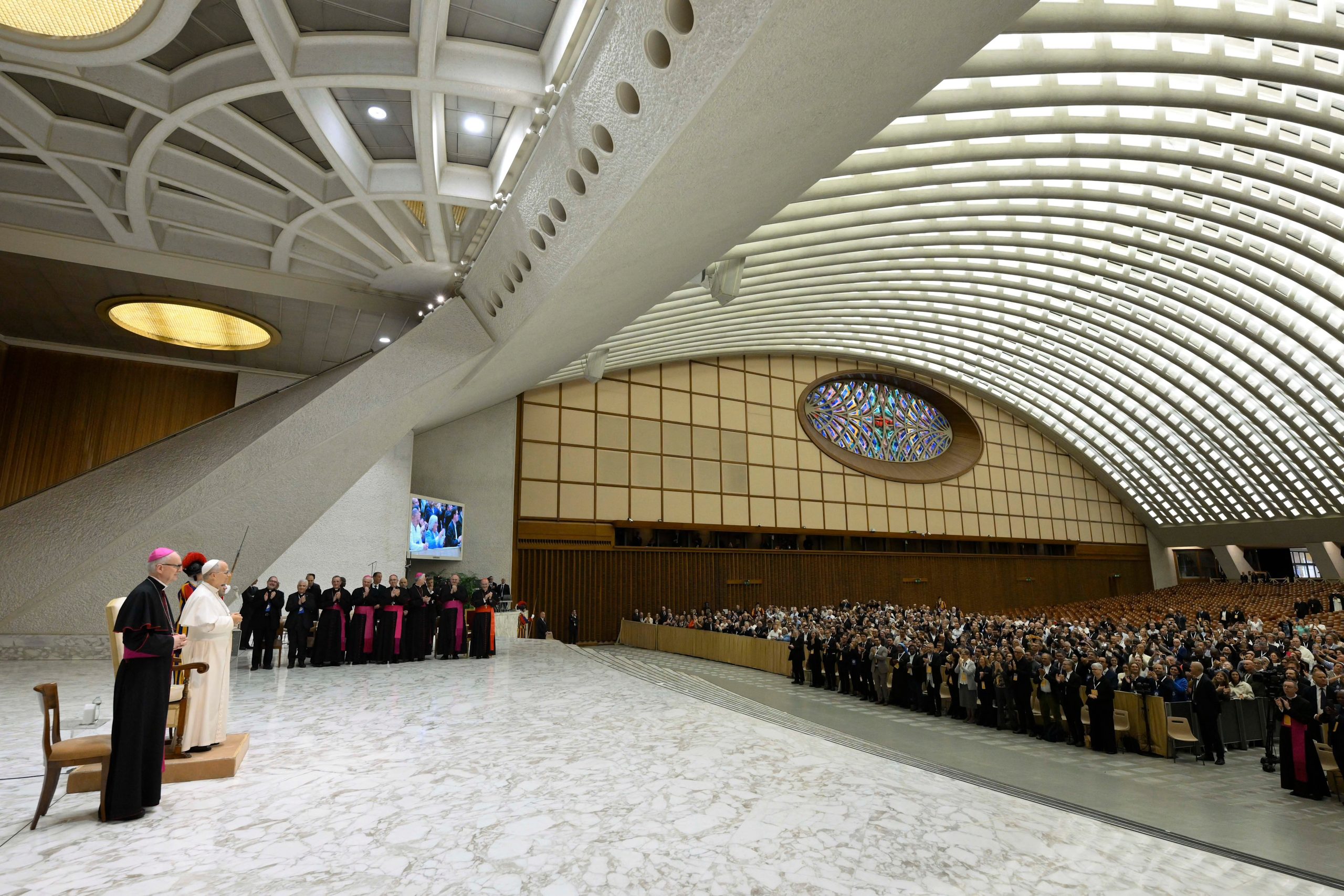
Pope Leo XIV addresses educators and others involved in pastoral ministry at schools about their role in helping young people face the “merciless” culture of comparison today, during the first day of a congress at the Vatican on Oct. 22, 2026. | Credit: Vatican Media

“Help the young people you encounter become protagonists of a new way of inhabiting the world, builders of fraternity and of a more just society. Courage is born from a covenant of trust: from the experience of someone believing in you before you believe in yourself,” the Holy Father said.

Digital loneliness and feelings of inadequacy

Leo XIV warned that many students today face situations of suffering marked by “wounded families, digital loneliness, feelings of inadequacy, or fear of a future that seems uncertain.”

“We live in a culture of performance that constantly compares and ranks, sometimes mercilessly. A misunderstood meritocracy ends up failing to respect the dignity of persons,” he warned.

For this reason, he stressed the importance of educational institutions being, above all, “a home, a familiar place where one is expected.”

The pope also emphasized that the proper mission of education is the shared search for truth and encouraged educators to value young people’s questions and foster an encounter between faith and reason: “May your passion be to help young people experience the beauty of an encounter with Christ, as well as the fruitfulness of the synergy between faith and reason.”

Leo XIV also invited participants to focus their efforts on the integral formation of young people, especially in educating their emotional life and interior life.

“School and university pastoral ministry will be all the more fruitful the more it is centered on the education of the heart,” he said. In this regard, he encouraged the promotion of compassion, gratitude, sensitivity to the suffering of others, and openness to God, recalling that “charity and prayer are inseparable.”

In closing, the pope compared the educational mission to Jesus’ accompaniment of the disciples on the road to Emmaus and urged teachers, chaplains, and pastoral workers to walk alongside young people and help them discover the gifts God has placed within them.

“You have chosen to do something much greater: to walk with them along the way until they discover the gifts God has already placed within them,” he concluded.

‘Revival driven by Leo XIV’

Among those taking part in the Vatican gathering is Carina Rossa, a member of the coordinating committee of the Global Compact on Education.

According to Rossa, who is from Argentina, one of the most significant aspects of the congress is the renewed attention the Holy See is giving to educational pastoral ministry, an area that, she explained, until now did not have a dedicated structure within the Dicastery for Culture and Education.

“Educational pastoral ministry is experiencing a revival driven by Leo XIV,” she said. “It is an area that is the heart of the university and the heart of the school.”

She recalled that the Global Compact on Education was launched by Pope Francis in 2020 and highlighted the importance of Leo XIV’s decision to take it up again and relaunch it during the Jubilee of the World of Education in 2025.
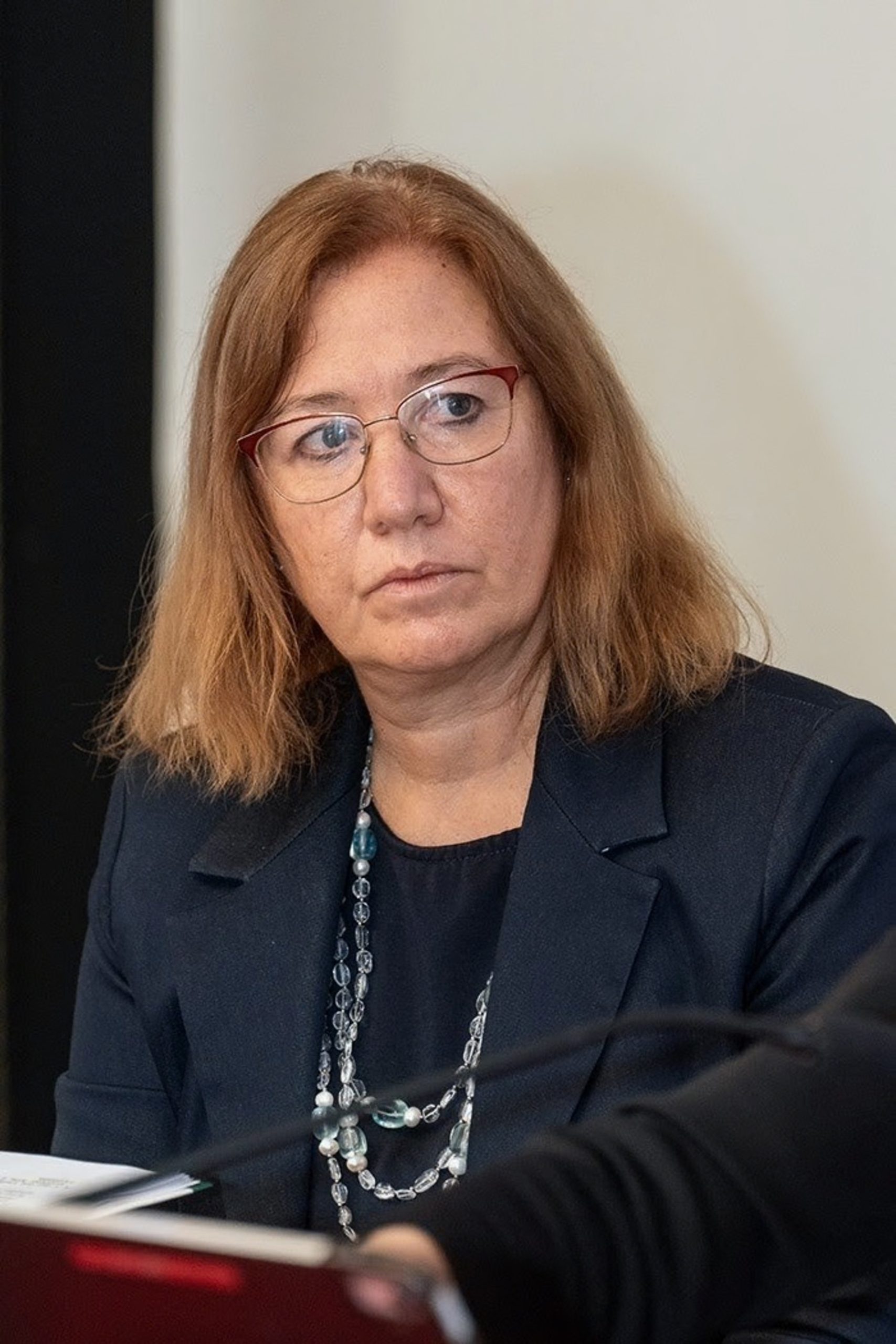
Carina Rossa, from Argentina, is a member of the coordinating committee of the Global Compact on Education. She participated in the Vatican’s international congress on pastoral care in Catholic schools and universities, held Oct. 22–23, 2026. | Credit: Courtesy of Carina Rossa

“The fact that Pope Leo relaunched the Global Compact on Education has been very important in revitalizing this proposal,” she said. According to Rossa, universities and educational institutions in different parts of the world have shown renewed interest ever since. “There is a need for, and a new enthusiasm about, this project.”

3 priorities for Catholic education

Rossa noted that the congress is centered on three major goals identified by Leo XIV: cultivating interior life, promoting a humane use of digital technologies, and educating for peace.

In particular, she emphasized the importance of recovering the spiritual dimension of education in a context marked by a crisis of meaning and mental health challenges among young people.

“What is emerging strongly is a great desire for meaning, interiority, spirituality, and silence,” she said. “We appreciate that Pope Leo speaks about this from his Augustinian charism, but above all because he does so in light of listening to young people,” the Global Compact on Education representative said.

She explained that in recent years the initiative has gathered testimonies and concerns from young people in different countries.

While she sees among them a strong social commitment and a desire for an integral education, she believes there is an even deeper need.

“St. Augustine reflects today’s young person very well, searching everywhere until discovering that God was within him all along,” she said.

A pastoral ministry that transforms academic life

For Rossa, educational pastoral ministry should not be understood as a parallel activity or one limited to religious celebrations but as a dimension capable of transforming the entire life of an academic institution.

“It is not something isolated, nor is it only about celebrations,” she explained. “It can revitalize the way we teach, the way we relate to students, the way the university connects with its local community, or how it approaches questions such as care for creation, the search for truth, beauty, and culture.”

After only the first day of the congress, the Argentine highlighted the high quality of the presentations and the atmosphere among participants.

“There is a lot of enthusiasm,” she said. “The 1,200 people gathered here are not only listening but are creating a true community among pastoral workers from different parts of the world.”

Unexpected encounter with the pope

One of the most moving moments of the congress was the encounter with Leo XIV, which had been on the schedule for weeks but had been thrown into doubt because of his recent lung cancer surgery, from which he is gradually recovering.

“It was very moving because we were not expecting it,” Rossa recounted. “Given his health situation, it seemed to me a very generous gesture on his part.”

After his address, Leo XIV personally greeted several of the speakers and participants.

This story was first published by EWTN News Español, the Spanish-language sister service of EWTN News. It has been translated and adapted by EWTN News English.
ETWN Asia Pacific
EV
ETWN Asia Pacific
EWTN Vaticanabout 5 hours ago

New Vatican document considers the difficulties of passing on the faith today

The document is presented as a set of “considerations,” drawing on the input and contributions of several national bishops’ conferences.

The Vatican’s Dicastery for the Doctrine of the Faith on Thursday published the document “Venite ad Me: Considerations on the Transmission of the Faith in an Epochal Change,” which is expected to be the last of the documents commissioned from the dicastery by the late Pope Francis.

The text, approved by Pope Leo XIV on Aug. 21, consists of eight chapters and 144 paragraphs, and bears the signature of Cardinal Victor Manuel Fernández, prefect of the Dicastery for the Doctrine of the Faith.

It is presented as a set of “considerations,” drawing on the input and contributions of several national bishops’ conferences, rather than as a “doctrinal note.”

The document says that today, difficulties to sharing the faith abound, including the spread of secularization and individualism.

“It must be acknowledged that what is in crisis is not only the transmission of the faith, but also a certain vision of the human person and of his or her foundational values — a vision that had found its fulfillment precisely in the Gospel,” it says.

“The crisis of modernity, which is the hallmark of this epochal change, has thus contributed to the emergence of a new culture that has come into competition with the traditional structures through which the faith has been transmitted.”

Encounter with the Lord Jesus

The text says that “the heart of the Christian experience” is “an encounter with the Lord Jesus that brings us into contact with the true light of divine love, keeps us from losing our way in darkness, and leads us to life. It is precisely in this sense that we can speak of the ‘light of faith.’”

“The transmission of the faith,” the document says, “has its ultimate foundation in God’s initiative, who, in Christ, revealed his face and entrusted the Apostles the task of proclaiming the Gospel to all nations. This mission, however, did not end with the apostolic preaching but continues throughout history through the Church.”

The document also recalls the words of Pope Benedict XVI, who, in a 2007 homily, reaffirmed that “the most authentic force of the evangelizing mission of the community of the Lord’s disciples remains the power of attraction.”

Role of the family, Church community

Central to this transmission is the role of the family, “the first and most essential place for the transmission of the faith.” In the family, there exists “the primary setting in which faith [was] passed from one generation to the next,” the document says.

From the family, one then moves to the Church community: “What a person has received from their parents — namely, the witness of faith in Jesus, who fully revealed the face of God’s infinite love, freeing human beings from darkness and opening them to the true light of life — finds in the Church the means and the opportunities to become the guiding principle of how that person sees the world,” it says.

The document adds: “Through catechesis, the celebration of the sacraments, the various spaces that foster active participation in community life (as proposed by the current synodal journey), commitment to the most disadvantaged, and gathering in the house of the Lord on Sundays, one reaches that maturity of faith which ultimately consists in seeing everything ‘through the eyes of Jesus.’”

In our age there are still people who convert or return to the practice of the Catholic faith; nevertheless, “there is also a parallel difficulty concerning the perseverance of neophytes [new Catholics], who often, shortly after receiving baptism, return to a state of practical indifference,” the document says. It therefore becomes necessary, the dicastery warns, to rediscover “the importance of the community in welcoming and accompanying new members of the faithful.”

New technologies and ideology

Addressing new digital technologies and artificial intelligence, the document says “the invitation to faith risks becoming disembodied, detached from concrete life, or tied to ideologies promoted by vocal minorities. This can lead to distortions of the faith itself or of conscience, or it can lead people to construct a so-called ‘do-it-yourself’ faith, shaped by their own tastes and preferences rather than by the teaching of the Church.”

At the same time, this situation opens up new frontiers for evangelization and, the dicastery states, the essential need “to transmit the faith, beginning with the ‘kerygma.’”

“It seems entirely natural that believers should embark on a renewed period of proclaiming the Gospel,” it continues. For this reason, “Christian communities are strongly called to promote — in season and out of season — a renewal of the proclamation of the ‘kerygma.’”

Liturgy

In the document, the liturgy is given particular importance for the transmission of the faith: “If the heart of the Christian proclamation is the encounter with God’s saving love in Christ, the liturgy constitutes the privileged place in which this mystery is celebrated and communicated sacramentally. For this reason, it plays a central role in handing on the faith, serving as the beating heart of ecclesial life, where the community is nourished by the Word of God and the Bread of eternal life.”

“In this regard, we must move beyond a reductive view that regards the liturgy as merely a ritual framework for ecclesial life. The liturgy, in fact, is first and foremost an experience of faith, even before it is a teaching, in that it allows the faithful to participate in gestures, words, silences, and symbols, thereby experiencing the mystery of Christ in a living way,” it continues.

The document further emphasizes that special care must be taken to enable, in every diocese, both the faithful and those approaching or returning to the believing community to encounter the various liturgical sensibilities present within the tradition of the Catholic Church.

While respecting the liturgical norms currently in force, pastors are called to value the richness of the Catholic liturgical heritage in such a way as to reach the diverse sensibilities of their flock. “The Christian community grows and is built up through ritual practices, and in this regard, the Church’s rich spiritual heritage represents a precious and inexhaustible resource,” the document says.

Inculturation

Finally, the document includes a passage on inculturation. It is important to recall, it states, “that the inculturation of the faith constitutes a necessary step in its transmission, since the Gospel message must be made understandable to people who share values and categories that do not perfectly coincide with the Hellenistic-Semitic ones in which the biblical text was originally formulated.”

“Where the faith touches the cultural roots and expressions of a people, its transmission truly becomes easier and more fruitful,” it says.

This story was first published by ACI Stampa, the Italian-language sister service of EWTN News. It has been translated and adapted by EWTN News English.

ETWN Asia Pacific
EV
ETWN Asia Pacific
EWTN Vaticanabout 5 hours ago

Pope invites young Catholics to Seoul as registration opens for World Youth Day 2027

The Vatican released the pontiff’s message on the feast of St. John Paul II, who established World Youth Day in 1985.

With less than a year to go until World Youth Day (WYD) in Seoul, South Korea, Pope Leo XIV invited young Catholics worldwide to register and to view the event as a pilgrimage rather than just a trip to a new place.

“This is not merely an invitation to see a new city; it is a call to set out on a pilgrimage of faith, friendship, and hope,” Leo said in a video message.

The Vatican released the pontiff’s message on Thursday, coinciding with the liturgical feast of St. John Paul II, who established WYD in 1985. In his message, Leo referred to his predecessor, who invited the young to “open wide the doors for Christ.”

“Providentially, today we celebrate the liturgical memory of St. John Paul II, who continuously proclaimed to all peoples, ‘Do not be afraid, open wide the doors for Christ.’ These words also apply to each one of you,” Leo said.

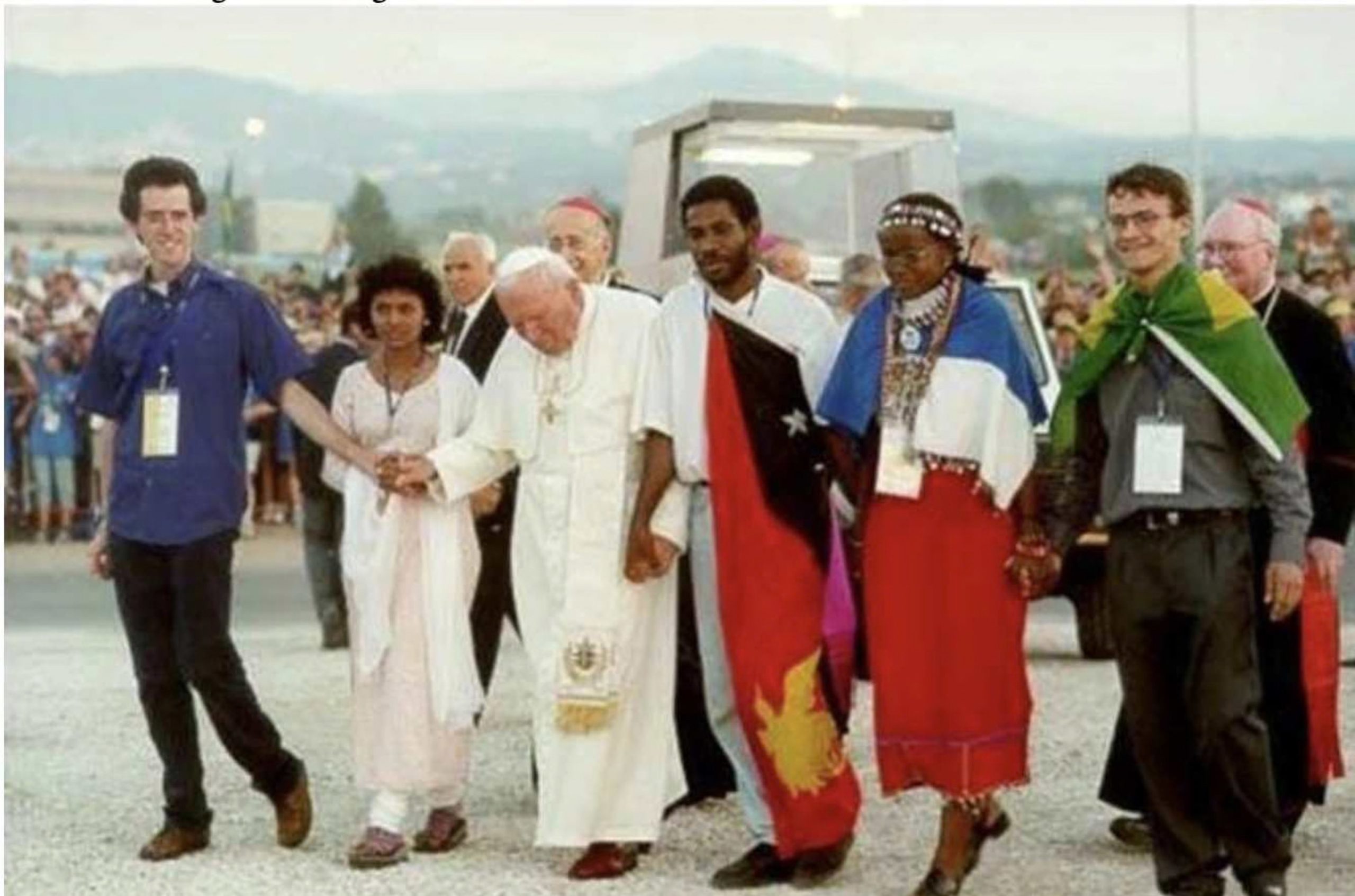
Pope John Paul II arrives at the campus of Tor Vergata University in Rome for World Youth Day with young people from each continent on Aug. 19, 2000. | Credit: Vatican Media

The pope, who is expected to attend, also reminded young Catholics what to look forward to as they register for WYD 2027: unity in diversity.

“In Seoul, you will meet young people from all across the world, representing a beautiful and rich variety of languages and cultures,” the pope said.

“Yet, despite these differences, and indeed because of your God-given diversity, you will experience an even greater sense of unity, for we are all members of the one body of Christ.”

WYD 2027 registration

The next World Youth Day will take place in Seoul from Aug. 3–8, 2027.

In a press release accompanying the pope’s message, the WYD 2027 organizers urged those registering to do so as groups. As explained in the press release, registration takes place in two phases: first, the group leader creates a group account, and second, the group leader adds each member’s information. Registration is complete once payment is made.

Pilgrims are offered 11 packages to choose from, ranging from $70 to $340, depending on the type of stay, and including public transportation and a pilgrim kit.

Registrations can be made on the WYD 2027 website.

Theme song, patron saints, and Korean hospitality

The theme of WYD 2027 is taken from the Gospel of John 16:33: “Take Courage! I Have Overcome the World.”

On Aug. 3, the WYD 2027 countdown began with the premiere of its official theme song, “Confidite, Ego Vici Mundum” (“Take Courage, I Have Overcome the World,” in Latin), on YouTube. The song was composed by Korean composer Francis Jiyoon Kim.

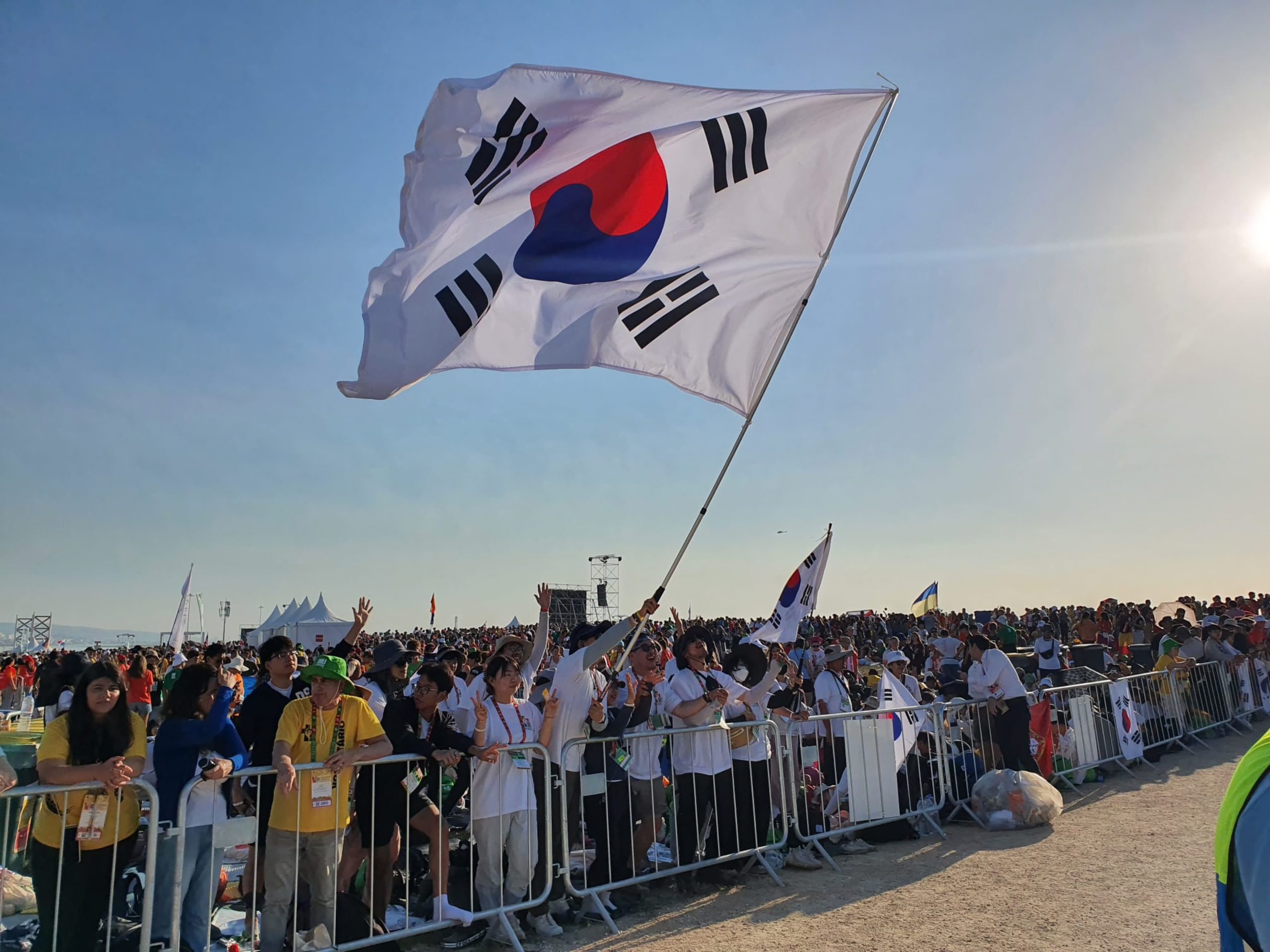
Pilgrims from South Korea wave a flag at the closing Mass of World Youth Day Lisbon with Pope Francis on Aug. 6, 2023. | Credit: Hannah Brockhaus/EWTN News

St. John Paul II and four other saints are patrons of WYD 2027: St. Andrew Kim Taegon and his companion martyrs, St. Frances Xavier Cabrini, St. Josephine Bakhita, and St. Carlo Acutis, the first millennial saint to be canonized.

In a July press release ahead of the countdown, Archbishop Peter Soon-taick Chung of Seoul, president of the local organizing committee, expressed hope that the hundreds of thousands of pilgrims expected in Seoul will experience the hospitality of the South Korean people.

“Over the past three years, we have concentrated on laying the foundations for the event. The year ahead will be the time to complete our preparations and welcome young people from every part of the world,” Chung said.

This article was originally published by EWTN News English.

ETWN Asia Pacific
EV
ETWN Asia Pacific
EWTN Vaticanabout 5 hours ago

Pope Leo XIV: Following St. John Paul II, the Church’s dialogue with Jews must continue

The pontiff met with a delegation of the American Jewish Committee at the Vatican on Thursday.

Pope Leo XIV reiterated the Church’s stance against antisemitism and all forms of religious discrimination, recalling the work of St. John Paul II in promoting dialogue between Catholics and Jews.

The pontiff held a private audience on Thursday with a delegation from the American Jewish Committee, one of several meetings he has held with Jewish leaders since his election as pope in 2025.

During the audience, coinciding with the liturgical feast day of St. John Paul II, Leo praised the Polish pope’s efforts to advance Catholic-Jewish dialogue, recalling his address to their delegation in 1995.

“Addressing the board of governors of your committee in 1995, he observed that ‘dialogue between Christians and Jews must find eloquent expression in the life of both our communities,’” Leo said in his address.

“These words remain relevant today, as reflected in your organization’s long-standing commitment to dialogue and cooperation with the Catholic Church.”

An image of St. John Paul II is visible in a side chapel of the Church of Santo Spirito in Sassia in Rome. | Credit: Courtney Mares/EWTN News

As he did in June during a meeting with the United Jewish Appeal-Federation of New York, Leo reflected on the progress of Catholic-Jewish dialogue since the 1965 publication of Nostra Aetate, the Second Vatican Councilʼs declaration condemning all forms of antisemitism.

“Rooted in our shared spiritual heritage, this friendship also calls us to defend human dignity, serve the poor, protect religious freedom, and promote justice and peace. Essential to this commitment is the rejection of all forms of religious and ethnic hatred and discrimination,” Leo said.

Reiterating the Church’s stance against antisemitism, he added that differences of opinion between Catholics and Jews “must never give rise to prejudice and hostility” and that fraternity between them will “certainly contribute to building a more peaceful world.”

This article was originally published by EWTN News English.

ETWN Asia Pacific
EV
ETWN Asia Pacific
EWTN Vatican1 day ago

Pope Leo XIV needs no further treatment after lung cancer surgery, Vatican says

Final histological examinations and molecular biology tests on tissue removed during the Holy Fatherʼs surgery were completed.

VATICAN CITY — The Vatican Press Office issued an important statement Wednesday evening on Pope Leo XIVʼs recovery following his Oct. 13 surgery, confirming that no further treatment is necessary.

The brief statement provided a significant update on the popeʼs postoperative condition.

“Dr. Luigi Carbone and Professor Stefano Margaritora report the following regarding the popeʼs postoperative recovery: Today, the final histological examinations and molecular biology tests on the tissue removed during the Holy Fatherʼs surgery were completed. The results confirmed that it was pulmonary adenocarcinoma and that the disease was localized. A subsequent oncological assessment confirmed that no further treatment is necessary,” the statement said.

The news that Pope Leo XIV will not require additional treatment following his surgery is an announcement that the world had been awaiting.

Pope Leo XIV was discharged from Romeʼs Gemelli Hospital on Oct. 17 and returned to the Vatican.

On Oct. 21, he held his first general audience since the operation. Appearing to be in excellent spirits, the pope was undeterred by the rain in Rome.

He wanted to be close to the faithful and thank them for their prayers for his health.

This story was first published by ACI Stampa, the Italian-language sister service of EWTN News. It has been translated and adapted by EWTN News English.

ETWN Asia Pacific
EV
ETWN Asia Pacific
EWTN Vatican1 day ago

Chaldean Catholics from around the world gather with patriarch at the Vatican

Chaldean Catholics from around the world gathered with their patriarch at the Vatican Faith, Reunion and the Hope of Return: Chaldean Catholics Gather at the Vatican

Hundreds of Chaldean Catholics from Iraq and diaspora communities around the world gathered at the Vatican last week, joining Patriarch Paul III Nona for Mass in St. Peter’s Basilica on Oct. 15.

Celebrated according to the Chaldean rite, the Mass filled St. Peter’s Basilica with prayers and chants in Aramaic, bringing the traditions of the ancient Chaldean Church to the heart of Catholicism. The occasion expressed the unity of the Catholic Church across its different rites and traditions.

The celebration followed a Mass in St. Peter’s Square on Oct. 14, during which Cardinal Luis Antonio Tagle, acting on behalf of Pope Leo XIV, publicly affirmed the ecclesiastical communion the pope granted to Nona following his election as patriarch of Baghdad of the Chaldeans in April.

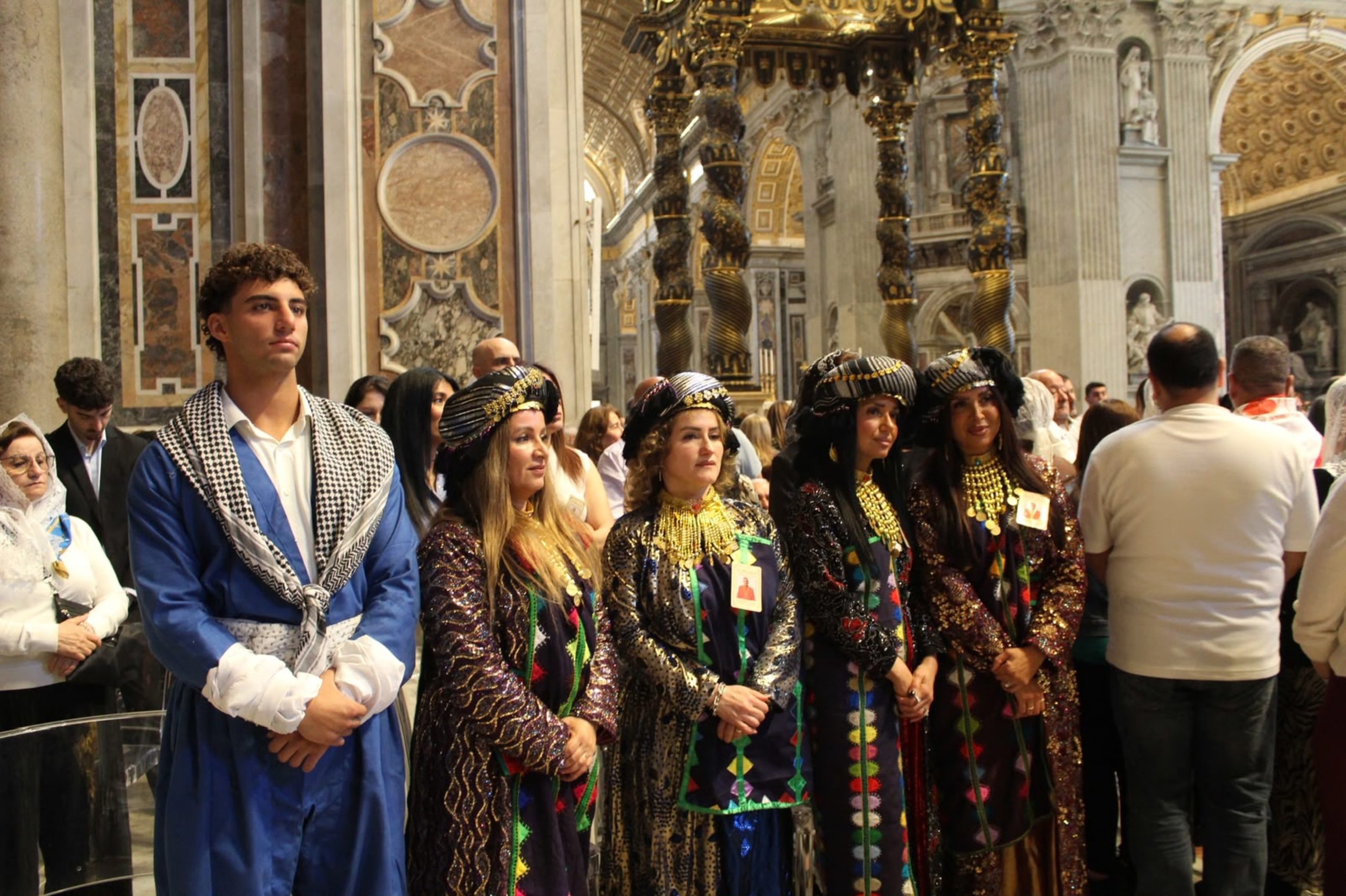
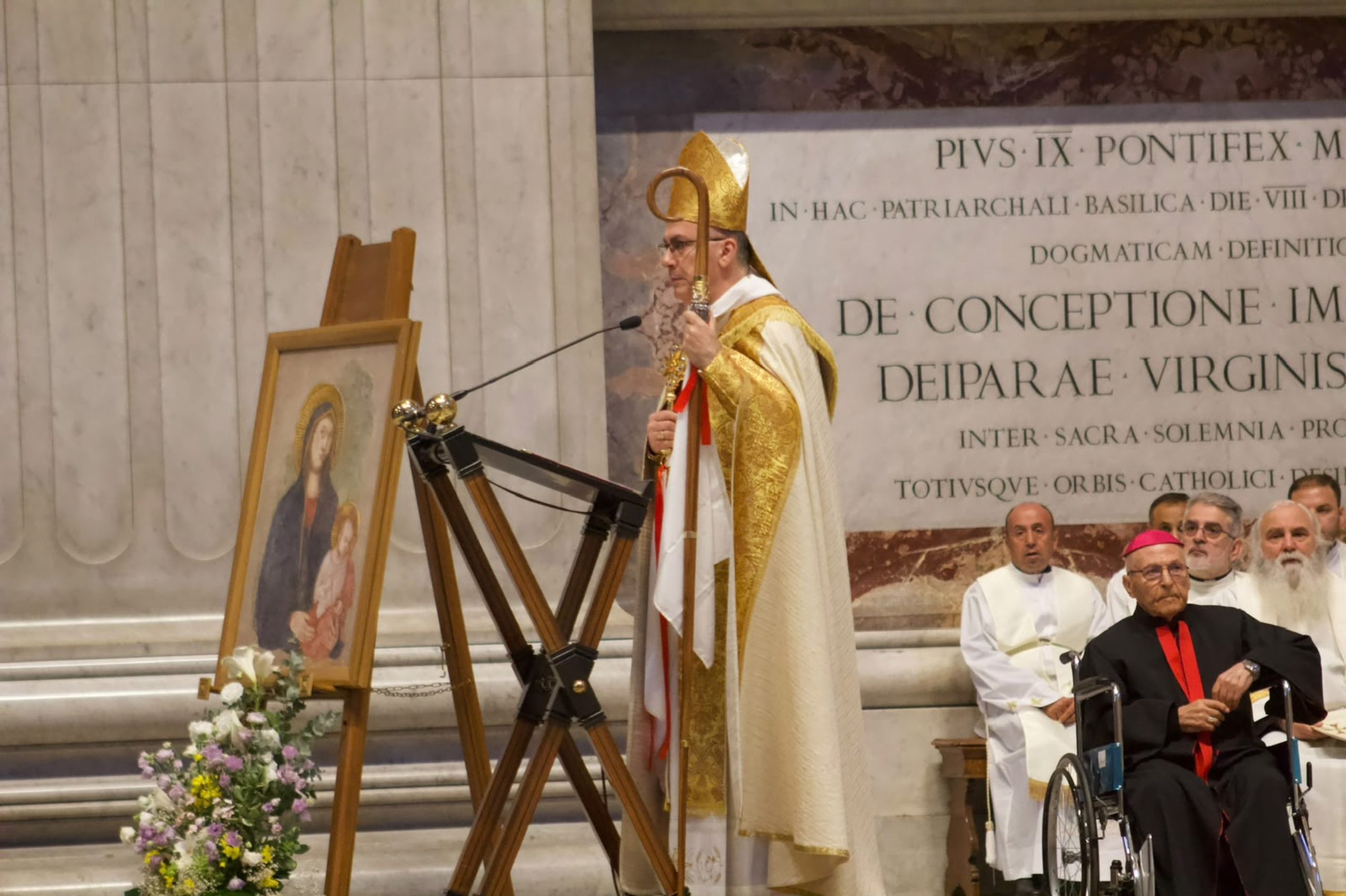
Chaldean Catholics gather Oct. 15, 2026, at the Vatican, expressing the unity of the Catholic Church across its different rites and traditions. | Credit: Romy Haber

For a community scattered across continents, the gathering was also an opportunity for Chaldean Catholics to come together in prayer, celebrate a shared heritage, and reflect on the challenges facing Chaldeans both in their homeland and abroad.

“This was a beautiful, spiritual, and historic day for all of us — one that we are going to cherish for the rest of our lives,” Father Fawaz Kako, a Chaldean priest serving in the United States, told EWTN News. “It is such a blessing to come together in one place, under one holy Catholic Church.”

For Kako, the faith of earlier generations, particularly those who suffered martyrdom, continues to sustain Chaldeans wherever they live. “Our connection to our Church is about more than just language. It is deeply rooted in Christ and in all the martyrs who gave themselves to him and whom we look to,” he said.

“Those who came before us shed their blood for Jesus. Today, we see that as a source of strength, something we can cling to as we continue to follow Christ.”

Patriarch Paul III Nona celebrates Mass with hundreds of Chaldean Catholics in St. Peter’s Basilica on Oct. 15, 2026. Nona is the Chaldean Catholic patriarch of Baghdad, serving as the head of the Chaldean Catholic Church. | Credit: Romy Haber

Preserving that identity far from the homeland presents its own difficulties.

Father Christopher Somo, another Chaldean priest serving in the United States, described the pressure that smaller communities face within the societies where they have settled.

“When you go to another culture, there’s a temptation to let your culture become diluted in the midst of a larger and more powerful culture,” he said.

At the same time, Somo stressed that the Church faces the challenge of preserving its presence and heritage in Iraq after many years of persecution.

Father Albert Hisham, a Chaldean priest based in Iraq, described how successive waves of violence, particularly since 2003, had driven Christians to leave. He recalled church bombings, the kidnapping and killing of clergy and other Christians, and the Islamic State group’s expulsion of Christians from Mosul and villages in the Nineveh Plain. 

“This has led our people, our Chaldean faithful, to almost lose confidence in the possibility of remaining in Iraq, which deeply saddens us,” Hisham said. He also estimated that more than 1 million Christians had emigrated over the past two or three decades. Yet leaving Iraq has not necessarily brought an end to their longing for home.

For those abroad, Hisham said, the desire to return remains, but the difficulties of resettling prevent many from acting on it.

“There are many Christians who find it very difficult to return to Iraq after settling in countries abroad,” he stressed.

Kako also acknowledged the uncertainty surrounding a permanent return, even among those who maintain close ties with their homeland. “We always travel back home and visit. But we are also very well established in the diaspora,” he said. “It all depends on how peaceful that region will be.”

Hisham said Patriarch Nona has emphasized that encouraging Christians to return must be accompanied by practical measures to help them rebuild their lives. These include housing, employment, and opportunities for investment.

“There must be job opportunities for Christians to return; otherwise, the invitation alone is not enough,” he said.

Hundreds of Chaldean Catholics gather at St. Peter's Basilica in Rome for Mass on Oct. 15, 2026. | Credit: Romy Haber
Hundreds of Chaldean Catholics gather at St. Peter’s Basilica in Rome for Mass on Oct. 15, 2026. | Credit: Romy Haber

While the question of return remains unresolved, communities abroad continue to support those in Iraq. Father Mahir Murad, a Chaldean priest serving in Australia, described efforts that range from raising funds to advocating for their protection.

“In Australia, we’re doing a lot of lobbying with members of Parliament about how we can keep our people safe, what we can do to protect them, and how we can help them leave the country if we can,” he said.

Parish communities also collect donations and send financial assistance to people back home, he added. Murad acknowledged the difficult choices involved in supporting both those who wish to remain and those who feel they must leave. He expressed a desire to preserve the community’s presence in its homeland while respecting the needs of people who fear for their safety.

“We are the indigenous people of Iraq. We want our people to stay, but to feel protected also,” he said. “For those who want to leave because they feel persecuted, we want to help them leave the country.”

Nevertheless, Murad said he hopes peace will allow more Chaldeans to return.

This story was first published by ACI MENA, the Arabic-language sister service of EWTN News. It has been translated and adapted by EWTN News English.

ETWN Asia Pacific
EV
ETWN Asia Pacific
EWTN Vatican1 day ago

Pope Leo XIV: The world is poorer without saints

The pontiff met with participants of the “Holiness in History” conference at the Vatican on Wednesday.

Pope Leo XIV, in his first private audience since undergoing surgery on Oct. 13, said the history of the world is inseparable from the history of the saints.

“The history of the world without saints would be immeasurably poorer; that is, less human,” Leo said in his address.

The pontiff met on Wednesday with participants of the “Holiness in History” conference, held at the Patristic Institute Augustinianum center in Rome from Oct. 19–21. Organized by the Dicastery for the Causes of Saints, the conference explored the role of historical research in determining whether to declare someone a saint.

Rigor in canonization causes

In his remarks, Leo referenced Pope Pius XI, who established the dicastery’s historical section in 1930, and emphasized that recent causes for canonization must continue to be carefully evaluated against historical evidence of one’s holiness.

Pope Leo XIV delivers remarks during a private audience at the Apostolic Palace in the Vatican with participants in the “Holiness in History” conference on Oct. 21, 2026. | Credit: Vatican Media

“The treatment of ‘recent causes’ likewise cannot dispense with a serious and rigorous examination of all the material collected,” Pope Leo said. “Causes of saints make use of the tools proper to the study of history, even though their aim is not to produce historiography, but rather to bring to light the exemplary nature, spirituality, and reputation for holiness of those proposed for the altars.”

Saints must be understood in context

Leo also explained the importance of placing canonized saints in the context in which they lived, eliminating stereotypes and misunderstandings.

“As the ages pass, even the profile of saints may undergo development: not to follow the stereotypes of the moment, but to interpret a particular experience through the categories of the Gospel lived out,” Leo said.

“For this reason, placing the witness of a saint within the context in which he or she lived is very important. The people of God seek models for living in the present, intercessors who help members of the Church face today’s challenges and recognize their opportunities.”

This article was originally published by EWTN News English.

ETWN Asia Pacific
EV
ETWN Asia Pacific
EWTN Vatican1 day ago

Pope Leo affirms the ‘unbreakable oneness’ of marriage at first general audience post-surgery

The pope stressed that the commitment to protect families is “more urgent than ever before.”

VATICAN CITY — The mutual self-gift of husband and wife underlies the requirement for “total fidelity” and the “unbreakable oneness” of marriage, Pope Leo XIV said at the general audience on Wednesday.

“The mutual self-giving of man and woman, such that ‘they are no longer two but one flesh,’ underlies the requirement for ‘total fidelity’ and the ‘unbreakable oneness’ of the spouses, finding vivid expression in the procreation and upbringing of children,” he said during his catechesis on Oct. 21.

The pontiff presided over the general audience just days after being discharged from Rome’s Gemelli Hospital, where he underwent surgery for lung cancer on Oct. 13. It was the Holy Father’s first ride in the popemobile since the operation and a chance to greet the faithful who had braved the morning’s rainy weather.

The pope was welcomed with a lengthy applause when he arrived at the platform in St. Peter’s Square. Not only pilgrims but also cardinals and bishops working in the Roman Curia gave a standing ovation upon his arrival. For many, it was the first opportunity to shake his hand again following his hospitalization.

Pope Leo XIV leans down to bless a baby while greeting the crowds during his general audience in St. Peter’s Square on Oct. 21, 2026. | Credit: Daniel Ibañez/EWTN News

Leo XIV appeared energetic after the surgical procedure, which took place just eight days ago. Before beginning the catechesis, he thanked the many people who had shown him support during his hospitalization: “The first thing I would like to say is thank you! Thank you for the support of your prayers. Thanks be to God for his generosity.”

Protecting families is ‘more urgent than ever before’

During his address, the Holy Father continued his series of messages dedicated to the Second Vatican Council’s pastoral constitution Gaudium et Spes.

He focused his reflection on marriage and the family, convinced that “the well-being of the individual and of human and Christian society is intimately linked with the healthy condition of that community produced by marriage and family.”

He stressed that the commitment to protecting families is “more urgent than ever before” and reminded “all those with social responsibilities, especially in the political and cultural spheres,” of their duty to “work efficiently for the welfare of marriage and the family.”

“The Church is well aware of this, as shown by the pastoral concern of the popes who have succeeded one another since the last council, right up to the two synodal assemblies convened by Pope Francis, which were addressed again in recent days by the heads of the Eastern Catholic Churches and the presidents of the episcopal conferences,” he said.

Leo XIV was referring to a recent meeting on the family he convened to mark the 10th anniversary of the apostolic exhortation Amoris Laetitia, attended by the presidents of bishops’ conferences from around the world.

A synthesis document compiling the principal interventions, without doctrinal authority, had been scheduled for publication, but the pontiff requested that its release be postponed so that he could study it carefully.

Pope Leo XIV delivers his catechesis during the first general audience after surgery to remove a cancerous nodule in his lung. He was greeted by a long applause upon arriving in St. Peter’s Square on Oct. 21, 2026. | Credit: Daniel Ibañez/EWTN News

The pope emphasized that Gaudium et Spes does not merely reiterate the values and purposes of marriage but offers a renewed understanding of it as an “intimate partnership of married life and love.” He explained that this vision incorporates the juridical dimension of marriage as a contract, while grounding the union in the “conjugal covenant,” understood as the “human act whereby spouses mutually bestow and accept each another.”

In his view, this reality finds a particularly vivid expression in the procreation and upbringing of children. “Conjugal love is not limited to erotic attraction, which it nonetheless encompasses, but involves the entire will of the spouses, enlivening the affections of their hearts and expressing itself through sentiments and gestures of tenderness,” he explained.

‘Integral love from person to person’

He also noted that this love “embraces the good of the whole person of both man and woman, who are equal in dignity.” It “pervades the entire life of the spouses, finding expression in acts proper exclusively to marriage.”

“Whilst signifying integral love from person to person, the unique intimacy between the spouses fosters their mutual self-giving and enriches their shared joy,” he added, before highlighting that the fruitfulness of conjugal love is also expressed through the procreation of children, “the supreme gift of marriage.”

“By transmitting and educating human life, which must never be rejected, spouses become ‘cooperators with the love of God the Creator, and are, so to speak, the interpreters of that love,’” Leo XIV said.

The pope added that spouses, called to this human and Christian responsibility, “are bound to allow themselves to be guided by a sound judgment regarding their own good and that of their children, whether already born or yet to be born.”

“Such a judgment, which, in the final analysis, the spouses themselves must form before God, requires that their conscience conform to divine law, as interpreted by the magisterium of the Church in the light of the Gospel,” he stated.

Rejection of abortion and infanticide

Drawing on these principles, the pontiff reiterated the Church’s defense of human life from conception. From this, he said, it follows that “from the moment of its conception, life must be guarded with the greatest care,” while rejecting “abortion and infanticide.”

He also affirmed that “the acts themselves which are proper to conjugal love and which are exercised in accord with genuine human dignity must be honored with great reverence.”

This story was first published by EWTN News Español, the Spanish-language sister service of EWTN News. It has been translated and adapted by EWTN News English.

ETWN Asia Pacific
EV
ETWN Asia Pacific
EWTN Vatican2 days ago

Will Pope Leo Reshape His Pontificate?

ANALYSIS: Could his cancer diagnosis change how Pope Leo governs the Vatican going forward?

Until the announcement of his hospitalization and lung surgery that led to the diagnosis of adenocarcinoma last week, the world took for granted that Leo XIV’s would be a broad-ranging pontificate spanning the better part of two decades, in which the Pontiff would have the opportunity to reshape and even redefine the Roman Curia, the bishops and the cardinals.

Although tests are still underway to determine the stage of cancer, initial reports from the medical team are that the Pope is recovering well from the surgery that removed the lower lobe of his right lung, and he has been cleared to proceed with his planned trip to South America from Nov. 6 to 17.

It’s true that the Pope had already proven himself to be a pope who takes his time. There have been no major reforms, no spoils system — only a few precise adjustments on some issues (technicalities of financial reform, the Vatican City State law), continuity on others (synodality and the synodal method applied to consistories, women heads of dicasteries), and even fewer high-profile appointments.

Although his recent hospitalization has introduced concerns about his health, Leo XIV’s pontificate is otherwise poised to blossom.

It also opened in the midst of a Jubilee, something that had happened only once before in history, and with the need to bring peace and unity to a Curia and a Church following a divisive pontificate like Pope Francis’.

Leo addressed these challenges by fulfilling all of Francis’ commitments until the Jubilee’s conclusion. He convened the first consistory the day after the Jubilee ended and then began the transition — albeit slowly — in the second half of the first year of his pontificate. The Pope even published in his own name a document prepared by Pope Francis, the apostolic exhortation Dilexi Te on caring for the poor.

Leo’s hospitalization came while celebrating the 10th anniversary of another divisive move by his immediate predecessor, the apostolic exhortation Amoris Laetitia on marriage and family.

This bishops’ meeting on Amoris Laetitia had already taken on the tone of a sociological discussion on the family. In his inaugural address to the meeting’s participants on Oct. 7, Leo had already called for a courageous response to present challenges and a renewed focus on the family. His March 19 letter marking the 10th anniversary of Amoris Laetitia’s release, in which he announced the October meeting, emphasized the need to consider the profound changes that have affected family life.

In short, with Leo XIV, we face neither a Pope who breaks with the Church’s tradition nor one who, in the name of continuity, accepts controversial interpretations that made their way in the previous pontificate.

Going Forward Post-Diagnosis

If the meeting on Amoris Laetitia was considered a watershed moment, we must understand how Leo’s cancer diagnosis affects the pontificate. Pressed by journalists’ questions, Cardinal Pietro Parolin, Vatican secretary of state, went so far as to say on Oct. 15 that the pontificate could be “reshaped” — and he later claimed he was mostly referring to the upcoming trip to Argentina, Peru and Uruguay that is still on. (The EWTN News reporting references Cardinal Parolin saying that “the Pope will also adjust his pontificate if it becomes necessary to do so.”)

Now, faced with serious surgery, cancer and convalescence, it’s entirely normal to decide to change one’s lifestyle and schedule. Cardinal Parolin was likely referring to this.

Regardless, for the cardinal secretary of state to say what he said while the Pope was still in the hospital could not fail to spark debate and raise questions.

In responding to journalists this way, Cardinal Parolin may have underestimated how each word could be interpreted, unless he intended it to be interpreted precisely that way.

What could it mean, then, to reshape the pontificate?

It could mean slowing down: slowing down decisions, slowing down audiences, slowing down travel plans, while calmly monitoring his health and surgical recovery. After all, Leo XIV has shown he is strictly following the doctors’ advice, which undoubtedly recommends rest.

It also means possibly adjusting his travel plans to South America next month, which would take him through three countries and 14 locations and involve about 20 flights by plane and helicopter, with a stop in Cuzco, more than 3,000 meters (almost 10,000 feet) above sea level.

The Pope’s doctor said over the weekend that Leo was medically cleared to travel. But it could be a bit too much for the Pope, who will still be recovering from the removal of a lung lobe. Typically after such a procedure, one prefers not to fly. But even if one does fly, making 20 flights in seven days is daunting.

Will the travel schedule change, even if the doctors said the trip is possible, and there are no clinical reasons not to go? For now, the trip is confirmed as originally planned.

Aside from the South America trip, reshaping the pontificate could mean speeding up.

After a year and a half of waiting, the Pope could speed up the appointment of trusted individuals to build an efficient, reliable government team capable of governing the Church, in case further absences occur due to hospitalizations. Until now, the Pope has generally enjoyed good relationships with those who speak his language: Cardinal Kevin Farrell, Cardinal Michael Czerny and Archbishop Paul Richard Gallagher.

The first will have to retire, the second has already done so — but retains control of the interdicasterial commission on artificial intelligence — and the third is firmly in place as the Vatican’s “foreign minister,” while Cardinal Parolin remains the head of diplomacy.

Then perhaps the Pope could decide to proceed decisively with a generational changeover and launch his personal governance program, which has yet to be fully realized.

In the days preceding his hospitalization, Leo confirmed the election of the dean of the College of Cardinals and the archpriest of St. Peter’s Basilica (Cardinal Luis Antonio Tagle and Archbishop Vittorio Francesco Viola, respectively), two important positions, as they do not cease even during a vacancy. The appointments were expected, but the fact they came on the eve of the papal hospitalization provided food for thought.

Should we therefore expect an acceleration in the pontificate? If so, how long might this acceleration last?

In all these hypotheses, however, one is not considered: that this is simply Leo XIV’s style. He has good relations with everyone and puts his trust in others without worrying about possible issues that could arise with new appointments or — even worse — gossip. Leo’s pontificate is not torn between the desire to maintain continuity and change.

Leo XIV doesn’t make sudden, impromptu decisions; he reflects and delves deeply into issues. He doesn’t develop strategies against anyone; he does so to empower everyone. And, God willing, he will find the formulas that heal division and restore peace in the Church.

For now, the pontificate remains undefined.

Perhaps his cancer surgery will help define it, even if only because everything becomes concentrated in the face of serious illness and decisions can no longer be so slow and deliberate.

This article was originally published by National Catholic Register.

ETWN Asia Pacific
EV
ETWN Asia Pacific
EWTN Vatican2 days ago

Pope Leo XIV tasks theologians with clarifying meaning of Church tradition

The pope has appointed 24 new members to the International Theological Commission, which will examine the nature of tradition and how the Catholic faith is transmitted across cultures.

Pope Leo XIV on Monday renewed much of the International Theological Commission (ITC), appointing 24 new members, including four Latin American theologians and one Spaniard, who will take part in the bodyʼs work over the next five years.

The new group consists of 16 priests, one religious sister, and seven laypeople. The commissionʼs other six members will serve a second term. Among the new appointees are Argentine priests Fabricio Leonel Forcat and Jorge Alejandro Scampini, both professors at the Faculty of Theology of the Pontifical Catholic University of Argentina.

Sources at the Dicastery for the Doctrine of the Faith told EWTN News Español, the Spanish-language sister service of EWTN News, that the commission will be divided into two thematic subcommissions.

The first will study Church tradition, a central question in Catholic theology and in understanding how the faith has been handed down through the centuries.

According to the sources, this subcommission will seek to “clarify what Tradition with a capital T is, where it is found, how it is determined that something belongs to Tradition, and so forth.”

To accomplish this, it will draw on biblical, patristic, historical, philosophical, and even scientific contributions.

It will also examine the development of magisterial reflection on the subject.

“It will seek to thoughtfully assimilate what the various pontiffs, from Paul VI to Magnifica Humanitas, have clarified on the matter,” the sources added.

Faith and culture

A second subcommission will focus on the cultural forms through which the faith is transmitted — that is, how the Churchʼs living tradition is expressed and passed on through different cultures.

“It will study that living Tradition that runs through the manifestations of faith of the People of God in their various cultural forms,” the dicastery sources said.

This work will include an in-depth examination of issues such as inculturation, popular piety, and the various forms of language through which the Christian faith is expressed and communicated in different cultural contexts.

“The topics chosen emerge from dialogue between the president of the commission [Cardinal Víctor Manuel Fernández, prefect of the Dicastery for the Doctrine of the Faith] and the pope,” the sources explained.

Established by St. Paul VI in 1969 and affiliated with the Dicastery for the Doctrine of the Faith, the International Theological Commission is tasked with assisting the Holy See in studying doctrinal questions of particular importance.

Its members, internationally recognized theologians from around the world, are appointed by the pope at the recommendation of the dicasteryʼs prefect.

What is Church tradition?

According to the Catechism of the Catholic Church (No. 78), tradition is the living transmission of the Gospel accomplished in the Holy Spirit. It is distinct from sacred Scripture, although closely connected to it.

Through tradition, “the Church, in her doctrine, life and worship, perpetuates and transmits to every generation all that she herself is, all that she believes” (Dei Verbum, 8).

This tradition receives the word of God entrusted by Christ and the Holy Spirit to the apostles and hands it on in its entirety to their successors, so that, enlightened by the Spirit of truth, they may faithfully preserve, explain, and spread it through their preaching (Catechism, No. 81).

Specifically, this refers to apostolic tradition, which transmits what the apostles received from Jesus’ teachings and example and what they learned through the Holy Spirit. It is distinct from particular ecclesial traditions, which can vary according to place and historical period (Catechism, No. 83).

This story was first published by EWTN News Español, the Spanish-language sister service of EWTN News. It has been translated and adapted by EWTN News English.
ETWN Asia Pacific
EV
ETWN Asia Pacific
EWTN Vatican2 days ago

New Vatican official says men and women are ‘in this together as witnesses to God’

In an interview with EWTN News, Sister Mary Teresa Barron, OLA, spoke about her new role supporting the Church’s missionary work.

Sister Mary Barron, a religious sister from Ireland, first landed in Tanzania as a missionary three decades ago. That experience had a huge impact on her and the roles she has held since — including her latest appointment as president of the Vatican’s Pontifical Mission Societies and adjunct secretary of the Dicastery for Evangelization.

“I went there as an evangelizer, but I in turn was evangelized,” Barron told EWTN News in Rome on Oct. 19, speaking of her time in Africa.

“I learned so much from the people in Tanzania about how they see God, how they relate to God. And I, in turn, was able to share [my perspective],” she said.

Barron, the latest woman to be named a superior of a Vatican office, also spoke about women’s role in Church leadership and the possibility of their ordination as priests.

The Pontifical Mission Societies (PMS) is a worldwide network of four missionary bodies — the Society for the Propagation of the Faith, the Society of the Holy Childhood, the Society of St. Peter the Apostle, and the Missionary Union.

An official instrument of the Holy See, PMS supports the Church’s missionary activity around the world. An annual offering taken up in Catholic churches on World Mission Sunday, observed on the third Sunday of October, supports its work. In 2026, World Mission Sunday was observed on Oct. 18.

Barron said when she was a missionary in Tanzania, she cherished the spiritual support of her parish in rural County Donegal, which would pray for her every Sunday as a missionary abroad.

“World Mission Sunday is a day when every parish, every diocese in the world thinks of all those missionaries and prays,” she explained. “Of course, there’s the material support also. But first and foremost, [what’s important is] that spiritual connection, that universality of our Church, where we’re actually connecting with each other around the world.”

As she takes up her new roles in the Vatican on Jan. 4, 2027, Barron said that same spiritual connection of the Church with missionaries remains important to her.

“The priority for me … is very much about the missionary spirit,” Barron said, underlining the Second Vatican Council’s emphasis on the missionary vocation of members of the Church.

“Everyone is called to mission by virtue of their baptism … and weʼre slowly growing into that realization,” she said.

Women’s leadership in the Church

Barron is the first woman to be president of the Pontifical Mission Societies, but she said she sees her appointment to such a position to be less about raising the profile of women, as being “for the Church … for all of us.”

Leadership roles in the institutional Church used to be limited to ordained men, members of the “hierarchical Church,” she said. “And now gradually thereʼs an awareness that, yes, there are other dimensions of the Church that also are gifted … And I think itʼs for all of us. … For me, it’s never been a man-woman thing. Itʼs [that] weʼre all in this together as witnesses to God who created us all in Godʼs own image.”

Barron said she appreciates the willingness of Pope Francis and now Pope Leo to consider a person’s overall capability for a role — outside of whether or not he is a cleric.

“Itʼs beginning to use the giftedness of all the baptized for the good of Godʼs mission,” she said.

Views on women’s ordination

Barron has served since 2018 as congregational leader of her order, the Missionary Sisters of Our Lady of Apostles. She was also president of the International Union of Superiors General (UISG), which represents approximately 600,000 religious sisters in 80 countries, from 2023 to 2025.

In that role, she participated in the two monthlong assemblies of the Synod on Synodality at the Vatican in October 2023 and 2024.

In 2024, during a press conference following synod discussions, Barron addressed the question of women who experience “a call to priesthood.”

“I think we have to look at the question very much from … the Spirit. ‘Is the Spirit calling women?’ Because some women do sense a call to priesthood or diaconate,” she said on Oct. 7, 2024.

St. John Paul II, in the 1994 apostolic letter Ordinatio Sacerdotalis, stated that all Catholics must “definitively” follow the Church’s teaching on a male-only priesthood.

Pope Francis also repeated John Paul II’s declarations on the issue during his pontificate, saying in 2013 that on the ordination of women “the Church has spoken and says, ‘No.’ … That is closed, that door.”

Speaking to EWTN News this week, Barron expressed the same views she espoused in 2024 — underlining the importance of being open to where the Holy Spirit guides the Church on the issue.

“Who am I to say whether the door is open or closed [to women priests]?” Barron said.

“Women today may hear the call to priesthood. Some of the great women saints heard that call also,” she said. “So for me, itʼs how do we within Church facilitate that discernment?”

The sister said she thinks the Church could do more to accompany women who feel called to the priesthood.

“What do we do as a Church to accompany that discernment to see if, yes, this is what the Spirit is calling the entire Church to or not at this point?” she said. Then, “in the discernment, thereʼs always a choice at the end. Itʼs either yes or no.”

Barron cited a line from the final document of the Synod on Synodality, published in October 2024, which says: “What comes from the Holy Spirit cannot be stopped.”

“So I think even though … there have been moments where we’ve been told we canʼt talk about this at all, itʼs over … it comes back and it comes back,” she said. “So I think the Spirit will guide us even if we say we canʼt talk about it now. I think at another moment itʼll probably come up again.”

“And I think the Spirit will guide us to when and if the time is right,” to consider allowing women’s ordination, she said.

Francis X. Rocca contributed to this report. This article was originally published by EWTN News English.

ETWN Asia Pacific
EV
ETWN Asia Pacific
EWTN Vatican3 days ago

Young members of the Order of Malta help the homeless in St. Peter’s Square

Every Tuesday, volunteers gather near St. Peter’s Square to provide food to the homeless.

In a society of increased indifference, a group of young people associated with the Sovereign Military Order of Malta is living out concretely Pope Leo XIV’s call to “not let our guard down when it comes to poverty.”

Every Tuesday, the youth group of the Rome chapter of the order and other volunteers gather near St. Peterʼs Square to provide food to the homeless. The young professionals and students ranging from 20 to 30 years old dedicate one evening a week of their busy lives to help those less fortunate.

The youth organization is simple: a group of around 10-15 young people meet at 8:30 p.m. in Piazza della Città Leonina, say a short prayer, and walk around the corner to St. Peter’s Square and Via della Conciliazione, the main thoroughfare leading to St. Peter’s Basilica, to offer “brodo” (broth), coffee, a piece of fruit, and snacks — accompanied by a smile — to those in need. The food is provided by the volunteers and distributed in and around the square, where recipients can choose what they want to receive.

The head of the youth group, Luigi Salvaggi, told EWTN News that “faith and prayer lead us to put ourselves in the background.”

It is “a moral but deeply concrete duty [to serve the poor], which is fundamental both for our lives as believers and for the good of society,” he said.

Youth volunteers, including Luigi Salvaggi (sixth from right), prepare to feed the homeless in St. Peter's Square on Oct. 6, 2026. | Credit: Isabella Reed/EWTN News
Youth volunteers, including Luigi Salvaggi (sixth from right), prepare to feed the homeless in St. Peter’s Square on Oct. 6, 2026. | Credit: Isabella Reed/EWTN News

‘Faith and prayer lead us to put ourselves in the background’

The youth who take part by donating their time highlight their love for the poor —  a love that demands action.

Salvaggi said “the goal of the youth group is … to communicate the spirit of the Order [of Malta], helping people understand the profound reasons that drive our work.”

The Sovereign Order of Malta is one of the oldest institutions of Western and Christian civilization. Founded as a religious order of the Catholic Church in 1113, its origins trace back to the hospitals during the Crusades in the Holy Land. Since its foundation, it has been dedicated to serving people in need from diverse faiths: Muslim, Orthodox, Catholic, Protestant, Jewish, and others.

According to its website, the Order of Malta is active in 130 countries, caring for people in need through medical, social, and humanitarian work. Across the world, the Order of Malta is dedicated to the preservation of human dignity and the care of all those in need, regardless of their origin or religion.

Influenced by his parents, Salvaggi learned from a young age that “our charitable work has a profound religious vocation.” He said the reason he decided “to actively commit myself to charitable work is precisely this strong bond between prayer and action.”

As Pope Leo XIV pointed out in Dilexi Te: “This is not a matter of mere human kindness but a revelation: contact with those who are lowly and powerless is a fundamental way of encountering the Lord of history. In the poor, he continues to speak to us.”

A sentiment shared by all the volunteers is the practice not only of service and duty but also of encounter with those in need. “In our own small way,” Salvaggi added, “it is enough for us to be sincere and act because we believe in what we do.”

Patricia Ocando contributed to this story. This article was originally published by EWTN News English.

ETWN Asia Pacific
EV
ETWN Asia Pacific
EWTN Vatican3 days ago

Pope Leo XIV speaks with Zelenskyy about humanitarian ceasefire in Ukraine

The pontiff raised the humanitarian crisis in the Kherson region and reiterated the Holy See’s commitment to dialogue and peace, days after speaking with Russian President Vladimir Putin.

Pope Leo XIV spoke by telephone with Ukrainian President Volodymyr Zelenskyy on Monday, days after holding a similar conversation with Russian President Vladimir Putin.

During Thursday’s call with Putin, Leo XIV requested a humanitarian ceasefire in Oleshky, a city in Ukraine’s Kherson region that has been facing a prolonged humanitarian crisis. Moscow, however, has blamed Kyiv for the situation, according to a Kremlin statement issued after the conversation.

The humanitarian ceasefire was also discussed during Monday’s call with Zelenskyy.

According to a statement from the Holy See Press Office, “In the course of the conversation, the Holy Father recalled the grave situation in the city of Oleshky, in the Kherson region, and made reference to the request for a humanitarian ceasefire that he had presented to the President of the Russian Federation.”

The statement continued: “His Holiness expressed the hope that cooperation between both parties will allow for the delivery of food and medical aid, and for the voluntary and safe evacuation of the civilian population.”

“Finally, the Holy Father reaffirmed the commitment of the Holy See to promoting dialogue and peace,” the statement said.

The telephone conversation with the Ukrainian president marks another step in a diplomatic effort involving Kyiv, Moscow, and the Holy See that began with visits by Cardinal Matteo Zuppi, the pope’s special envoy, first to Kyiv and then to Moscow.

During Zuppi’s visit to Ukraine in June, the cardinal was asked whether the pope would be willing to advocate for humanitarian assistance for residents of Kherson and Oleshky.

Leo XIV agreed, and Zuppi conveyed the pope’s willingness to intervene on the humanitarian issue during his Sept. 28–30 visit to Moscow.

While Vatican News issued a report following Zuppi’s visit to Ukraine, no similar communication was released after the cardinal’s trip to Russia.

Cardinal Pietro Parolin, the Vatican secretary of state, said the telephone conversation with Putin resulted from the pope’s desire for dialogue. “It was the Holy Father who took the initiative to plead the cause of this besieged city,” Parolin told reporters on Friday.

Russian sources, however, have noted that Putin was particularly interested in holding a second conversation with the pope following their first exchange in June 2025.

Monday’s call marked the third telephone conversation between Leo XIV and Zelenskyy since the beginning of the pontificate. The two leaders have also met three times in person.

This story was first published by ACI Stampa, the Italian-language sister service of EWTN News. It has been translated and adapted by EWTN News English.
ETWN Asia Pacific
EV
ETWN Asia Pacific
EWTN Vatican3 days ago

Notre Dame, Boston College professors among new members of Vatican theological commission

The Vatican announced 24 new members to the International Theological Commission on Monday.

Pope Leo XIV named 24 new members of the International Theological Commission, including University of Notre Dame theologian Father Khaled Anatolios and Boston College professor Boyd Coolman.

These appointments, announced by the Vatican on Monday, are members of an advisory body to the Dicastery for the Doctrine of the Faith. They will not be required to relocate to Rome but periodically assist the dicastery in examining major theological questions and may publish study documents.

Members of the commission, who can number no more than 30, serve a five-year term that the pope may choose to renew.

2 theologians, both formed by Notre Dame and Boston College

Both Anatolios and Coolman are affiliated with Boston College and Notre Dame through their doctoral work or teaching careers.

Anatolios is a married Melkite Catholic priest who has served as the John A. O’Brien professor of theology at Notre Dame since 2015. He received his doctorate from Boston College in 1996 and taught theology at the college before leaving for Notre Dame.

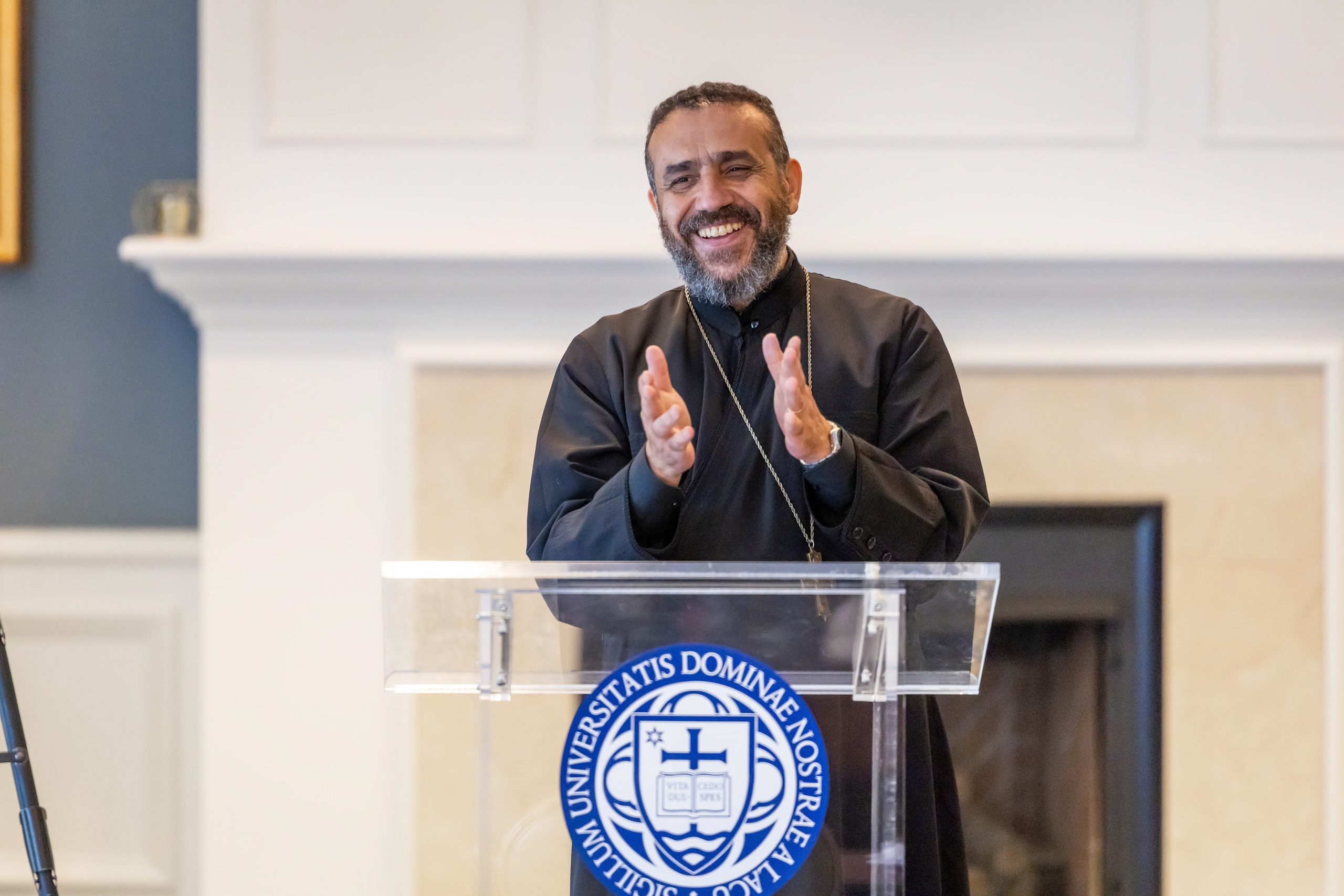
Father Khaled Anatolios, who has served as a professor of theology at Notre Dame since 2015, was appointed to the International Theological Commission in October 2026. | Credit: Photo courtesy of Father Khaled Anatolios

Also an ecumenist, he has taught and published on several early Christian theologians, including Sts. Augustine, Gregory of Nyssa, and Athanasius, focusing on how patristic theology engages contemporary theology.

Anatolios, in a statement to EWTN News, thanked the pope for the appointment and praised him for his Christocentric focus.

“I am honored and humbled by this appointment,” Anatolios said. “Pope Leo has already set forth, in various explicit and implicit ways, a Christocentric agenda and vision for engaging the urgent challenges and sufferings of our current world.”

“I look forward to working with the other esteemed theologians of the commission in fulfilling this agenda and entering more deeply into this vision,” he added.

Coolman, who received his doctorate in Church history from Notre Dame in 2001, has taught theology at Boston College since 2005.

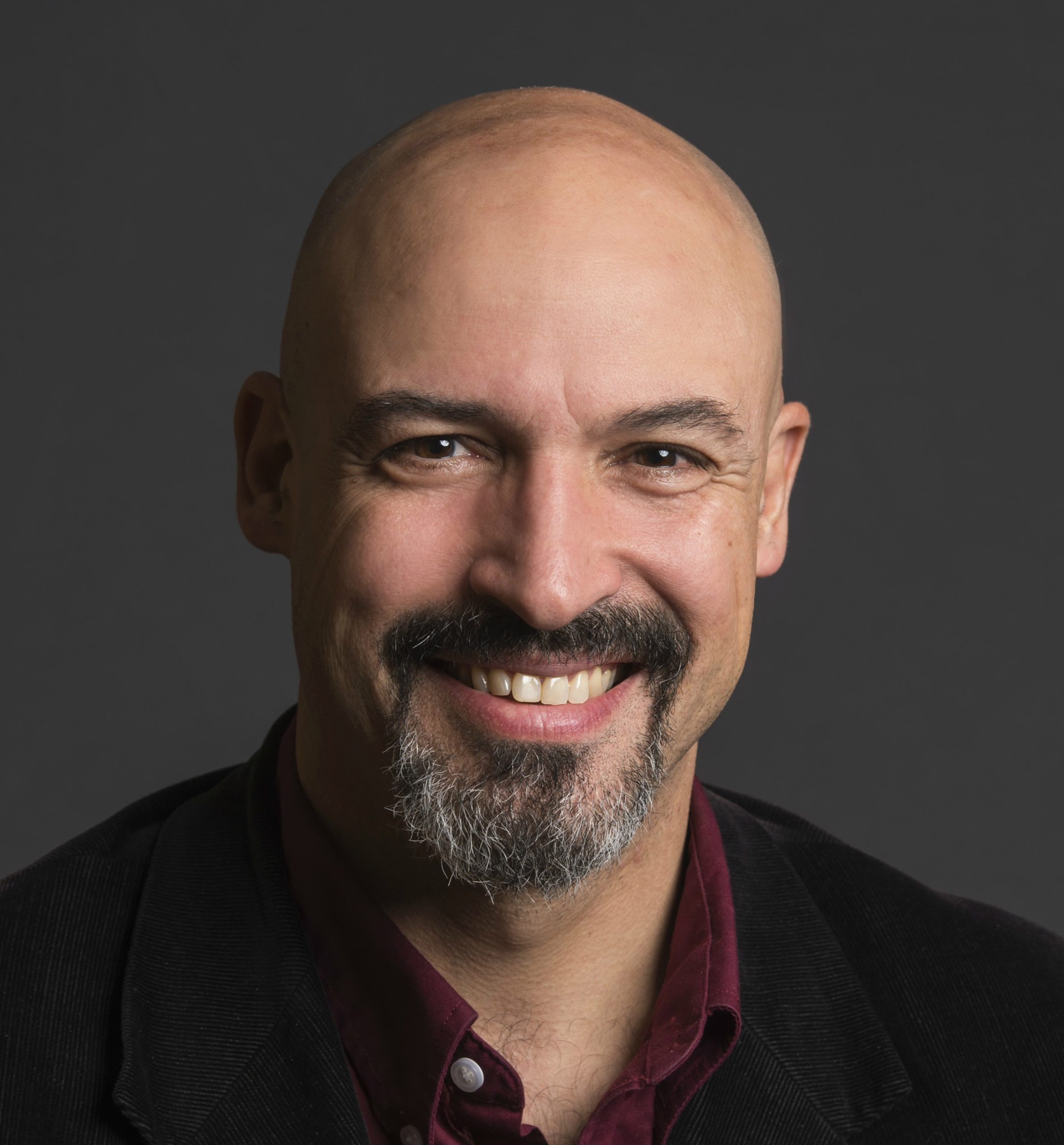
Boyd Taylor Coolman, who has taught theology at Boston College since 2005, was appointed to the International Theological Commission in October 2026. | Credit: Photo courtesy of Boyd Taylor Coolman

“This is truly a surprising and humbling appointment, but I look forward to serving the Church in this capacity to the best of my ability in the days ahead,” Coolman said in a statement to EWTN News.

Latest Notre Dame appointments to the Vatican

The appointments of Anatolios and Coolman reflect a broader trend of Vatican appointments affiliated with Notre Dame this year.

In March, Pope Leo XIV appointed Father Daniel Gerard Groody, CSC, vice president and associate provost for undergraduate education at the University of Notre Dame, to the Vatican’s Dicastery for Integral Human Development.

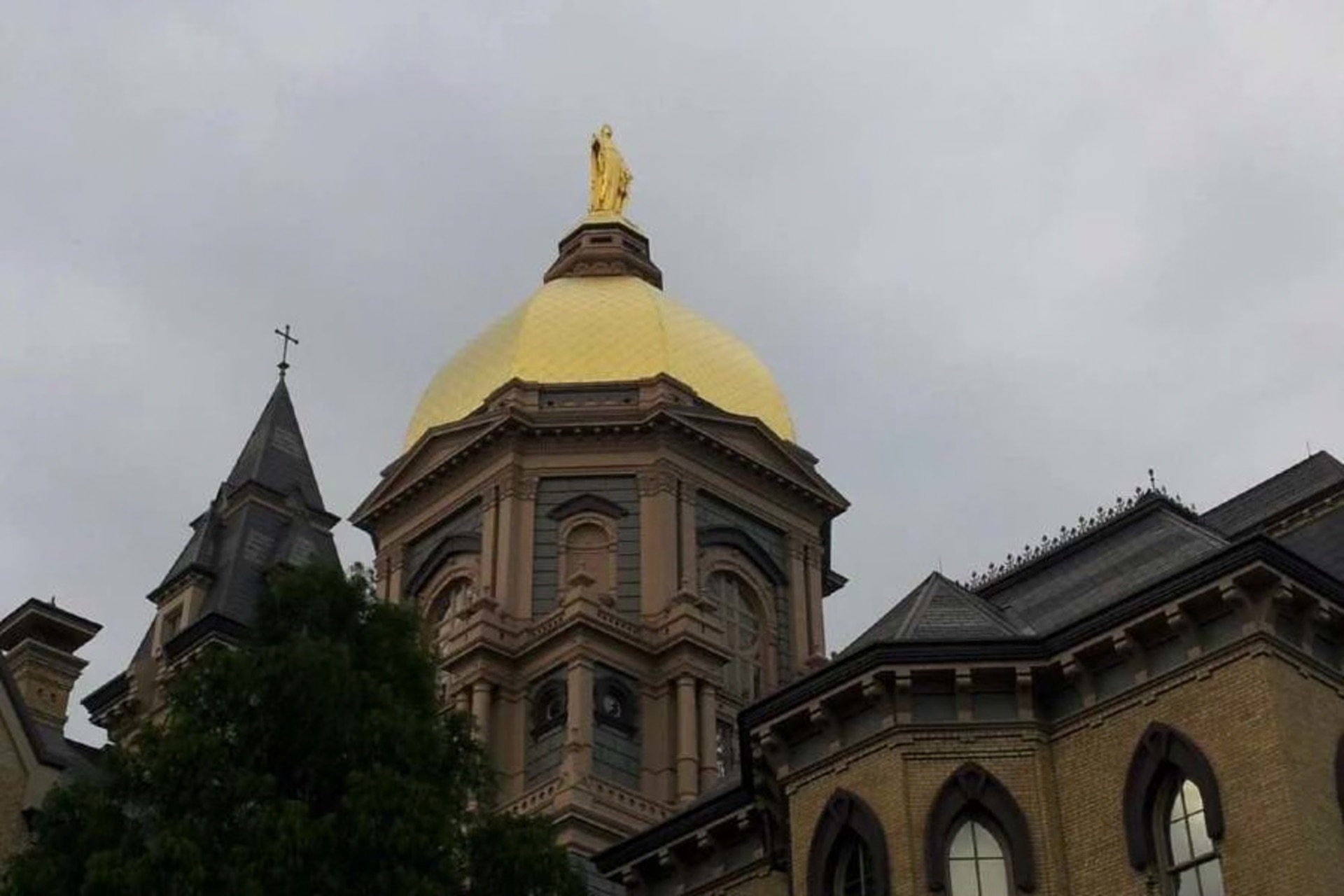
The University of Notre Dame in South Bend, Indiana. | Credit: Peter Zelasko/CNA

In August, the pope appointed two more Notre Dame professors to that same dicastery: Father Emmanuel Katongole, a professor of theology and peace studies, and Clemens Sedmak, a professor of social ethics and director of the Nanovic Institute for European Studies. Leo also appointed Kathryn Koch, a Notre Dame graduate and member of its board of trustees.

In September, John Cavadini, a professor of patristic theology at Notre Dame, was named the winner of the 2026 Ratzinger Prize. He served on the International Theological Commission from 2009 to 2014.

This article was originally published by EWTN News English.

ETWN Asia Pacific
EV
ETWN Asia Pacific
EWTN Vatican3 days ago

Pope Leo XIV, Chris Pratt come together for new documentary about the tomb of St. Peter

“Pétros Ení — Discovering the Origins” is scheduled to be released in theaters in February 2027.

A new documentary is bringing Pope Leo XIV and Hollywood actor Chris Pratt together to dive into the history and archaeological discoveries surrounding the tomb of St. Peter at the Vatican.

“Pétros Ení — Discovering the Origins” was produced by AF Films in collaboration with Vatican Media and the Fabric of St. Peter to mark the 400th anniversary of the consecration of St. Peter’s Basilica, which took place on Nov. 18, 1626.

Taking viewers into areas rarely seen by the general public, the film journeys back in time all the way to the Roman necropolis, which has been preserved beneath St. Peter’s Basilica.

The documentary brings together documents from the Archives of the Fabric of St. Peter, contributions from Pietro Zander (one of the leading experts on the Vatican Necropolis), images and audio recordings of the popes, and archival footage from renowned epigrapher Margherita Guarducci.

Pope Leo appears in the final scenes to talk more about the figure of St. Peter and the significance of his tomb’s presence beneath the famous basilica.

Pratt, who is best known for his roles in “Guardians of the Galaxy” and “Jurassic World,” speaks publicly of his Christian faith and is married to a practicing Catholic. According to Vatican News, he said the experience of making this film deeply moved him and helped him “define my faith.”

“What I would like audiences to understand about Peter after watching this documentary is that he was an imperfect man,” Pratt said. “He was a weak man. He was a human being. And I believe we are all broken, imperfect, and weak. But his strength lies in the grace of Jesus and his faith in God. With that strength, through grace and faith, you can be incredibly strong.”

He added: “It was an incredible honor to collaborate with Pope Leo and the Vatican on this project. The story of St. Peter is foundational to the Christian faith, and I am deeply grateful for the trust and access I was given to bring his legacy to the screen.”

“Pétros Ení” — which refers to a Greek inscription that means “Peter is here” and is found near the apostle’s burial grounds — is scheduled to start its theatrical debut in February 2027, during the first few weeks of Lent.

Hallow Studios will be in charge of U.S. and Canada distribution, Bosco Films will handle the distribution in Spain, and Cinépolis +Que Cine will oversee its theatrical release in Mexico, Brazil, and Colombia.

“When I first saw this film it changed my life. I think it is one of the most beautiful things I’ve ever seen. It is an honor to get to partner together on it,” Alex Jones, Hallow CEO and co-founder, said in a statement. “And the fact that it is led by one of our core Hallow partners in Chris and features such a powerful reflection from Pope Leo is just truly extraordinary.”

Watch the first trailer for “Pétros Ení — Discovering the Origins,” released Oct. 16, below.

This article was originally published by EWTN News English.

ETWN Asia Pacific
EV
ETWN Asia Pacific
EWTN Vatican3 days ago

Pope Leo XIV to resume Wednesday general audience this week, skips Castel Gandolfo

Louis Prevost, the pope’s brother, expressed surprise in an interview that the South American trip would proceed.

Pope Leo XIV will resume his Wednesday general audience at the Vatican this week. But he will skip his usual Monday-evening-through-Tuesday-evening stay at the papal villa of Castel Gandolfo southeast of Rome.

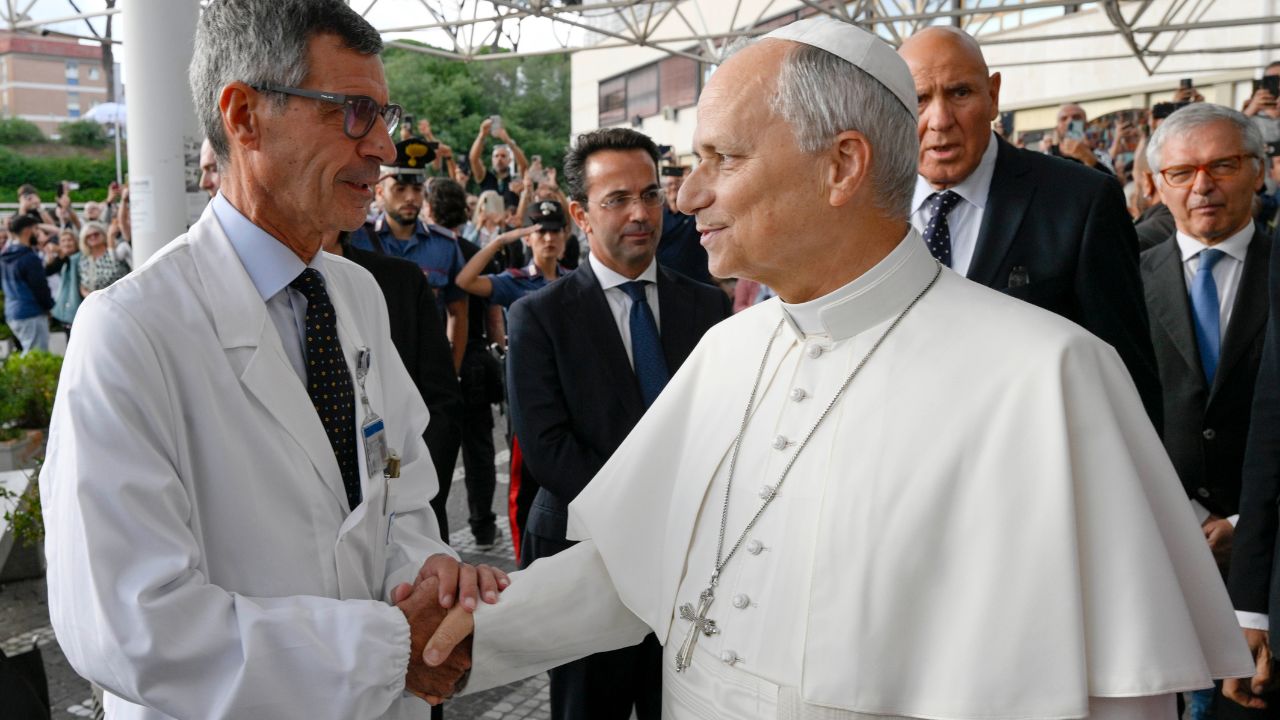
The pontiff returned to the Vatican on Saturday, four days after surgery to remove a cancerous lung nodule. The same day, Dr. Stefano Margaritora, who operated on Pope Leo on Oct. 13 at Rome’s Gemelli Hospital, cleared the pope to proceed with his apostolic journey to South America in November.

The next day, Oct. 18, Leo resumed praying the Sunday Angelus from the window of the Apostolic Palace in the Vatican.

“Having overcome this delicate phase, as you know, I will now gradually resume my activities, always with Godʼs help and your prayers,” the pope said in his Angelus address.

Brother surprised that pope’s South America trip will proceed

Louis Prevost, one of Pope Leo XIV’s brothers, expressed surprise in a Sunday interview with Fox News that Margaritora had cleared the pope’s trip.

“I thought maybe theyʼd postpone that,” Prevost said.

Prevost, who is receiving treatment for multiple myeloma, a form of cancer, also expressed surprise that Leo had been diagnosed with lung cancer, which had never occurred in the family.

“He was the first with the lung cancer, which came out of the blue. Nobody else had that in our family that Iʼm aware of,” Prevost said.

Prevost also shared that he and the pope had talked every day during his hospitalization.

“Every time I talked to him or texted him [during his hospitalization], he was answering,” Prevost said. “So, I know other than during the operation and in his brief, quick recovery, he was incommunicado. But since then, almost anytime I reach out to him, he is right there.”

“When we get on the phone or talk, we give each other crap, you know?” Prevost said. “We tell jokes; some are off color.”

Asked how he could give the pope crap, he replied: “You tell him he’s being stupid.”

This article was originally published by EWTN News English.

ETWN Asia Pacific
EV
ETWN Asia Pacific
EWTN Vatican4 days ago

Pope leads pilgrims in prayer one day after leaving hospital

The pontiff, five days after undergoing surgery for cancer, said he would “gradually resume my activities.”

Pope Leo XIV appeared at the window of his private study in the Vatican’s Apostolic Palace on Sunday, just one day after being discharged early from the hospital following surgery last Tuesday.

Pope Leo XIV Prays the Sunday Angelus After His Surgery

The pontiff thanked “all those who have prayed for me in recent days” and expressed “particular gratitude to the doctors, nurses, and all the staff of the Gemelli University Hospital,” where he was treated.

“This experience has made me feel a special closeness to all those who are going through illness and experiencing poor health,” Leo said.

“Having overcome this delicate phase, as you know, I will now gradually resume my activities, always with Godʼs help and your prayers.”

The pope did not mention his planned trip to three countries in South America, scheduled for next month. The Vatican has announced no changes in that plan. The Vatican said last week that Leo had canceled all private audiences through Tuesday Oct. 20.

Sunday was the first time the Holy Father had spoken publicly since the operation. The appearance was eagerly awaited by Catholics around the world, who had anxiously followed each new official Vatican bulletin on his medical condition in recent days.

According to the official Vatican News outlet, 15,000 people gathered in St. Peter’s Square despite a morning of cloudy skies and intermittent rain in Rome. They were eager to see the pope recovering from surgery and to express their affection for him the day after his release from the hospital.

At 3:30 p.m. Saturday, the pontiff left Rome’s Gemelli Hospital following his first hospitalization since the beginning of his pontificate, during which surgeons removed a malignant tumor from his right lung. Leo XIV appeared to be in good condition and walked with a steady gait, greeting several patients without showing signs of fatigue.

Smiling, the pope stopped to shake hands and speak with patients in the hospital corridors. About 15 minutes after leaving the hospital, the car carrying him entered Vatican City through the Perugino Gate.

For now, the pontiff will remain in Rome rather than travel to Castel Gandolfo, where he usually spends periods of rest.

A response that exposes hypocrisy

During his reflection before the Angelus prayer, the pontiff discussed one of Jesus’ best-known teachings: “Give therefore to the emperor the things that are the emperor’s, and to God the things that are God’s.” Leo explained the context in which Jesus originally spoke the words, amid what the evangelist Matthew describes as “a situation of hostility towards Jesus.”

“The Pharisees gather together to see how they might catch him in his words,” the pope said, quoting the Gospel account. “They decide to send some people to question him on a controversial matter: ‘Is it lawful to pay taxes to the emperor, or not?’”

According to Leo XIV, “The Teacher’s response is astute, for it allows him to avoid the trap and exposes the hypocrisy of those who seek to put him to the test.”

The Gospel recounts how Jesus asks to see the coin used to pay the tax, a denarius. After receiving it, he delivers the familiar teaching: “Give therefore to the emperor the things that are the emperor’s, and to God the things that are God’s.”

“In Jesus, we contemplate a God who is not afraid of history but comes instead to dwell within it. His Kingdom does not abolish human roles and responsibilities,” the pontiff explained.

He emphasized, however, that Godʼs Kingdom “does, however, call us to live without compromise, free from selfish ambitions and unjust motives, seeking above all the Kingdom of God and his righteousness.”

Being truthful and free to do good

In this context, Leo XIV drew attention to the fact that Jesus’ questioners praised him despite their hostile intentions.

“In this regard, it is striking that those same people praise Jesus, even though their intentions are far from good,” he observed.

The pope recalled the words with which they addressed Jesus: “Teacher, we know that you are sincere, and teach the way of God in accordance with truth, and show deference to no one; for you do not regard people with partiality.”

Drawing on this passage, Leo XIV invited the faithful to reflect on what it means to live an authentic Christian life.

“Dear friends, this is precisely what it means to ‘give to the emperor the things that are the emperor’s, and to God the things that are God’s’: to be truthful, free from servile fear or hypocrisy, free to do good,” he said.

“Let us pray to the Lord to help us live in this way. And let us entrust ourselves to the intercession of the Virgin Mary.”

This story was first published by ACI Prensa, the Spanish-language sister service of EWTN News. It has been translated and adapted by EWTN News English. It has been updated at 6:20 am ET to include the pope’s remarks following the Angelus.
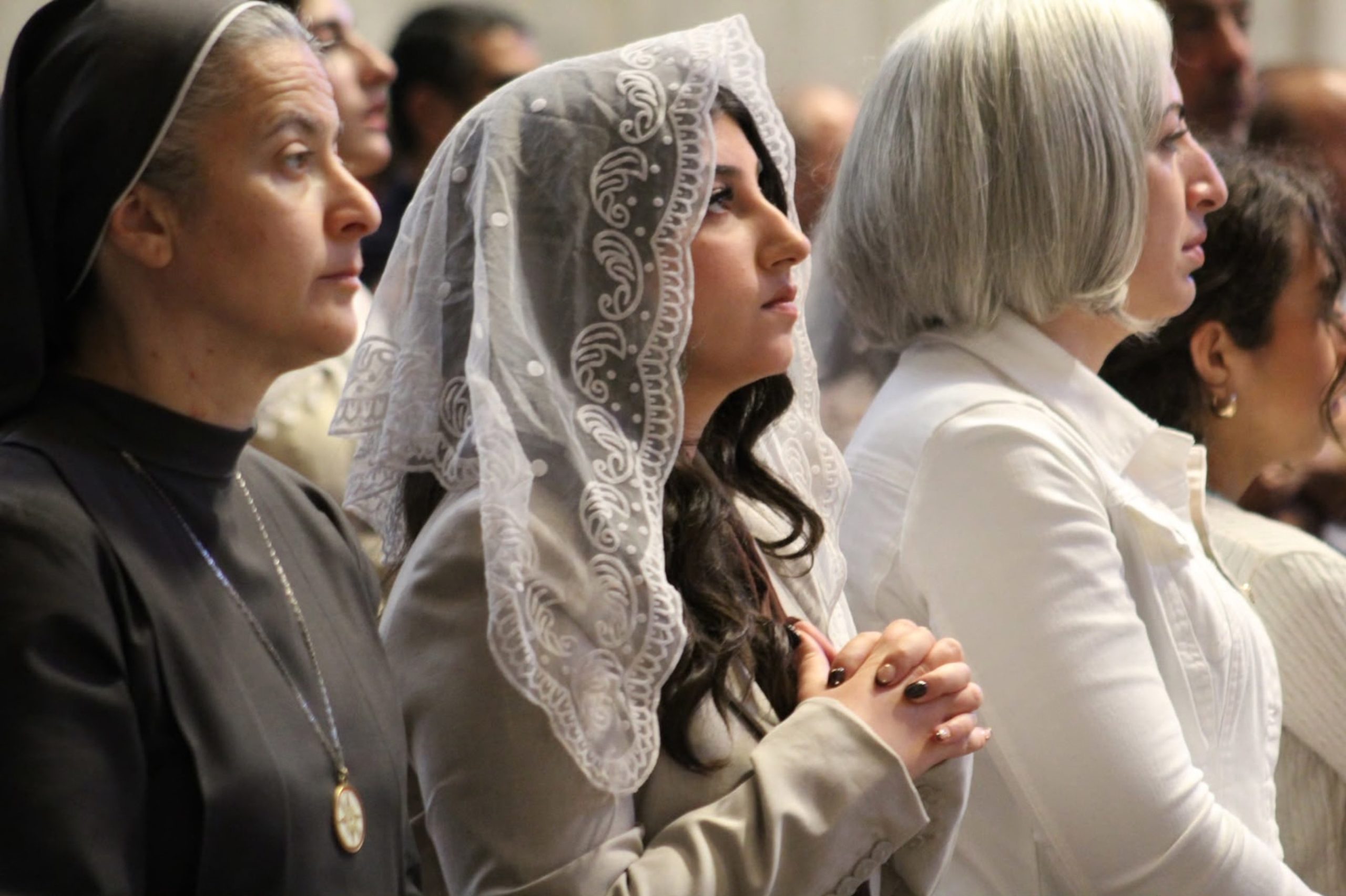
ETWN Asia Pacific
A
ETWN Asia Pacific
asiapacific4 days ago

They Risk Everything for Jesus: The Missionaries Changing Lives Around the World | EWTN Vatican

This week on Vaticano, discover the missionary heart of the Catholic Church, from its historic roots in Rome to communities bringing the Gospel to the world’s most remote regions.

We visit the historic headquarters of the Congregation for the Propagation of the Faith and explore how the Pontifical Mission Societies continue to support more than 1,100 mission dioceses and ecclesiastical territories worldwide.

Meet the Missionaries of Africa, known as the White Fathers, and discover their work promoting the Gospel, human dignity, justice, and peace across the continent. We also travel to Papua New Guinea, where Bishop Yachk Tad shares the challenges of serving Catholic communities scattered across remote islands, and meet an Austrian initiative offering formation, fellowship, and faith to converts from Iran and Afghanistan.

Through these stories, discover how missionaries continue to bring Christ to the world’s peripheries through prayer, service, and a living witness to the Gospel.

ETWN Asia Pacific
EV
ETWN Asia Pacific
EWTN Vatican5 days ago

Propaganda Fide: The Vatican Institution at the Heart of the Church’s Missionary Work

The historic headquarters of Propaganda Fide in Rome has played a central role in the Catholic Church’s missionary activity for more than four centuries. Founded by Pope Gregory XV in 1622, the institution was established to coordinate the Church’s missionary efforts and promote the spread of the Gospel around the world. Today, its mission continues through the Dicastery for Evangelization.

In a visit to the historic palace near Piazza di Spagna, Father Tadeusz Novak, secretary general of the Pontifical Society for the Propagation of the Faith, offers a glimpse into the history of the institution and its enduring role in the Church’s evangelizing mission.

Propaganda Fide

A mission distinct from colonial ambitions

One of the founding principles of Propaganda Fide was to ensure that evangelization remained distinct from the political ambitions of colonial powers. Father Novak explains that the pope deliberately chose the palace because of its proximity to the Spanish embassy to the Holy See.

The aim was to ensure that the Church’s presence in newly reached territories would be associated with proclaiming the Gospel rather than advancing colonial interests.

The institution also became a center for missionary formation. Pope Urban VIII established the Urban College in 1627 to prepare priests for service in mission territories. Among its notable former students was St. John Henry Newman, who lived in the palace and celebrated Mass in its private chapel.

Today, the Pontifical Urban University continues to train priests and missionaries from around the world.

Supporting the Church’s mission worldwide

The Pontifical Mission Societies remain central to the Church’s missionary cooperation. They comprise four organizations: the Society for the Propagation of the Faith, the Society of the Holy Childhood, the Society of St. Peter the Apostle, and the Pontifical Missionary Union.

Through prayer, formation, and financial assistance, they support local Churches in territories where the Catholic community is young, developing, or in need of particular assistance.

The scale of this work is global, with more than 1,100 mission dioceses and ecclesiastical territories receiving support. These include communities throughout Africa and Oceania, as well as parts of Asia and Latin America.

From Mongolia to the world: Sharing missionary stories

The report also highlights the young Catholic Church in Mongolia, where journalist Marie-Lucile Kubacki describes discovering a small community of approximately 1,700 Catholics in a country of around 3.5 million people.

Her experience of the Church in Mongolia became a turning point, helping her recognize how the Gospel becomes present and alive through the faith journeys of local communities.

Kubacki now works with Agenzia Fides, the Church’s missionary news agency, founded in 1927. Based within the historic headquarters of Propaganda Fide, the agency shares stories from local Churches with readers around the world through its multilingual publications and international network of correspondents.

From its origins in seventeenth-century Rome to the communities it serves today, the Church’s missionary network continues to carry out the same essential task: proclaiming Christ and helping local Churches grow in faith.

Adapted by Jacob Stein. Produced by Bénédicte Cedergren; Video Edited by Giada D’Ottavi; Special thanks & Credits to Propaganda Fide, Agenzia Fides.

ETWN Asia Pacific
EV
ETWN Asia Pacific
EWTN Vatican5 days ago

Papua New Guinea: A Catholic Bishop’s Mission Across Remote Islands

Serving as a Catholic bishop in Papua New Guinea means reaching communities scattered across islands, navigating difficult waters, and accompanying people whose cultures and languages reflect an extraordinary diversity.

In an interview with EWTN Vatican journalist Magdalena Wolinska-Riedi, Bishop Yachk Tad of the Diocese of Alotau-Sideia shares his experience of missionary life in one of the Church’s most geographically challenging regions.

Papua New Guinea is home to hundreds of tribes, languages, and dialects. Its geographical isolation has helped many communities preserve their traditions, but it has also made communication and access to essential services difficult.

A Catholic Bishop’s Life in Papua New Guinea

Serving a Church shaped by hundreds of cultures

When the bishop first prepared to serve in the country, his superior general offered him a simple piece of advice: forget European standards, because life and culture there would be completely different.

That lesson became central to understanding the people he was called to accompany.

The history of evangelization in Papua New Guinea has been a gradual process. Early missionaries established chapels and churches, followed by schools and healthcare centers. Translators helped communicate the Gospel in local languages, while Tok Pisin developed as a common language among people speaking many different tongues.

Through preaching, education, healthcare, and personal relationships, missionaries helped establish Christian communities across the country.

Three days by boat to reach remote communities

The geography of the diocese makes pastoral ministry particularly demanding. Approximately 95% of its territory is ocean, with only 5% consisting of land.

While four parishes are located on the main island, other communities are scattered across smaller islands that can only be reached by motorboat or ship.

Travel can be dangerous, uncomfortable, and time-consuming. Reaching one of the most remote parishes can take approximately three days and three nights by ship.

The bishop describes arriving at communities soaked by seawater and being welcomed with elaborate traditional ceremonies, including dances, speeches, and songs. These celebrations are followed by prayer in the local church.

Such encounters reveal the importance of cultural traditions in the lives of the people and the warmth with which they welcome their bishop.

The diocese has only around 20 priests to serve its widespread territory. As a result, many Sunday celebrations take place without a priest and are led by lay catechists. In these celebrations, the Blessed Sacrament is reserved in the tabernacle, and consecrated hosts are distributed for Holy Communion.

Prayer sustains the Church in remote territories

The shortage of priests highlights the essential role of lay people in sustaining the Church’s life in communities where priests cannot be present every Sunday.

Despite the physical demands of his ministry, Bishop Tad emphasizes that the greatest foundation of pastoral work is prayer.

Referring to Pope Leo XIV’s emphasis on prayer in pastoral ministry, he invites Catholics around the world to pray for the priests and people of his diocese.

Remaining in the presence of the Lord, he explains, brings solutions and opens paths forward amid difficulties.

His testimony highlights the dedication required to serve communities separated by vast stretches of ocean and the faith that sustains the Church in places where access to pastoral care remains difficult.

For Bishop Tad and the communities he accompanies, missionary work means more than reaching distant islands. It means being present, celebrating the faith, and ensuring that even the most isolated communities remain connected to the wider Catholic Church.

Adapted by Jacob Stein. Produced by Bénédicte Cedergren; Camera by Alberto Basile, Fabio Gonnella; Video Edited by Giada D’Ottavi.

ETWN Asia Pacific
EV
ETWN Asia Pacific
EWTN Vatican5 days ago

International rosary in Rome held in advance of 100th World Mission Sunday

The rosary, recited in 13 languages, also marked the 75th anniversary of the World Mission Rosary by Blessed Fulton Sheen.

An international rosary in Rome united clergy, religious, and lay faithful to mark the 100th anniversary of World Mission Sunday.

The rosary was held on the grounds of the Pontifical Urban University on Oct. 17, the eve of this year’s World Mission Sunday on Oct. 18.

Led by Cardinal Luis Antonio Tagle, dean of the College of Cardinals and Grand Chancellor of the university, the rosary was recited in 13 languages across five mysteries representing Africa, Asia, the Americas, Europe, and Oceania.

The occasion also marked the 75th anniversary of the rosary’s establishment by Blessed Fulton J. Sheen, who was U.S. national director of the Pontifical Mission Societies from 1950 to 1966.

Sister Mary Teresa Baron, recently appointed president of the Pontifical Mission Societies, was not present during the rosary.

Several participants in the rosary explained how the faithful can support the Church’s missionaries beyond financial contributions.

Archbishop Fortunatus Nwachukwu, who serves as a secretary at the Dicastery for Evangelization, urged a focus on the Word of God.

“I am always a bit wary about monetizing mission,” Nwachukwu said to EWTN News. “So, I do not want to begin with money; I want to begin with the Word, because mission is all about bringing the Word of the Lord to the ends of the earth.”

Archbishop Fortunatus Nwachukwu, secretary of the Section of First Evangelization at the Dicastery for Evangelization, participated in an international rosary at the Pontifical Urban University in Rome on Oct. 17, 2026, to mark the 100th anniversary of World Mission Sunday. | Credit: Ishmael Adibuah/EWTN News

At the same time, Nwachukwu indicated that supporting missionaries also means providing “the means to bring the Gospel to various places.” That support, he said, involves money.

“[Today] is also an occasion to tell people: please, be generous to missionaries,” Nwachukwu said.

Msgr. Thomas George Schluep, who also serves at the Dicastery for Evangelization, cited Pope Leo XIV’s message for World Mission Sunday as a reminder that unity in Christ precedes material support

“Pope Leo, in his message for this 100th Anniversary of World Mission Sunday, reminds us that we first must be one in Christ,” Schluep told EWTN News. “Our baptism calls us to be missionaries: to share that love with our families, our friends, our coworkers.”

Memories of missionaries, Pope Leo’s return from the hospital

Participants also shared personal anecdotes about missionaries and their impact on their faith journey.

Schluep shared his memory of Father Gerard Hammond, an American Maryknoll missionary priest known for his decades of humanitarian work in North and South Korea.

“I met him in Korea, where he had been serving since 1960 when he was ordained and sent on mission. He was celebrated by thousands of people in South Korea for bringing the faith to them over the course of 65 years,” Schluep said.

“In North Korea he could not speak of Christ, but his “apostolate of presence” and love for those suffering from tuberculosis was itself evangelization. He taught me a lot about the importance of being present to people, exactly where they are at in their lives, no matter the personal cost.”

Around the time the rosary was taking place, Pope Leo XIV returned to the Vatican after being hospitalized for surgery Oct. 13 at Rome’s Gemelli Hospital. Nwachukwu expressed happiness at his return and hoped that “the Lord will keep him quite long among us”.

“We are all praying for him. We love the Pope, and we love what he is doing.”

The contributions of Americans

Schluep, an American from Pittsburgh, Pennsylvania, also noted the significant contributions of Americans, such as Blessed Fulton Sheen, to missionary work through the Pontifical Mission Societies.

“The American contribution to the missions historically has been enormous,” Schluep noted.

“It was a great joy to see Fulton Sheen beatified, who did so much to evangelize the United States, but also who traveled personally to so many missions around the world and did so much to raise funds for those missions.”

Cardinal Tagle stands before the image of Blessed Fulton Sheen during the beatification Mass in St. Louis on Sept. 24, 2026. | Credit: Jeffrey Bruno

Schluep said he hoped the example of Pope Leo XIV, the first U.S.-born pope, would encourage renewed American support.

“The fact that the Holy Father understands American culture and missionary life in Peru can help him in his particular guidance for us, but now he is the Pope of the entire world, and he calls us to think also of the entire world and not just our country, our families, and especially ourselves,” Schluep said.

This article was originally published by EWTN News in English.

ETWN Asia Pacific
EV
ETWN Asia Pacific
EWTN Vatican6 days ago

For the first time in 5 years, the number of priests worldwide rose

The Catholic Church has 407,421 priests, 425 more than the previous year. Africa and Asia are driving this growth, while Europe recorded another decline.

The number of Catholic priests worldwide has risen again after five years of no growth, according to statistics published by the Vatican agency Fides ahead of the 100th World Mission Sunday, which will be celebrated Sunday, Oct. 18.

According to the Fides report, the total number of priests rose from 406,996 to 407,421, representing an increase of 425 compared with the previous year. The Vatican agency noted that the data comes from the Statistical Yearbook of the Church and is current as of Dec. 31, 2024.

Africa recorded the largest increase with 1,676 more priests, followed by Asia with 1,065. The Americas also reversed the previous yearʼs downward trend, adding 199 priests.

In contrast, Europe lost 2,483 priests over the course of the year, while Oceania recorded a decrease of 32.

The overall increase is attributed to the growth in the number of diocesan priests, which reached 279,238, an increase of 496 compared with the previous count. Meanwhile, the number of religious order priests fell by 71, standing at 128,183.

Despite the increase in the number of priests, the number of Catholics per priest also rose, reaching 3,491 — an increase of 38 compared with the previous year. The average number of inhabitants per priest also climbed, reaching 16,104.

At 1.4 billion, Catholics are 18% of global population

Fides statistics further indicated that the global Catholic population reached 1,422,144,000 as of June 30, 2024, an increase of 16.69 million over the previous year. Based on these figures, Catholics represent 17.8% of the worldʼs population.

Africa saw the largest growth in the number of Catholics, with an increase of 7.58 million, followed by the Americas, with a rise of nearly 7 million. Asia added 968,000, Europe 911,000, and Oceania 239,000.

Number of seminarians worldwide decreases

While the number of priests is rising, the number of seminarians is decreasing. The number of major seminarians stood at 103,604 worldwide, a decrease of 2,891 from the previous year.

Africa was the only continent to record growth, with 786 additional seminarians, whereas Asia saw a decline of 2,733, Europe 701, the Americas 227, and Oceania 16.

The number of minor seminarians also decreased, falling to 94,041, which is 980 fewer than in the previous count. Africa reversed the previous yearʼs trend, adding 132, while Oceania recorded an increase of 20. In contrast, Europe lost 872, Asia 182, and the Americas 78.

Catholic Church’s educational and charitable work

Fides also compiles figures on the Churchʼs educational work around the world. Globally, the Church administers 75,448 kindergartens with over 7.4 million pupils; 103,666 primary schools attended by more than 36.3 million students; and 51,810 secondary schools with over 20.3 million students.

Joining them are nearly 2.7 million students in higher education centers and more than 4 million in university institutions affiliated with the Catholic Church.

In its healthcare and social assistance work, the Church manages 101,110 facilities worldwide. These include 5,397 hospitals, 13,646 dispensaries, 16,263 homes for the elderly, the chronically ill, and people with disabilities, 8,138 orphanages, 10,624 marriage counseling centers, and 3,194 social education or rehabilitation centers.

This story was first published by EWTN News Español, the Spanish-language sister service of EWTN News. It has been translated and adapted by EWTN News English.
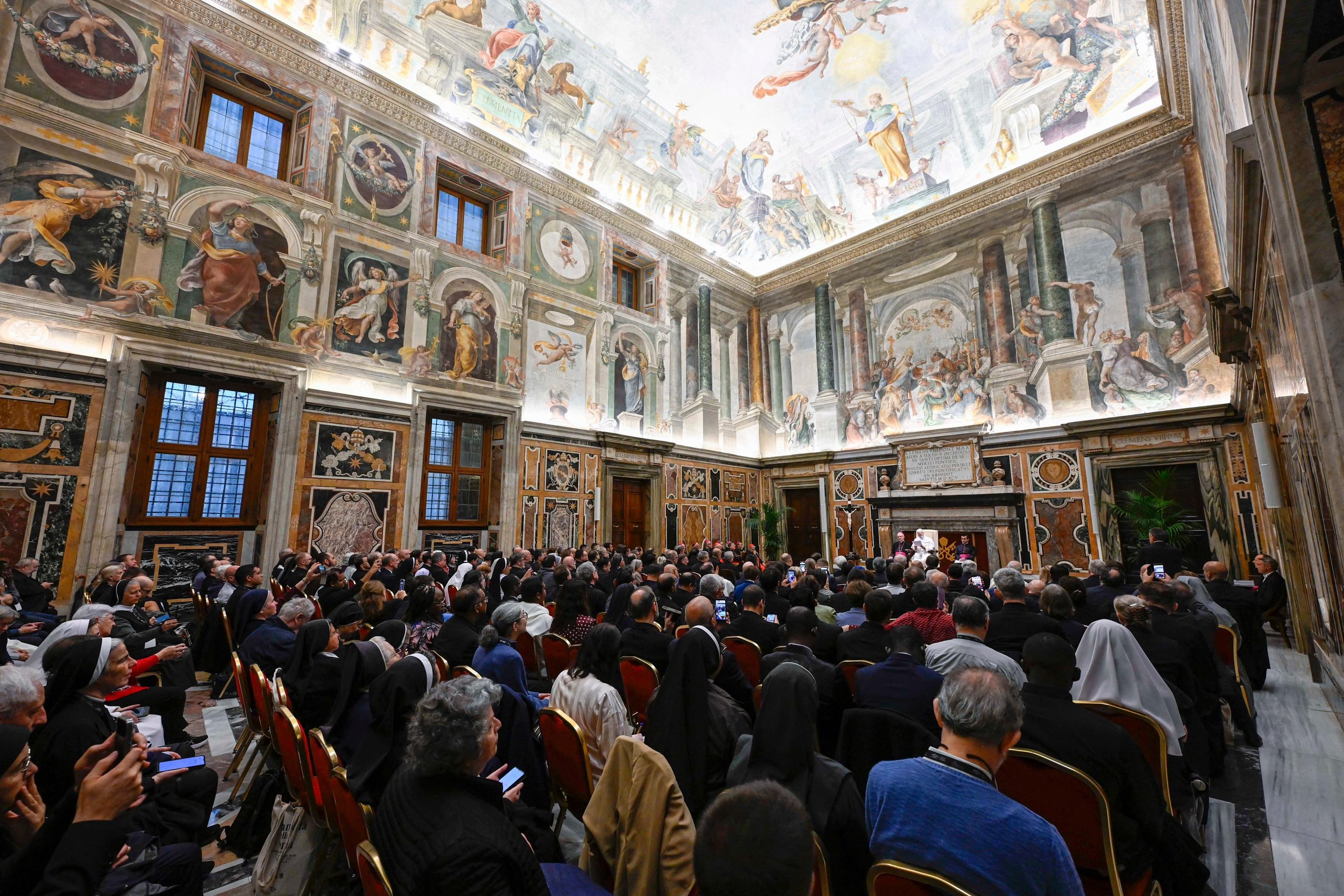
ETWN Asia Pacific
EV
ETWN Asia Pacific
EWTN Vatican6 days ago

Pope Leo XIV leaves Gemelli Hospital, returns to Vatican

The 71-year-old pope had been admitted last Tuesday and underwent surgery to remove the lower lobe of his right lung.

Pope Leo XIV left the Agostino Gemelli University Hospital shortly after 3:30 p.m. local time on Saturday to return to the Vatican.

Around 3:30 pm Rome time, Pope Leo left Gemelli Hospital just as he arrived: walking, smiling, and greeting the crowd. He will continue his recovery at the Vatican and is expected to lead the Sunday Angelus overlooking St. Peter’s Square tomorrow.
Video: Veronica Giacometti /… pic.twitter.com/BaJSDjhbS3

— EWTN News (@EWTNews) October 17, 2026

The 71-year-old pope had been admitted last Tuesday and underwent surgery just hours later to remove the lower lobe of his right lung. The procedure, which lasted about an hour and a half, was performed using a video-assisted technique, while an intraoperative histological examination confirmed a diagnosis of pulmonary adenocarcinoma.

Pope Leo XIV concludes his stay at the Gemelli Hospital on Oct. 17, 2026. | Credit Vatican Media

His discharge from the hospital was announced by the pontiff’s attending physician, Dr. Luigi Carbone, and the surgeon who performed the operation, Professor Stefano Margaritora.

As he left, the pope greeted the faithful gathered along the barriers. Daniele Franco, chairman of the board of the Gemelli University Hospital Foundation, was also there to welcome the pontiff upon his exit.

Before getting into the car, Leo greeted several members of the faithful who presented him with gifts. The pope did not stay in the papal suite on the hospitalʼs 10th floor, as it was undergoing renovation, but rather in adjacent rooms on the same floor.

Pope Leo XIV is seen here blessing a group outside Gemelli Hospital on Oct. 17, 2026. | Credit: Vatican Media

Yesterday, the first postoperative images of the pope were released, showing Leo XIV presiding over Mass in a room at the Policlinico hospital that had been specially set up for the celebration. Beside the pope was his personal secretary, Monsignor Edgard Iván Rimaycuna Inga.

Around noon on Saturday, Oct. 17, the pope also celebrated Mass before leaving the Roman hospital, the Holy See Press Office reported.

In the days following the surgery, Leo XIV has resumed his work, meeting at the hospital on various occasions with Archbishop Paolo Rudelli, substitute for general affairs of the Secretariat of State; Cardinal Luis Antonio Tagle, dean of the College of Cardinals; and Cardinal Baldassare Reina, vicar general of His Holiness for the Diocese of Rome.

On Friday, the press office also reported on a telephone conversation between the pope and Russian President Vladimir Putin.

Pope Leo XIV appears in good spirits as he departs Gemelli Hospital on Oct. 17, 2026. | Credit: Vatican Media

Sunday morning at noon, the pope will appear at the window of his study in the Apostolic Palace for the customary recitation of the Angelus. It was only last Sunday that Leo XIV himself, at the conclusion of the Angelus prayer, announced the news of his imminent hospitalization and the associated surgery.

This story was first published by ACI Stampa, the Italian-language sister service of EWTN News. It has been translated and adapted by EWTN News English.
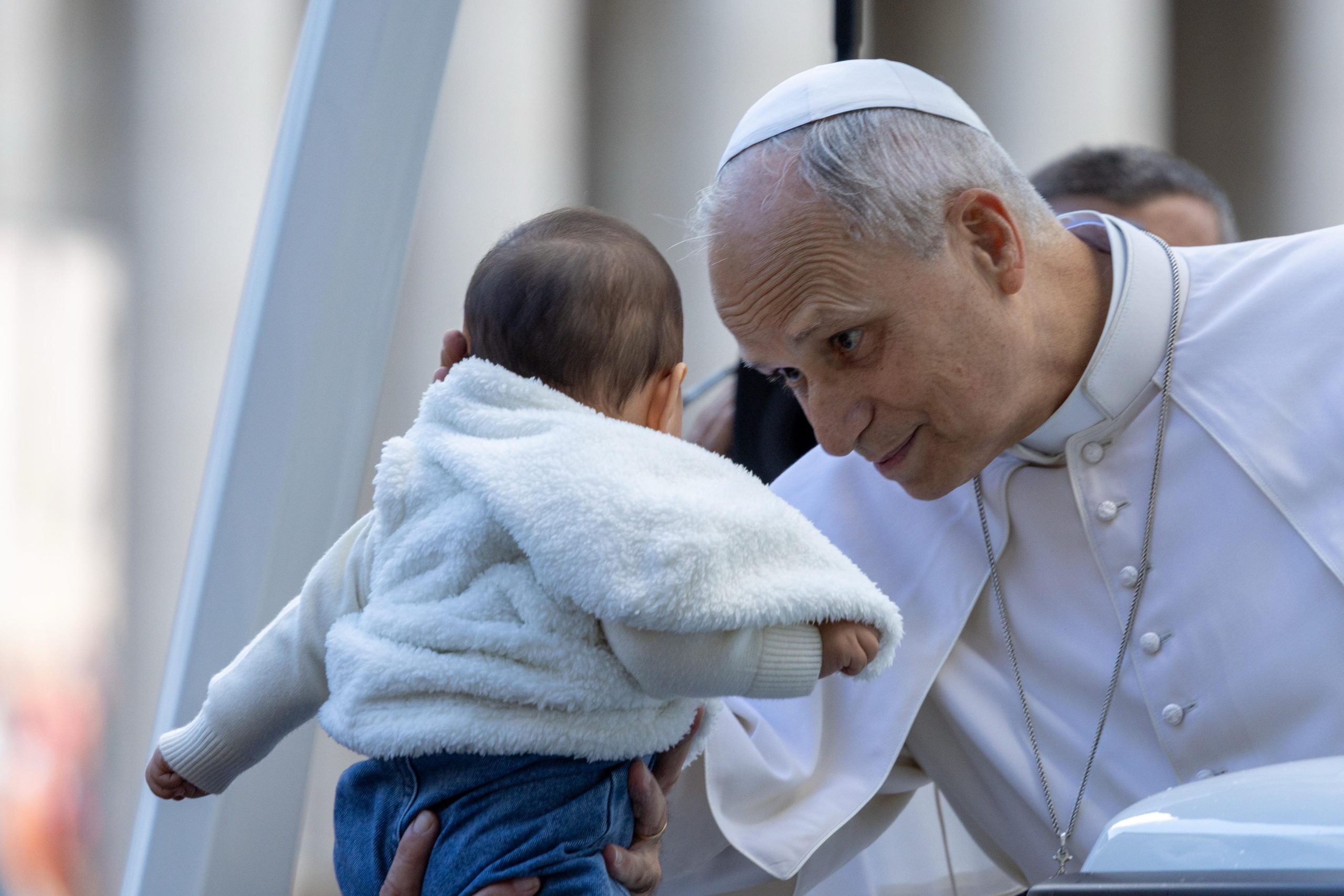
ETWN Asia Pacific
EV
ETWN Asia Pacific
EWTN Vatican6 days ago

Pope’s surgeon green lights Nov. 6–17 apostolic trip to Latin America

‘No clinical reasons why it should not take place’ says Dr. Stefano Margaritora, who called Pope Leo ‘an ideal patient.’

Pope Leo XIV has received the green light from his surgeon to proceed with his planned Nov. 6–17 apostolic journey to Uruguay, Argentina, and Peru.

In an interview with Vatican News following the Holy Father’s Oct. 17 discharge from the Gemelli Hospital, Dr. Stefano Margaritora, who operated on Pope Leo on Oct. 13, said he expects Leo will be fully recovered and in shape to travel within the next “10 days or so.”

Calling him “an ideal patient,” Margaritora said that upon his discharge from the hospital Leo “was in entirely satisfactory clinical condition” with completely normal blood test results and heart function.

“The lung’s re-expansion after surgery is proceeding according to the usual timetable,” and “overall, his condition is good,” Margaritora added.

The surgeon indicated that the Holy Father’s lung adenocarcinoma was discovered during routine abdominal examinations, which underscores the importance of regular preventive checkups.

“In the Holy Father’s case, he had no respiratory symptoms and felt perfectly well,” the doctor noted.

The pope has “put his heart and soul” into his recovery, Margaritora said. “His determination to recover quickly has been effective in every respect” and “truly commendable,” he pointed out.

Illustrating the point, the doctor noted that on the second day after the operation, the medical staff found him arranging the chairs in the chapel himself. “Holy Father, we can do that,” Margaritora recounted. But Leo replied: “It doesn’t matter. I can do it, so I will.”

This article was originally published by EWTN News in English.

ETWN Asia Pacific
EV
ETWN Asia Pacific
EWTN Vatican6 days ago

Cardinal Parolin: Pope Leo’s demanding Latin America trip now depends on doctors

The Vatican secretary of state also said Thursday that the pontiff may have to “adjust his pontificate if it becomes necessary.”

Vatican Secretary of State Cardinal Pietro Parolin said on Thursday that Pope Leo XIV, still hospitalized after surgery, may have to “adjust his pontificate” to his doctors’ advice, including his November trip to Latin America, if necessary.

Parolin, as reported by Ansa.it, spoke on the sidelines of the launch of the Iraqi Embassy to the Holy See in Rome, marking 60 years of diplomatic relations between the two sovereign states.

The pontiff was admitted to Rome’s Gemelli Hospital on Tuesday for surgery to remove a lung nodule. Since his surgery, his doctors and the Vatican have confirmed that his postoperative recovery “is progressing normally.”

Parolin, who praised the pope for his “great serenity” on Monday, told reporters on Thursday that he imagined Leo’s Latin America trip would proceed but that it now depends on his doctors.

“[The trip] will depend on how things go,” Parolin said. “Let us wait until he leaves the hospital and, based on what the doctors tell us, see whether he will be able to travel. We must wait.”

Parolin also said that while predictions for the future of Leo’s pontificate were premature, his condition upon returning may require him to adjust his papacy.

“Based on all these elements, the pope will also adjust his pontificate if it becomes necessary to do so,” Parolin said.

“We need to see when he returns, in what condition he returns, and what the doctors will say.”

The pope’s postoperative recovery is expected to last one week, allowing him to resume audiences on Oct. 20.

This article was originally published on EWTN News in English.

ETWN Asia Pacific
EV
ETWN Asia Pacific
EWTN Vatican6 days ago

Pope Leo XIV calls world hunger a ‘terrible offense’ against human dignity

The pontiff, still hospitalized after surgery, sent a message for World Food Day on Friday.

Pope Leo XIV on Friday called world hunger a “terrible offense” against human dignity and emphasized that adequate food is a basic human right.

“It is a terrible offense against human dignity to prevent bread from reaching any person or to destroy the means by which it is produced,” the pontiff wrote in a message published for World Food Day.

Still recovering from surgery at Rome’s Gemelli Hospital, Leo addressed his message to Qu Dongyu, director general of the Food and Agriculture Organization of the United Nations (FAO). World Food Day, celebrated every year on Oct. 16 to highlight world hunger, also marks the organization’s founding in 1945.

‘World hunger remains due to lack of charity’

In his message, Leo lamented the challenge of world hunger and questioned how some can speak of technological innovation while food shortages persist.

“Hunger cannot be considered a statistical anomaly, for it is caused mainly by a lack of political will and collective charity,” Leo said.

“Today, people speak of innovation with great confidence,” Leo said. “However, this term is often used only in reference to the development of devices and algorithms, or the optimization of performance merely for the sake of financial gain.”

A new global food order

According to FAO’s annual report for 2025, an estimated 645 million people worldwide experienced hunger, mainly distributed across Africa, Asia, Latin America, and the Caribbean. According to the same report, 35.5 million children were severely malnourished, and war remained the “primary driver of acute food insecurity and malnutrition.”

Leo also said that food shortages should never be “used as a weapon of war” and encouraged the United Nations to work toward a “new global food order” in which technology ensures food for all.

“Regular access to safe, adequate and sufficient food, in keeping with the dignity of every person, is a basic human right,” the pope wrote.

“A new global food order is essential — one in which technological innovation is unconditionally subordinated to respect for God-given human dignity and the universal common good.”

The pope’s remarks on world hunger follow his June visit to the headquarters of the World Food Programme in Rome, where he emphasized the need to focus on humanity to combat hunger worldwide.

This article was originally published on EWTN News in English.

ETWN Asia Pacific
EV
ETWN Asia Pacific
EWTN Vatican6 days ago

Pope Leo XIV cleared to leave hospital Saturday after successful surgery

The Vatican said the pontiff will lead the Angelus from the Vatican as usual on Sunday.

Doctors have cleared Pope Leo XIV to leave the hospital; he will return to the Vatican on Saturday afternoon, according to the Vatican.

The pope’s personal physician Dr. Luigi Carbone and surgeon Dr. Stefano Margaritora said Oct. 17 that “based on the blood tests and chest X-ray performed this morning, and after evaluating his clinical condition, the Holy Father has been deemed fit to be discharged.”

The Vatican also announced that Leo would celebrate Mass at the hospital on Saturday before being discharged, and lead his Angelus at the Vatican on Sunday.

Leo announced during his Sunday Angelus on Oct. 11 that he would undergo surgery to remove a lung nodule. Doctors confirmed a diagnosis of lung adenocarcinoma after his surgery at Rome’s Gemelli Hospital on Oct. 13.

Since his surgery and hospitalization, doctors and the Vatican have confirmed that the pontiff’s postoperative recovery is “progressing normally.” On Friday, the Vatican released photos of the pope celebrating Mass at the hospital, the first photos since his hospitalization.

This article was originally published by EWTN News in English.

ETWN Asia Pacific
EV
ETWN Asia Pacific
EWTN Vatican6 days ago

Vatican releases first photos of Pope Leo XIV following surgery

Vatican sources also indicated that the pope will publicly lead the Angelus this Sunday, although it has not yet been determined whether it will be from the hospital or the Vatican.

Pope Leo XIV celebrated Mass at Gemelli Hospital on Friday after undergoing surgery Oct. 13 for a cancerous tumor in his right lung.

In two photographs released by the Vatican, the first since his hospitalization, the Holy Father can be seen standing and wearing the green liturgical vestments used during this period of the liturgical year.

In one image, he appears with his hands joined in prayer; the other was taken during the consecration and shows the popeʼs secretary at his right side.

Vatican sources said that the pope distributed Communion during the Eucharistic celebration. In previous days, the Vatican had specified that the pontiff had only concelebrated Mass with his collaborators.

Members of the hospital’s medical and nursing staff, and gendarmes responsible for the pope’s security, were also present at the pope’s Mass on Friday.

“In his homily, the pope thanked all healthcare personnel — doctors, nurses and nursing assistants — for the work they carry out every day caring for the sick and for those in fragile conditions, and in particular for everything they have done and continue to do for him,” the statement released by the Holy See Press Office said.

In the medical bulletin released Friday, Oct. 16, the Vatican also confirmed that the pontiffʼs clinical condition continues to improve.

The statement published by the Holy See and prepared by the popeʼs personal physician, Luigi Carbone, and the surgeon who performed the operation, Stefano Margaritora, notes that the Holy Father “underwent blood tests and a chest X-ray, the results of which confirmed the steady improvement in his overall condition.”

Pope Leo XIV celebrates Mass at Gemelli Hospital on Oct. 16, 2026, where he was admitted four days prior for surgery to remove a tumor from his right lung. | Credit: Vatican Media

Respiratory physiotherapy sessions also continued. The doctors further specified that his “favorable postoperative recovery allows him to carry out his normal daily activities with complete autonomy.”

Vatican sources also indicated that the pope will publicly lead the Angelus on Sunday, although it has not yet been determined whether it will be from the hospital or the Vatican.

All appointments on Leo XIV’s schedule through Oct. 20 have been canceled, though the Vatican has not ruled out the possibility that he could be discharged before then. For now, doctors have not changed the timeline for his release from the hospital, which is expected to be next Tuesday.

Letters from children hospitalized at Gemelli

On Friday, the pope also received several letters in his hospital room from young patients receiving treatment in the pediatric oncology department of the same hospital. In them, the children share their personal experiences and assure him of their prayers.

Among the letter writers was Angelo, a 7-year-old boy who has been hospitalized for 36 days and who found in writing a way to reach out to the pontiff.

The child, from Taurisano in the Italian province of Lecce, explained in his letter that he is also hospitalized on the 10th floor and has undergone head surgery. “My mom and I pray for you every night,” he wrote, before wishing him “a speedy recovery.” He included a drawing featuring a large yellow sun and several birds flying over a meadow.

‘Faith moves mountains’

Maria Graziela, the mother of Eleonora, also wanted to send a message of hope. Her daughter, who was treated in the hospitalʼs neurosurgery and oncology units, has now recovered.

“Faith moves mountains,” her mother wrote, expressing her conviction that “God has heard our prayers.” In her letter she added: “Pope Leo, our prayers are for you. May God, the Blessed Virgin Mary, and the guardian angels always protect you.”

‘It is difficult to depend on others’

The letter from Giorgia, an 18-year-old young woman, explained how illness transformed her way of understanding life. Passionate about travel and accustomed to relying on herself, she acknowledged that “it has been difficult to go from depending solely on my own strength to having to depend on others.”

However, the experience had also allowed her to discover the value of the care she has received, the love of her family and friends, and a new vocation. “If there is one thing I want to do in life, it is save other peopleʼs lives. I want to be like the doctors who are saving mine,” she said.

She concluded her letter by promising that “I pray to God that we may both be healed, and I ask you to pray with me,” and expressing her confidence that “better days will come.” The young woman ended by assuring Pope Leo that “we are united in prayer, for ourselves and for all those who are going through the same situation.”

This story was first published by EWTN News Español, the Spanish-language sister service of EWTN News. It has been translated and adapted by EWTN News English.
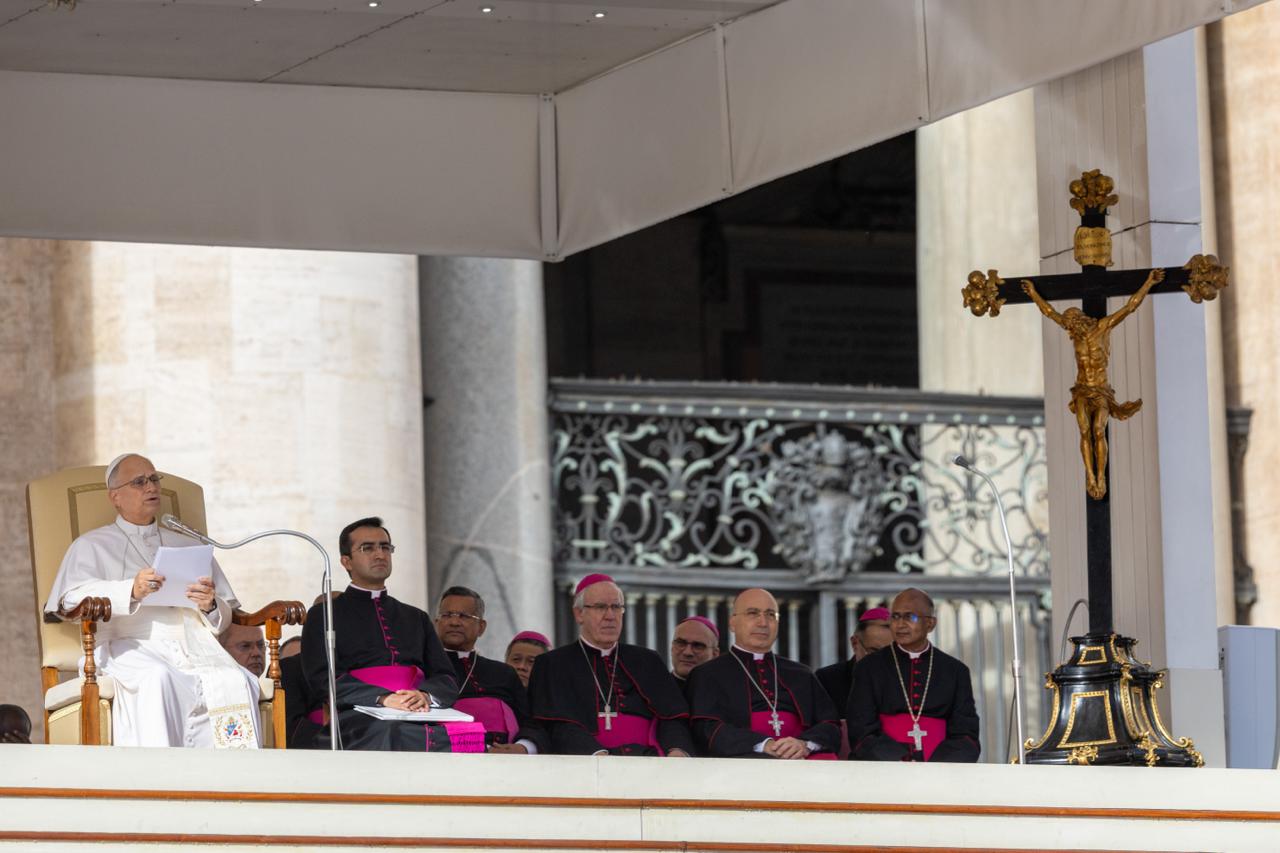
ETWN Asia Pacific
EV
ETWN Asia Pacific
EWTN Vatican6 days ago

Pope Leo speaks with Russian President Putin by phone

The hospitalized pontiff initiated the call to the Russian president, according to the Vatican secretary of state.

Pope Leo XIV and Russian President Vladimir Putin spoke by telephone Oct. 16 while the pope remains hospitalized.

According to a Holy See statement, the pope expressed concern about Oleshky in the Kherson region, a city in the Russian-occupied portion of Ukraine where a severe humanitarian crisis is underway and where, according to the United Nations, 1,700 people are trapped in what have become ghost towns because of ongoing attacks. The pope sought a truce to enable the arrival of food and medical aid and the voluntary and safe evacuation of the population, and he reaffirmed the Holy Seeʼs commitment to dialogue and peace.

The conversation with the Russian president is the pope’s first reported direct communication with a head of state since undergoing lung cancer surgery Oct. 13. The statement issued by the Holy See Press Office was brief. It said: “Today, His Holiness Pope Leo XIV spoke by telephone with His Excellency Mr Vladimir Putin, President of the Russian Federation.”

Besides calling for a ceasefire, the statement concluded by reaffirming “the Holy See’s commitment to promoting dialogue and peace.”

A Kremlin statement was more detailed. It said that, while expressing his sincere wishes for the popeʼs health and speedy recovery following his recent surgery, Putin emphasized “the importance of Russian-Vatican cooperation in promoting shared spiritual and moral values and protecting Christians and Christian holy sites in various regions of the world.” Both sides reaffirmed their interest in continuing dialogue between the Russian Orthodox Church and the Roman Catholic Church.

The Kremlin also said that, during an exchange of views on Ukraine, “Vladimir Putin thanked the pope for his willingness to contribute to resolving the conflict and for his ongoing humanitarian efforts.”

In addition, the Kremlin stated that, in response to the popeʼs concern for civilians in the Russian-held city of Oleshky in the Kherson region, Putin provided what it described as a detailed explanation of the responsibility of the Kyiv government for the areaʼs humanitarian situation. It added that Putin supported the Vaticanʼs intention to help create the conditions necessary to ensure public safety and organize the delivery of essential supplies. According to the Kremlin, cooperation toward that goal was agreed upon.

The Kremlin described the conversation as “constructive and conducted in a spirit of mutual respect.”

Pope initiated call, Parolin says

Cardinal Pietro Parolin, the Vatican secretary of state, told reporters it was Pope Leo who initiated the Oct. 16 phone call with Putin, according to the SIR news agency of the Italian bishops’ conference. Parolin said he hopes that, in response to the popeʼs request, Putin will agree to implement the humanitarian measures. He added that Putinʼs willingness to take the call could be a positive sign.

The call followed visits in August to Russia by Archbishop Paul Richard Gallagher and later by Cardinal Matteo Zuppi, the popeʼs envoy for humanitarian affairs.

A source familiar with the organization of the Oct. 16 meeting said the conversation had been planned during Zuppiʼs trip to Russia at the end of September. This date coincided with the popeʼs hospital stay.

Leo XIV had previously spoken with Putin by telephone on June 4, 2025. According to Vatican News, that conversation focused on matters of mutual interest, with particular attention given to the war in Ukraine and prospects for peace. During the call, the pope urged Russia to make “a gesture fostering peace” and stressed “the importance of dialogue in establishing positive contacts between the parties and seeking solutions to the conflict.”

Putin visited the Apostolic Palace in the Vatican three times for meetings with Pope Francis.

This story was first published by ACI Stampa, the Italian-language sister service of EWTN News. It has been translated and adapted by EWTN News English.
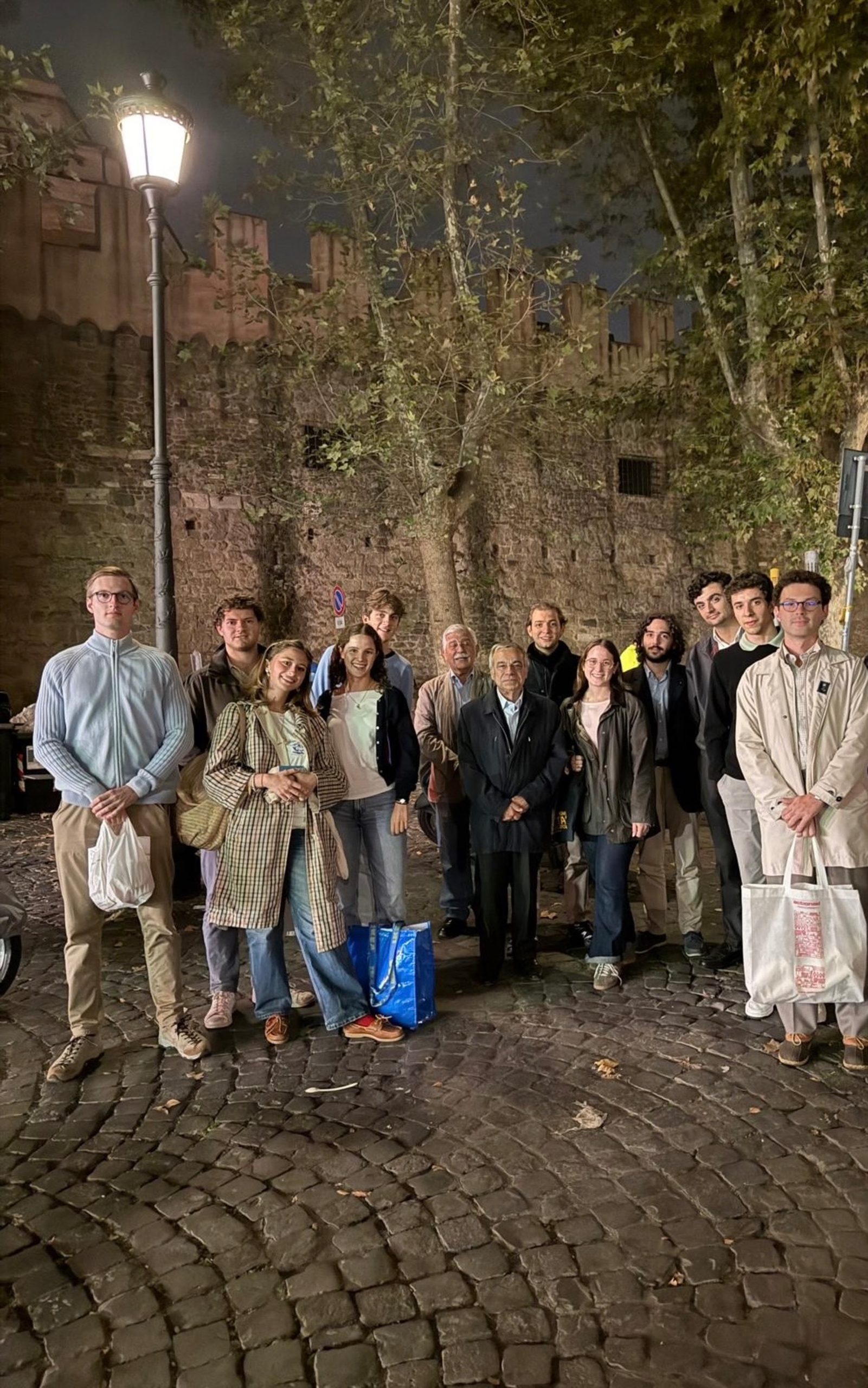
This story was updated at 4:10 p.m. ET on Oct. 16, 2026, to include comments from the Vatican secretary of state.

ETWN Asia Pacific
EV
ETWN Asia Pacific
EWTN Vatican6 days ago

The Missionaries of Africa: Bringing the Gospel to Communities Across the Continent

For more than 150 years, the Missionaries of Africa, popularly known as the White Fathers, have brought the Gospel to communities across Africa. Founded in 1868 by Cardinal Charles Lavigerie, then Archbishop of Algiers, the missionary society has sought to proclaim Christ while promoting human dignity, dialogue, and service.

In a visit to the society’s international headquarters in Rome, EWTN Vatican explores what missionary life looks like today and the challenges faced by priests serving in culturally and religiously diverse communities.

Meet the White Fathers: Catholic Missionaries Serving Africa

Why they are called the White Fathers

The White Fathers take their familiar name from their traditional white garments, inspired by clothing worn in North Africa. Their founder wanted missionaries to live among the people they served, adopting local customs and clothing so they could build relationships without emphasizing their status as foreign priests.

This approach reflected a broader vision of a Church open to the world, willing to meet people of different cultures and faiths.

In Algeria and other Muslim-majority communities, the Missionaries of Africa seek to make the Church present through relationships, service, and dialogue. Their mission extends beyond preaching. It involves living alongside local communities, learning their languages, understanding their traditions, and witnessing to Christian faith through daily life.

Facing challenges in the pursuit of justice and peace

For missionaries, this openness can require significant personal adjustment. Adapting to unfamiliar cultures, communicating across language barriers, and building trust with people of different religious backgrounds are among the challenges they encounter.

The work can become particularly difficult when missionaries are involved in questions of justice and peace that intersect with political tensions. One missionary interviewed in the report describes the challenge of standing up for justice while being prepared to face the consequences, which can sometimes include threats to personal safety.

In the Democratic Republic of the Congo, one missionary worked extensively with young people, including former child soldiers. His ministry combined proclaiming the Gospel with efforts to promote peace and help children recover from the trauma of violence.

He recalls the tragedy of children forced to carry rifles when they should have been carrying books or toys. Helping these young people recover their childhood and regain a sense of dignity became a central part of the mission.

Bringing hope to communities affected by conflict

In other areas, insecurity has made even everyday pastoral work dangerous. One missionary describes serving near Mount Nyiragongo in the Democratic Republic of the Congo, where volcanic eruptions and unstable conditions made survival a daily concern.

Despite these difficulties, the Missionaries of Africa continue their work across the continent, seeking to bring hope to communities facing violence, poverty, and uncertainty.

Their experience offers a reminder that missionary work is not simply about crossing geographical boundaries. It also requires a willingness to encounter others with humility, to serve those in need, and to remain present even in difficult circumstances.

As one missionary reflects, the first language a missionary must learn is love. For the White Fathers, that conviction continues to shape their witness to Christ and their service to the people of Africa.

Adapted by Jacob Stein. Produced by Bénédicte Cedergren; Video Edited by Gianluca Gangemi.