
This website is in beta. For the full experience, download the app.
葡萄园的雇工 经文 (玛窦 20:1-16) 天国好像一个家主,清晨出去为自己的葡萄园雇工人。他与工人议定一天一个『德纳』,就派他们到葡萄园里去了。约在第三时辰,又出去,看见另有些人在街市上闲立着,就对他们说:你们也到我的葡萄园里去罢!凡照公义该给的,我必给你们。他们就去了。约在第六和第九时辰,他又出去,也照样作了。约在第十一时辰,他又出去,看见还有些人站在那里,就对他们说:为什么你们站在这里整天闲着?他们对他说:因为没有人雇我们。他给他们说:你们也到我的葡萄园里去罢!到了晚上,葡萄园的主人对他的管事人说:你叫工人来,分给他们工资,由最后的开始,直到最先的。那些约在第十一时辰来的人,每人领了一个『德纳』。 那些最先雇的前来,心想自己必会多领;但他们也只领了一个「德纳」。他们一领了,就抱怨家主,说:这些最后雇的人,不过工作了一个时辰,而你竟把他们与我们这整天受苦受热的同等看待。他答覆其中的一个说:朋友!我并没有亏负你,你不是和我议定了一个「德纳」吗?拿你的走罢!我愿意给这最后来的和给你的一样。难道不许我拿我所有的财物,行我所愿意的吗?或是因为我好,你就眼红吗?这样,最后的,将成为最先的,最先的将会成为最后的。 」 评论 最早来到葡萄园的工人向家主抱怨说:「这些最后雇的人,不过工作了一个时辰,而你竟把他们与我们这整天受苦受热的同等看待。」(玛窦20:12) 葡萄园的家主答覆说:「朋友!我并没有亏负你,你不是和我议定了一个「德纳」吗?拿你的走罢!我愿意给这最后来的和给你的一样。难道不许我拿我所有的财物,行我所愿意的吗?或是因为我好,你就眼红吗? 」(玛窦20:13-15) 然后,耶稣说:这样,最后的,将成为最先的,最先的将会成为最后的。 」 (玛窦20:16) 葡萄园的雇工的比喻有多种解释。然而,当我们弄清楚什么代表什么之后,这个比喻的意义就变得很清楚了: • 葡萄园的家主是代表天主。 • 雇工人是代表那些被呼召跟随耶稣基督的人。 • 葡萄园是代表世界。 • 葡萄园里的工作是代表跟随耶稣基督的工作 – 就是爱天主和爱邻人。 • 一天的日薪是代表天国。 许多人被呼召在这个世界去跟随耶稣基督-要爱天主和爱邻人。但我们在生命的不同时期蒙召。我们中的一些人在生命早期蒙召,而其他人则在生命后期蒙召。但天国是应许给那些跟随耶稣基督的人。 「最后的,将成为最先的,最先的将会成为最后的。」(玛窦20:16)在葡萄园雇工的比谕中(参阅玛窦20:1-16),「最后的」指的是在第十一个时辰来到葡萄园工作的人,或是那些晚年跟随耶稣基督的人,即使在他们的最后时刻。 「最先的」是指第一个时辰来到葡萄园工作的人,或者那些从小就跟随耶稣的人。 「最后的,将成为最先的,最先的将会成为最后的」的这句话是表明那些回应耶稣呼召的人,无论是首先的或是最后的,还是介于两者之间的,都将获得继承天国的同样的奖赏。 从这个比喻中,我们可以学到两件事:第一,天主是多么慷慨的——无论一个人在生命中多迟开始跟随祂的圣子,天主神都会赐给他同样极大的赏赐,那就是天国。第二,我们不应该嫉妒天主对别人的慷慨; 也就是说,我们不应该嫉妒别人的好运。 在许多的情况下,嫉妒是由于看到或发现到别人拥有而我们没有的东西而引起的。例如,我的邻居有更大的房子或新车,或者我以前的同事现在有了更好的工作,或者我的朋友总是得到新的东西。但在其他的情况下,当一个人感到不公平时,就会产生嫉妒。例如,我在工作更努力,但我的同事升职了,或者我的同事做更少的工作却得到同样的工资,就像「雇工的比喻」中的情况一样。不过,还有些人说,嫉妒的根源与一个人无法看到天主在他们的生活中所提供的一切以及缺乏感恩有关。 圣保禄将嫉妒视为本性私欲的作为之一,并告诫它:「本性私欲的作为是显而易见的:即淫乱、不洁、放荡、崇拜偶像、施行邪法、仇恨、竞争、嫉妒、忿怒、争吵、不睦、分党、妒恨、【凶杀】、醉酒、宴乐,以及与这些相类似的事。我以前劝戒过你们,如今再说一次:做这种事的人,决不能承受天主的国... 凡属于耶稣基督的人,已把肉身同邪情和私欲钉在十字架上了。如果我们因圣神生活,就应随从圣神的引导而行事。不要贪图虚荣,不要彼此挑拨,互相嫉妒。」 (迦拉达书5:19-21, 24-26) 我们怎么能克服嫉妒呢? 1. 感恩-每当我们开始觉得自己没有得到生命中应得的事物时,我们必须细数自己的祝福,并为此感谢天主。我们相信一切都来自天主;我们不该抱怨天主对我们不公平,而该顺服天主的审判和无限的智慧。 2. 知足-很多时候我们会贬低生活中所得到的祝福。我们倾向于认为,既然很多人都拥有与我们生活中所享受的相同的事物,那就没什么特别的。但世界上有更多的人没有我们享受的最普通的事物。让我们不仅学会对这些事物表示感恩,也学会对我们所得到的感到满足。 3. 兄弟之爱-兄弟之爱不仅意味着做慈善或帮助别人; 它还包括为他人的好运感到高兴。对他人抱持仁慈的态度意味着我们将他们的收获视为我们的收获,并将他们的成功视为我们的成功。从更深的意义上来说,这就是爱你的邻人的真正意义。 反省的问题 1. 您认为家主给最先来作工的雇工的薪水与最后来工作的雇工相同,是否欺骗了他们?为什么? 2. 你有时候会觉得天主不公平吗?为什么?
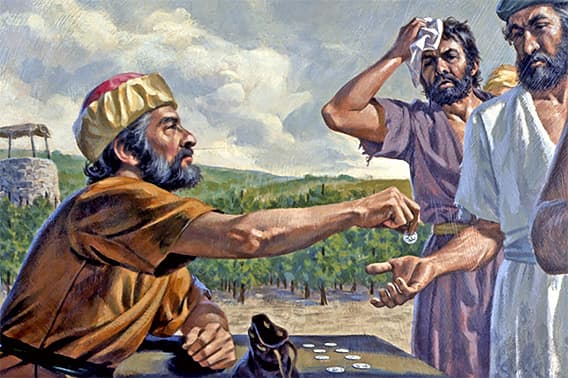
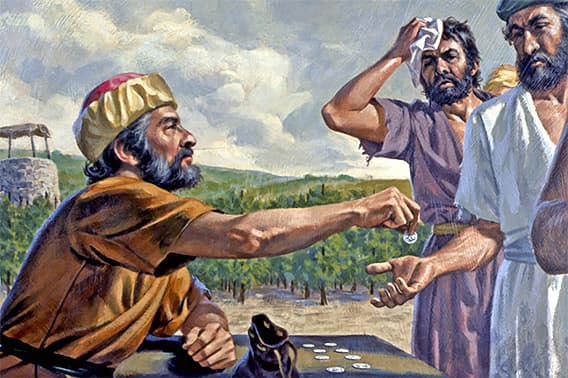
葡萄园的雇工 经文 (玛窦 20:1-16) 天国好像一个家主,清晨出去为自己的葡萄园雇工人。他与工人议定一天一个『德纳』,就派他们到葡萄园里去了。约在第三时辰,又出去,看见另有些人在街市上闲立着,就对他们说:你们也到我的葡萄园里去罢!凡照公义该给的,我必给你们。他们就去了。约在第六和第九时辰,他又出去,也照样作了。约在第十一时辰,他又出去,看见还有些人站在那里,就对他们说:为什么你们站在这里整天闲着?他们对他说:因为没有人雇我们。他给他们说:你们也到我的葡萄园里去罢!到了晚上,葡萄园的主人对他的管事人说:你叫工人来,分给他们工资,由最后的开始,直到最先的。那些约在第十一时辰来的人,每人领了一个『德纳』。 那些最先雇的前来,心想自己必会多领;但他们也只领了一个「德纳」。他们一领了,就抱怨家主,说:这些最后雇的人,不过工作了一个时辰,而你竟把他们与我们这整天受苦受热的同等看待。他答覆其中的一个说:朋友!我并没有亏负你,你不是和我议定了一个「德纳」吗?拿你的走罢!我愿意给这最后来的和给你的一样。难道不许我拿我所有的财物,行我所愿意的吗?或是因为我好,你就眼红吗?这样,最后的,将成为最先的,最先的将会成为最后的。 」 评论 最早来到葡萄园的工人向家主抱怨说:「这些最后雇的人,不过工作了一个时辰,而你竟把他们与我们这整天受苦受热的同等看待。」(玛窦20:12) 葡萄园的家主答覆说:「朋友!我并没有亏负你,你不是和我议定了一个「德纳」吗?拿你的走罢!我愿意给这最后来的和给你的一样。难道不许我拿我所有的财物,行我所愿意的吗?或是因为我好,你就眼红吗? 」(玛窦20:13-15) 然后,耶稣说:这样,最后的,将成为最先的,最先的将会成为最后的。 」 (玛窦20:16) 葡萄园的雇工的比喻有多种解释。然而,当我们弄清楚什么代表什么之后,这个比喻的意义就变得很清楚了: • 葡萄园的家主是代表天主。 • 雇工人是代表那些被呼召跟随耶稣基督的人。 • 葡萄园是代表世界。 • 葡萄园里的工作是代表跟随耶稣基督的工作 – 就是爱天主和爱邻人。 • 一天的日薪是代表天国。 许多人被呼召在这个世界去跟随耶稣基督-要爱天主和爱邻人。但我们在生命的不同时期蒙召。我们中的一些人在生命早期蒙召,而其他人则在生命后期蒙召。但天国是应许给那些跟随耶稣基督的人。 「最后的,将成为最先的,最先的将会成为最后的。」(玛窦20:16)在葡萄园雇工的比谕中(参阅玛窦20:1-16),「最后的」指的是在第十一个时辰来到葡萄园工作的人,或是那些晚年跟随耶稣基督的人,即使在他们的最后时刻。 「最先的」是指第一个时辰来到葡萄园工作的人,或者那些从小就跟随耶稣的人。 「最后的,将成为最先的,最先的将会成为最后的」的这句话是表明那些回应耶稣呼召的人,无论是首先的或是最后的,还是介于两者之间的,都将获得继承天国的同样的奖赏。 从这个比喻中,我们可以学到两件事:第一,天主是多么慷慨的——无论一个人在生命中多迟开始跟随祂的圣子,天主神都会赐给他同样极大的赏赐,那就是天国。第二,我们不应该嫉妒天主对别人的慷慨; 也就是说,我们不应该嫉妒别人的好运。 在许多的情况下,嫉妒是由于看到或发现到别人拥有而我们没有的东西而引起的。例如,我的邻居有更大的房子或新车,或者我以前的同事现在有了更好的工作,或者我的朋友总是得到新的东西。但在其他的情况下,当一个人感到不公平时,就会产生嫉妒。例如,我在工作更努力,但我的同事升职了,或者我的同事做更少的工作却得到同样的工资,就像「雇工的比喻」中的情况一样。不过,还有些人说,嫉妒的根源与一个人无法看到天主在他们的生活中所提供的一切以及缺乏感恩有关。 圣保禄将嫉妒视为本性私欲的作为之一,并告诫它:「本性私欲的作为是显而易见的:即淫乱、不洁、放荡、崇拜偶像、施行邪法、仇恨、竞争、嫉妒、忿怒、争吵、不睦、分党、妒恨、【凶杀】、醉酒、宴乐,以及与这些相类似的事。我以前劝戒过你们,如今再说一次:做这种事的人,决不能承受天主的国... 凡属于耶稣基督的人,已把肉身同邪情和私欲钉在十字架上了。如果我们因圣神生活,就应随从圣神的引导而行事。不要贪图虚荣,不要彼此挑拨,互相嫉妒。」 (迦拉达书5:19-21, 24-26) 我们怎么能克服嫉妒呢? 1. 感恩-每当我们开始觉得自己没有得到生命中应得的事物时,我们必须细数自己的祝福,并为此感谢天主。我们相信一切都来自天主;我们不该抱怨天主对我们不公平,而该顺服天主的审判和无限的智慧。 2. 知足-很多时候我们会贬低生活中所得到的祝福。我们倾向于认为,既然很多人都拥有与我们生活中所享受的相同的事物,那就没什么特别的。但世界上有更多的人没有我们享受的最普通的事物。让我们不仅学会对这些事物表示感恩,也学会对我们所得到的感到满足。 3. 兄弟之爱-兄弟之爱不仅意味着做慈善或帮助别人; 它还包括为他人的好运感到高兴。对他人抱持仁慈的态度意味着我们将他们的收获视为我们的收获,并将他们的成功视为我们的成功。从更深的意义上来说,这就是爱你的邻人的真正意义。 反省的问题 1. 您认为家主给最先来作工的雇工的薪水与最后来工作的雇工相同,是否欺骗了他们?为什么? 2. 你有时候会觉得天主不公平吗?为什么?

The Workers in the Vineyard Scripture Passage (Matthew 20:1-16) The kingdom of heaven is like a landowner who went out at dawn to hire laborers for his vineyard. After agreeing with them for the usual daily wage, he sent them into his vineyard. Going out about nine o’clock, he saw others standing idle in the marketplace, and he said to them, ‘You too go into my vineyard, and I will give you what is just.’ So they went off. [And] he went out again around noon, and around three o’clock, and did likewise. Going out about five o’clock, he found others standing around, and said to them, ‘Why do you stand here idle all day?’ They answered, ‘Because no one has hired us.’ He said to them, ‘You too go into my vineyard.’ When it was evening the owner of the vineyard said to his foreman, ‘Summon the laborers and give them their pay, beginning with the last and ending with the first.’ When those who had started about five o’clock came, each received the usual daily wage. So when the first came, they thought that they would receive more, but each of them also got the usual wage. And on receiving it they grumbled against the landowner, saying, ‘These last ones worked only one hour, and you have made them equal to us, who bore the day’s burden and the heat.’ He said to one of them in reply, ‘My friend, I am not cheating you. Did you not agree with me for the usual daily wage? Take what is yours and go. What if I wish to give this last one the same as you? [Or] am I not free to do as I wish with my own money? Are you envious because I am generous?’ Thus, the last will be first, and the first will be last.” Commentary The workers who came first to the vineyard complained to the landowner: “These last ones worked only one hour, and you have made them equal to us, who bore the day’s burden and the heat.” (Matthew 20:12) The owner of the vineyard responded: “My friend, I am not cheating you. Did you not agree with me for the usual daily wage? Take what is yours and go. What if I wish to give this last one the same as you? [Or] am I not free to do as I wish with my own money? Are you envious because I am generous?” (Matthew 20:13-15) Then Jesus said, “Thus, the last will be first, and the first will be last.” (Matthew 20:16) The parable of the workers in the vineyard has been interpreted in many ways. However, the meaning of the parable can become quite clear after we figure out who is represented by what: • The owner represents God. • The workers represent those who are called to follow Jesus Christ. • The vineyard represents the world. • The work in the vineyard represents following Jesus Christ by LOVING GOD AND NEIGHBOR. • The daily wage represents the kingdom of heaven. Many are called to follow Jesus Christ in this world – by LOVING GOD AND NEIGHBOR. But we are called at different times in our lives. Some of us are called early in life, while others are called later in life. But the kingdom of heaven is promised to those who follow Jesus Christ in this world. “The last will be first, and the first will be last.” (Matthew 20:16) Within the context of the parable of the workers in the vineyard (cf. Matthew 20:1-16), the ‘last’ refers to the workers who came to work in the vineyard at the last hour, or those who have come to follow Jesus later in life, even if it is at their last hour. The ‘first’ refers to the workers who came to work in the vineyard at the first hour, or those who have come to follow Jesus early in life, even since childhood. That the ‘last’ will be first and the ‘first’ will be last suggests that those who respond to the call of Jesus, whether first or last or in between, will obtain the same reward of inheriting the kingdom of God. There are two things that we can learn from this parable: first, that God is generous – regardless of how late in life someone started to follow His Son, God gives him the same great reward, which is the kingdom of heaven. Second, we should not be envious of God’s generosity to others; i.e., we should not be envious of the good fortune of others. In many instances, envy is caused by seeing or knowing about things that others have which we don’t; e.g., my neighbors have a bigger house or a new car, or someone I used to work with now has a better job, or my friends always get new things. But in other cases, envy is caused when one senses unfairness; e.g., I work harder, but my co-worker got promoted, or my co-workers get the same pay for less work, as was the case in the parable. Still, some say that the root cause of envy is connected to a person's inability to see what God has provided in their life and a lack of thankfulness. St. Paul identifies envy as one of the works of the flesh and he admonishes against it: Now the works of the flesh are obvious: immorality, impurity, licentiousness, idolatry, sorcery, hatreds, rivalry, jealousy, outbursts of fury, acts of selfishness, dissensions, factions, occasions of envy, drinking bouts, orgies, and the like. I warn you, as I warned you before, that those who do such things will not inherit the kingdom of God… Now those who belong to Christ [Jesus] have crucified their flesh with its passions and desires. If we live in the Spirit, let us also follow the Spirit. Let us not be conceited, provoking one another, envious of one another. (Galatians 5:19-21, 24-26) How can we overcome envy? 1. Gratitude – whenever we begin to feel that we are not getting what we deserve in life, we must count your own blessings and thank God for them. We believe that all things come from God; and instead of complaining that God is unfair, we defer to God’s judgment and infinite wisdom. 2. Contentment – many times we belittle the blessings that we receive in life. We tend to think that since many people have the same things that we enjoy in life, it is nothing special. But there are more people in the world that do not have the most ordinary things that we enjoy. Let us learn not only to be thankful for these things, but also learn to be content with what we have received. 3. Brotherly love – brotherly love does not only mean doing charity work or helping others; it also includes being happy for the good fortune of others. Having a benevolent attitude towards others means that we look at their gains as our gain and their successes as our success. In a deeper sense, this is what it really means to love your neighbor. Questions for reflection 1. Do you think that the owner cheated the first workers by giving them the same wage as the last workers? Why? 2. Do you sometimes think that God is unfair? Why?
兄弟的矫正 经文 (玛窦 18:15-18) 如果你的弟兄得罪了你,去,要在你和他独处的时候,规劝他;如果他听从了你,你便赚得了你的兄弟;但他如果不听,你就另带上一个或两个人,为叫任何事情,凭两个或三个见证人的口供,得以成立。若是他仍不听从他们,你要告诉教会;如果他连教会也不听从,你就将他看作外教人或税吏。我实在告诉你们:凡你们在地上所束缚的,在天上也要被束缚;凡你们在地上所释放的,在天上也要被释放。 评论 在玛窦福音中,耶稣教导祂的门徒如何对待一直在犯罪但仍留在团体中的门徒们。第一,纠正要私下进行; 如果这不起作用,则应在两到三名证人在场的情况下进行纠正; 如果还不起作用,则应将此事提交教会。如果罪人仍然拒绝纠正,那么他将被逐出教会。被开除出教会可不是小事,因为天主会批准教会的审判;耶稣说:「凡你们在地上所束缚的,在天上也要被束缚;凡你们在地上所释放的,在天上也要被释放。 」(玛窦18 :18); 如果犯罪的人不悔改并与教会和解,那么绝罚就会永远具有约束力。 在格林多前书中,圣保禄敦促格林多的早期基督徒与社区内的罪人脱离关系来保持社区内心的纯洁;他写道:「其实,我写给你们的,是说:若有称为弟兄的,是淫荡的,或贪婪的,或拜偶像的,或辱骂人的,或酗酒的,或勒索人的,你们就不要同他交结;并且同这样的人,连一起吃饭也不可。 」(格林多前书5:11) 根据天主教教理:某些特别严重的罪过会处以绝罚;这是教会给予最严厉的处罚,即罪人不得领受圣事,及执行某些教会行动。并且,按照教会法律,只有教宗、地方主教或获得他们授权的司铎,才能给予赦免。 (天主教教理 1463) 绝罚到底是什么?绝罚是教会施加的惩罚; 这是一种惩戒罚,旨在打破一个人的固执,让他承认自己的罪过,从而悔改并回归教会。 根据1917 年的天主教法典,一个被绝罚的人是被排除在信徒的团契之外(天主教法典2257 条第1 款);这个方式跟玛窦福音和圣保禄罗致格林多人书中所描述的方式非常相似。然而,这并没有延续在 1983 年的天主教法典; 因此,目前,一个被绝罚的人并不意味着他被“踢出”教会。相反,2021 年对天主教法典进行的修订禁止被绝罚的人做某些在教会内的事情(天主教法典第 1331 条);例如,领圣事并积极参与教会的庆典。被绝罚的人仍然可以参与弥撒,但禁止他们在教会内服务; 例如,在弥撒中送圣体或读经。 重要的是要记住,教会施加诸如绝罚之类的惩罚,不是为了将罪人拒之门外,而是作为一种「药物」来「唤醒」罪人承认自己的错误,并促使他们悔改并和解与天主和教会。正如在玛窦福音中,耶稣教导门徒将那些拒绝纠正的罪人绝罚,听起来相当严厉;相反,在路加福音中,通过荡子的比喻,耶稣教导我们天主的爱和怜悯;荡子认识了自己的错误并悔改之后,他被父亲欢迎回来父亲的家。 (参阅路加 15:11-32) 反省的问题 1. 绝罚的利弊是什么? 2. 您认为今天的绝罚方式是否过于宽松?为何?
聆听而遵行天主的话 耶稣说这些话的时候,人群中,有一个妇人高声向他说:「怀过你的胎,及你所吮吸过的乳房,是有福的!」耶稣却说:「可是那听天主的话而遵行的人,更是有福的!」(路加11:27-28) 耶稣的回答:《「听天主的话而遵行的人,是有福的!》是一种真福,可以与耶稣在「山中圣训」中宣讲的真福八端一起计算;例如:「神贫的人是有福的,因为天国是他们的」、「哀恸的人是有福的,因为他们要受安慰」、「温良的人是有福的,因为他们要承受土地」等。 (参阅玛窦 5:1-12) 耶稣的回答不应该被理解为是对祂母亲的责备。相反,耶稣的话证实了耶稣的母亲是多么蒙福。事实上,玛利亚受到双重祝福:因为她在腹中孕育了耶稣并喂养祂,以及她听而遵行了天主的话。 当人们通过这个世界的眼看到幸福时,例如物质财富、声望和血缘关系,耶稣教导他们从天国的角度看待幸福。就这段福音经文而言,玛利亚对天主的话的关注使她真正受到祝福。圣经证明了这一点,说玛利亚思虑,并且将天主的话默存在她心中:在天使报喜时,当天使来告诉她,她被天主选为默西亚的母亲时(参阅路加1:26- 35 ),以及在耶路撒冷的圣殿中,她和若瑟在博学的老师们中间找到了孩子耶稣时,她把十二岁的耶稣所说的一切思虑并默存在她心中(参阅路加2: 41-51)。 对我们来说,思虑天主的话是多么重要的——天主的话就是生命的话;它与圣事一起赋予我们真正的圣神生命——在这种生活中,我们的辨别能力并同意天主的旨意,及行祂所喜悦的,会稳步增长。 我们每天都有机会通过每天的弥撒读经来思虑天主的圣言。我们不能简单地读圣经;我们必须研究它!研究圣经不仅仅是知道圣经所有的故事;还意味着了解其背景、目的、教义以及它如何符合天主的救赎计划。这样,我们才可以将天主的话正确地应用到我们的生活中。 我们已经听过很多次了,玛利亚是我们很多美德的榜样——玛利亚是谦卑的榜样、顺服的榜样、圣德的榜样。让我们也记得玛利亚是聆听而遵行天主的话的榜样。玛利亚对天使说:「看!上主的婢女,愿照你的话成就于我罢!」(路加 1:38)

Hear the word of God and observe it While Jesus was speaking, a woman from the crowd called out and said to Him, “Blessed is the womb that carried you and the breasts at which you nursed.” Jesus replied, “Rather, blessed are those who hear the word of God and observe it.” (Luke 11:27-28) Jesus’ reply, “Blessed are those who hear the word of God and observe it” is a beatitude, one which can be counted together with the eight beatitudes like “Blessed are the poor in spirit,” “Blessed are they who mourn,” and “Blessed are the meek,” that Jesus preached at the Sermon on the Mount (cf. Matthew 5:1-12). Jesus’ reply should not be interpreted as a rebuke to His mother; rather, Jesus’ words confirm how blessed His mother is. In fact, Mary is twice blessed: for carrying Jesus in her womb and nursing him, and for hearing the word of God and observing it. As people see beatitude through the eyes of this world, such as material wealth, prestige and blood relationship, Jesus teaches them to see beatitude from the vantage point of the kingdom of God. In the case of this Gospel passage, Mary’s attentiveness to God’s word is what makes her truly blessed. Scripture attests to this by saying that Mary pondered and kept the word of God in her heart: at the Annunciation, when the angel came and told her that she was chosen by God to be the mother of the Messiah (cf. Luke 1:26-35), and at the Finding of the Boy Jesus in the Temple, when she pondered in her heart everything that the twelve-year old Jesus said, after she and Joseph found Him in the midst of the learned teachers in the temple (cf. Luke 2:41-51). How important it is for us to ponder the word of God – the word of God are the words of life, and together with the sacraments, both give us true life in the Spirit – a life in which we steadily grow in our ability to discern and to assent to God’s will and what is pleasing to Him. Each and every day we get the chance to ponder the word of God through the daily readings for Mass. We cannot simply read the Bible; we must study it! Studying the Bible goes beyond just knowing the Bible stories; it means understanding the context of the bible passages, its purpose, its teaching and how it fits in God’s plan of salvation. In this way, we can draw the correct applications from the word of God to our lives. We have heard so many times how Mary is our model for so virtues – Mary as a model of humility, a model of obedience, a model of holiness. Let us also remember Mary as the model of those who hear the word of God and observe it. And Mary said to the angel, “Behold, I am the handmaid of the Lord. May it be done to me according to your word.” (Luke 1:38)

信德与怀疑 经文 (玛窦福音 14:22-33) 耶稣即刻催迫门徒上船,在他以先到对岸去;这其间,他遣散了群众。耶稣遣散了群众以后,便私自上山祈祷去了。到了夜晚,他独自一人在那里。船已离岸几里了,受着波浪的颠簸,因为吹的是逆风。夜间四更时分,耶稣步行海上,朝着他们走来。 门徒看见他在海上行走,就惊骇说:「是个妖怪。」并且吓得大叫起来。耶稣立即向他们说道:「放心!是我。不必害怕!」伯多禄回答说:「主,如果是你,就叫我在水面上步行到你那里罢!」耶稣说:「来罢!」伯多禄遂从船上下来,走在水面上,往耶稣那里去。但他一见风势很强,就害怕起来,并开始下沉,遂大叫说:「主,救我罢!」耶稣立刻伸手拉住他,对他说:「小信德的人哪!你为什么怀疑?」 他们一上了船,风就停了。船上的人便朝拜他说:「你真是天主子。」 评论 这段福音经文与其说是关于门徒所经历的恐惧,不如说是关于伯多禄的怀疑,即使他知道耶稣就在他身边。 在海中,夜间四更时分,当门徒们在乘船被逆风吹而受着波浪的颠簸时,他们看见了有人在海面上行走,就害怕了。他们以为是个妖怪,吓得大叫起来。于是,耶稣立刻喊道:「放心!是我。不必害怕!」 伯多禄听见耶稣的声音,就呼叫耶稣说:「主,如果是你,就叫我在水面上步行到你那里罢!」耶稣回答说:「来罢!」伯多禄下了船,开始在水面上走向耶稣。但当他看到风浪如此猛烈时,他再次感到害怕,于是他开始下沉。他向耶稣呼求:「主,救我罢!」 耶稣抓住伯多禄,说:「小信德的人哪!你为什么怀疑?」(参阅玛窦 14:27-31) 在圣经中,我们还看到了其他怀疑的例子:在伊甸园中,蛇引诱女人怀疑天主,说:「天主真说了,你们不可吃乐园中任何树上的果子吗?」(创世纪3:1) ; 哈巴谷先知也有疑惑,他对天主抱怨说:「上主,我呼救而你不予垂听,要到何时?向你呼喊「残暴,」而你仍不施救? 」(哈巴谷 1:2); 匝加利亚对那位预报给他的天使表示怀疑,尽管他和他的妻子已经上了年纪,他们将还要生一个儿子。 (路加1:5-20); 其中最著名怀疑的例子是多默,他对其他的门徒说:「我除非看见他手上的钉孔,用我的指头,探入钉孔;用我的手,探入他的肋膀,我决不信。」(若望20:25) 当我们开始怀疑天主时,我们该怎么办? 1. 首先,我们不能让自己痴迷于此。确定根源并找到解决方案来克服我们的怀疑是值得赞扬的,但花费过太多的时间和精力可能会导致混乱和绝望。痴迷于某件事就像挖了一个越来越深的洞,我们可能会掉进去,而非常难爬出来的。 2. 有时候,当我们感到无趣或陷入困境并且感觉没有取得进步时,怀疑就会出现; 我们需要的是一个新的观点或新的灵感来在我们的生活中寻求天主。如果我们的祈祷生活已经枯竭,那就是尝试其他方式与天主联系的时间。例如: a. 不要只读圣经; 需要研究! b. 了解教会的历史。 c. 聆听圣乐。 d. 看宗教电影。 e. 参与平日弥撒并定期去办告解。 f. 关掉电子设备,练习安静地阅读和冥想。 g. 参与一些值得可以扩大我们的经验和对于信仰的理解的活动。 如果每次我们向天主呼求帮助时,耶稣就会伸出援手,把我们从问题中拉出来,这不是很好吗?但如果是这样的话,我们如何从问题中吸取教训呢?我们如何在美德上成长,特别是耐心、刚毅、智德和智慧的美德?无论我们的问题需要多长时间决绝,我们都必须学会坚持。同时,我们可以从伯多禄的榜样中得到安慰,耶稣基督永远不会放弃那些以谦卑和真诚的心寻求祂的人! 反省的问题 1. 请分享你过去呼求天主的经验。 2. 你从这次经验中学到了什么?它有助于增强你的信仰吗? 3. 如果家人或朋友怀疑他们的信仰,你会如何交谈?

Faith and Doubt Scripture Passage (Matthew 14:22-33) Then He [Jesus] made the disciples get into the boat and precede him to the other side, while he dismissed the crowds. After doing so, he went up on the mountain by himself to pray. When it was evening he was there alone. Meanwhile the boat, already a few miles offshore, was being tossed about by the waves, for the wind was against it. During the fourth watch of the night, he came toward them, walking on the sea. When the disciples saw him walking on the sea they were terrified. “It is a ghost,” they said, and they cried out in fear. At once [Jesus] spoke to them, “Take courage, it is I; do not be afraid.” Peter said to him in reply, “Lord, if it is you, command me to come to you on the water.” He said, “Come.” Peter got out of the boat and began to walk on the water toward Jesus. But when he saw how [strong] the wind was he became frightened; and, beginning to sink, he cried out, “Lord, save me!” Immediately Jesus stretched out his hand and caught him, and said to him, “O you of little faith, why did you doubt?” After they got into the boat, the wind died down. Those who were in the boat did him homage, saying, “Truly, you are the Son of God.” Commentary This Gospel passage is not so much about the fear experienced by the disciples, but more so about the doubt experienced by Peter even after he knew that Jesus was right there with him. In the midst of a strong wind while they were in a boat tossed about by the waves, the disciples were terrified when they saw someone walking on the sea; thinking that it was a ghost, they cried out in fear. Therefore, Jesus called out at once: “Take courage, it is I; do not be afraid.” Having heard the voice of Jesus, Peter called to Jesus, “Lord, if it is you, command me to come to you on the water.” And Jesus said, “Come.” Peter got out of the boat and began to walk on the water toward Jesus. But once again, Peter became frightened when he saw how strong the wind and the waves were, so he began to sink. He cried out to Jesus, “Lord, save me!” Jesus caught Peter and said, “O you of little faith, why did you doubt?” (cf. Matthew 14:27-31) In the Bible, we see other examples of doubt: in the garden of Eden, the snake tempted the woman to doubt God by saying, “Did God really say, ‘You shall not eat from any of the trees in the garden’?” (Genesis 3:1); the prophet Habakkuk also had doubt as he complained to God, “How long, O LORD, must I cry for help and you do not listen? Or cry out to you, ‘Violence!’ and you do not intervene?” (Habakkuk 1:2); Zechariah doubted the angel who brought him news that he and his wife were to have a son despite their being advanced in years. (Luke 1:5-20); and the most famous example of all – Thomas who said to the other disciples, “Unless I see the mark of the nails in His hands and put my finger into the nail marks and put my hand into His side, I will not believe.” (John 20:25) What are we to do when we begin to doubt God? 1. First, we mustn’t allow ourselves to obsess about it. To determine the source and to find a solution to overcome doubt is commendable, but spending far too much time and energy over it can lead to confusion and despair. Obsessing about something is like digging a deeper and deeper hole that we can fall into and which is very difficult to climb out of. 2. Sometimes, doubt comes when we feel bored or stuck and don’t feel like we are making progress; what we need is a fresh outlook or a new inspiration to seek God in our lives. If our prayer life has run dry, then it is time to try out other ways to connect with God. For example: a. Do not just read the Bible; study it! b. Learn about the history of the Church. c. Listen to sacred music. d. Watch religious movies. e. Attend daily Mass and go to confession regularly. f. Turn off electronics and practice reading and meditating in silence. g. Get involved in a worthy cause which can broaden your experience and understanding of faith. Wouldn’t it be nice if each time we call out to God for help, Jesus would reach out and pull us out of our problems? But if that were the case, how are we to learn from our problems? How are we to grow in the virtues, especially the virtues of patience, fortitude, prudence and wisdom? However long it takes for our deliverance, we must learn to persevere. Meanwhile, we can take consolation in the example of Peter that Jesus Christ will never abandon those who seek Him with a humble and sincere heart! Questions for reflection 1. Share an experience you had in the past in which you called out to God. 2. What have you learned from that experience? Did it help strengthen your faith? 3. How would you talk to family or friends who doubt their faith?

The Workers in the Vineyard Scripture Passage (Matthew 20:1-16) The kingdom of heaven is like a landowner who went out at dawn to hire laborers for his vineyard. After agreeing with them for the usual daily wage, he sent them into his vineyard. Going out about nine o’clock, he saw others standing idle in the marketplace, and he said to them, ‘You too go into my vineyard, and I will give you what is just.’ So they went off. [And] he went out again around noon, and around three o’clock, and did likewise. Going out about five o’clock, he found others standing around, and said to them, ‘Why do you stand here idle all day?’ They answered, ‘Because no one has hired us.’ He said to them, ‘You too go into my vineyard.’ When it was evening the owner of the vineyard said to his foreman, ‘Summon the laborers and give them their pay, beginning with the last and ending with the first.’ When those who had started about five o’clock came, each received the usual daily wage. So when the first came, they thought that they would receive more, but each of them also got the usual wage. And on receiving it they grumbled against the landowner, saying, ‘These last ones worked only one hour, and you have made them equal to us, who bore the day’s burden and the heat.’ He said to one of them in reply, ‘My friend, I am not cheating you. Did you not agree with me for the usual daily wage? Take what is yours and go. What if I wish to give this last one the same as you? [Or] am I not free to do as I wish with my own money? Are you envious because I am generous?’ Thus, the last will be first, and the first will be last.” Commentary The workers who came first to the vineyard complained to the landowner: “These last ones worked only one hour, and you have made them equal to us, who bore the day’s burden and the heat.” (Matthew 20:12) The owner of the vineyard responded: “My friend, I am not cheating you. Did you not agree with me for the usual daily wage? Take what is yours and go. What if I wish to give this last one the same as you? [Or] am I not free to do as I wish with my own money? Are you envious because I am generous?” (Matthew 20:13-15) Then Jesus said, “Thus, the last will be first, and the first will be last.” (Matthew 20:16) The parable of the workers in the vineyard has been interpreted in many ways. However, the meaning of the parable can become quite clear after we figure out who is represented by what: • The owner represents God. • The workers represent those who are called to follow Jesus Christ. • The vineyard represents the world. • The work in the vineyard represents following Jesus Christ by LOVING GOD AND NEIGHBOR. • The daily wage represents the kingdom of heaven. Many are called to follow Jesus Christ in this world – by LOVING GOD AND NEIGHBOR. But we are called at different times in our lives. Some of us are called early in life, while others are called later in life. But the kingdom of heaven is promised to those who follow Jesus Christ in this world. “The last will be first, and the first will be last.” (Matthew 20:16) Within the context of the parable of the workers in the vineyard (cf. Matthew 20:1-16), the ‘last’ refers to the workers who came to work in the vineyard at the last hour, or those who have come to follow Jesus later in life, even if it is at their last hour. The ‘first’ refers to the workers who came to work in the vineyard at the first hour, or those who have come to follow Jesus early in life, even since childhood. That the ‘last’ will be first and the ‘first’ will be last suggests that those who respond to the call of Jesus, whether first or last or in between, will obtain the same reward of inheriting the kingdom of God. There are two things that we can learn from this parable: first, that God is generous – regardless of how late in life someone started to follow His Son, God gives him the same great reward, which is the kingdom of heaven. Second, we should not be envious of God’s generosity to others; i.e., we should not be envious of the good fortune of others. In many instances, envy is caused by seeing or knowing about things that others have which we don’t; e.g., my neighbors have a bigger house or a new car, or someone I used to work with now has a better job, or my friends always get new things. But in other cases, envy is caused when one senses unfairness; e.g., I work harder, but my co-worker got promoted, or my co-workers get the same pay for less work, as was the case in the parable. Still, some say that the root cause of envy is connected to a person's inability to see what God has provided in their life and a lack of thankfulness. St. Paul identifies envy as one of the works of the flesh and he admonishes against it: Now the works of the flesh are obvious: immorality, impurity, licentiousness, idolatry, sorcery, hatreds, rivalry, jealousy, outbursts of fury, acts of selfishness, dissensions, factions, occasions of envy, drinking bouts, orgies, and the like. I warn you, as I warned you before, that those who do such things will not inherit the kingdom of God… Now those who belong to Christ [Jesus] have crucified their flesh with its passions and desires. If we live in the Spirit, let us also follow the Spirit. Let us not be conceited, provoking one another, envious of one another. (Galatians 5:19-21, 24-26) How can we overcome envy? 1. Gratitude – whenever we begin to feel that we are not getting what we deserve in life, we must count your own blessings and thank God for them. We believe that all things come from God; and instead of complaining that God is unfair, we defer to God’s judgment and infinite wisdom. 2. Contentment – many times we belittle the blessings that we receive in life. We tend to think that since many people have the same things that we enjoy in life, it is nothing special. But there are more people in the world that do not have the most ordinary things that we enjoy. Let us learn not only to be thankful for these things, but also learn to be content with what we have received. 3. Brotherly love – brotherly love does not only mean doing charity work or helping others; it also includes being happy for the good fortune of others. Having a benevolent attitude towards others means that we look at their gains as our gain and their successes as our success. In a deeper sense, this is what it really means to love your neighbor. Questions for reflection 1. Do you think that the owner cheated the first workers by giving them the same wage as the last workers? Why? 2. Do you sometimes think that God is unfair? Why?

兄弟的矫正 经文 (玛窦 18:15-18) 如果你的弟兄得罪了你,去,要在你和他独处的时候,规劝他;如果他听从了你,你便赚得了你的兄弟;但他如果不听,你就另带上一个或两个人,为叫任何事情,凭两个或三个见证人的口供,得以成立。若是他仍不听从他们,你要告诉教会;如果他连教会也不听从,你就将他看作外教人或税吏。我实在告诉你们:凡你们在地上所束缚的,在天上也要被束缚;凡你们在地上所释放的,在天上也要被释放。 评论 在玛窦福音中,耶稣教导祂的门徒如何对待一直在犯罪但仍留在团体中的门徒们。第一,纠正要私下进行; 如果这不起作用,则应在两到三名证人在场的情况下进行纠正; 如果还不起作用,则应将此事提交教会。如果罪人仍然拒绝纠正,那么他将被逐出教会。被开除出教会可不是小事,因为天主会批准教会的审判;耶稣说:「凡你们在地上所束缚的,在天上也要被束缚;凡你们在地上所释放的,在天上也要被释放。 」(玛窦18 :18); 如果犯罪的人不悔改并与教会和解,那么绝罚就会永远具有约束力。 在格林多前书中,圣保禄敦促格林多的早期基督徒与社区内的罪人脱离关系来保持社区内心的纯洁;他写道:「其实,我写给你们的,是说:若有称为弟兄的,是淫荡的,或贪婪的,或拜偶像的,或辱骂人的,或酗酒的,或勒索人的,你们就不要同他交结;并且同这样的人,连一起吃饭也不可。 」(格林多前书5:11) 根据天主教教理:某些特别严重的罪过会处以绝罚;这是教会给予最严厉的处罚,即罪人不得领受圣事,及执行某些教会行动。并且,按照教会法律,只有教宗、地方主教或获得他们授权的司铎,才能给予赦免。 (天主教教理 1463) 绝罚到底是什么?绝罚是教会施加的惩罚; 这是一种惩戒罚,旨在打破一个人的固执,让他承认自己的罪过,从而悔改并回归教会。 根据1917 年的天主教法典,一个被绝罚的人是被排除在信徒的团契之外(天主教法典2257 条第1 款);这个方式跟玛窦福音和圣保禄罗致格林多人书中所描述的方式非常相似。然而,这并没有延续在 1983 年的天主教法典; 因此,目前,一个被绝罚的人并不意味着他被“踢出”教会。相反,2021 年对天主教法典进行的修订禁止被绝罚的人做某些在教会内的事情(天主教法典第 1331 条);例如,领圣事并积极参与教会的庆典。被绝罚的人仍然可以参与弥撒,但禁止他们在教会内服务; 例如,在弥撒中送圣体或读经。 重要的是要记住,教会施加诸如绝罚之类的惩罚,不是为了将罪人拒之门外,而是作为一种「药物」来「唤醒」罪人承认自己的错误,并促使他们悔改并和解与天主和教会。正如在玛窦福音中,耶稣教导门徒将那些拒绝纠正的罪人绝罚,听起来相当严厉;相反,在路加福音中,通过荡子的比喻,耶稣教导我们天主的爱和怜悯;荡子认识了自己的错误并悔改之后,他被父亲欢迎回来父亲的家。 (参阅路加 15:11-32) 反省的问题 1. 绝罚的利弊是什么? 2. 您认为今天的绝罚方式是否过于宽松?为何?
聆听而遵行天主的话 耶稣说这些话的时候,人群中,有一个妇人高声向他说:「怀过你的胎,及你所吮吸过的乳房,是有福的!」耶稣却说:「可是那听天主的话而遵行的人,更是有福的!」(路加11:27-28) 耶稣的回答:《「听天主的话而遵行的人,是有福的!》是一种真福,可以与耶稣在「山中圣训」中宣讲的真福八端一起计算;例如:「神贫的人是有福的,因为天国是他们的」、「哀恸的人是有福的,因为他们要受安慰」、「温良的人是有福的,因为他们要承受土地」等。 (参阅玛窦 5:1-12) 耶稣的回答不应该被理解为是对祂母亲的责备。相反,耶稣的话证实了耶稣的母亲是多么蒙福。事实上,玛利亚受到双重祝福:因为她在腹中孕育了耶稣并喂养祂,以及她听而遵行了天主的话。 当人们通过这个世界的眼看到幸福时,例如物质财富、声望和血缘关系,耶稣教导他们从天国的角度看待幸福。就这段福音经文而言,玛利亚对天主的话的关注使她真正受到祝福。圣经证明了这一点,说玛利亚思虑,并且将天主的话默存在她心中:在天使报喜时,当天使来告诉她,她被天主选为默西亚的母亲时(参阅路加1:26- 35 ),以及在耶路撒冷的圣殿中,她和若瑟在博学的老师们中间找到了孩子耶稣时,她把十二岁的耶稣所说的一切思虑并默存在她心中(参阅路加2: 41-51)。 对我们来说,思虑天主的话是多么重要的——天主的话就是生命的话;它与圣事一起赋予我们真正的圣神生命——在这种生活中,我们的辨别能力并同意天主的旨意,及行祂所喜悦的,会稳步增长。 我们每天都有机会通过每天的弥撒读经来思虑天主的圣言。我们不能简单地读圣经;我们必须研究它!研究圣经不仅仅是知道圣经所有的故事;还意味着了解其背景、目的、教义以及它如何符合天主的救赎计划。这样,我们才可以将天主的话正确地应用到我们的生活中。 我们已经听过很多次了,玛利亚是我们很多美德的榜样——玛利亚是谦卑的榜样、顺服的榜样、圣德的榜样。让我们也记得玛利亚是聆听而遵行天主的话的榜样。玛利亚对天使说:「看!上主的婢女,愿照你的话成就于我罢!」(路加 1:38)

Hear the word of God and observe it While Jesus was speaking, a woman from the crowd called out and said to Him, “Blessed is the womb that carried you and the breasts at which you nursed.” Jesus replied, “Rather, blessed are those who hear the word of God and observe it.” (Luke 11:27-28) Jesus’ reply, “Blessed are those who hear the word of God and observe it” is a beatitude, one which can be counted together with the eight beatitudes like “Blessed are the poor in spirit,” “Blessed are they who mourn,” and “Blessed are the meek,” that Jesus preached at the Sermon on the Mount (cf. Matthew 5:1-12). Jesus’ reply should not be interpreted as a rebuke to His mother; rather, Jesus’ words confirm how blessed His mother is. In fact, Mary is twice blessed: for carrying Jesus in her womb and nursing him, and for hearing the word of God and observing it. As people see beatitude through the eyes of this world, such as material wealth, prestige and blood relationship, Jesus teaches them to see beatitude from the vantage point of the kingdom of God. In the case of this Gospel passage, Mary’s attentiveness to God’s word is what makes her truly blessed. Scripture attests to this by saying that Mary pondered and kept the word of God in her heart: at the Annunciation, when the angel came and told her that she was chosen by God to be the mother of the Messiah (cf. Luke 1:26-35), and at the Finding of the Boy Jesus in the Temple, when she pondered in her heart everything that the twelve-year old Jesus said, after she and Joseph found Him in the midst of the learned teachers in the temple (cf. Luke 2:41-51). How important it is for us to ponder the word of God – the word of God are the words of life, and together with the sacraments, both give us true life in the Spirit – a life in which we steadily grow in our ability to discern and to assent to God’s will and what is pleasing to Him. Each and every day we get the chance to ponder the word of God through the daily readings for Mass. We cannot simply read the Bible; we must study it! Studying the Bible goes beyond just knowing the Bible stories; it means understanding the context of the bible passages, its purpose, its teaching and how it fits in God’s plan of salvation. In this way, we can draw the correct applications from the word of God to our lives. We have heard so many times how Mary is our model for so virtues – Mary as a model of humility, a model of obedience, a model of holiness. Let us also remember Mary as the model of those who hear the word of God and observe it. And Mary said to the angel, “Behold, I am the handmaid of the Lord. May it be done to me according to your word.” (Luke 1:38)

信德与怀疑 经文 (玛窦福音 14:22-33) 耶稣即刻催迫门徒上船,在他以先到对岸去;这其间,他遣散了群众。耶稣遣散了群众以后,便私自上山祈祷去了。到了夜晚,他独自一人在那里。船已离岸几里了,受着波浪的颠簸,因为吹的是逆风。夜间四更时分,耶稣步行海上,朝着他们走来。 门徒看见他在海上行走,就惊骇说:「是个妖怪。」并且吓得大叫起来。耶稣立即向他们说道:「放心!是我。不必害怕!」伯多禄回答说:「主,如果是你,就叫我在水面上步行到你那里罢!」耶稣说:「来罢!」伯多禄遂从船上下来,走在水面上,往耶稣那里去。但他一见风势很强,就害怕起来,并开始下沉,遂大叫说:「主,救我罢!」耶稣立刻伸手拉住他,对他说:「小信德的人哪!你为什么怀疑?」 他们一上了船,风就停了。船上的人便朝拜他说:「你真是天主子。」 评论 这段福音经文与其说是关于门徒所经历的恐惧,不如说是关于伯多禄的怀疑,即使他知道耶稣就在他身边。 在海中,夜间四更时分,当门徒们在乘船被逆风吹而受着波浪的颠簸时,他们看见了有人在海面上行走,就害怕了。他们以为是个妖怪,吓得大叫起来。于是,耶稣立刻喊道:「放心!是我。不必害怕!」 伯多禄听见耶稣的声音,就呼叫耶稣说:「主,如果是你,就叫我在水面上步行到你那里罢!」耶稣回答说:「来罢!」伯多禄下了船,开始在水面上走向耶稣。但当他看到风浪如此猛烈时,他再次感到害怕,于是他开始下沉。他向耶稣呼求:「主,救我罢!」 耶稣抓住伯多禄,说:「小信德的人哪!你为什么怀疑?」(参阅玛窦 14:27-31) 在圣经中,我们还看到了其他怀疑的例子:在伊甸园中,蛇引诱女人怀疑天主,说:「天主真说了,你们不可吃乐园中任何树上的果子吗?」(创世纪3:1) ; 哈巴谷先知也有疑惑,他对天主抱怨说:「上主,我呼救而你不予垂听,要到何时?向你呼喊「残暴,」而你仍不施救? 」(哈巴谷 1:2); 匝加利亚对那位预报给他的天使表示怀疑,尽管他和他的妻子已经上了年纪,他们将还要生一个儿子。 (路加1:5-20); 其中最著名怀疑的例子是多默,他对其他的门徒说:「我除非看见他手上的钉孔,用我的指头,探入钉孔;用我的手,探入他的肋膀,我决不信。」(若望20:25) 当我们开始怀疑天主时,我们该怎么办? 1. 首先,我们不能让自己痴迷于此。确定根源并找到解决方案来克服我们的怀疑是值得赞扬的,但花费过太多的时间和精力可能会导致混乱和绝望。痴迷于某件事就像挖了一个越来越深的洞,我们可能会掉进去,而非常难爬出来的。 2. 有时候,当我们感到无趣或陷入困境并且感觉没有取得进步时,怀疑就会出现; 我们需要的是一个新的观点或新的灵感来在我们的生活中寻求天主。如果我们的祈祷生活已经枯竭,那就是尝试其他方式与天主联系的时间。例如: a. 不要只读圣经; 需要研究! b. 了解教会的历史。 c. 聆听圣乐。 d. 看宗教电影。 e. 参与平日弥撒并定期去办告解。 f. 关掉电子设备,练习安静地阅读和冥想。 g. 参与一些值得可以扩大我们的经验和对于信仰的理解的活动。 如果每次我们向天主呼求帮助时,耶稣就会伸出援手,把我们从问题中拉出来,这不是很好吗?但如果是这样的话,我们如何从问题中吸取教训呢?我们如何在美德上成长,特别是耐心、刚毅、智德和智慧的美德?无论我们的问题需要多长时间决绝,我们都必须学会坚持。同时,我们可以从伯多禄的榜样中得到安慰,耶稣基督永远不会放弃那些以谦卑和真诚的心寻求祂的人! 反省的问题 1. 请分享你过去呼求天主的经验。 2. 你从这次经验中学到了什么?它有助于增强你的信仰吗? 3. 如果家人或朋友怀疑他们的信仰,你会如何交谈?

Faith and Doubt Scripture Passage (Matthew 14:22-33) Then He [Jesus] made the disciples get into the boat and precede him to the other side, while he dismissed the crowds. After doing so, he went up on the mountain by himself to pray. When it was evening he was there alone. Meanwhile the boat, already a few miles offshore, was being tossed about by the waves, for the wind was against it. During the fourth watch of the night, he came toward them, walking on the sea. When the disciples saw him walking on the sea they were terrified. “It is a ghost,” they said, and they cried out in fear. At once [Jesus] spoke to them, “Take courage, it is I; do not be afraid.” Peter said to him in reply, “Lord, if it is you, command me to come to you on the water.” He said, “Come.” Peter got out of the boat and began to walk on the water toward Jesus. But when he saw how [strong] the wind was he became frightened; and, beginning to sink, he cried out, “Lord, save me!” Immediately Jesus stretched out his hand and caught him, and said to him, “O you of little faith, why did you doubt?” After they got into the boat, the wind died down. Those who were in the boat did him homage, saying, “Truly, you are the Son of God.” Commentary This Gospel passage is not so much about the fear experienced by the disciples, but more so about the doubt experienced by Peter even after he knew that Jesus was right there with him. In the midst of a strong wind while they were in a boat tossed about by the waves, the disciples were terrified when they saw someone walking on the sea; thinking that it was a ghost, they cried out in fear. Therefore, Jesus called out at once: “Take courage, it is I; do not be afraid.” Having heard the voice of Jesus, Peter called to Jesus, “Lord, if it is you, command me to come to you on the water.” And Jesus said, “Come.” Peter got out of the boat and began to walk on the water toward Jesus. But once again, Peter became frightened when he saw how strong the wind and the waves were, so he began to sink. He cried out to Jesus, “Lord, save me!” Jesus caught Peter and said, “O you of little faith, why did you doubt?” (cf. Matthew 14:27-31) In the Bible, we see other examples of doubt: in the garden of Eden, the snake tempted the woman to doubt God by saying, “Did God really say, ‘You shall not eat from any of the trees in the garden’?” (Genesis 3:1); the prophet Habakkuk also had doubt as he complained to God, “How long, O LORD, must I cry for help and you do not listen? Or cry out to you, ‘Violence!’ and you do not intervene?” (Habakkuk 1:2); Zechariah doubted the angel who brought him news that he and his wife were to have a son despite their being advanced in years. (Luke 1:5-20); and the most famous example of all – Thomas who said to the other disciples, “Unless I see the mark of the nails in His hands and put my finger into the nail marks and put my hand into His side, I will not believe.” (John 20:25) What are we to do when we begin to doubt God? 1. First, we mustn’t allow ourselves to obsess about it. To determine the source and to find a solution to overcome doubt is commendable, but spending far too much time and energy over it can lead to confusion and despair. Obsessing about something is like digging a deeper and deeper hole that we can fall into and which is very difficult to climb out of. 2. Sometimes, doubt comes when we feel bored or stuck and don’t feel like we are making progress; what we need is a fresh outlook or a new inspiration to seek God in our lives. If our prayer life has run dry, then it is time to try out other ways to connect with God. For example: a. Do not just read the Bible; study it! b. Learn about the history of the Church. c. Listen to sacred music. d. Watch religious movies. e. Attend daily Mass and go to confession regularly. f. Turn off electronics and practice reading and meditating in silence. g. Get involved in a worthy cause which can broaden your experience and understanding of faith. Wouldn’t it be nice if each time we call out to God for help, Jesus would reach out and pull us out of our problems? But if that were the case, how are we to learn from our problems? How are we to grow in the virtues, especially the virtues of patience, fortitude, prudence and wisdom? However long it takes for our deliverance, we must learn to persevere. Meanwhile, we can take consolation in the example of Peter that Jesus Christ will never abandon those who seek Him with a humble and sincere heart! Questions for reflection 1. Share an experience you had in the past in which you called out to God. 2. What have you learned from that experience? Did it help strengthen your faith? 3. How would you talk to family or friends who doubt their faith?
