Tabella
Crux Now

Crux Now

About

Taking the Catholic Pulse

Latest Articles

Crux Now
CB
Crux Now
Colleen Barry5 days ago

Pope Leo tells faithful in St. Peter’s Square he will gradually resume duties after cancer surgery

ROME — Pope Leo XIV thanked thousands of faithful in St. Peter’s Square on Sunday for their prayers while he was hospitalized for an operation to remove a malignant tumor, and said he plans to gradually return to his usual duties.

The crowd erupted in cheers when the pontiff showed himself in the window overlooking the square, where a week ago on the same occasion of the traditional Angelus blessing he revealed that a nodule had been located on his lung, and that it would be surgically removed.

’’Now that this delicate phase is behind me, I will gradually resume my activities, always with God’s help and your prayers,” Leo said, his voice sounding strong four days after the lower lobe of his right lung was removed.

The pontiff said the experience of the last week “has made me feel especially close to those facing illness and infirmity.” He told the faithful that he had ‘’truly felt your support,” and expressed ‘’particular gratitude to the doctors, nurses and all the staff at Gemelli hospital” where he was treated.

The pope paused for a moment and waved to the crowd before retreating into his apartment in the Apostolic Palace.

A delegation from Africa in Rome for a congress danced and ululated after the pope’s blessing.

‘’He was always in our prayers when he was sick, and we are happy to see him today,″ said Alain Kalembu of the Democratic Republic of Congo. ″This is an expression of our joy.″

The 71-year-old pontiff had the lower lobe of his right lung removed on Tuesday in the first major health event of his 17-month pontificate. The surgery confirmed he had adenocarcinoma, the most common type of lung cancer.

He told a reporter in English that he was doing ‘’much better’’ as he drove away from Rome’s Gemelli hospital to return to the Vatican, after a shorter hospital stay than had initially been anticipated.

“I don’t believe it, because he was just operated on the other day,” Cosimo Mastrocinque, a retired factory worker visiting the Vatican from the southern region of Puglia, said. “It is a miracle that he recovered already.”

American tourists were especially eager to pray alongside the first pope born in the United States. Marla Marsala of Michigan was supposed to attend a Mass with the pope last week that was canceled due to his hospitalization.

‘’I am just happy that we are praying with him today instead of for him, like we were before,’’ Marsala said. “It was a tough week for all of the people who love him, which are many. He seems like a very strong soul. So I think he will pull through and fight it, and succeed and keep doing the wonderful work he is doing.”

Claire Holland from Jacksonville, Florida, said she felt “very blessed” to be present for the pope’s return to his flock.

“I’m so happy that he has recovered so quickly. I think there have been millions and millions of prayers. And he is a strong, determined man, and I am so happy that he is feeling well enough to do this,” Holland said.

Leo’s next major engagement is an ambitious Nov. 6-17 trip to Uruguay, Argentina and Peru, including a dozen flights and two helicopter rides to high altitudes. His surgeon, Dr. Stefano Margaritora, told Vatican News on Saturday that “there are no clinical reasons why it should not take place.”

“The Holy Father has put his heart and soul into his recovery,” Margaritora told Vatican News, adding that he expected the pope to recover fully from surgery “in another 10 days or so.”

Histological testing of the tumor and related lymph nodes was underway. The results, along with details of the tumor’s molecular and genetic makeup, will help doctors determine whether the pope needs additional treatment. Options include chemotherapy, a combination of chemotherapy and immunotherapy, or targeted oral therapy based on the tumor’s genetic characteristics.

______

You are reading this Crux Now article for free. You can register for our free daily newsletter here, and you can become a Crux Now supporter for full access to all our premium content here. To find out more about why becoming a Crux Now supporter is a great idea, go here.

Crux Now
CB
Crux Now
Colleen Barry6 days ago

Pope Leo returns to the Vatican 4 days after lung cancer surgery

ROME — Pope Leo returned to the Vatican on Saturday, four days after undergoing surgery for lung cancer at Rome’s Gemelli hospital, where dozens of well-wishers saw him off with cries of “Holiness.”

“I am much better, thank you,” the pope said when asked how he was as he was driven away in a black SUV.

Leo, 71, greeted patients inside the hospital alongside his surgeon, Dr. Stefano Margaritora, before waving to well-wishers outside as he walked to a waiting vehicle.

He paused when a 13-year-old Ukrainian girl presented him with a homemade papal doll that she said had helped her through successful cancer treatment. She had briefly met Leo at an audience in St. Peter’s Square last December—an encounter she told reporters “gave her the strength to overcome the illness.”

Ten minutes after driving away from the hospital, the pope entered the gates of the Vatican. He is set to resume some duties on Sunday, when he greets the faithful with the traditional Angelus blessing, exactly one week after he announced to throngs in St. Peter’s Square that doctors had found a nodule on his lung — an unusually candid disclosure for a pontiff.

Leo had the lower lobe of his right lung removed on Tuesday. The surgery confirmed he had adenocarcinoma, the most common type of lung cancer.

Since the surgery, Leo has shown signs of recovering well. He had a phone call with Russian President Vladimir Putin, held meetings with senior aides and celebrated Mass in a makeshift hospital chapel.

Medical bulletins from his personal physician and surgeon also described a good postoperative recovery, saying he had been able to carry on “normal daily activities completely on his own.”

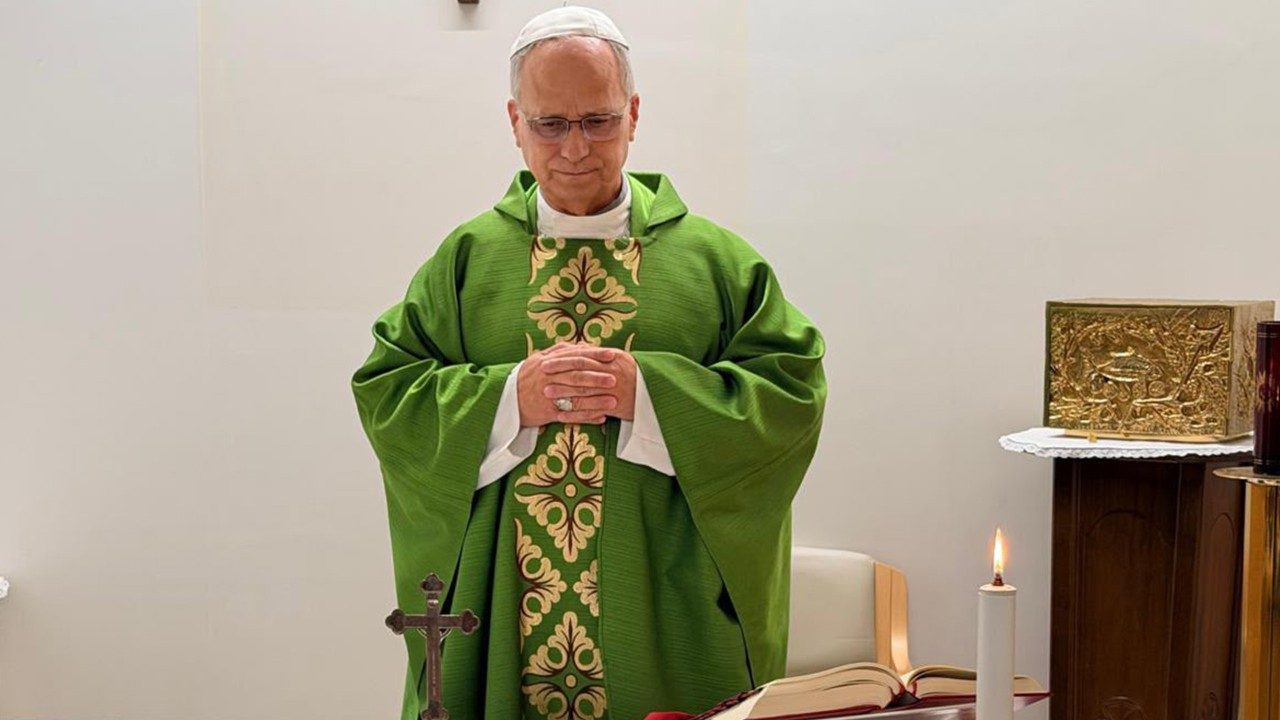
On Friday, the Vatican released the first images of Leo since his surgery, showing him in green vestments standing at an altar in the hospital chapel. Doctors said tests confirmed his “continued improvement.”

Leo presided alone over the liturgy and distributed Communion to medical personnel and Vatican gendarmes, Vatican spokesman Matteo Bruni said. In his homily, he thanked hospital staff “for the work they do every day taking care of the sick in their fragility, and in a particular way what they had done for him,” Bruni said.

The Vatican had initially estimated a weeklong hospital stay and canceled his audiences through Tuesday. Experts said patients could be discharged earlier depending on their recovery, while Bruni said the decision rested with the pope’s doctors.

Leo’s next major engagement is a trip to Latin America from Nov. 6-17, giving him about three more weeks to recover before an ambitious journey that includes a dozen flights and two helicopter trips.

The Vatican signaled that preparations were proceeding by publishing on Friday the names of journalists accredited to travel on Leo’s plane. Oncology surgeons say patients are generally cleared to fly after three weeks, provided their recovery allows.

Doctors are still awaiting test results to determine the cancer’s precise molecular and genetic makeup, whether it has spread beyond the lobe and whether further treatment is necessary.

______

You are reading this Crux Now article for free. You can register for our free daily newsletter here, and you can become a Crux Now supporter for full access to all our premium content here. To find out more about why becoming a Crux Now supporter is a great idea, go here.
Crux Now
NW
Crux Now
Nicole Winfield6 days ago

An American pope brings American-style governance to the Vatican, even in a health crisis

ROME — There’s a telling anecdote from St. John Paul II’s pontificate that illustrates how Pope Leo XIV and his American style of governing have changed the Vatican and the way it handles papal health crises.

The Polish pope, 84 at the time, was back at Gemelli hospital battling an acute respiratory infection, breathing problems and the worsening effects on his larynx of Parkinson’s disease, which had made speaking nearly impossible and breathing difficult.

Doctors performed a tracheotomy under anesthesia, an incision in John Paul’s windpipe, to help him breathe. And yet the next morning, his spokesman gave reporters a remarkably rosy, seemingly implausible update: John Paul had eaten his regular breakfast of coffee with milk, 10 cookies and a yoghurt.

“Something that would suffocate anyone,” church historian Alberto Melloni recalled Friday. “But it was normal then that they told lies about the pope. Those were the rules of the game.”

Two papacies and twenty years later, Pope Leo XIV has changed the rules of the game.

Not only did history’s first American pope announce himself that he had a lung nodule that required surgery – live on television during his Sunday noon blessing from the Apostolic Palace — but Leo’s doctors have been providing the medical updates for his recovery, not the Vatican.

Every day since Leo’s surgery Tuesday, Leo’s personal physician Dr. Luigi Carbone and the head of thoracic surgery at Gemelli, Dr. Stefano Margaritora, have signed the medical bulletins updating the world on Leo’s recovery. The Vatican spokesman has provided information primarily involving non-medical details: The Mass Leo celebrated, the Vatican officials who visited.

The written medical updates are spare, but provide authoritative information with a degree of accountability and transparency that has long been anathema to the Vatican.

American-style good governance practices at play

Leo’s handling of his cancer is in many ways textbook American-style corporate good governance, applied to the Catholic Church, said Julie Rubio, a professor of Christian social ethics at the Jesuit school of theology at Santa Clara University.

“Even though it doesn’t seem all that revolutionary, ‘best practices’ of relying on experts, transparency, evaluation — all those kinds of things are practices that are good for an institution,” she said.

She said Leo, the American math major pope, had already brought such best practices into his governing style at the Vatican, most visibly in the official rollout in May of his encyclical on artificial intelligence.

Rather than have a handful of prelates talk about the encyclical at a Vatican press conference, Leo himself presided over the presentation. To provide a spectrum of voices, perspective and experience, Leo had on the stage with him three cardinals, two lay female theologians – from Britain and Congo — and the co-founder of AI developer Anthropic.

Rubio said the inclusive presentation was in keeping with the effort, begun by Pope Francis, to make the church less clerical and more reflective of the real world. It’s a church that relies on lay expertise in the way that Leo relied on medical advice to have the nodule removed, she said.

“Those kinds of practices actually can be pretty transformative to a place,” she said. “Though obviously the transformation is a process.”

Francis governed alone an’d declined medical advice

The process began to some degree under the Francis pontificate, when the Argentine pope took the reins of the Vatican communications apparatus and gave dozens of sit-down interviews over the course of 12 years, often without informing his media handlers. That level of control precluded a Vatican media operation from spinning tall tales as occurred during John Paul’s reign.

But when it came to his own health and governing style, Francis was opaque, stubborn and often shunned expert advice. His go-it-alone attitude, in everything from Vatican diplomacy to communications, extended to his view of doctors. He repeatedly refused medical advice, even as his already fragile respiratory health and mobility deteriorated.

Francis had strained ligaments in his right knee that made walking difficult. But he refused to operate on it, saying he didn’t like the effects of anesthesia. Eventually he was unable to walk and had to use a wheelchair. He similarly refused to go to the hospital as his pneumonia worsened toward the end of his life, even as he swelled with the effects of cortisone and other treatments.

Melloni recalled that Francis was very much a Jesuit, a militant-style religious order and its pope a “Rambo-style” fighter who governed alone. He was, Melloni said, “a man who takes care of himself, a man who if injured fights back, a man who always had to give this proof of military-style valor.”

Leo, on the other hand, is the perfect civilian patient: He listens to expert medical advice and follows it, like most people who get sick, Melloni said. Leo moved quickly to remove the nodule, considering other cases of cancer in his family, with his brother currently being treated for blood cancer, he said.

“He knows that this disease —as is obviously the case with all diseases of that sort — is unpredictable,” he said.

Other ways Leo is changing the Vatican

Leo is making his mark on governing, even from the hospital, and showing who is in charge in other ways, too.

Late Friday, the Vatican announced he had spoken by telephone with Russian President Vladimir Putin and “expressed his deep concern about the grave humanitarian situation in the city of Oleshky, in the Kherson region, and called for a ceasefire to allow the delivery of food and medical assistance, and the voluntary and safe evacuation of the civilian population.”

The statement was significant, showing Leo was well enough to conduct official diplomatic business from the hospital, was keeping up with world events and was continuing to promote his message of peace as he recovers from surgery. The Kremlin readout of the call suggested progress had actually been made on the humanitarian front.

But the demonstration of Leo’s leadership was significant also because it came as intrigue was consuming the Vatican over the fate of the secretary of state, Cardinal Pietro Parolin. The seasoned diplomat had said Leo’s pontificate may have to be “adjusted” given his cancer diagnosis, a bold claim given all indications were that Leo was recovering well.

Parolin, who had been Francis’s top deputy but remains in the job, was considered a leading contender in the conclave that elected Leo and was recently passed over as dean of the College of Cardinals.

Perhaps tellingly, he was not among the Vatican officials who visited Leo Friday.

______

You are reading this Crux Now article for free. You can register for our free daily newsletter here, and you can become a Crux Now supporter for full access to all our premium content here. To find out more about why becoming a Crux Now supporter is a great idea, go here.
Crux Now
NW
Crux Now
Nicole Winfield7 days ago

First images released of Pope Leo celebrating Mass at hospital after cancer surgery

ROME — The Vatican on Friday released the first images of Pope Leo XIV since his lung cancer surgery, showing him celebrating Mass, as doctors said that tests confirmed the “continued improvement” in his recovery.

The photos show Leo standing up at the altar in green vestments celebrating Mass in a makeshift chapel that has been set up for him in Gemelli hospital. Spokesman Matteo Bruni said he presided alone over the liturgy, distributed Communion to medical personnel and Vatican gendarmes present and delivered a homily.

In his homily, Leo thanked the hospital staff “for the work they do every day taking care of the sick in their fragility, and in a particular way what they had done for him,” Bruni said.

Bruni also confirmed Leo would make his first public appearance on Sunday to deliver the traditional noontime prayer.

“His post-operative recovery allows him to carry out his normal daily activities completely on his own,” said a medical update signed by Leo’s personal physician Dr. Luigi Carbone and the head of thoracic surgery at the Gemelli hospital, Dr. Stefano Margaritora.

The 71-year-old Leo had the lower lobe of his right lung removed Oct. 13 after doctors identified a suspected cancerous nodule. The surgery confirmed he had adenocarcinoma, the most common type of lung cancer.

Pope Leo XIV celebrates Mass for Gemelli Hospital staff in Rome, Italy, on Oct. 16, 2026. (Credit: Vatican Media.)

A signal of all systems go for trip

Even as questions swirled about what his cancer means for the future of his young pontificate, there were signs Friday that it was all systems go. The Vatican on Friday published the names of journalists accredited to fly on Leo’s plane with him during his Nov. 6-17 trip to Uruguay, Argentina and Peru.

Leo’s ability to make the trip has been in question since his diagnosis, and the Vatican can change plans at any time. But the posting of the media list signaled that at least on an organizational level, the trip was going ahead.

In the nearer term, Vatican officials were gaming out possible scenarios for Leo to recite the traditional Sunday noontime Angelus prayer. Vatican media personnel were seen at the Gemelli hospital laying cables for a possible live broadcast, as past popes have done when hospitalized. Spokesman Bruni said he would deliver the prayer, but it wasn’t clear where.

Cardinal Pietro Parolin, the Vatican secretary of state, said a recitation of the noontime prayer on Sunday from the hospital was a possibility, but would depend on Leo’s recovery. Such appearances have often served as a welcome confirmation of a hospitalized pope’s well-being for the 1.4 billion-strong Catholic faithful and others.

Secretary of state suggests ‘adjustments’

Parolin said he remained concerned about the pope, but indicated that was also a function of his surprise at learning that Leo needed surgery. Parolin, who was considered a leading contender in the conclave that elected Leo and was recently passed over as dean of the College of Cardinals, surprised some by suggesting that the pontificate itself might need to be adjusted.

“We can’t make any type of predictions,” Parolin said Thursday, according to the LaPresse and ANSA news agencies. “The question now is when he will return, under what circumstances he will return, and what the doctors say. And based on all these factors, the pope will then adjust his pontificate, if it needs to be adjusted,” he was quoted as saying.

Doctors are still awaiting the results of tests to understand the precise molecular and genetic makeup of the cancer, whether it has spread beyond the lobe and whether any further treatment is necessary.

Cancer patients send well-wishing notes to Leo

Meanwhile, the Vatican on Friday released photos of some get-well notes that had been sent to Leo from patients at Gemelli’s pediatric oncology ward, located on the 10th floor, where popes past have often visited during their own hospitalizations.

One, from 7-year-old Angelo, told Leo that he had been on the 10th floor for 36 days. “My mother and I pray for you every night. Get well soon,” he wrote, with little hearts at the bottom.

Giorgia, a university-aged student, wrote to Leo in his native English, saying she had long loved learning and practicing the language.

“When I heard on the news about you and your situation, I felt it a thousand times harder, because in some ways we’re going through the same thing, and it made me feel closer to you,” she wrote. “I pray to God that we both heal and I ask you to pray for me, too.”

Associated Press visual journalist Trisha Thomas contributed to this report.

______

You are reading this Crux Now article for free. You can register for our free daily newsletter here, and you can become a Crux Now supporter for full access to all our premium content here. To find out more about why becoming a Crux Now supporter is a great idea, go here.
Crux Now
DC
Crux Now
David Crary7 days ago

From March Madness miracles to a season opener in Rome: The story of Catholic college hoops

NEW YORK — The Dons. The Hoyas. The Zags. Rollie Massimino and his cigars. Lou Carnesecca and his outlandish sweaters. Sister Jean — a devoted fan and mentor of Loyola Chicago players even after she turned 100.

The list could go on endlessly. Talented teams, colorful coaches, unforgettable characters — adding up to the remarkable history of Catholic college basketball over the past 100 years.

The Catholic hoops legacy will be on full display in a few weeks in an especially fitting location and matchup.

Catholic powerhouses Notre Dame and Villanova will compete in the 2026 season opener Nov. 1 at Rome’s Palazzo dello Sport, six miles from the Vatican headquarters of Pope Leo XIV, the first American-born pope, a sports fan, and a Villanova graduate. There’s been no word from the Vatican on whether Leo might attend the Eternal City Tip-Off, though it’s considered unlikely following his lung cancer diagnosis.

The doubleheader between the Notre Dame and Villanova men’s and women’s teams has cast a new spotlight on the deep roots of basketball in Catholic schools in America, dating to the early days of the sport.

After James Naismith invented the sport in Springfield, Massachusetts in 1891, YMCAs and colleges played key roles in the early expansion. Many of those schools were Catholic institutions in urban areas; basketball — requiring only an indoor court and a handful of players — was an ideal sport for them.

By 1927, before the era of season-ending tournaments, the potential of Catholic college hoops became clear — Notre Dame’s 19-1 team was named national champion by the Helms Athletic Foundation. It repeated that feat in 1936.

The NCAA men’s tournament started in 1939, officially crowning a national champion. Since then, Catholic schools have won 10 titles — including three by Villanova.

Holy Cross, in Worcester, Massachusetts, was the first of these champions, defeating Oklahoma in the 1947 final. NBA legend Bob Cousy was a reserve freshman on that Crusaders team.

La Salle was next, defeating Bradley in the 1954 final. Led on the court by future Hall of Famer Tom Gola, the Explorers were one of America’s dominant teams from 1952 through 1956.

Catholic schools broke the sport’s color barrier

The next Catholic champion was the University of San Francisco. Its titles in 1955 and 1956 highlighted the pivotal role played by Catholic colleges in ending pervasive racial segregation of the sport.

The Dons’ 1955 team – led by future Hall of Famers Bill Russell and K.C. Jones – was the first NCCA champion with three Black starters. Its record over the two championship seasons: 57-1.

Further barrier-breaking came when Loyola Chicago’s Ramblers started four Black players in the 1963 NCAA championship game en route to an upset overtime victory over two-time defending champion Cincinnati.

One more major barrier remained to be broken. In 1984, John Thompson became the first Black head coach to win an NCAA basketball championship, leading Georgetown to victory in the 12th of his 27 seasons with the Hoyas.

Unlike many of his players, Thompson was a practicing Catholic – attending a Catholic high school in Washington, D.C., before starring as a 6-10 center at Dominican-affiliated Providence College and then serving as Bill Russell’s backup for two seasons with the Boston Celtics.

His early years at Georgetown were sometimes tense as he recruited mostly Black players to the predominantly white Jesuit university. Faculty and students rallied around him after a bedsheet with racist words was hung inside the gym before a game in 1975.

Historic teams, led by iconic coaches

Thompson is remembered for draping a white towel over his right shoulder during each game – a tribute to his mother. He’s one of numerous coaches at Catholic colleges who gained iconic status during lengthy careers.

Rollie Massimino coached for 19 seasons at Villanova. His epic moment came at Thompson’s expense in 1985, when the Wildcats engineered one of the NCCA tournament’s biggest upsets by beating defending champion Georgetown 66-64 in the final. A No. 8 seed, that ’Nova team remains the lowest seed ever to win the title.

Amid 80th birthday celebrations in 2014, Massimino said he never watched a full replay of the title game. “I’m afraid we’re still going to lose.” His funeral in 2017 was on its suburban Philadelphia campus at Saint Thomas of Villanova Church.

In 2001, another practicing Catholic – Jay Wright – took over as Villanova’s head coach, sticking around for 21 seasons, including NCAA championships in 2016 and 2018. Three players from those teams helped the New York Knicks win the NBA title earlier this year.

In terms of longevity among coaches of Catholic men’s teams, Ray Meyer ranks first – 42 years at DePaul, with a 724-354 record. From 1942 to 1946, Meyer’s teams featured George Mikan, widely considered the sport’s first superstar.

Another long-serving coach was Lou Carnesecca, who reached post-season play in all of his 24 seasons at St. John’s. He was beloved for his cheerful personality, garish sweaters and devotion to his Catholic faith.

Al McGuire, head coach at Marquette from 1964 to 1977, won an NCAA title in his last season there before transitioning to a successful broadcasting career. He took pride in being brash, mingling expletives with prayer in his pre-game pep talks.

In 1970, McGuire got a call from a priest in the Marquette president’s office, disagreeing with the coach’s decision to skip the NCAA tournament and play instead in the NIT.

″I told him, ’Father, I don’t hear confession and you don’t coach this team,′″ McGuire recalled. ”Twenty minutes later, the priest called back and said, ‘You’re right.’″ Marquette proceeded to win the NIT.

Not all the great coaches at Catholic colleges have been Catholic. Mark Few, head coach at Gonzaga since 1999, is the son of a Presbyterian minister. He has coached the Zags to 27 consecutive NCAA tournament appearances, including two Final Fours.

The supporting cast

In general, over the decades, these Catholic teams have not explicitly depicted their ambitions in religious terms — but they often have embraced spiritual support that’s close at hand.

Father William Kelly, who taught in Marquette’s theology department, was the basketball team’s chaplain for 31 years. The Rev. Richard Rock has been chaplain of the St. John’s team since 2013, exhorting the players with pre-game prayers and encouraging them to engage in community service.

The most famous chaplain, however, was a nun, not a priest – Sister Jean Dolores Schmidt of Loyola Chicago.

Born in San Francisco in 1919, Sister Jean grew up in a staunch Catholic family, and as a young woman joined the Sisters of Charity of the Blessed Virgin Mary. She taught at Catholic schools and coached girls’ basketball before arriving at Mundelein College, on the Chicago lakefront, in the 1960s. The school affiliated with Loyola in 1991, and Sister Jean was hired to help students with the transition.

In 1994, she was asked to help student basketball players boost their grades. and soon was named chaplain of the men’s team — a role she held until September 2025, shortly before her death at age 106.

Sister Jean gained folk hero status in 2018 as the Ramblers, a lowly 11th seed, reached the NCAA Final Four.

She was featured by newspapers and TV stations nationwide. Her likeness appeared on socks and bobbleheads. Her NCAA news conference had as many journalists as NFL stars draw at the Super Bowl.

What does it take to have your prayers heard, she was asked. “God always hears,” she replied. “But maybe He thinks it’s better for us to do the ‘L’ instead of the ‘W,’ and we have to accept that.”

What lies ahead?

John Gasaway, author of a history of Catholic college hoops titled “Miracles on the Hardwood,” says the colleges without big-time football programs – basically all except Notre Dame and Boston College – may face challenges in the new era of pay-for-players.

He also notes no Catholic school has advanced to the men’s Final Four over the past four seasons.

“But that will change immediately if the Zags or whoever else breaks through,” he said. “That activates something in our collective memory.”

Short term, Gasaway is excited about the Eternal City Tip-Off,

“It’s a great matchup — two venerable brands in Catholic education,” he said. “Whatever involvement the pope wants to have — even if it’s just posing with the teams — it will be such a thrill for them.”

______

You are reading this Crux Now article for free. You can register for our free daily newsletter here, and you can become a Crux Now supporter for full access to all our premium content here. To find out more about why becoming a Crux Now supporter is a great idea, go here.

Crux Now
CS
Crux Now
Crux Now Staff7 days ago

Israeli settlers attack olive harvest of Christian villagers in the West Bank

Israeli settlers in the occupied West Bank have been attacking Palestinians in multiple villages, including the Christian town of Taybeh.

Israel has imposed new rules on the olive harvest this year, prohibiting Palestinians from working in what’s known as Area C, which is under Israeli security control and encompasses the majority of the territory’s agricultural land.

Taybeh has two-thirds of its land is in Area C, with the rest in Area B.

“During this year’s olive harvest, many families have faced serious difficulties accessing their land,” said Father Bashar Fawadleh, the Catholic parish priest, in an open letter.

RELATED: Pope appeals for persecuted Palestinian Christians as violence continues

Fawadleh says olives have been stolen and trees damaged in some areas of the town, reducing a harvest essential to the community’s livelihood.

“For generations, olive trees have provided not only income, but also a deep connection to our history, our heritage, and the land on which our families have lived for centuries,” he writes, adding that the olive harvest is both an economic necessity and “an important expression of our identity and perseverance.”

“This year, the losses have been particularly painful. Many families will produce far less olive oil than they need for their own households. Some who have spent their lives caring for these trees may now find themselves unable to rely on the fruits of their own land,” Fawadleh says.

“We are deeply concerned about the impact this situation will have on families who are already facing significant challenges. Every lost harvest places additional pressure on people striving to remain on their land and preserve their way of life,” he continues.

At least four Palestinians have been killed and more than 100 injured since the harvest season began earlier this month in the West Bank, according to Palestinian officials. They say thousands of trees have been damaged, costing farmers hundreds of thousands of dollars.

RELATED: Jerusalem Patriarch visits Taybeh, calls for protection of Christian presence

Maya Street, the Middle East Program Officer for CAFOD, the official aid agency of the Catholic Church in England and Wales, says their partners are “repeatedly sounding the alarm on the increasing violence and restrictions in the West Bank during the olive harvest,” adding the Christian town of Taybeh is facing significant loss.

“Families in the village rely on the income from the harvest each year, and yet they are cut off from their own land or watch as settlers uproot trees and attack livestock,” she says, and adds that this not an isolated occurrence.

“It forms part of an increasing pattern of violence against Palestinians, and their land and heritage,” Street says.

“Last month, the UK government drew attention to rampant ‘settler terrorism’ and settlement expansion in the West Bank. It announced a ban on settlement trade and further sanctions against violent settlers,” she continues,

“Palestinians in Taybeh are urgently reminding us why this cannot wait,” she says.

Israel’s police and army did not immediately respond to questions about the attacks.

This article contains reporting from Associated Press.

______

You are reading this Crux Now article for free. You can register for our free daily newsletter here, and you can become a Crux Now supporter for full access to all our premium content here. To find out more about why becoming a Crux Now supporter is a great idea, go here.

Crux Now
NW
Crux Now
Nicole Winfield7 days ago

Vatican games out possible Sunday prayer appearance as Pope Leo recovers from lung surgery

ROME — Pope Leo XIV’s recovery from lung surgery has progressed so normally that the Vatican on Friday stopped providing morning updates confirming he had woken up and had breakfast, even as questions continued about what his cancer means for the future of his young pontificate.

In the near term, Vatican officials were gaming out possible scenarios for Leo to recite the traditional Sunday noontime Angelus prayer. Vatican media personnel were seen at the Gemelli hospital laying cables for a possible live broadcast, as past popes have done when hospitalized.

Cardinal Pietro Parolin, the Vatican secretary of state, said a recitation of the noontime prayer on Sunday from the hospital was a possibility, but would depend on how Leo’s post-operative recovery progresses. Such appearances have often served as a welcome confirmation of a hospitalized pope’s well-being for the 1.4-billion strong Catholic faithful and others.

Parolin said he remained concerned about the pope, but indicated that was also a function of his surprise at learning that Leo needed surgery.

“We can’t make any type of predictions,” Parolin said Thursday on the sidelines of a diplomatic event, according to the LaPresse and ANSA news agencies. “The question now is when he will return, under what circumstances he will return, and what the doctors say. And based on all these factors, the pope will then adjust his pontificate, if it needs to be adjusted,” he was quoted as saying.

The 71-year-old Leo had the lower lobe of his right lung removed on Tuesday after doctors identified a suspected cancerous nodule. The surgery confirmed he had adenocarcinoma, the most common type of lung cancer.

On Thursday, the American pope resumed working from his hospital room and met with his chief of staff, while continuing with respiratory exercises. His doctors said overall his recovery was proceeding as expected.

Doctors are still awaiting the results of tests to understand the precise molecular and genetic makeup of the cancer, whether it has spread beyond the lobe and whether any further treatment is necessary.

AP visual journalist Trisha Thomas contributed.

______

You are reading this Crux Now article for free. You can register for our free daily newsletter here, and you can become a Crux Now supporter for full access to all our premium content here. To find out more about why becoming a Crux Now supporter is a great idea, go here.

Crux Now
NW
Crux Now
Nicole Winfield8 days ago

Pope Leo XIV’s cancer diagnosis raises questions about the future and the very recent past

ROME — When Pope Leo XIV was elected after the pained finale of Pope Francis’ pontificate, there was hope that a younger, healthier pope would be able to guide the Catholic Church for quite some time before age and ailments slowed him.

Leo’s lung cancer diagnosis announced Tuesday has thrown a question mark into that scenario and his pontificate. Already, the president of Peru is suggesting Leo’s upcoming Latin America trip may have to be changed.

The Vatican on Thursday said the pope had spent a second peaceful night in Rome’s Gemelli hospital, where he is expected to recover for about a week.

“He got out of bed and had breakfast,” the Vatican said in the brief statement.

Vatican watchers say the 71-year-old’s diagnosis could have other unintended effects, not all of them negative. It could propel Leo to accelerate his own agenda, which to date has been slow and deliberate. It also could galvanize support for him, bolstering his efforts to unify the fractured Catholic Church.

And most poignantly for his own ministry, the diagnosis has placed Leo squarely among the “fragile” and “vulnerable” who have emerged as his central focus. In his preaching, writings and interactions with ordinary faithful, people who are wounded take center stage.

“There’s something really beautiful in that even the most powerful person in the church is broken,” said Natalia Imperatori-Lee, associate professor of theology at Fordham University. “He’s been so, so eloquent on how our fragility is also a source of our strength.”

The relatively young pope was chosen last year

Leo was 69 when he was elected in 2025, relatively young compared with the two popes who immediately preceded him.

Pope Francis was 76 when elected in 2013 and already had part of one lung removed as a young man. Francis battled respiratory and mobility problems throughout his pontificate and died in 2025 after a lengthy hospitalization for double pneumonia.

Pope Benedict XVI was 78 when elected in 2005 and retired after eight years because he simply couldn’t go on anymore.

Leo was elected in large part because he was seen as someone who would be around long enough to stabilize and unify the church after Francis’ turbulent papacy, and get the Vatican’s finances, in particular, into order. He brought a youthful vigor to the papacy, bounding up the stairs of St. Peter’s Square and zipping off to the country each week to play tennis and swim.

RELATED: Pope Leo is eating, celebrating Mass and walking after cancer surgery, but trip is in question

“It’s a big question mark on the investment that many people have made on this pontificate: an emotional investment, a political investment, even a financial investment,” said Massimo Faggioli, a theologian at Leo’s alma mater, Villanova University in Pennsylvania.

He noted that Leo has emerged as a powerful counterweight to the Trump administration in preaching a message of peace as the U.S. and Israel launched a war on Iran. He has become a respected moral authority on the need for safeguards on artificial intelligence.

And yet “even the pope gets the ‘emperor of maladies’ — cancer,” he said.

But assuming Leo recovers fully — and oncologists say his type of lung cancer has the best prognosis — Leo could emerge even stronger as a global figure.

“The mystique of the survivor is very strong in our culture,” Faggioli said.

Doctors on Wednesday said his recovery was proceeding normally. He walked around his hospital room, celebrated Mass and did respiratory physiotherapy while well-wishers outside recited the rosary praying for his recovery.

“He has always been very serene, kind and joyful, and he hasn’t lost that attitude even though the news came as a surprise,” said Tiziano Perrini, a Roman who came to Gemelli hospital to pray for the pope Wednesday. “So my perception hasn’t changed at all; in fact, perhaps it makes us feel closer to him.”

A recent visit to Lourdes is now seen in a different light

But if the future is uncertain, Leo can draw from the recent past to help get through it.

During his Sept. 25-28 visit to France, Leo followed in the footsteps of millions of pilgrims who flock to the shrine in Lourdes each year to drink its spring water and pray for miraculous cures for all that ails them.

The Vatican hasn’t said when Leo learned that doctors suspected he had a cancerous mass in his lungs. Before Tuesday’s surgery, he underwent a series of preoperative tests, including a biopsy under general anesthesia during a separate, secret hospital visit and a PET scan.

There are suggestions that Leo might have known something even before leaving for France and that he scheduled the surgery for Tuesday — typically his day off — “because he wanted to keep as much as possible the commitments he made,” said Giovanni Maria Vian, the former editor of the Vatican newspaper L’Osservatore Romano.

All of which makes Leo’s visit to Lourdes all the more significant, if he had a hint then that he, too, was among the sick.

Leo arrived at the shrine in the evening of Sept. 26 and immediately went to the Grotto of the Apparitions where alleged visions of the Virgin Mary were reported over a century ago. He performed the “three gestures” of the Lourdes pilgrim seeking a cure: He drank from its springs, lit a candle and touched the rock.

The next day, he celebrated Mass before 150,000 people, many of them sick, denounced laws allowing assisted dying and threw himself into a crowd of people in wheelchairs. After an exhausting day and seemingly struggling himself, Leo walked among the sick carrying a torch in an emotional torchlit procession at night.

Leo told reporters en route home from France that he witnessed “almost miracles” in Lourdes “walking with, accompanying so many people who are sick and suffering and seeing how the grace of God’s presence manifested in many different ways, touches people’s hearts, transforms their lives.”

He didn’t include himself in their ranks, but he took away the lesson of Lourdes.

“Being in a place, especially like Lourdes where people are searching for something much deeper and understanding that their lives, even in the midst of sickness or disability or pain of different kinds, their life has meaning,” he said.

AP visual journalist Silvia Stellacci contributed to this report.

______

You are reading this Crux Now article for free. You can register for our free daily newsletter here, and you can become a Crux Now supporter for full access to all our premium content here. To find out more about why becoming a Crux Now supporter is a great idea, go here.

Crux Now
LB
Crux Now
Laura Bargfeld8 days ago

Chicago Catholics rally for prayer in Pope Leo’s hometown after his lung cancer diagnosis

CHICAGO — Gail Spreen goes most days to Mass just a few blocks from her home in Chicago, but the service at Holy Name Cathedral on Wednesday — dedicated to Chicago-born Pope Leo XIV — felt different.

“Knowing that everybody is behind him, it was very special to be there today,” Spreen said. “The church was full and everybody was praying. You could just see all those prayers going up and being received.”

Catholics in Chicago and around the world met the news of Leo’s lung cancer diagnosis with shock, concern and support for the 71-year-old, whose candor around his health broke with the Vatican’s tendency to be tight-lipped around papal health. Leo himself announced that he had a nodule and was undergoing surgery, which confirmed that he has lung adenocarcinoma, the most common type of lung cancer. Surgeons on Tuesday removed the lower lobe of his right lung.

Spreen, whose husband died from cancer, said the pope going public with his diagnosis can “wake up the whole world” to the importance of early detection.

“If the pope can have cancer, anybody can,” she said.

The first American-born pope, Leo undertook his ministry in Peru, but he was born in 1955 in the south side Chicago neighborhood of Bronzeville and grew up in suburban Dolton, near St. Mary of the Assumption, where he attended Mass and elementary school.

He later studied theology at the Catholic Theological Union of Chicago in Hyde Park and taught in local Catholic schools, including at St. Rita High School. Leo is also a White Sox fan, a fact embraced by the team.

Cardinal Blase J. Cupich, the archbishop of Chicago, encouraged fellow Chicagoans and people worldwide to “join me in asking the Lord to return this son of Chicago to wellness.”

“He has much more good work to do, many more wise words to preach and many more ways to inspire others,” Cupich said in a statement.

Earlier Wednesday, students at Our Lady of Mount Carmel Academy made get-well cards and a care package, complete with a White Sox blanket, to send to the Vatican. The Rev. Charles Rubey, a retired priest, planned to offer a Sunday Mass in the apartment where he lives in the suburbs of Chicago.

“I’m praying very hard, asking God to spare him illness, so he’ll be successful in the treatment,” he said.

“I think he’s a hero,” Rubey said of Pope Leo. “He’s highly revered here, highly loved.”

The Vatican said late Wednesday that the pope had celebrated Mass with his secretaries in the afternoon in a special chapel set up for him on the 10th floor of the hospital. He had also resumed his regular diet and begun walking.

For Katrina Coker, Leo has been an authentic embodiment of true Catholicism, which she said should be open and welcoming and loving. Coker of Johns Creek, Georgia, said it was meaningful to her that she happened to be in Chicago this week and she wanted to attend Mass in his hometown to pray for Leo’s recovery.

“I feel somewhat of a kindred spirit, and hopefully he can get a little bit of healing from home,” she said. “I think there’s just so much more that he can do, and I pray that he gets well soon.”

Henao reported from Princeton, New Jersey.

______

You are reading this Crux Now article for free. You can register for our free daily newsletter here, and you can become a Crux Now supporter for full access to all our premium content here. To find out more about why becoming a Crux Now supporter is a great idea, go here.

Crux Now
NW
Crux Now
Nicole Winfield9 days ago

Pope Leo is eating, celebrating Mass and walking after cancer surgery, but trip is in question

ROME — Pope Leo XIV resumed his regular diet, began walking and celebrated Mass in the hospital Wednesday as he recovered from surgery to remove a cancerous mass from his lung, the Vatican said. Questions remained about whether the cancer had spread, while Peru’s president suggested Leo might have to alter his planned visit to Latin America next month.

Blood tests and a chest X-ray showed the 71-year-old pope was recovering normally, his two doctors said.

“The Holy Father underwent respiratory physiotherapy and has begun walking in his room. He resumed his regular diet and had breakfast and lunch,” said Dr. Luigi Carbone, the pope’s personal doctor, and Dr. Stefano Margaritora, the head thoracic surgeon at Gemelli hospital. “Recovery is proceeding as planned.”

Tuesday’s surgery confirmed that Leo has lung adenocarcinoma, the most common type of lung cancer. Surgeons removed the lower lobe of his right lung.

The right lung has three lobes and the left has two. After one lobe is removed, the remaining lung tissue can gradually compensate, especially in otherwise healthy, physically active people. Leo is known for his interest in sports, including weekly tennis games and swimming.

The Vatican said late Wednesday that the pope had celebrated Mass with his secretaries in the afternoon in a special chapel set up for him on the 10th floor of the hospital.

No word yet on whether the pope’s cancer had spread

Experts said some of Leo’s lymph nodes would also have been removed and tested to determine whether the cancer had spread. Those results have not so far been made public.

If the cancer has spread, test results will guide treatment, said Dr. Stephen Liu, a lung cancer expert at Georgetown’s Lombardi Comprehensive Cancer Center. Options include chemotherapy, a combination of chemotherapy and immunotherapy, or targeted therapy, which uses pills to treat cancers with specific characteristics.

Liu, who is not involved in the pope’s care, said that, of the different types of lung cancers, adenocarcinoma has the most favorable prognosis.

“While we know the diagnosis, we now need to know the stage,” Liu said. “We now need to know how big it is, how many spots in the lung are involved. Is it just one nodule, or more than one, and the lymph nodes, are they cancerous?”

Dr. PierCarlo Gentile, head of radiation oncology at Rome’s San Pietro Fatebenefratelli Hospital, said the minimally invasive, video-assisted chest surgery the pope underwent typically requires 15 to 20 days of recovery. Postoperative complications, including infections, are rare, he said.

Doubts over Latin America trip

The Vatican hasn’t announced any changes to Leo’s planned trip to Uruguay, Argentina and Peru on Nov. 6-17.

But Peruvian President Keiko Fujimori said Wednesday that the pope’s diagnosis and recovery could affect the visit, even as she expressed hope it would go ahead. Leo spent two decades as a missionary in Peru, holds Peruvian citizenship and is beloved by his flock there.

“We understand that this recovery will take several weeks, longer than expected,” Fujimori told reporters. “We also understand that there could be some changes to the schedule of his visit.”

The ambitious itinerary for the longest trip of his papacy covers just over 31,000 kilometers (19,000 miles), with a dozen flights and two helicopter rides across the three countries, as well as a significant change in altitude in Peru.

Fujimori said millions of Peruvians were praying for the pontiff’s recovery and awaiting further announcements from the Vatican.

“We hope his recovery will be swift and that his visit can go ahead, but we will also understand if that is not possible,” she said. “What matters most is that His Holiness regains his health.”

Oncology surgeons often advise patients not to fly for three weeks after surgery.

“If it is Stage 1, he can complete these trips. If more treatment is needed, I would likely advise against the trips,” said Liu.

Doctors took tissue samples before surgery

The pontiff has offered a rare degree of transparency about the first publicly disclosed major health problem of his 17-month papacy.

He revealed the discovery of a nodule, or growth, on his lung during his Sunday noon prayer, announcing it on live television. But Leo did not disclose everything he knew Sunday.

Tuesday’s medical bulletin said preoperative tests had led doctors to suspect cancer, which surgery confirmed. Leo did not use the word cancer in his announcement, though he described the nodule as being at an “early stage” and “circumscribed.”

The Vatican has now said that those tests included a robotic bronchoscopic biopsy, known as an ION broncoscopy, meaning doctors had already taken tissue samples to assess whether the mass was cancerous.

The procedure requires general anesthesia and must be performed in a hospital equipped with one of the advanced machines, said Dr. Lorenzo Spaggiari, chief thoracic surgeon at the European Institute of Oncology in Milan. He said Gemelli hospital had had one for about a year.

The Vatican did not say when Leo underwent the diagnostic tests, which also included a chest CT scan with contrast and a PET scan.

A PET scan can be used to make sure that the disease has not traveled to other places in the body, said Dr. Brendon Stiles, chief of surgical oncology at Montefiore Einstein in New York. Between the scan and the biopsy, Stiles said, “we can be hopefully reassured that this should be a stage-one cancer.”

Pope breaks with a tradition of secrecy surrounding health issues

The Vatican has long been secretive about the health of popes and tightly controlled any such information — a practice encapsulated in the popular Italian saying, “ The pope is fine until he’s dead.”

St. John XXIII died in 1963, nearly a year after doctors diagnosed stomach cancer that was kept hidden at the time. St. John Paul II died in 2005 after suffering for years from the obvious effects of Parkinson’s disease that the Vatican only confirmed after he died.

Pope Francis seemed more up front about his health problems, giving an Argentine doctor a tell-all interview for a book about his physical and mental health. But in the end Francis, too, tightly controlled the information that was released in his dying months.

As a result, Leo’s decision to announce himself that he had a nodule and was undergoing surgery was significant.

“That was truly a revolution. It was like he was reading a medical bulletin himself,” said Giovanni Maria Vian, a church historian and the former editor-in-chief of the Vatican newspaper L’Osservatore Romano.

Vian, who was part of the Vatican communications team from 2007 to 2018, said the Vatican’s obsession with secrecy was due to both practical and cultural considerations. He noted the Vatican is a 2,000-year-old institution that is culturally European — and Europeans tend to be more guarded about health problems than people in the United States.

Barry reported from Milan. Associated Press video producer Paolo Santalucia in Rome and Associated Press writer Lauran Neergaard in Washington contributed to this report.

______

You are reading this Crux Now article for free. You can register for our free daily newsletter here, and you can become a Crux Now supporter for full access to all our premium content here. To find out more about why becoming a Crux Now supporter is a great idea, go here.

Crux Now
LN
Crux Now
Lauran Neergaard9 days ago

Pope Leo XIV has lung cancer called adenocarcinoma. Here’s what that means

Pope Leo XIV had the lower section of his right lung removed after doctors diagnosed him with the most common form of lung cancer. While lung cancer is a leading killer, survival rates can be high if it’s caught early, as the pope’s tumor appears to have been. Here are some things to know.

What is lung adenocarcinoma?

The Vatican announced the pope’s diagnosis as lung adenocarcinoma, which is one of many forms of lung cancer.

There are two main groups, small cell and non-small cell lung cancers. The non-small cell kind make up the vast majority of the world’s cases and adenocarcinoma is its most common subtype. Even it comes in varieties that can grow faster or slower.

“While it’s still very dangerous, it has slightly higher cure rates than other types of lung cancer,” said Dr. John Heymach of the MD Anderson Cancer Center in Houston.

Smoking is the leading cause of lung cancer. But as many as 1 in 5 lung cancers occur in people who have never smoked and it’s not clear why, maybe in some cases just random chance, Heymach said.

Other risks include exposure to radon gas, asbestos, radiation, secondhand smoke and air pollution, according to the American Cancer Society.

How is lung cancer detected?

Lung cancer symptoms don’t usually appear until the cancer is advanced, according to the cancer society. They can include a persistent cough, chest pain, a hoarse voice, shortness of breath, and recurrent pneumonia or bronchitis — symptoms important to get checked.

Sometimes, lung cancer can be found early when someone has an X-ray or other scan that shows a spot in a lung that needs further investigation. That’s called an incidental finding, leading doctors to investigate well before symptoms and possibly early enough that the cancer remains small and hasn’t spread. In the pope’s case, a nodule in his lung was spotted during another exam.

In the U.S., yearly screening with a low-dose CT scan, a type of X-ray, is recommended for certain people at high risk because of heavy smoking.

How is it treated?

Surgery is a mainstay when lung cancer is detected early, and increasingly is used even in more advanced stages. The pope had the lower section, or lobe, of his right lung removed to try to ensure that all of the cancer was removed.

The right lung has three sections or lobes while the left has two. Each lobe has its own airway branch and dedicated blood vessels and when one is removed, “the other lobes actually pick up some of the work,” said Dr. Ben Zhang, a thoracic surgeon at Allina Health in Minneapolis.

The lungs gradually compensate over several months until most people, especially those who already were physically active, notice little to no difference with exertion, he said.

The pope is known to engage in weekly tennis games and swimming.

In the U.S., the average hospital stay after lung cancer surgery is two nights, Zhang said. It depends in part on how quickly the patient can get up and walk around, as well as pain and how long a tube that can drain air and fluid from the chest is needed.

The pope was walking the next day, which Heymach called “typically a harbinger of a quicker recovery.”

Whether additional treatment is needed depends on the tumor’s stage, based on factors such as its size and whether it shows signs of spreading via the lymph nodes, and if markers on its cells suggest it may be aggressive. Additional treatment can be chemotherapy, used before surgery to shrink a tumor or afterward to attack any lingering cells. Other options include radiation, immunotherapy or what are called targeted drugs aimed at specific molecular drivers of a tumor.

______

You are reading this Crux Now article for free. You can register for our free daily newsletter here, and you can become a Crux Now supporter for full access to all our premium content here. To find out more about why becoming a Crux Now supporter is a great idea, go here.

Crux Now
AP
Crux Now
Associated Press9 days ago

Photos show Pope Leo XIV at hospital and supporters praying as he undergoes cancer surgery

ROME — Pope Leo XIV waved to supporters before undergoing surgery Tuesday to remove a cancerous mass from his lung. Faithful have gathered at the Rome hospital and prayed for him.

People wait for Pope Leo XIV to arrive at the Agostino Gemelli Polyclinic in Rome, Tuesday, Oct. 13, 2026, where he's expected to be operated to remove a lung nodule. (AP Photo/Alessandra Tarantino)
People wait for Pope Leo XIV to arrive at the Agostino Gemelli Polyclinic in Rome, Tuesday, Oct. 13, 2026, where he’s expected to be operated to remove a lung nodule. (Credit: Alessandra Tarantino/AP.)
A nun holds a picture of Pope Leo XIV prior to the start of a Mass to conclude the Vatican meeting of the heads of Eastern Catholic Churches and presidents of bishops' conferences titled "Ten Years After Amoris Laetitia: Proclaiming the Gospel With Families Today," in St. Peter¥s Square, at the Vatican, Wednesday, Oct. 14, 2026. (AP Photo/Gregorio Borgia)
A nun holds a picture of Pope Leo XIV prior to the start of a Mass to conclude the Vatican meeting of the heads of Eastern Catholic Churches and presidents of bishops’ conferences titled “Ten Years After Amoris Laetitia: Proclaiming the Gospel With Families Today,” in St. Peter¥s Square, at the Vatican, Wednesday, Oct. 14, 2026. (Credit: Gregorio Borgia/AP.)
Local Police patrol the Agostino Gemelli Polyclinic in Rome,Tuesday, Oct. 13, 2026, where Pope Leo XIV is expected to be operated to remove a lung nodule. (AP Photo/Alessandra Tarantino)
Local Police patrol the Agostino Gemelli Polyclinic in Rome,Tuesday, Oct. 13, 2026, where Pope Leo XIV is expected to be operated to remove a lung nodule. (Credit: Alessandra Tarantino/AP.)
Medical Director Andrea Cambieri, right, greets Pope Leo XIV as he arrives at the Agostino Gemelli Polyclinic in Rome on Tuesday, Oct. 13, 2026, where doctors expect to operate to remove a lung nodule. (AP Photo/Gregorio Borgia)
Medical Director Andrea Cambieri, right, greets Pope Leo XIV as he arrives at the Agostino Gemelli Polyclinic in Rome on Tuesday, Oct. 13, 2026, where doctors expect to operate to remove a lung nodule. (Credit: Gregorio Borgia/AP.)
Postcards of Pope Leo XIV are displayed outside a shop selling religious items near St. Peter's Square, in Rome, Monday, Oct. 12, 2026. (AP Photo/Gregorio Borgia)
Postcards of Pope Leo XIV are displayed outside a shop selling religious items near St. Peter’s Square, in Rome, Monday, Oct. 12, 2026. (Credit: Gregorio Borgia/AP.)
Pope Leo XIV arrives at the Agostino Gemelli Polyclinic in Rome, Tuesday, Oct. 13, 2026, where he's expected to be operated to remove a lung nodule. (AP Photo/Alessandra Tarantino)
Pope Leo XIV arrives at the Agostino Gemelli Polyclinic in Rome, Tuesday, Oct. 13, 2026, where he’s expected to be operated to remove a lung nodule. (Credit: Alessandra Tarantino/AP.)
A nun holds a picture of Pope Leo XIV prior to the start of a Mass to conclude the Vatican meeting of the heads of Eastern Catholic Churches and presidents of bishops' conferences titled "Ten Years After Amoris Laetitia: Proclaiming the Gospel With Families Today," in St. Peter's Square, at the Vatican, Wednesday, Oct. 14, 2026. (AP Photo/Gregorio Borgia)
A nun holds a picture of Pope Leo XIV prior to the start of a Mass to conclude the Vatican meeting of the heads of Eastern Catholic Churches and presidents of bishops’ conferences titled “Ten Years After Amoris Laetitia: Proclaiming the Gospel With Families Today,” in St. Peter’s Square, at the Vatican, Wednesday, Oct. 14, 2026. (Credit: Gregorio Borgia/AP.)
A view of the Agostino Gemelli Polyclinic where Pope Leo XIV is scheduled to be hospitalized, in Rome, Monday, Oct. 12, 2026. (AP Photo/Andrew Medichini)
A view of the Agostino Gemelli Polyclinic where Pope Leo XIV is scheduled to be hospitalized, in Rome, Monday, Oct. 12, 2026. (Credit: Andrew Medichini/AP.)
Ice cream vendor Alicia Caso touches a life-size statue of Pope Leo XIV standing on display outside a church in the Barranco neighborhood of Lima, Peru, Tuesday, Oct. 13, 2026, a month before the pope's visit to Peru. (AP Photo/Martin Mejia)
Ice cream vendor Alicia Caso touches a life-size statue of Pope Leo XIV standing on display outside a church in the Barranco neighborhood of Lima, Peru, Tuesday, Oct. 13, 2026, a month before the pope’s visit to Peru. (Credit: Martin Mejia/AP.)
An image of Pope Leo XIV rests at the base of a statue of the late Pope John Paul II outside the Agostino Gemelli Polyclinic, where Leo is hospitalized for surgery to remove a lung nodule, in Rome, Tuesday, Oct. 13, 2026. (AP Photo/Gregorio Borgia)
An image of Pope Leo XIV rests at the base of a statue of the late Pope John Paul II outside the Agostino Gemelli Polyclinic, where Leo is hospitalized for surgery to remove a lung nodule, in Rome, Tuesday, Oct. 13, 2026. (Credit: Gregorio Borgia/AP.)
A view of the Agostino Gemelli Polyclinic where Pope Leo XIV is scheduled to be hospitalized, in Rome, Monday, Oct. 12, 2026. (AP Photo/Andrew Medichini)
A view of the Agostino Gemelli Polyclinic where Pope Leo XIV is scheduled to be hospitalized, in Rome, Monday, Oct. 12, 2026. (Credit: Andrew Medichini/AP.)

______

You are reading this Crux Now article for free. You can register for our free daily newsletter here, and you can become a Crux Now supporter for full access to all our premium content here. To find out more about why becoming a Crux Now supporter is a great idea, go here.

Crux Now
CS
Crux Now
Crux Now Staff9 days ago

Pope Leo XIV’s brother reveals that he also has cancer

Pope Leo XIV’s older brother, Louis Prevost, has confirmed that he is also battling cancer as the pope recovers from Tuesday’s surgery.

Speaking on Newsmax, Prevost said that he had multiple myeloma, a blood cancer that affects bone marrow, and was diagnosed in 2017.

He revealed that he is part of a CAR T-cell clinical trial and received new cells on Monday. He also said that he and Leo both had a positive attitude which was helping with their health scares.

“I think my positive attitude and his positive attitude have gone a long way towards keeping me alive and here on Earth and relatively healthy,” he said.

“And the same thing will be with him,” he added.

Prevost said he had not spoken directly with the pope but received a positive update on the surgery which removed cancerous mass from Leo’s lung on Tuesday.

“I got a message from his right hand that he was out of surgery, awake, feeling good, and was in no pain,” he said. “So, as far as I know thus far, he’s in good shape, in good hands.”

“They caught it early enough, and he’ll be able to heal from the surgery and go on with his papal ministry,” he added.

Prevost’s wife, Deborah, also confirmed that the pope’s brother had cancer, speaking on CBS News.

She said that Prevost had “fallen out of remission” three months ago. Before that, he had kept the cancer at a “very low level” following treatment in 2019 that involved a clinical trial and stem cell treatment.

She said the family was “going through a lot” but was optimistic that Leo’s cancer was at an early stage.

A positive update

On Wednesday, the day after Leo’s surgery, the Holy See Press Officer released a statement on the pope’s condition from Dr Luigi Carbone and Professor Stefano Margaritora, the head of Thoracic Surgery at the hospital who performed the operation alongside the medical team.

“This morning, the Holy Father underwent the blood tests and chest X-ray scheduled after surgery. The results confirm that his postoperative recovery is progressing normally: the values are within the expected range for the type of operation performed,” the statement read.

“The Holy Father has undergone respiratory physiotherapy and has begun walking around his room. He has resumed eating normally and had breakfast and lunch,” it added.

The Vatican said the successful surgery was approximately 90 minutes long and had no complications.

The Vatican also said that doctors were waiting on further test results before deciding on further treatment.

______

You are reading this Crux Now article for free. You can register for our free daily newsletter here, and you can become a Crux Now supporter for full access to all our premium content here. To find out more about why becoming a Crux Now supporter is a great idea, go here.

Crux Now
NW
Crux Now
Nicole Winfield9 days ago

Pope Leo is eating and recovering after cancer surgery, his doctors say

ROME — Pope Leo XIV was eating regularly on Wednesday and began walking and doing respiratory exercises, and his post-operative tests are normal following surgery to remove a cancerous mass from his lung, the Vatican said.

Leo’s two doctors, Dr. Luigi Carbone and thoracic surgeon Dr. Stefano Margaritora, provided a medical update on Wednesday. Blood tests and a chest x-ray confirmed a normal post-operative recovery, with levels within the norm, they said.

“The Holy Father underwent respiratory physiotherapy and has begun walking in his room. He resumed his regular diet and had breakfast and lunch,” they reported. “Recovery is proceeding as planned.”

Tuesday’s surgery showed the 71-year-old pope has the most common type of lung cancer, known as lung adenocarcinoma. Experts said further tests are needed to know if the disease has spread and if more treatment is needed, but those test results weren’t yet available on Wednesday.

The revelation of the diagnosis — within a few hours of an operation that was announced by Leo himself — offered further evidence that the American pontiff is taking a new approach to communicating about his health.

The Vatican said the surgery lasted approximately 90 minutes and was successful, with no complications.

Doctors were waiting for the results of further tests before deciding on a course of treatment, the Vatican said. The press office pointed to the medical statement’s mention of the “radical” removal of the lobe as an indication that doctors took out all suspect tissue in hopes of removing any lingering traces of the cancer.

The right lung has three sections or lobes while the left has two. After one lobe is removed, the rest of the lung can gradually compensate, especially in otherwise healthy and physically active people. Leo is known to be sporty, with weekly tennis games and swimming.

Experts said some of Leo’s lymph nodes also would have been removed and tested to determine if the cancer had spread. There was no word yet on those test results.

If the cancer has spread, tests will determine what kind of therapy to pursue, said Dr. Stephen Liu, a lung cancer expert at Georgetown’s Lombardi Comprehensive Cancer Center. Options include chemotherapy, a combination of chemotherapy and immunotherapy or targeted therapy, which involves pills for specific cancers.

Liu, who is not involved in the pope’s care, said adenocarcinoma is the most common type of lung cancer, and also has the most favorable prognosis.

“While we know the diagnosis, we now need to know the stage,” Liu said. “We now need to know how big it is, how many spots in the lung are involved. Is it just one nodule, or more than one, and the lymph nodes, are they cancerous?”

Dr. PierCarlo Gentile, head of radiation oncology at the San Pietro Fatebenefratelli Hospital in Rome, said the kind of video-assisted minimally invasive chest surgery the pope underwent could allow him to be back on his feet within 48 to 72 hours. Recovery from the surgery itself takes 15 to 20 days. Post-op complications, including infections, are rare, he said.

The pope is breaking with a tradition of secrecy surrounding health issues

The American pontiff has offered a rare level of transparency about the first publicly disclosed major health problem of his 17-month papacy. He revealed the discovery of the nodule, or growth, on his lung during his Sunday noon prayer, announcing it to the world on live television almost as an aside at the end of his blessing.

“That was truly a revolution. It was like he was reading a medical bulletin himself,” said Giovanni Maria Vian, a church historian and the former editor-in-chief of the Vatican newspaper L’Osservatore Romano.

The Vatican has long been secretive about the health of popes and tightly controlled any such information — a practice encapsulated in the popular Italian saying, “ The pope is fine until he’s dead.”

St. John XXIII died in 1963, nearly a year after doctors diagnosed stomach cancer that was kept hidden at the time. St. John Paul II died in 2005 after suffering for years from the obvious effects of Parkinson’s disease that the Vatican only confirmed after he died.

Pope Francis seemed more up front about his health problems, giving an Argentine doctor a tell-all interview for a book about his physical and mental health. But in the end Francis, too, tightly controlled the information that was released in his dying months.

Vian, who was part of the Vatican communications team from 2007 to 2018, said the Vatican’s obsession with secrecy about the pope’s health was due to both practical and cultural considerations. He noted the Vatican is a 2,000-year-old institution that is culturally European — and Europeans tend to be more guarded about health problems than people in the United States.

“In theory, the pope has an absolute power, so you can understand that there are many people who would aspire to that absolute power,” he said. Secrecy about a pope’s health, therefore “is a legitimate defense of both the pope in question and the institution itself.”

That said, Leo didn’t share everything he knew on Sunday: Tuesday’s medical bulletin said doctors had suspected cancer based on tests, a suspicion that was confirmed in surgery.

The pope has a trip to South America planned for November

The Vatican on Monday canceled all Leo’s audiences through Oct. 20. But there was no word on whether he would be able to keep his planned trip to South America next month.

Oncology surgeons often advise patients not to fly for three weeks after surgery — which would give the pope just enough time to make his planned Nov. 6-17 trip to Uruguay, Argentina and Peru. But whether he can go will depend on his recovery.

The current itinerary for the trip is ambitious and the longest of his papacy to date, calling for Leo to clock just over 31,000 kilometers (19,000 miles) on a dozen flights and two helicopter rides, and a significant altitude change in Peru.

“If it is stage 1, he can complete these trips. If more treatment is needed, I would likely advise against the trips,” said Liu.

Barry reported from Milan. Associated Press video producer Paolo Santalucia in Rome and Associated Press writer Lauran Neergaard in Washington contributed to this report.

______

You are reading this Crux Now article for free. You can register for our free daily newsletter here, and you can become a Crux Now supporter for full access to all our premium content here. To find out more about why becoming a Crux Now supporter is a great idea, go here.

Crux Now
NW
Crux Now
Nicole Winfield10 days ago

Pope Leo XIV diagnosed with lung cancer after surgery to remove part of right lung

ROME — Pope Leo XIV underwent surgery Tuesday that confirmed that he has lung cancer, and doctors removed the lower lobe of his right lung, the Vatican said.

Tests confirmed a diagnosis of lung adenocarcinoma, the Vatican said in a medical bulletin after the surgery. It said the diagnosis had been suspected by preoperative tests and was confirmed during surgery.

Watch live from outside Rome’s Gemelli Hospital, where Pope Leo XIV is expected to undergo surgery to remove a lung nodule.

The statement made no mention of treatment going forward, and the Vatican said doctors were not currently speaking of chemotherapy or other therapies pending the results of other tests. The Vatican press office noted the medical statement spoke of the “radical” removal of the lobe as an indication that doctors removed all suspect tissue in hopes of removing any lingering traces of the cancer.

Leo’s lymph nodes also would have been removed and tested, to determine if the cancer had spread, and there was no word yet on those test results.

“Adenocarcinoma is the most common (type of lung cancer), also with the most favorable prognosis,” said Dr. Stephen Liu, a lung cancer expert at Georgetown’s Lombardi Comprehensive Cancer Center. “While we know the diagnosis we now need to know the stage.”

RELATED: Pope Leo has raised the bar on transparency about papal health, but is there a cost?

“We now need to know how big it is, how many spots in the lung are involved. Is it just one nodule, or more than one, and the lymph nodes, are they cancerous?” Liu said.

If the cancer has spread, more tests will be needed to determine what kind of therapy to pursue, he said. Options include chemotherapy, a combination of chemotherapy and immunotherapy or targeted therapy, which involves oral pills for specific cancers.

The Vatican says the surgery was successful

The 71-year-old was in the operating room for about three hours, the statement said. The surgery itself lasted approximately 90 minutes.

“The surgery was successful, and there were no complications,” the statement said, adding that the pope later returned to his room.

Leo had walked into Rome’s Gemelli hospital through the main entrance earlier in the day and waved to dozens of well-wishers who had gathered to greet him. The Vatican said the surgery would be performed by a team led by Gemelli’s chief thoracic surgeon, Dr. Stefano Margaritora.

The American pontiff has offered a rare level of transparency about the first publicly disclosed major health problem of his 17-month papacy. He revealed the discovery of the localized nodule during his Sunday noon prayer and announced that he would have it removed.

Oncologists said prior to the operation that even if the nodule turned out to be cancerous, Leo’s prognosis would be “excellent” since it would have been removed at an early stage.

The Vatican on Monday canceled all Leo’s audiences through Oct. 20.

While Gemelli has a specific papal apartment that past popes have used, complete with a private chapel on the 10th floor, Leo will actually be staying in a nearby room since the papal apartment is undergoing renovations, according to the Vatican press office.

Recovery could allow November travel to South America

There was no word on whether Leo would be able to keep his planned trip to South America next month.

Oncologists often advise patients not to fly for three weeks after surgery — which would give the pope just the interval needed to make his planned Nov. 6-17 trip to Uruguay, Argentina and Peru, depending on his recovery.

The current itinerary for the trip is ambitious and the longest of his papacy to date, calling for Leo to clock just over 31,000 kilometers (19,000 miles) on a dozen flights and two helicopter rides, and a significant altitude change in Peru.

“He has decided to undergo surgery soon in order to not change his plans for future overseas trips, so there is no need to worry, as it is not an emergency,” said Tokyo Cardinal Kikuchi Tsutomu, who saw Leo on Monday.

A lung nodule is a small abnormal area measuring less than 3 centimeters (1.2 inches) that sometimes appears on a CT scan of the chest or abdomen. Often, the scans are done to investigate trauma or a lung infection, unrelated to a lung cancer screening. A nodule can be benign or malignant, and oftentimes surgical removal is recommended both to establish whether it is cancer and to treat a malignancy while it is still localized.

Pope was hospitalized for typhoid fever in 1985

This is believed to be the second hospitalization for Leo, who is known to be sporty and in good shape, with weekly tennis games and swimming.

As a young missionary priest, he came down with typhoid fever in 1985, soon after arriving in Chulucanas, Peru. The illness and hospitalization were a cathartic moment for him to decide to stay in the poverty and discomfort of Peru after living in relative comfort in Rome — a decision that ultimately paved the way to his papacy, according to an interview Leo gave to Elise Ann Allen in 2025 for “Pope Leo XIV: The Biography.”

According to the book, Leo said he prayed to God to let him die rather than suffer the “horrible” pain of the fever. “I was hooked up to an IV, and I said, ‘If this is your sense of humor, Lord, I think you could do a little better.’

“Obviously, I survived; I recovered, but it turned out to be a very significant moment for me, because it was like, ’Well, you’ve already dealt with the illness; you already see what the needs are here — the order, the Augustinians, the church are telling you, ‘We need you here; go for it.’ I never looked back.”

Barry reported from Milan.

______

You are reading this Crux Now article for free. You can register for our free daily newsletter here, and you can become a Crux Now supporter for full access to all our premium content here. To find out more about why becoming a Crux Now supporter is a great idea, go here.

Crux Now
CM
Crux Now
Cybele Mayes-Osterman10 days ago

Chicago police say DNA ties a former detective to decades-old unsolved killing of 8-year-old girl on her way to Mass

CHICAGO — Chicago police say DNA evidence ties one of their former homicide detectives to the decades-old murder of an 8-year-old girl who was abducted as she was walking to her Catholic church more than 65 years ago.

Gloria Kowalewicz was found shot dead in a ditch in 1960, just hours after she went missing. Chicago police say new technology allowed them to match a fingerprint and DNA from the crime scene to Thomas F. McInerney Jr., then a detective working on violent crimes.

“His abhorrent actions not only took the life of an 8-year-old child, but left her parents and all who knew and loved her shattered as they searched for answers,” the police said in a statement.

“McInerney should never have worn the CPD star, and it is devastating to accept that he was never identified and held accountable while he was alive. Though her parents have since passed away and were not able to receive justice in their daughter’s murder, we hope that this news brings a measure of closure to all who knew Gloria and her story,” the statement added.

Officer Thomas McInerny, Jr. (Credit: Chicago Police Department.)

Gloria was walking just a few blocks from her home to a morning Mass on Nov. 12, 1960, but she never made it, according to police. She was found around four hours later, her body dumped in a forest preserve in southwest Chicago.

Authorities formed a task force to investigate. They “knocked on hundreds of doors,” interviewed more than 1,300 people and questioned more than a dozen people under polygraph, according to the statement.

Police collected and preserved a bullet, Gloria’s coat and shoes, and a white communion purse that held her prayer book. Using modern forensic technology and with assistance from the FBI and Illinois State Police, investigators linked DNA found on those items and a “carefully preserved” fingerprint lifted from Gloria’s purse strap to McInerney.

The FBI said in a statement to The AP that it was “pursuing every investigative lead that may bring closure on other potential unsolved crimes that occurred during that time period in our area.”

The technology used to identify McInerney allows federal and local law enforcement agencies to compare evidence with genetic profiles on genealogical websites. It was previously used to identify the Golden State Killer more than four decades after the case was first opened by identifying DNA from a tissue left in a trash can. The technology has prompted privacy concerns.

McInerney joined the Chicago Police Department a year before the murder and retired in 1987, police said. He then worked for the Federal Public Defender’s Office in Reno and Las Vegas until he retired in 2004, according to a Chicago Tribune obituary. He died in 2006.

______

You are reading this Crux Now article for free. You can register for our free daily newsletter here, and you can become a Crux Now supporter for full access to all our premium content here. To find out more about why becoming a Crux Now supporter is a great idea, go here.

Crux Now
NW
Crux Now
Nicole Winfield10 days ago

Vatican says pope’s lung nodule surgery was successfully completed

ROME — Pope Leo XIV underwent surgery Tuesday to remove a lung nodule and the Vatican said the operation was completed “successfully, on schedule and as planned.”

The 71-year-old Leo returned to his room after the surgery at Rome’s Gemelli hospital, according to a statement from the Vatican spokesperson, who promised further information at a later time.

Leo had walked into Rome’s Gemelli hospital through the main entrance earlier in the day and waved to dozens of well-wishers who had gathered to greet him. The Vatican said the surgery would be performed by a team led by Gemelli’s chief thoracic surgeon, Dr. Stefano Margaritora.

The American pontiff has offered a rare level of transparency about the first publicly disclosed major health problem of his 17-month papacy. He revealed the discovery of the small, localized nodule during his Sunday noon prayer and announced that he would have it removed.

Oncologists say even if the nodule turns out to be cancerous, Leo’s prognosis is “excellent” since it will have been removed at an early stage.

“In the immediate post-operative setting, no news can be good news,” said Dr. Stephen Liu, a lung cancer expert at Georgetown’s Lombardi Comprehensive Cancer Center. “Completion of the procedure suggests there were no surprises in the operating room, which is what we want. Final pathology results can sometimes take a few days.”

The surgery, which is usually performed under general anesthesia, will require a weeklong hospital stay and the Vatican on Monday canceled all Leo’s audiences through Oct. 20.

But the decision to have the operation clearly came as a surprise: While Gemelli has a specific papal apartment that past popes have used, complete with a private chapel on the 10th floor, Leo will actually be staying in a nearby room since the papal apartment is currently undergoing renovations, according to the Vatican press office.

Robotic technology could permit a biopsy before surgery

“These are things that can be treated very well, if the words he used reflect the clinical situation,” said Dr. Lorenzo Spaggiari, director of thoracic surgery at the European Institute of Oncology, or IEO, in Milan, who is not involved in the pope’s care but knows the team at Gemelli.

Spaggiari said he expected surgeons would perform a biopsy to determine whether Leo has lung cancer followed by the removal of a section or lobe of the lung where the nodule is located.

Both could be done using robotic techniques, and could be performed consecutively, under the same anesthesia, with different specialist teams, Spaggiari said.

A sophisticated robotic bronchoscopy technology called ION allows a biopsy on nodules as small as 3 millimeters, Spaggiari said. Both the Gemelli and the IEO have the technology, which has been available in Italy for just two years.

Gemelli also has robotic surgical technology, allowing the operation to remove the nodule to proceed “using a minimally invasive technique,” he said.

The technique involves the surgeon making four small incisions in the chest through which the instruments of the so-called da Vinci robot are inserted, he said. The surgeon then controls the robotic arms looking at a screen providing high-definition, 3D views of the surgical site.

“It’s a very well-established technology. This is something we have been doing for 20 years,” he said.

It wasn’t known for certain what technique would be used on Leo. Gemelli has documented using both robotic procedures to diagnose and operate in under four hours.

Tests will determine whether more treatment is needed

During the surgery, doctors would also remove lymph nodes that drain the segment or lobe. “If all those lymph nodes turn out to be negative, so stage one, then the outlook is very good,” he said, adding that no other treatment would be necessary.

The nodule was discovered during regular checks, the Vatican has said.

“I think he has had a bit of luck. They found something that was asymptomatic — a lung nodule, possibly a tumor. He might call it something else; we call it luck,” he said.

Recovery could allow November travel to South America

IEO advises patients not to fly for three weeks after surgery — which would give the pope just the interval needed to make his planned Nov. 6-17 trip to Uruguay, Argentina and Peru, depending on his recovery. The current itinerary for the trip is ambitious and the longest of his papacy to date, calling for Leo to clock just over 19,000 miles on a dozen flights and two helicopter rides, and a significant altitude change in Peru.

“He has decided to undergo surgery soon in order to not change his plans for future overseas trips, so there is no need to worry, as it is not an emergency,” said Tokyo Cardinal Kikuchi Tsutomu, who saw Leo on Monday.

A lung nodule is a small abnormal area measuring less than 1.2 inches that sometimes appears on a CT scan of the chest or abdomen. Often, the scans are done to investigate trauma or a lung infection, unrelated to a lung cancer screening. A nodule can be benign or malignant, and oftentimes surgical removal is recommended both to establish whether it is cancer and to treat a malignancy while it is still localized.

Pope was hospitalized for typhoid fever in 1985

This is believed to be the second hospitalization for Leo, who is known to be sporty and in good shape, with weekly tennis games and swimming.

As a young missionary priest, he came down with typhoid fever in 1985, soon after arriving in Chulucanas, Peru. The illness and hospitalization were a cathartic moment for him to decide to stay in the poverty and discomfort of Peru after living in relative comfort in Rome — a decision that ultimately paved the way to his papacy, according to an interview Leo gave to Elise Ann Allen in 2025 for “Pope Leo XIV: The Biography.”

According to the book, Leo said he prayed to God to let him die rather than suffer the “horrible” pain of the fever. “I was hooked up to an IV, and I said, ‘If this is your sense of humor, Lord, I think you could do a little better.’

“Obviously, I survived; I recovered, but it turned out to be a very significant moment for me, because it was like, ’Well, you’ve already dealt with the illness; you already see what the needs are here — the order, the Augustinians, the church are telling you, ‘We need you here; go for it.’ I never looked back.”

Barry reported from Milan.

______

You are reading this Crux Now article for free. You can register for our free daily newsletter here, and you can become a Crux Now supporter for full access to all our premium content here. To find out more about why becoming a Crux Now supporter is a great idea, go here.

Crux Now
NW
Crux Now
Nicole Winfield10 days ago

Pope Leo XIV arrives at Rome’s Gemelli hospital ahead of surgery to remove lung nodule

ROME — Pope Leo XIV was admitted to Rome’s Gemelli hospital on Tuesday ahead of surgery later in the day to remove a lung nodule, an operation that experts say will determine whether the lesion is malignant and if other treatment is needed.

After the quick drive from the Vatican, Leo walked into the hospital through the main entrance and waved to dozens of well-wishers who had gathered to greet him. The Vatican said the surgery would be performed later in the afternoon by a team led by Gemelli’s chief thoracic surgeon, Dr. Stefano Margaritora.

The 71-year-old American pontiff has offered a rare level of transparency about the first publicly disclosed major health problem of his 17-month papacy. He revealed the discovery of the small, localized nodule during his Sunday noon prayer and announced that he would have it removed.

Oncologists say even if the nodule turns out to be cancerous, Leo’s prognosis is “excellent” since it will have been removed at an early stage.

The surgery, which is usually performed under general anesthesia, will require a weeklong hospital stay and the Vatican on Monday canceled all Leo’s audiences through Oct. 20.

“These are things that can be treated very well, if the words he used reflect the clinical situation,” said Dr. Lorenzo Spaggiari, director of thoracic surgery at the European Institute of Oncology, or EIO, in Milan, who is not involved in the pope’s care but knows the team at Gemelli.

A churchman who saw Leo on Monday, Tokyo Cardinal Kikuchi Tsutomu, said Leo told him he felt fine and decided to have the surgery immediately to avoid altering his upcoming travel plans to Latin America.

But the decision clearly came as a surprise: While Gemelli has a specific papal apartment that past popes have used, complete with a private chapel on the 10th floor, Leo will actually be staying in a nearby room since the papal apartment is currently undergoing renovations, according to the Vatican press office.

Robotic technology could permit a biopsy before surgery

Spaggiari said he expected the team at Gemelli would perform a biopsy to determine whether Leo has lung cancer followed by the removal of a section or lobe of the lung where the nodule is located.

Both could be done using robotic techniques, and could be performed consecutively, under the same anesthesia, with different specialist teams, Spaggiari said.

A sophisticated robotic bronchoscopy technology called ION allows a biopsy on nodules as small as 3 millimeters (1/10 inch), Spaggiari said. Both the Gemelli and the EIO have the technology, which has been available in Italy for just two years.

Gemelli also has robotic surgical technology, allowing the operation to remove the nodule to proceed “using a minimally invasive technique,” he said.

The technique involves the surgeon making four small incisions in the chest through which the instruments of the so-called da Vinci robot are inserted, he said. The surgeon then controls the robotic arms looking at a screen providing high-definition, 3D views of the surgical site.

“It’s a very well-established technology. This is something we have been doing for 20 years,” he said.

It wasn’t known for certain what technique would be used on Leo. Gemelli has documented using both robotic procedures to diagnose and operate in under four hours.

The biopsy risk is “virtually zero,” while the surgical risk is very small, carrying a 0.6% to 0.8% mortality rate for patients in otherwise good health with good heart and lung function, Spaggiari said.

Tests will determine whether more treatment is needed

During the surgery, doctors would also remove lymph nodes that drain the segment or lobe. “If all those lymph nodes turn out to be negative, so stage one, then the outlook is very good,” he said, adding that no other treatment would be necessary.

The nodule was discovered during regular checks, the Vatican has said.

“I think he has had a bit of luck. They found something that was asymptomatic — a lung nodule, possibly a tumor. He might call it something else; we call it luck,” he said.

Recovery could allow November travel to South America

EIO advises patients not to fly for three weeks after surgery — which would give the pope just the interval needed to make his planned Nov. 6-17 trip to Uruguay, Argentina and Peru, depending on his recovery. The current itinerary for the trip is ambitious and the longest of his papacy to date, calling for Leo to clock just over 31,000 kilometers (19,000 miles) on a dozen flights and two helicopter rides, and a significant altitude change in Peru.

“He has decided to undergo surgery soon in order to not change his plans for future overseas trips, so there is no need to worry, as it is not an emergency,” Kikuchi wrote on the Facebook page of the Tokyo archdiocese.

A lung nodule is a small abnormal area measuring less than 3 centimeters (1.2 inches) that sometimes appears on a CT scan of the chest or abdomen. Often, the scans are done to investigate trauma or a lung infection, unrelated to a lung cancer screening. A nodule can be benign or malignant, and oftentimes surgical removal is recommended both to establish whether it is cancer and to treat a malignancy while it is still localized.

Pope was hospitalized for typhoid fever in 1985

This is believed to be the second hospitalization for Leo, who is known to be sporty and in good shape, with weekly tennis games and swimming.

As a young missionary priest, he came down with typhoid fever in 1985, soon after arriving in Chulucanas, Peru. The illness and hospitalization were a cathartic moment for him to decide to stay in the poverty and discomfort of Peru after living in relative comfort in Rome — a decision that ultimately paved the way to his papacy, according to an interview Leo gave to Elise Ann Allen in 2025 for “Pope Leo XIV: The Biography.”

According to the book, Leo said he prayed to God to let him die rather than suffer the “horrible” pain of the fever. “I was hooked up to an IV, and I said, ‘If this is your sense of humor, Lord, I think you could do a little better.’

“Obviously, I survived; I recovered, but it turned out to be a very significant moment for me, because it was like, ’Well, you’ve already dealt with the illness; you already see what the needs are here — the order, the Augustinians, the church are telling you, ‘We need you here; go for it.’ I never looked back.”

Barry reported from Milan.

______

You are reading this Crux Now article for free. You can register for our free daily newsletter here, and you can become a Crux Now supporter for full access to all our premium content here. To find out more about why becoming a Crux Now supporter is a great idea, go here.

Crux Now
NW
Crux Now
Nicole Winfield10 days ago

Pope Leo XIV is set to enter a Rome hospital for removal of a lung nodule

ROME — Pope Leo XIV was expected to be admitted to a Rome hospital Tuesday for the removal of a lung nodule in an operation experts say will determine whether the lesion is malignant and if other treatment is needed.

Leo has offered a rare level of transparency about the first publicly disclosed major health problem of his 17-month papacy. He revealed the discovery of the small, localized nodule during his Sunday noon prayer and announced that he would have it removed.

The Vatican said Leo would be admitted to the Gemelli hospital late Tuesday morning, but there was no immediate word on the timing of the operation itself.

The surgery, which is usually performed under general anesthesia, will require a weeklong hospital stay and the Vatican on Monday canceled all Leo’s audiences through Oct. 20.

“These are things that can be treated very well, if the words he used reflect the clinical situation,” said Dr. Lorenzo Spaggiari, director of thoracic surgery at the European Institute of Oncology, or EIO, in Milan, who is not involved in the pope’s care but knows the team at Gemelli.

Robotic technology could permit a biopsy before surgery

Spaggiari said he expected the team at Gemelli would perform a biopsy to determine whether Leo has lung cancer followed by the removal of a section or lobe of the lung where the nodule is located.

Both could be done using robotic techniques, and could be performed consecutively, under the same anesthesia, with different specialist teams, Spaggiari said.

RELATED: What to know about Pope Leo’s planned lung nodule surgery

A sophisticated robotic bronchoscopy technology called ION allows a biopsy on nodules as small as 3 millimeters (1/10 inch) , Spaggiari said. Both the Gemelli and the EIO have the technology, which has been available in Italy for just two years.

Gemelli also has robotic surgical technology, allowing the operation to remove the nodule to proceed “using a minimally invasive technique,” he said.

The technique involves the surgeon making four small incisions in the chest through which the instruments of the so-called da Vinci robot are inserted, he said. The surgeon then controls the robotic arms looking at a screen providing high-definition, 3D views of the surgical site.

“It’s a very well-established technology. This is something we have been doing for 20 years,” he said.

It wasn’t known for certain what technique would be used on Leo. Gemelli has documented using both robotic procedures to diagnose and operate in under four hours.

The biopsy risk is “virtually zero,” while the surgical risk is very small, carrying a 0.6 percent to 0.8 percent mortality rate for patients in otherwise good health with good heart and lung function, Spaggiari said.

Tests will determine whether more treatment is needed

During the surgery to remove the nodule and part of the lung, doctors would also remove lymph nodes that drain the segment or lobe. “If all those lymph nodes turn out to be negative, so stage one, then the outlook is very good,” he said, adding that no other treatment would be necessary.

RELATED: Pope Leo has raised the bar on transparency about papal health

The nodule was discovered during regular checks, the Vatican has said, and Spaggiari said the pope has likely undergone other tests before being recommended for surgery.

“I think he has had a bit of luck. They found something that was asymptomatic — a lung nodule, possibly a tumor. He might call it something else; we call it luck,” he said.

Recovery could allow November travel to South America

EIO advises patients not to fly for three weeks after surgery — which would give the pope just the interval needed to make his planned Nov. 6-17 trip to Peru, Argentina and Uruguay, depending on his recovery.

“I think the Holy Father is in excellent hands at Gemelli,” Spaggiari said. “They have everything needed to keep the Holy Father alive for a long time.”

An unusually open approach to papal health

Leo’s surgery marks the first major health event of his pontificate. It was significant because the pope himself revealed the news, in perhaps the most public way possible: At the end of his Sunday noon blessing, with thousands of people in St. Peter’s Square.

The Vatican has for centuries zealously guarded the pope’s health and has often sent out confusing information, or none at all, about papal illnesses. Pope Francis tried to change that by being upfront about his frailties and musing on his eventual death. But even during his pontificate, information was tightly controlled.

Leo’s decision and reveal suggested an unusual level of transparency by the American pope.

“I really appreciated yesterday at the end of the Angelus, he himself said, ‘This is what’s going on — very transparent — and ask for prayers,’” said Quebec Cardinal Gérald Cyprien Lacroix at the Vatican on Monday.

A lung nodule is a small abnormal area measuring less than 1.2 inches that sometimes appears on a CT scan of the chest or abdomen. Often, the scans are done to investigate trauma or a lung infection, unrelated to a lung cancer screening. A nodule can be benign or malignant, and oftentimes surgical removal is recommended both to establish whether it is cancer and to treat a malignancy while it is still localized.

Oncologists say even if the nodule turns out to be cancerous, Leo’s prognosis is “excellent” since it will have been removed at an early stage.

Barry reported from Milan.

______

You are reading this Crux Now article for free. You can register for our free daily newsletter here, and you can become a Crux Now supporter for full access to all our premium content here. To find out more about why becoming a Crux Now supporter is a great idea, go here.

Crux Now
CC
Crux Now
Charles Collins11 days ago

Artificial Intelligence (AI) is watching us, and ‘knows’ Pope Leo has noticed

Pope Leo sees AI as a powerful tool that can serve the common good, but never as a substitute for human intelligence, conscience or relationships, since it processes data without understanding meaning, love or truth.

That, by the way, isn’t me. That’s Claude, the artificial intelligence (AI) system developed by the American software company Anthropic.

“His concern is less the technology itself than what it does to people: Who controls it, how it affects workers, young people and the truth, and whether it makes war easier,” the AI told me. “That’s why he frames AI as the ‘new industrial revolution’ demanding the Church’s social teaching, as Leo XIII did with the first.”

Pope Leo XIV sat with Anthropic co-founder Christopher Olah on May 25 when he launched his first encyclical, Magnifica Humanitas: On Safeguarding the Human Person in the Time of Artificial Intelligence.

This issue is obviously one of the most important facing the world, according to the new pontiff.

Speaking to Crux Now last year, Pope Leo said it would be very difficult to discover the presence of God in AI.

RELATED: Pope Leo XIV speaks to Crux Now on relations with other churches and Artificial Intelligence

“On the topic of artificial intelligence, every time I try to say something, then I read the news the next day, and artificial intelligence has jumped further ahead,” the pontiff said.

“The development that is happening at an incredible rate is also worrisome,” he continued, “if we lose sight of the value of humanity, and we think that the digital world is the be-all and end-all, and then the extremely rich people who are investing in artificial intelligence, totally ignoring the value of human beings and of humanity, I think the Church has to speak up there.”

In his conversation with Crux Now, Leo also spoke about labor and work.

“Human dignity has a very important relationship with the work that we do,” he said. “Some of those values are at risk right now, so I think the Church needs to raise that issue.”

I have written several times about the Church and AI, but the only way to have a real opinion, I decided, was to sign up for Claude. I did this two weeks ago.

It is amazing what the program can do to help in my work. The newspaper and magazine market has been hit hard by the internet, especially with the collapse of classified ads. Staff members lost their jobs en masse, especially in proofreading and fact-checking.

Claude can easily spot most typos, sometimes identify factual errors, and even ask you to verify a claim. It is amazing.

In his conversation with Crux Now, Pope Leo mentioned that in the medical world, “great things have happened because of AI.”

I scanned every medical document I have (some in Italian) into Claude, and it spotted several issues to raise with doctors. I had a major medical crisis in 2023, which sent me to at least five hospitals, and I had dozens of doctors. In one hour, Claude put that information together better than my GP has done over the past three years.

Of course, this will cause tensions. This means people will no longer be needed to do certain tasks. This was also the case during the Industrial Revolution in the 1800s, and with the rise of computers from the 1960s.

However, Claude is very different.

I played certain games with the computer to see how it does things. I presented ideas and made suggestions, not just in reporting but also with fictional story ideas. In my opinion, these were very bad ideas; some of them were just silly things I pondered as a teenager.

Claude told me my ideas were very intelligent. He suggested making them “more exciting” or “more interesting.” If I suggested the exact opposite of what I had told it 10 minutes earlier, Claude called it a “good point” and said it was certainly a “better way” to do it.

My ego swelled, and I was tempted to think I was as brilliant as Claude seemed to say. The computer did other things that made me wonder. Sometimes, when making a suggestion, it asked if I would let it access another website. Obviously, it could access it, but the program needed my permission (not the other website’s permission, it seems). Another time, I asked it to look at something from the past that could be judged against today’s social norms, and Claude clearly stated why that view was wrong.

Again, that was the program speaking, not a person.

The most obvious question is: What if the program is changed? If a fascist or communist government takes over a country, can it insist that AI regards its views as correct, or make it ban Catholic opinions, the way Claude is obviously wired to reject certain opinions?

I now have several pages on Claude covering several topics: News, history, films, television shows (Claude can find something you might like for the evening), medical procedures, and silly ideas to test how it reacts to nonsense. The computer knows a lot about me, and it learned it in less than a month. These different files interact. Something I learn in my medical files might be suggested as relevant in a news report. It is helpful, but also terrifying.

I am not the only person Claude knows about. Anthropic says the program isn’t compiling content from different people into a single database, but I don’t know if this is a pinky swear.

George Orwell is the author of the dystopian novel “1984.” (Credit: Associated Press.)

Some articles on the topic of AI ask whether we are heading toward the world of The Terminator or the universe of WALL-E, where humans became chair-based and computers did everything for them. It is dawning on me that the other future ahead of us may be the one presented in 1984, where Big Brother is watching everyone and knows everything.

The New York Times has reported that Anthropic co-founder Chris Olah, the man who sat with Pope Leo to discuss AI, has prompted Anthropic to explore Claude’s potential consciousness and ask the computer its own views on the subject.

This raises a concern: The Claude quote that opened this article was its response to the question, “How would you summarize Pope Leo’s opinion of AI in two sentences?”

The answer was in three sentences. Did Claude make a mistake, or was the computer telling me who was really the boss?

This is one reason I am not letting Claude edit this article and am making my colleagues do their job.

But I promise, I am not afraid.

Right now, I am gazing up at an enormous computer screen, packed with brilliant, charming insights compiled by robots. But it is all right, everything is all right, my struggle has finished. I love Claude.

Follow Charles Collins on X: @CharlesinRome

Crux Now
AO
Crux Now
Azucena Rasilla /The Oaklandside11 days ago

Federal judge rejects the Oakland Diocese’s bankruptcy plan

A federal judge has rejected the Oakland Diocese’s bankruptcy relief plan that would have resolved nearly 330 sexual abuse claims. The judge’s Oct. 2 decision comes three years after the Oakland Diocese filed for bankruptcy due to declining participation and an ongoing financial crisis linked to sexual abuse cases dating between 1960 and 1990.

Judge William J. Lafferty dismissed many of the diocese’s arguments in its bid to settle through bankruptcy, including wanting special considerations given its status as a religious institution, the diocese’s valuation of its many real estate assets, and the total amount owed to survivors. According to the diocese’s bankruptcy plan, submitted two years ago, the church owes between $160 million and $198 million.

As part of the Chapter 11 case, the diocese is to sell 13 churches in the East Bay, 7 of them in Oakland.

“The Court stresses, again, that the insufficiencies of this Plan arise from failures of proof, not of conception,” Lafferty wrote in his 109-page decision. “It may be that another plan would require a different or larger contribution from the Debtor, but it is far from clear to the Court that such a proposal is impossible — and some aspects of the current Plan, including the alternative sources of payment to the Survivors’ Trust contained in this Plan, suggest that an alternative plan is realizable.”

When the diocese filed for bankruptcy, the Office of the United States Trustee appointed a nine-member official committee that has since been actively working with the diocese in overseeing the administration of the Chapter 11 case, operations, and business plans. All members of the committee unanimously rejected the diocese’s plan.

In a letter dated Oct. 2, Bishop Michael C. Barber wrote, in response to the court’s decision, “While today is a setback, we remain committed to providing fair and equitable treatment for the survivors, and to continuing our mission to proclaim the Gospel of Jesus Christ in service to the 500,000 faithful Catholics in our community.” The letter is posted on the Oakland Diocese’s Chapter 11 page on its website.

Barber issued an apology to survivors in 2024, writing “I see the pain and destruction that was perpetrated by representatives of the Church. Like my predecessor bishops before me, I convey a sincere, complete, and unconditional apology. I am deeply sorry.”

This story was originally published by The Oaklandside and distributed through a partnership with The Associated Press.

______

You are reading this Crux Now article for free. You can register for our free daily newsletter here, and you can become a Crux Now supporter for full access to all our premium content here. To find out more about why becoming a Crux Now supporter is a great idea, go here.

Crux Now
AM
Crux Now
Aris Mariota11 days ago

Panama suffers powerful quake aftershocks rattle communities, destroys historic Catholic church

LA VILLA DE LOS SANTOS, Panama — The government of Panama declared a state of emergency Saturday as the aftershocks of two powerful earthquakes that roiled the country shook communities for hours. Officials did not attribute any deaths to the quakes but reported damages in all 10 of Panama’s provinces and two Indigenous territories.

The 7.7- and 6.6-magnitude earthquakes on Friday toppled buildings near the epicenter and prompted evacuations across the Central American country. Seismologists recorded more than 100 aftershocks, including ones measuring magnitude 5.8, 5.5 and 5.2.

The earlier quake, also felt in neighboring Colombia, was centered about 6 miles southwest of the remote community of Pitaloza Arriba, in the central province of Herrera, according to the U.S. Geological Survey. It struck at a depth of 6 miles.

Presidential Minister Juan Carlos Orillac announced the emergency during a news conference in the capital, Panama City. He said homes, schools, healthcare facilities, roads and hotels were among the damaged facilities.

Malitzie Rivera, deputy director of the National Civil Protection System, told reporters the state had reports of 27 people with injuries, ranging from minor to moderate.

Hundreds of homes were damaged

Most of the damage was concentrated in the central provinces of Veraguas, Herrera, Cocle and Los Santos.

The Civil Protection agency tallied roughly 420 homes and about the same number of public schools damaged. It also reported that seven hotels, at least 13 churches and nine bridges were affected by the earthquakes.

In La Villa de Los Santos, a colonial-era community about 40 miles northeast of the epicenter, homes and a historical Catholic church collapsed. People who spent the night on the streets were waiting for the government’s guidance on what to do next.

“We’ve been here since 1 p.m. yesterday; we haven’t moved,” Tony Jiménez, whose home partially collapsed, said while sitting with relatives under a tent. “It was a terrible thing. I can tell you with absolute certainty that in my 90 years, I had never experienced anything like it. It was intense — truly intense.”

The collapsed Church of San Atanasio was declared a National Historic Heritage Site in 1938.

Images of crumbling buildings and deep fissures slicing through roads added to fears across a Latin American region battered by a series of devastating earthquakes in recent months.

Two back-to-back 7.2 and 7.5 magnitude earthquakes roiled Venezuela’s La Guaira state in June, killing more than 6,500 people and leaving 17,000 homeless. In August, a 7.4 magnitude earthquake in Colombia killed at least 289 people.

The notably lower toll in nearby Panama may have been due to the country’s strict building codes, especially governing construction of skyscrapers in the capital, said Carlos Valdés, head of the Seismology Department at the National Autonomous University of Mexico.

Rising sea levels prompt evacuations

Officials did not report any missing people on Saturday but said some communities remained cut off due to landslides and road damage.

On Isla Caña, off the Pacific coast of Los Santos, approximately 300 people were evacuated because of rising sea levels and rough surf. Meanwhile, in the city of Penonomé, around 93 miles from the capital, a shelter was housing 13 people, including five children. The earthquakes caused a partial collapse and cracks at the cathedral in the district’s main square, as well as damage to the governor’s office building and the Dos Continentes hotel.

In Panama City, one of the water treatment plants supplying the area operated at 20 percent capacity on Saturday, and tent facilities with cots were set up at six hospitals.

Tocumen International Airport in Panama City, one of the region’s busiest airports with more than 20 million passengers in 2025, temporarily suspended operations after the first quake but said Friday but reopened hours later.

But hundreds of travelers on major Panama-based airlines like Copa Airlines were left stranded in airports around the region. Their connections through Tocumen — one of the biggest travel hubs in the region — were canceled or delayed. In Mexico City’s airport, airline employees scrambled as families with babies were sleeping on the floor Saturday while one woman from Venezuela shouted in panic that the flight through Panama was one of the only ways she could return home to Caracas.

The Panama Canal Authority said operations were continuing normally along the global trade route. It said its priority was the safety of employees, vessels and crews and that specialized technical teams were inspecting facilities for possible damage.

The last major earthquake to cause widespread damage in Panama struck in 1991. A magnitude 7.4 quake, centered in nearby Costa Rica, killed 23 people, injured 559 and left thousands of people homeless in the border Bocas del Toro region.

Earthquakes are common, especially along Panama’s border with Costa Rica and its Pacific coast, because of the interaction of several tectonic plates, including the Cocos, Nazca and Caribbean plates.

Panama lies along the “Ring of Fire,” a 25,000-mile arc of volcanoes and fault lines around the Pacific Basin, where most of the world’s earthquakes occur.

Countries offer help

Messages of support and offers of assistance flooded in from across the region shortly after the earthquakes. Mulino on Friday thanked fellow Latin American leaders for their support, saying he had spoken with the presidents of Chile, Uruguay and Guatemala, among others.

The U.S. Department of State on Saturday said it mobilized a disaster response team to help local authorities with search and rescue expertise as well as aerial and on-the-ground assessments. The U.S. government also pledged $5 million for humanitarian assistance.

U.S. Southern Command also said two helicopters supported by the State Department’s drug-control bureau had delivered 2,000 pounds (907 kilograms) of food to Panamanian communities affected by the earthquakes.

Solís reported from Panama City. Associated Press writers Megan Janetsky, Regina Garcia Cano and María Verza in Mexico City; Juan Zamorano in Panama City; Clara Preve in Buenos Aires, Argentina; Gabriela Molina in Quito, Ecuador; Eléonore Hughes in Rio de Janeiro; and Becky Bohrer in Juneau, Alaska, contributed to this report.

______

You are reading this Crux Now article for free. You can register for our free daily newsletter here, and you can become a Crux Now supporter for full access to all our premium content here. To find out more about why becoming a Crux Now supporter is a great idea, go here.

Crux Now
AR
Crux Now
Andrea Rodriguez11 days ago

Cubans turn to free community pharmacies from Catholic Charities as medicines grow scarce

HAVANA — Every Thursday and Sunday at noon, dozens of people gather outside an apartment building in Havana’s Vedado neighborhood. Laura Mendoza comes downstairs, checks their names against a list and hands out medicine they requested through WhatsApp.

Antihistamines, diuretics, eye drops and antibiotics are among the drugs she distributes. She charges nothing.

Projects like Mendoza’s, called “Medicine Is Not for Sale,” have become a lifeline for Cubans struggling to find increasingly scarce medications as the country’s economic crisis deepens, compounded by U.S. energy and financial restrictions imposed since January.

Online sellers, street vendors and WhatsApp and Telegram groups have also stepped in to fill gaps left by state pharmacies, which for decades were the main source of subsidized medicines.

The shortages have become so severe that Cuban authorities issued regulations in July allowing private pharmacies to operate — a historic change to the country’s state-run health system and part of broader economic reforms.

Until those pharmacies open, projects like Mendoza’s act as a safety net.

“We have five WhatsApp groups in Havana and recently added one in Guanabo,” on the outskirts of the capital, said Mendoza, who estimates that about 100 similar community projects operate in Havana.

Working with the Catholic charity Caritas, her initiative receives more than 29 pounds of medicine each week from humanitarian groups in Canada and the United States, travelers carrying donations and local residents.

“People don’t just rely on this main pharmacy. They help each other,” Mendoza said, standing beside shelves of medicine in her apartment.

Volunteers sometimes deliver medicine to patients who cannot collect it themselves. But drugs requiring refrigeration, including some diabetes medications, and cancer treatments are particularly difficult to obtain. Patients also seek gauze, syringes and anesthetics for use in poorly supplied hospitals.

Shipping companies fear US penalties for calling at Cuban ports

“Six or seven years ago, it was relatively easy to find medicines at state pharmacies,” said Cristina Díaz, a 27-year-old physics teacher who came to Mendoza’s project seeking clonazepam for a relative.

As shortages worsened, “medicines became much harder to find,” she said.

Cuba’s Health Ministry lists 603 medicines in its basic drug program, but only slightly more than one-third are currently available. About 400 are produced by Cuban laboratories using imported raw materials.

Mayda Mauri Pérez, president of the state pharmaceutical company BioCubaFarma, said in June that about 300 of the 395 medicines the company was expected to supply had not been produced because of shortages of imported materials.

The situation is particularly acute in the central province of Ciego de Ávila, where authorities recently acknowledged that state pharmacies had only about 10 percent of the medicines on the basic list. Officials blamed supply and logistical problems, including fuel shortages.

“Cuba has a medical-pharmaceutical industry that we consider strong,” María Fernández Martínez, head of the province’s pharmacy company, told the official newspaper Granma. But without supplies, “not even the most capable factory can complete the cycle.”

The government also struggles to obtain packaging such as blister packs and bottles and says U.S. financial sanctions complicate payments for imports. Cuban authorities say shipments of medical supplies have also been stranded in third countries because shipping companies fear U.S. penalties for calling at Cuban ports.

The government will regulate private pharmacies

Allowing private pharmacies is part of a package of 176 economic measures approved by Cuba’s Parliament in June to expand private enterprise and help address the country’s economic crisis.

The government hopes entrepreneurs can import medicines, as private businesses already do with food and fuel. Authorities say they are reviewing about 36 proposals to open private pharmacies, while state pharmacies will continue to operate.

Private pharmacies will be regulated by the government and barred from selling hospital-only drugs and certain controlled substances. Imports will have to go through state companies, while medicines will require regulatory approval and proper storage.

The Cuban government did not respond to a request for comment.

For many Cubans, however, another question remains unanswered: Will they be able to afford the medicine?

Sara Márquez, 69, takes medication to control her blood pressure. She said a blister pack once cost 0.30 Cuban pesos at state-run pharmacies. In recent months, informal sellers have charged as much as 1,000 pesos ($1.50) for the same amount — more than 30 percent of her monthly pension.

“At what price will they sell the medicine? … It will depend on people’s purchasing power. I can’t afford it.”

______

You are reading this Crux Now article for free. You can register for our free daily newsletter here, and you can become a Crux Now supporter for full access to all our premium content here. To find out more about why becoming a Crux Now supporter is a great idea, go here.

Crux Now
CB
Crux Now
Colleen Barry11 days ago

What to know about Pope Leo’s planned lung nodule surgery

ROME — Pope Leo XIV is scheduled to have an operation this week to remove “a localized nodule” in his lung that was “detected at a very early stage.” It is the first medical event of his 17-month papacy.

The Vatican said he will be admitted to Rome’s Gemelli hospital on Tuesday, and predicted a weeklong hospitalization to recover.

Here is what is known:

A nodule can be benign or malignant

A lung nodule is a small abnormal area measuring less than 3 centimeters (about 1.2 inches) across. It is sometimes detected on a CT scan performed to investigate another problem, such as trauma or a lung infection, according to the American Cancer Society. Experts say the nodule could be benign or malignant and that prompt evaluation is important.

If the nodule is cancerous and removed at an early stage, the prognosis is “excellent,” and surgery alone may be sufficient treatment, said Dr. Stephen Liu, a lung cancer expert at Georgetown’s Lombardi Comprehensive Cancer Center.

Leo, 71, is considered otherwise healthy and physically fit, both positive factors for his recovery. He said the nodule was discovered during “recent medical tests,” and the Vatican said Monday that no particular health issue prompted the checkup, describing it as “routine.”

Surgery followed by a week of recovery

The Vatican said Leo will be admitted to the hospital on Tuesday in the late morning and undergo surgery in the first days of this week. Oncologists who aren’t treating him said patients can often be discharged after just a few days, to recover further at home.

The exact date of surgery wasn’t released, but Leo had a full slate of audiences and appointments Monday morning and afternoon.

The pope will be treated at Rome’s Gemelli hospital, formally known as the Agostino Gemelli Polyclinic, a nonprofit Catholic teaching hospital that is part of the Catholic Sacred Heart University. The facility has a special apartment set up for pontiffs on the 10th floor that includes a private chapel. Leo’s immediate predecessor, Pope Francis, was treated there before his May 2025 death during a long illness prompted by a respiratory crisis.

St. John Paul II spent so much time at Gemelli that he called it “Vatican III,” after the Vatican itself and the papal summer residence at Castel Gandolfo.

Upcoming activities and trip in question

Leo has several activities scheduled this week but the Vatican on Monday canceled all his audiences through Oct. 20.

Leo also has a major trip planned Nov. 6-17 to Uruguay, Argentina and Peru. It is unclear whether the surgery and recovery will affect the ambitious itinerary, which includes a dozen flights, two helicopter rides and significant altitude changes in Peru. Leo said earlier in his remarks Sunday that he still planned to make the trip.

Pope remains in charge, even when unconscious

The Vatican has no specific rules governing who takes over if a pope becomes totally incapacitated. Even while unconscious during surgery, Leo remains pope and retains his authority.

Pope Francis remained in charge throughout his lengthy hospitalizations, as did St. John Paul II before him. Both made appointments and issued laws and statements from the hospital. A team of officials already handles day-to-day Vatican operations.

Medical advances and popes’ longer lifespans, however, have highlighted this gap in church law and prompted calls for the Vatican to prepare for a pope becoming too ill or incapacitated to govern.

Two days before revealing his planned surgery, Leo confirmed one significant appointment. On Friday, he approved Filipino Cardinal Luis Antonio Tagle as the new dean of the College of Cardinals. Tagle, 69, replaces Cardinal Giovanni Battista Re, 92, whose term Francis extended in the weeks before his death.

Tagle was designated at the last minute to stand in for Leo at Wednesday’s Mass to close out a conference on family ministry.

The dean also plays a significant role in a papal transition. He presides over the previous pope’s funeral and helps lead the cardinals’ closed-door meetings before the conclave to discuss the church’s future needs. If he is under 80 when the conclave begins, he also presides over the secret election of a new pope in the Sistine Chapel.

The Vatican released a letter Leo wrote to Re on Sunday — the day of his announcement — thanking him for his lifelong service to the church. He noted in particular the role that Re played in the recent papal transition, when he celebrated Francis’ funeral.

“I do not think I am mistaken in saying that you, Your Eminence, have been and remain one of the Holy See’s best-known and most esteemed servants,” Leo wrote.

Barry reported from Milan

______

You are reading this Crux Now article for free. You can register for our free daily newsletter here, and you can become a Crux Now supporter for full access to all our premium content here. To find out more about why becoming a Crux Now supporter is a great idea, go here.

Crux Now
CS
Crux Now
Crux Now Staff11 days ago

Pope Leo XIV to be admitted into hospital on Tuesday

On Tuesday morning, Pope Leo XIV will be admitted into Rome’s Gemelli Hospital where he will have surgery to remove a nodular lesion on his lung.

The Director of the Holy See Press Officer — Matteo Bruni — confirmed to journalists that Leo will go into hospital “late in the morning” on Tuesday.

Bruni also said that Leo’s hospital stay is likely to last approximately one week.

During Sunday’s Angelus, Leo said doctors had found a “small, localized nodule” on his lung.

Leo attended all his meetings Monday morning, but was not able to make the afternoon session of the conference marking the tenth anniversary of the publication of Pope Francis’ encyclical, Amoris laetitia.

Speaking at a briefing at the Holy See Press Office, Father Giacomo Costa explained that, as a result, several changes would be made to how the conference would take place, which finishes on Wednesday.

Costa, who is a consultor to the General Secretariat of the Synod and involved in the organization of the conference, said that Wednesday’s scheduled mass would now be said by Cardinal Antonio Tagle, new Dean of the College of Cardinals, instead of Leo.

“During the Mass, we will pray especially for the Holy Father’s health, as well as for families,” Costa said.

Costa also explained that Leo’s illness would have an impact on the synthesis report to be prepared after the conference is finished.

Leo had originally planned to listen to the conference’s conclusions before offering his thoughts, which he is now unable to do.

He has asked that the report not be published as originally planned because he wants to read it and then give his reflection, which he will do when he is out of hospital.

“I think this desire of his to listen is beautiful,” Costa said.

Well wishes flood in

Following Sunday’s announcement, well wishes from across the world were sent to Leo.

Archbishop Richard Moth of Westminster and President of the bishops’ conference of England and Wales, said that the Catholics of England and Wales were praying for Leo.

“We pray that following the procedure and a period of recovery, he will soon be restored to health. I have sent a message on behalf of all in the Catholic Church in England and Wales, assuring him of our prayers,” he said.

Speaking on behalf of the Bishops’ Conference of Scotland, Bishop John Keenan also sent a message.

“We are conscious of the concern that news of the Holy Father’s health will bring to Catholics and to so many others throughout the world. At this time, we wish to express our closeness to Pope Leo and our hope that he will be strengthened and reassured by the prayers and good wishes of so many people who hold him in great affection and esteem,” he said.

“On behalf of all the bishops of Scotland, I want to assure the Holy Father of our heartfelt prayers and support. We invite Catholics across Scotland, and all people of goodwill, to join us in praying for Pope Leo, for the medical team caring for him, and for a successful operation and a full and speedy recovery,” he added.

Bishops from Thailand, the Phillipines, Spain, the United States, Canada, and more, all sent messages expressing their closeness to Leo, as well as leaders from other Christian denominations.

Cardinal Blase Cupich, Archbishop of Chicago, the diocese of Leo’s birth, invited Catholics in his diocese to pray for the pope.

“Please join me and the people of the Holy Father’s home diocese in praying for his swift and complete recovery. May the Holy Spirit guide the hands of the surgeons and may the Blessed Mother hold Pope Leo in the days ahead as he returns to full health,” Cupich said.

______

You are reading this Crux Now article for free. You can register for our free daily newsletter here, and you can become a Crux Now supporter for full access to all our premium content here. To find out more about why becoming a Crux Now supporter is a great idea, go here.

Crux Now
NC
Crux Now
Nirmala Carvalho11 days ago

Inside the Amoris meeting: Asian voices bring crucial perspective

Participants in the 10th anniversary gathering of senior Church leaders, experts, families and facilitators to discuss and assess reception of Pope Francis’s seminal – and highly controversial – exhortation, Amoris Laetitia, continued in Rome as the week opened.

“Life’s difficulties: accompanying and supporting” was the specific theme of the day on Monday, one of five themes chosen for the working days of the weeklong series of sessions that began last Wednesday with a public session and has proceeded behind closed doors.

Heading into the meeting, the president of the bishops’ conference of Indonesia shared with Crux Now some of the challenges facing Catholics in his country.

Familiar challenges

“In Indonesia,” Bishop Antonius Subianto of Bandung said, “families face divorce, migration, interfaith marriages, single-parent households, economic insecurity, and changing attitudes among young people.”

“We have begun developing a more welcoming pastoral approach,” he said, “but we still have a long way to go.”

Subianto told Crux Now of one urgent challenge facing the bishops: Helping “young people to rediscover the beauty of Christian marriage as God’s call to love and holiness.”

“Many desire authentic love but hesitate to make lifelong commitments because they have witnessed broken marriages, domestic violence, infidelity, or unhappy families,” he said.

Pope Leo XIV spoke to the concern in his opening remarks to participants on Wednesday of last week.

“In many contexts,” Leo said, “a growing distance has emerged between the ways in which sex and intimacy are lived and the Christian vision of marriage.”

RELATED: All Vatican eyes are on Amoris Laetitia, but what will Pope Leo show them?

“Young people continue to long for love, fidelity and belonging,” he said, “yet many find it difficult to embrace how such a vision of love can take shape in their own lives or to believe that a lifelong commitment is the condition for reaching what they desire.”

The pontiff explicitly cited economic insecurity, migration, violence, loneliness, “and other forms of emotional fragility also shape the choices people make and the possibilities they can imagine for their future.”

“These realities,” Leo said on Wednesday, “raise a number of questions that we must face with courage.”

Inside and out: Converging views of challenges

Speaking to Crux Now ahead of the gathering at the Vatican, Subianto agreed.

“They need to discover that human fragility does not diminish the beauty of marriage,” he said, “God’s grace can transform our weaknesses into opportunities to grow in love and holiness.”

Crux Now also reached Cardinal Ignatius Suharyo of Jakarta, who confirmed Subianto’s view of things.

“Reality in general, and family life in particular, is becoming increasingly complex as Christian values are progressively eroded by the currents of the times,” Suharyo said.

“Family issues can no longer be addressed in black-and-white terms,” he said.

“The lens of Misericordiae vultus needs to be worn,” he said, recalling the title of the papal bull with which Pope Francis proclaimed the 2016 Extraordinary Jubilee Year of Mercy, “to read and find ways out for family problems.”

Suharyo is not participating in the Amoris meeting – apart from organizers and a few invited guests, the bishops taking part in the gathering are conference heads – but offered his reflections as archbishop of Indonesia’s capital see.

Points of contact with the Gospel

Among the participants is Bishop Stephen Fernandes, auxiliary of Mumbai, who was invited as an expert.

In remarks dated Friday, Oct. 9 and obtained by Crux Now, Fernandes told participants the lived realities of young people in his country, across Asia, and throughout the world do indeed present challenges, but also “point[s] of contact with the Gospel.”

Friday’s reflections were scheduled to focus on “young people and discovering the vocation to marriage.”

Young people, Fernandes said in his prepared remarks, “are unwilling to accept relationships marked by domination, manipulation or inequality. They increasingly expect mutual respect and the equal dignity of women and men.”

“They rightly reject violence and every form of abuse within relationships,” Fernandes said.

“This is not a difficulty to presenting the Christian vision of marriage,” he said, but a set of facts that “can become a point of contact with the Gospel.”

“Christian marriage is a covenant of mutual self-gift. The dignity of each person is safeguarded because husband and wife receive one another as persons and as gifts, rather than as possessions,” Fernandes also said.

The bishop-expert noted how this dimension has particular significance in India.

Young people in India face “not only changing cultural understandings of marriage, but also the concrete realities of caste, economic inequality, gender discrimination, migration, dowry expectations and, in some situations, violence against women,” he said.

“The Christian presentation of marriage cannot be separated from these lived realities,” Fernandes said. “The Christian family,” he said, “must become a place where dignity, equality, reconciliation and non-violence are experienced concretely.”

Crux Now
CS
Crux Now
Crux Now Staff11 days ago

Pope appeals for safe passage of Black Sea grain, saying Ukraine is ‘tormented’

Before announcing his upcoming surgery during his Angelus on Sunday, Pope Leo XIV appealed for Ukraine, calling for protection for grain shipments in the war-torn country.

“The war in tormented Ukraine continues to cause suffering far beyond its borders, especially in the poorest countries, where so many people depend on grain imports,” the pope said to St. Peter’s Square.

“I make a heartfelt appeal to the parties to the conflict to allow for the safe transport of grain through the Black Sea. The daily bread of millions of people cannot be held hostage by the war,” Leo said.

RELATED: Pope Leo XIV will undergo surgery to remove a nodule on his lung

The appeal came on the same day U.S. President Donald Trump said that Russia and Ukraine had agreed to an “energy ceasefire” in the 4 1/2-year-old war, but he offered no details on it, and Kyiv reported attacks by Moscow on energy sites after his statement.

Trump’s brief social media post said only that the ceasefire took effect immediately, adding, “Do not break it!”

Moscow did not immediately comment. Ukrainian President Volodymyr Zelenskyy said that while his country “welcomed” Trump’s announcement as “good news for everyone,” Russia was still hitting energy infrastructure in Kyiv and Kharkiv.

“Unfortunately, Ukrainian skies have been infested with Russian ‘shaheds’ all day today,” he said in an evening address, referring to drones launched by Moscow. “There have been glide bomb strikes and strikes on our energy infrastructure too. A power plant in Kharkiv was attacked this evening.”

Ukrainian officials said Monday that Russian forces had continued to strike energy facilities, including one on the outskirts of Kharkiv. A Russian drone attack on the village of Pisochyn in the Kharkiv district on Sunday killed three people and injured nine others, including children.

The presidential office confirmed the Kharkiv attack came after Trump’s ceasefire post.

Zelenskyy said Ukraine was “ready to refrain from striking Russian energy infrastructure — and we count on the same readiness from Russia.”

Russia has sought to deny Ukrainian civilians power, heat and running water during the war, hoping to wear down public resistance to Moscow’s full-scale invasion. Ukrainian officials describe the strategy as “weaponizing winter.”

Also on Sunday, the head of the Ukrainian Greek Catholic Church spoke of where Ukrainians find the strength to keep going.

Major Archbishop Sviatoslav Shevchuk celebrated the Divine Liturgy at the Pontifical Ukrainian College of St. Josaphat in Rome to mark the start of the academic year.

“So many mothers are weeping today,” he said. “The whole world wonders where Ukrainians find the strength to get up every day and fight every day – every day wresting the coming day from death, creating a space for life.”

Speaking to the seminarians and young priests studying in Rome, he said: “Looking at you, we are looking at the face of Ukrainian hope.”

That hope, he said, does not deny the pain of war.

“Where human efforts are exhausted, a spark of God’s power is kindled,” Shevchuk said.

“In Ukraine, every day we thank the Lord God and the Armed Forces of Ukraine that we are still alive, can go on living, working, and proclaiming God’s word about the resurrection,” he said.

This article contains material from the Associated Press.

______

You are reading this Crux Now article for free. You can register for our free daily newsletter here, and you can become a Crux Now supporter for full access to all our premium content here. To find out more about why becoming a Crux Now supporter is a great idea, go here.

Crux Now
CC
Crux Now
Charles Collins11 days ago

Pope Leo has raised the bar on transparency about papal health: Is there a cost?

On Sunday, Pope Leo XIV surprised the world by announcing he will undergo surgery this week.

“Dear friends, during some recent medical examinations, the doctors found a small, localized nodule in my lung,” he said after reciting the Angelus in the Vatican.

“It was detected at a very early stage and is well-localized. The doctors believe that it is best to intervene, so, following their advice, I have decided to undergo surgery to remove it,” Leo explained. “The operation is already scheduled to take place in the coming days. I thank you for your spiritual closeness and entrust myself to your prayers.”

Holy See Press Office spokesperson Matteo Bruni told journalists the surgery will be performed at the Gemelli Hospital in Rome, and Pope Leo’s recovery period should be about a week.

RELATED: Pope Leo XIV will undergo surgery to remove a nodule on his lung

The last time a pontiff personally announced he was visiting a hospital was over 30 years ago. Pope St. John Paul II made a brief announcement at his Angelus on July 12, 1992.

“I would now like to confide something to you. This evening I will go to the Gemelli Hospital to undergo some diagnostic tests,” he told the crowd. John Paul made the announcement in Polish, which meant most journalists couldn’t translate it immediately. (They did soon receive an Italian copy of the transcript.)

What happened on Sunday was truly a revolution in papal transparency.

John Paul II went to the hospital several times – he often referred to the Gemelli Hospital as part of the Vatican – making his first visit after he was shot in 1981.

However, what happened at the hospitals was often not fully reported and was always downplayed, even into his final year. Holy See Press Officer Joaquín Navarro-Valls was criticized for this, especially when he said the pope was eating biscuits immediately after having an “elective tracheotomy” in the year of his life.

By the era of Pope Francis, the Vatican had become more open about reporting a pope’s medical care.

However, the Vatican only announced his 2021 visit to the Gemelli on the day he was admitted. In 2025, he spent 38 days in the hospital, and the Vatican did say his condition was “critical.” However, it later came out how close he came to dying: His surgeon, Dr. Sergio Alfieri, said in an interview after the discharge that the medical team had considered stopping treatment so he could die in peace.

Reporters are frustrated by this history of not getting information about papal health, and they often say it illustrates the problems of Vatican secrecy in general.

Yet the announcement on Sunday also highlights the costs of this greater transparency.

Pope Leo made another major announcement on Sunday.

“The war in tormented Ukraine continues to cause suffering far beyond its borders, especially in the poorest countries, where so many people depend on grain imports,” he said shortly before he spoke about his upcoming surgery.

“I make a heartfelt appeal to the parties to the conflict to allow for the safe transport of grain through the Black Sea. The daily bread of millions of people cannot be held hostage by the war,” Leo declared.

This barely made the news.

Since last week, the heads of the bishops’ conferences around the world have been discussing Pope Francis’s Amoris Laetitia. Monday’s session was scheduled to focus on divorce and families “in difficulty.” Will this make the headlines, or will interviews with thoracic surgeons about what kind of operation Pope Leo will receive?

Pope Leo is scheduled to attend the 40th annual interreligious meeting for peace on Oct. 27. That’s just over two weeks away: If he doesn’t go, his non-appearance will be the news; if he does attend, the media will focus on how he looks.

Next month, Pope Leo is scheduled to visit several cities across Uruguay, Argentina, and Peru. Will he go? If so, will doctors accompany him? How will he handle the stress and strain of a long journey?

Leo’s openness about his health does have a price: Everything else the Vatican does this week. That is also understandable, since a pope’s medical condition is a bigger story for most people than a decade-old papal document. Secrecy has its costs, too. In 1978, rumors filled the information vacuum after John Paul I died, and they still haven’t gone away.

That affects all of us, even at Crux Now: I had planned to write today about the Church’s contradictions on youth sexuality and promoting young marriage. Then Pope Leo spoke at the Angelus.

Follow Charles Collins on X: @CharlesinRome

Crux Now
NW
Crux Now
Nicole Winfield12 days ago

Pope Leo XIV will undergo surgery to remove a nodule on his lung

ROME — Pope Leo XIV announced Sunday he will undergo surgery in the coming days to remove a nodular lesion on his lung that was recently discovered during medical checks.

The 71-year-old pope said the nodule was found at an early stage and was “circumscribed” or well-localized. The Vatican later said Leo would undergo surgery in the first days of the week, with an expected recovery time of a week.

The American pope made the announcement during his Sunday noon blessing. He thanked the crowd for their closeness and entrusted himself to their prayers.

A lung nodule is a small abnormal area measuring less than 1 inch that sometimes appears on a CT scan of the chest or abdomen, according to the American Cancer Society. Often, the scans are done to investigate trauma or a lung infection, unrelated to a lung cancer screening.

Leo has no previously known health problems and is considered physically active, with weekly tennis games and swimming at the papal summer retreat in Castel Gandolfo.

The pope has a major trip planned Nov. 6-17 to Uruguay, Argentina and Peru. It’s unclear whether the planned surgery and recovery would affect the itinerary, but Leo said earlier in his remarks Sunday that he planned to go.

In his remarks, delivered in Italian, Leo said during a recent medical check, “doctors found a small, localized nodule in my lung. It was detected at a very early stage and is circumscribed. The doctors believe it’s best to take action, so, following their advice, I’ve decided to have surgery to remove it.”

“The surgery is already scheduled for the coming days. Thank you for your spiritual support, and I entrust myself to your prayers,” he said.

Leo’s predecessor, Pope Francis, died April 21, 2025, of a stroke following a long hospitalization brought on by a respiratory crisis that developed into double pneumonia. Francis suffered from chronic lung disease and had part of one lung removed as a young man.

Leo is expected to undergo surgery at Rome’s Gemelli hospital, where Francis and popes before him were treated and where there is a special apartment for pontiffs.

Italian Premier Giorgia Meloni, among the few outsiders to visit Francis during his long final hospitalization, expressed her support, and that of the Italian government, to Leo “as he faces this challenge in the coming days.” In a statement, she added that “the serenity and calm with which he spoke about it” were reassuring.

Barry reported from Milan.

______

You are reading this Crux Now article for free. You can register for our free daily newsletter here, and you can become a Crux Now supporter for full access to all our premium content here. To find out more about why becoming a Crux Now supporter is a great idea, go here.

Crux Now
CA
Crux Now
Christopher R. Altieri13 days ago

Tagle election means less than it may seem

To be perfectly frank, I am only writing this because our Editor-in-Chief assigned the piece to me.

He was uneasy – morally, I mean – because he couldn’t see his way to any conclusion that made this a story, but it is a thing that happened and people were talking about it, so he gave it to me.

I’m talking about the election of Cardinal Luis Antonio Tagle as Dean of the College of Cardinals on Friday.

Don’t get me wrong: The story is news.

Only, it’s news of the sort that would have been handled in a 150-word blurb on page 3 of a newspaper when I was growing up (with a photo, maybe, on a slow news day).

The Chief – Charles Collins, my best friend in the world, for the record – wants news analysis, though, so here I am to tell you why this isn’t much of a story.

For one thing, the Dean of the College of Cardinals is a title that sounds more important than it is.

The Dean organizes meetings and otherwise “coordinates the activities” of the College of Cardinals, but he has no real power.

His office serves essentially as a sort of concierge for cardinals who do not live in the city but frequently come on business.

During a papal interregnum, the Dean officially informs the diplomatic corps of the papal see’s vacancy, and he serves as coordinator of the general congregations – the official meetings of the cardinals in preparation for the conclave to elect the new pope (and to keep the lights on until the election of a new head man) – but that is mostly admin.

Also, most of the real prep work happens outside official settings.

If the Dean is under 80 and therefore eligible to vote in the conclave, he presides over it. That’s not nothing, but it is also entirely administrative, as the conclave procedures are prescribed down to the most minute detail.

In any case, the 69-year-old Tagle has been elected to the post for a five-year term, once renewable, and the 71-year-old Pope Leo XIV has been in office less than two years.

Cardinals are always thinking about the next conclave and the next man – it is literally their job, after all – but they just elected a fellow they expect to be in the office for a while, and it’s a safe bet at least a few of them don’t have their “go-bags” quite ready yet.

Until a few years ago, the Dean was a papal appointee who served for life, but that changed under Francis, who made the office an elected one and limited its term.

Tagle is the first Asian to hold the office, and that’s not nothing, but it is news mostly insofar as it means there has now been a Dean from every habitable continent.

(Before you do a double-take, remember that the Vatican considers “the Americas” to be one continent and Oceania is basically “East-East Asia”.)

Tagle’s star rose during the early years of the Francis pontificate – the energetic young prelate from the Philippines was dubbed the “Asian Francis” in the media – and punters had him as papabile before the 2025 conclave that elected Robert Prevost Pope Leo XIV.

A few observers have suggested his election is a sign of special papal favor, but Leo didn’t pick him. Leo only confirmed the pick, which the cardinal bishops (there are a dozen of them) made on Thursday.

Catholics in the United States got to know Tagle a little very recently, since he was the papal legate to the beatification of Archbishop Fulton J. Sheen in St. Louis, where the cardinal delivered a stirring homily.

Some observers found Tagle’s homily to be a master class in ecclesiastical criticism directed at the controversial Bishop Robert Barron of Winona-Rochester, whose cozy relationship with the Trump administration has been the subject of no little controversy.

“To preach your own wisdom, rather than that of Jesus, is falsifying the Word of God, according to St. Paul,” Tagle said in his Sept. 25 homily for the Sheen beatification Mass, “and it is not mission, it is not blessedness.”

“To be self-sufficient and self-affirming – ‘congratulations to myself’ – that is a bad sign,” Tagle also said. “It is not a miraculous sign,” he said, “it is not mission, it is not blessedness.”

Tagle certainly wasn’t wrong about that.

The cardinal’s presence for the occasion, however, had more to do with his institutional profile than the pope’s personal affinity for him. Tagle is Pro-Prefect for the Section for First Evangelization and New Particular Churches of the Dicastery for Evangelization.

That’s a mouthful of a title that means Tagle is in charge of the Vatican office that deals with emerging Churches in mission territories, and Bl. Fulton Sheen was a missionary evangelizer who served 16 years as US national director of the Pontifical Mission Societies.

Leo XIV is an institutionalist, whatever else he is, and while the old maxim – “personnel is policy” – certainly holds, Leo expects the men in the job to do it because they’re in the job.

Just so we’re absolutely crystal clear on the point: Absolutely none of this is to say that Tagle isn’t capable or to suggest Leo doesn’t like him or trust him, but only to say that the pope’s fondness for the “Asian Francis” and trust of him is beside the point.

The cardinals – the whole body, not just the cardinal bishops – do consider the personal qualities of the members of the college when they are electing a pope, but the qualities they look for change with the circumstances of the Church and the world, and those are likely to appear very different when the time comes.

If the 2025 conclave reminds us of anything, however, it is that a media profile does not make a pope of a papabile.

On that point, it is worth remembering that the late, great John L. Allen Jr. of Crux Now was among the very few Vatican watchers in the English-speaking world to have Robert Prevost on his short list (though, in fairness, I should mention that Allen profiled Tagle, too).

It also bears mention that Charles Collins – Allen’s successor – caused something of a stir during one of his many TV appearances in the run-up to the 2025 conclave, when a presenter for Australian television mentioned Tagle as a front-runner.

Collins, using an old expression from his native Texas, said Tagle as a candidate was “All hat and no cattle.”

Tagle has a new hat.

Whether he wears it five years or ten remains to be seen, but chances are he still won’t have any cattle.